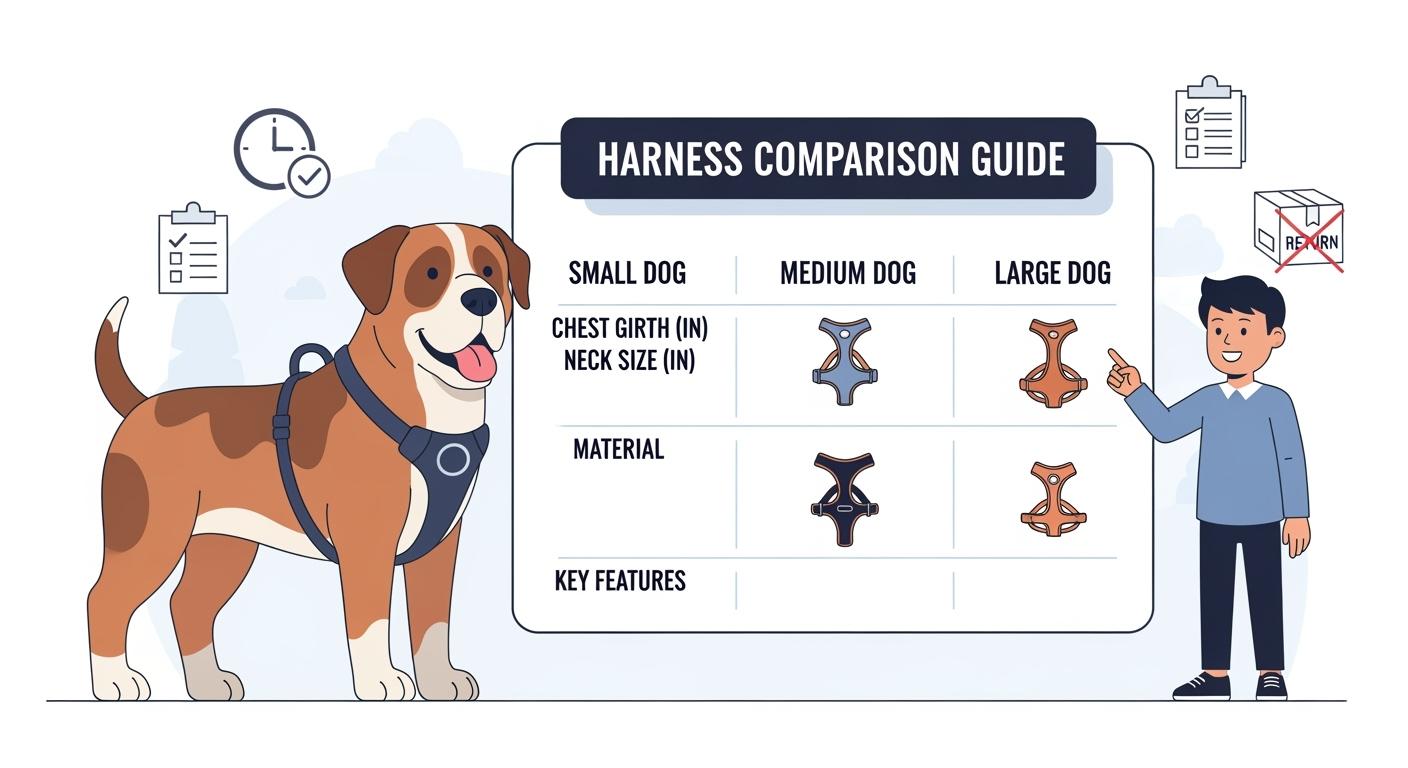
You know the frustration when a dog harness for large dogs arrives and does not fit. Unclear sizing leads to exchanges and extra work for your team. If you rely on breed or weight guesses, you risk mistakes. Measurement-based charts in plain English help your staff and customers pick the right size quickly. For best results, use chest girth (inches and centimeters) and neck circumference if needed. Returns cost retailers time and money. Always check for clear measurement guidance before buying.
Tip: Use a flexible tape measure to check chest girth just behind the front legs. Record both inches and centimeters for accuracy.
Key Takeaways
Always measure your dog’s chest and neck before you buy a harness. This helps the harness fit well and keeps your dog comfortable.
Use size charts with measurement ranges, not just one number. Ranges make it easier for people to pick the right size. This also helps stop returns.
Give clear advice for dogs that are between sizes. Tell customers to pick the bigger size and change the straps to fit better.
Add pictures and diagrams to show where to measure. This helps people know how to measure the right way.
Check labels and instructions to make sure they are correct before selling harnesses. Clear details help people choose well and can lower returns.
Sizing challenges for dog harness for large dogs
Guessing by breed or weight
Some people pick a harness size by looking at their dog’s breed or weight. This way is not always right, especially for big dogs. Dogs that weigh the same can have different body shapes. For example, two dogs that both weigh 80 pounds might have very different chest sizes. Many charts use weight to help you choose, but this can make the harness fit badly. It might even be uncomfortable for your dog. Charts that use measurements look at your dog’s real body size. This helps you get a harness that fits well and stays on.
Dogs with the same weight can have different chest sizes.
Breed-based sizing does not show each dog’s differences.
Weight-only charts often lead to wrong sizes and returns.
Returns mean more work for your team and cost your business money. If a harness does not fit, you need to handle exchanges and restock items. You also have to deal with unhappy customers. Using clear measurement charts helps stop these problems and saves time.
Unclear measurement points
Measuring your dog for a harness can be confusing. Many people only measure the neck and forget about the chest girth. Some do not know where to put the tape measure. Getting the right measurements is important for a good fit.
Here are the most common sizing challenges:
Sizing Challenge | Explanation |
|---|---|
Relying solely on neck measurement | Owners often only measure the neck and forget the girth. This can make the harness fit badly. |
Misunderstanding adjustable straps | Many owners do not use the straps the right way. This makes the harness not fit well. |
Ignoring the importance of accurate measurements | Getting the chest girth right is very important for a harness that fits and feels good. |
To measure your dog’s neck, put the tape around the bottom of the neck where a collar goes. For chest girth, wrap the tape around the widest part of the chest, just behind the front legs. Write down both inches and centimeters to be sure. The tape should be snug but not too tight. If your harness has straps you can adjust, make sure they do not rub or stop your dog from moving.
Tip: Always measure both the neck and chest girth before picking a dog harness for large dogs. This step helps you avoid mistakes and lowers the chance of returns.
Standard measurements for large dog harnesses
Chest girth: where and how to measure
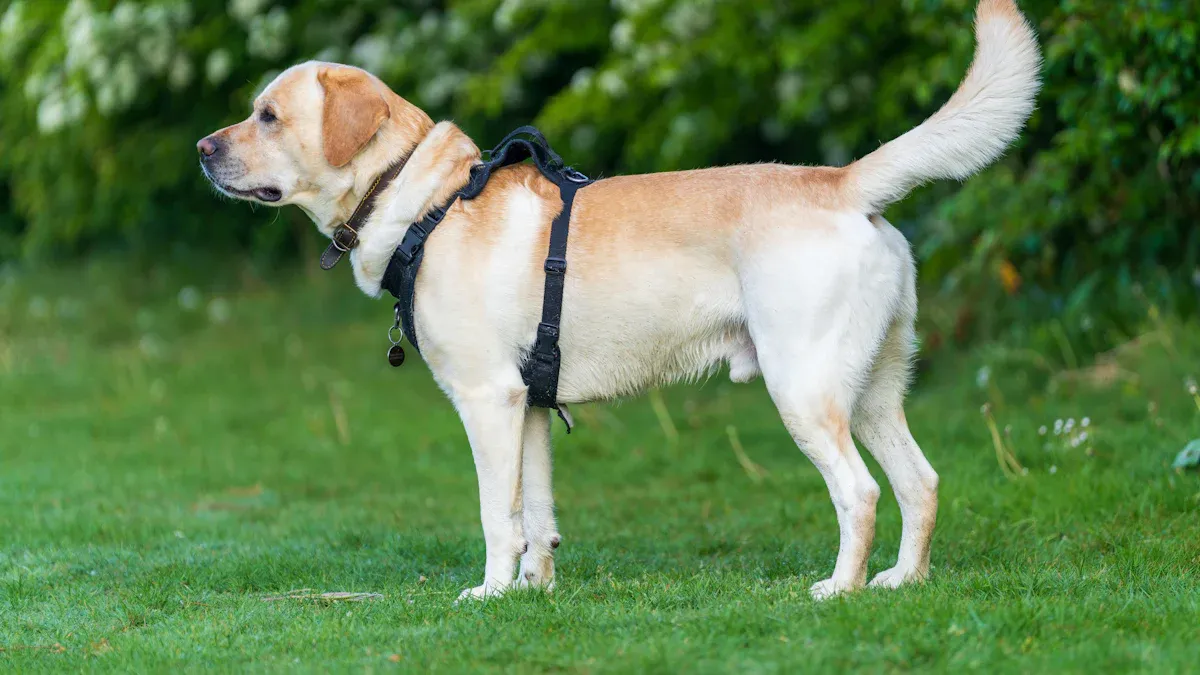
You must measure your dog’s chest girth to get the right harness size. Chest girth is the widest part of the ribs, just behind the front legs. Use a soft tape measure and wrap it around this spot. The tape should be close to the body but not squeeze. Write down the number in inches and centimeters. Getting the chest girth right helps you pick a harness that fits well and keeps your dog happy. If the harness does not fit, your dog might feel sore or get red skin. Bad pressure can also hurt your dog’s muscles. Dogs with special body shapes need a harness that matches their chest size. This helps stop sores or trouble moving.
Tip: Always measure chest girth when your dog is standing. Write down both inches and centimeters for catalogs.
A harness that does not fit can make your dog sore or cause red skin.
It can also hurt muscles if the pressure is not even.
Some breeds have special shapes and need harnesses that fit just right to stop pain or movement problems.
Neck circumference: when it matters
Some harnesses need you to measure neck circumference. Neck circumference is the bottom of the neck, where a collar sits. Use a tape measure and wrap it around this area. Write down the number in inches and centimeters. Only measure the neck if the harness has a neck opening or strap. Not all harnesses for large dogs need this step. Always check the chart and instructions before you measure.
Body length and strap adjustment
Body length is not always needed for harness sizing, but some harnesses use it. Measure from the bottom of the neck to just behind the front legs. Write down the length in inches and centimeters. Strap adjustment is important for comfort and safety. Make sure straps do not rub near the elbow or armpit. The harness should let your dog move easily. Straps should be close but not too tight.
Here is a table that shows the main measurement points for large dog harnesses:
Measurement Point | Description |
|---|---|
Neck Circumference | Measure around the dog’s neck while standing or sitting to get the neck size needed. |
Chest Girth | Wrap a measuring tape around the broadest part of the dog’s chest, behind the front legs, ensuring it is snug but not tight. |
Weight | Note the dog’s weight to ensure the proper size and comfort, especially if they are still growing. |
Using the same words for measurements helps your team, customers, and suppliers. Always use the same terms in your writing, charts, and when talking to staff. This makes things clear and helps everyone find the right harness for large dogs faster.
Size chart rules to reduce returns
Clear size charts help lower returns and keep people happy. You can make your sizing advice better by following three main rules. First, use measurement ranges. Second, give clear advice for “between sizes” cases. Third, use honest words when checking fit.
Use measurement ranges, not single numbers
Always use measurement ranges in your size charts. A range like “Chest Girth: 28–34 inches (71–86 cm)” helps people find the right fit. One number, like “Chest: 32 inches (81 cm),” does not show all dog shapes and sizes. Ranges help shoppers see if their dog’s size is safe for that harness.
Most returns in online shopping happen because of sizing problems. Experts say up to 70% of clothing returns are from fit issues. This shows why good sizing is important to stop returns. Using ranges instead of one number can lower your returns. Ranges make people feel sure and less likely to be upset.
Tip: Always show both inches and centimeters in your size charts. This helps teams in other countries and stops mix-ups.
Clear “between sizes” guidance
Many people find their dog’s size is between two choices. You need to give easy steps for these times. Do not let your customers guess. Top pet stores say to do these steps:
Get a soft tape measure and have the dog stand up and relax.
Measure the neck and leave space for comfort.
Measure the chest at the widest part, just behind the front legs.
Check the size chart from the maker to match sizes.
Use the two-finger rule to make sure the harness is snug but not tight.
If a dog’s chest is between two sizes, tell people to pick the bigger size. Adjust the straps so the harness fits well. If the harness cannot be made to fit, try a different style. Always use simple words and do not blame the shopper for mistakes.
Note: Add a short line in your chart, like “If your dog is between sizes, pick the bigger size and adjust for a snug fit.”
Honest fit-check language
You should use clear and honest words in your fit-check steps. Do not promise a “guaranteed fit” or say the harness is “escape-proof.” Instead, help your customers check the fit at home. People get upset when things do not fit as they hoped. Reviews show people talk about being upset almost 20,000 times when sizing is wrong. You can stop this by using good size charts and honest fit-check words.
Here are some ways to make your fit-check steps better:
Use clear product descriptions.
Show good pictures with measurement spots.
Add a size guide with both inches and centimeters.
Be honest about any known fit changes.
You can add a simple fit-check step: “After you put on the harness, slide two fingers under each strap. The harness should feel snug but not too tight. Your dog should move easily without rubbing or pinching.” These words help your customers feel sure and lower returns.
Safety Reminder: Always check that the harness lets your dog move naturally and does not rub behind the elbows or armpits.
By following these rules, you help your team and customers pick the right dog harness for large dogs. Clear size charts save time, lower returns, and help shoppers trust you.
Visual cues for sizing large dog harnesses
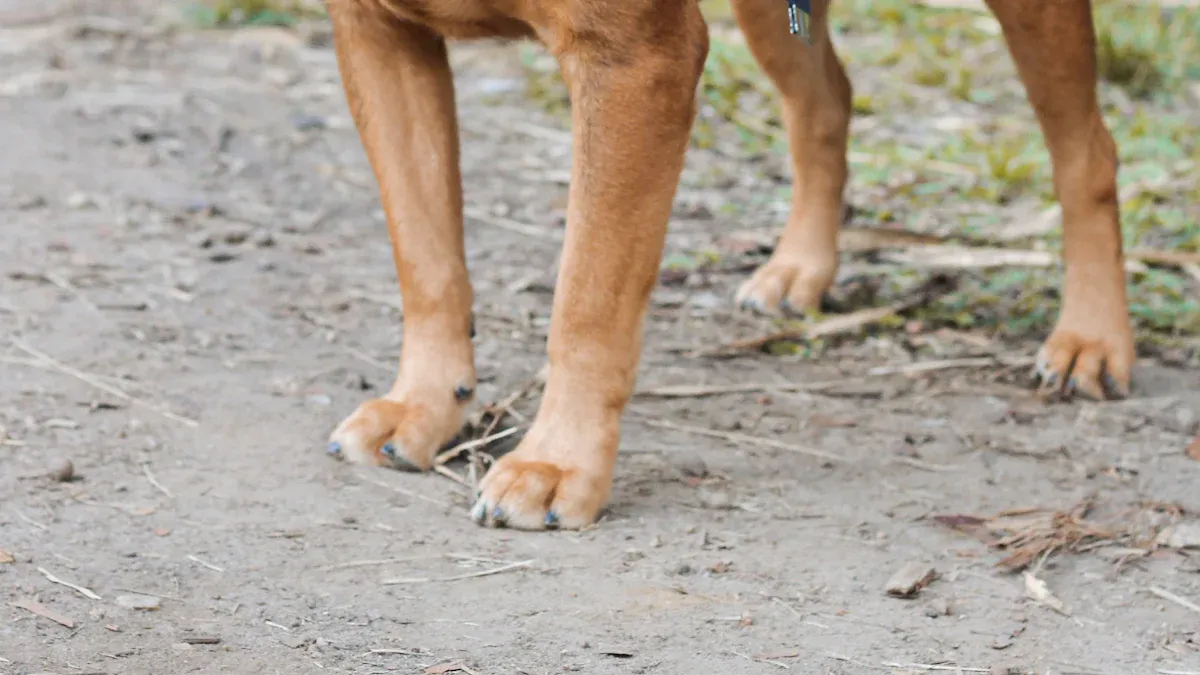
Clear photos help you and your team understand harness sizing for large dogs. You need to show measurement points, strap paths, and scale cues. These visual details make it easier to choose the right harness and reduce returns.
Chest girth tape placement
You should always include a photo that shows how to measure chest girth. Place a soft tape measure around the widest part of the dog’s ribcage, just behind the front legs. Make sure the tape sits flat and does not twist. Show both inches and centimeters on the tape in the photo. This helps staff and customers measure correctly.
Tip: Use a close-up image with the tape measure clearly visible. Add a label that says “Chest Girth: 28–34 inches (71–86 cm)” for easy reference.
Adjustability and strap path close-ups
You need photos that show how the harness straps adjust. Take close-up shots of the buckle, sliders, and strap paths. Show how the straps move and where they sit on the dog’s body. Highlight areas near the elbow and armpit to make sure the harness does not rub or pinch. Use arrows or labels to point out adjustment features.
Show the main adjustment points.
Highlight strap paths behind the front legs.
Use labels for “snug but not restrictive” fit.
Scale cues for big breeds
Include a photo of a large dog wearing the harness. Choose a breed with a broad chest, such as a Labrador or German Shepherd. Place a ruler or tape measure next to the dog to show scale. Do not rely only on breed claims for sizing. Use measurement-based cues in every image.
Minimum Photo Set Needed | Description |
|---|---|
Chest girth measurement | Tape measure placement, inches/cm visible |
Strap adjustment | Close-up of buckles and sliders |
Harness on dog | Full view with scale reference (ruler/tape) |
Note: Visual cues help your team and customers measure, adjust, and fit harnesses with confidence. Always use clear, measurement-based images.
Clear copy for dog harness for large dogs listings
Two-sentence sizing summary
Measure your dog’s chest girth at the widest part of the ribcage, just behind the front legs, using a soft tape measure. Choose your size based on the measurement range in inches (and centimeters) shown in the chart, not by breed or weight alone.
Fit and adjustment bullet points
Measure chest girth while your dog stands, wrapping the tape snugly but not tightly.
Record both inches and centimeters for accuracy.
Select the size range that matches your dog’s measurement.
Look for harnesses with four or more adjustment points for a secure and comfortable fit.
Adjust straps so they do not rub behind the elbows or armpits.
Make sure the harness allows natural movement and does not shift side to side.
Ideally, a harness will offer four to five adjustment points for a perfect fit, otherwise, the harness can chafe a dog, rotate side to side and impede walking (or cause injury) or offer opportunities to escape.
Short fit-check paragraph
After you put the harness on your dog, slide two fingers under each strap. The harness should feel snug but not restrictive. Your dog should walk and move freely without rubbing or pinching. If your dog’s measurement falls between two sizes, choose the larger size and adjust the straps for a safe fit. Always check that the harness sits flat and does not twist during use.
Retail staff scripts for sizing support
30-second measurement script
You can help shoppers find the right harness size with a quick, clear script. Use the same words every time to avoid confusion. Here is a sample you can use:
“To choose the best harness, measure your dog’s chest girth at the widest part of the ribcage, just behind the front legs. Use a soft tape measure and record the number in inches and centimeters. If the harness uses a neck strap, measure around the base of the neck where a collar sits. Always check both measurements against the size chart before you buy.”
This script keeps the process simple and helps your team give consistent advice.
“Between sizes” advice
Many shoppers find their dog’s measurements fall between two sizes. You can guide them with a clear next step. Use this advice:
If your dog’s chest girth is between two sizes, pick the larger size.
Adjust the straps for a snug but not restrictive fit.
Remind shoppers to check that the harness does not rub behind the elbows or armpits.
Tip: Always use the two-finger test. Slide two fingers under each strap. The harness should feel secure but allow easy movement.
When to suggest a different style
Sometimes, a harness style will not fit a dog’s shape well. You can help shoppers by knowing when to suggest another option. Use these cues:
If the harness cannot adjust to fit both chest and neck measurements, recommend a different style.
If the harness rubs or shifts during movement, suggest a design with more adjustment points.
For dogs with broad chests or unique body shapes, look for harnesses with wider measurement ranges.
Situation | Staff Action |
|---|---|
Measurements between sizes | Advise sizing up and adjusting straps |
Harness does not fit comfortably | Suggest a different style or more adjustments |
Signs of rubbing or shifting | Recommend harness with better fit features |
By using these scripts, you help shoppers choose the right harness quickly and safely.
Exchange prevention checklist
Verify labels and instructions
You should check every harness label and instruction sheet before you put products out or sell them online. Good labels help people pick the right size and stop confusion. Labels need to show chest girth and neck circumference in inches and centimeters. Clear instructions tell people how to measure their dog and adjust the harness for safety.
Make sure each label matches the real size of the product.
Check that instructions use easy words and show where to measure.
See if the pictures on the box match the SKU and product.
Look for signs that help people know what to do.
Tip: Good labels and instructions help people choose fast and smart. This means fewer returns and happier shoppers.
Prevent SKU and listing errors
SKU and listing mistakes can cause big trouble for your team and customers. You must match each SKU with the right product and size. If SKUs or listings are wrong, people get the wrong order and your team has more work.
SKU Error Prevention Steps | Why It Matters |
|---|---|
Match SKU to label and packaging | Stops mix-ups when checking or shipping |
Double-check size ranges | Lowers wrong orders and arguments |
Use a SKU evidence pack | Makes sure buyers and customs follow the rules |
Review online listings for accuracy | Helps people find the right harness fast |
Always check that the SKU, label, and listing all match. This keeps your stock neat and helps people trust your brand.
Exchange Prevention Checklist for Large Dog Harnesses:
Check labels for the right chest girth and neck circumference (inches/cm).
Make sure instructions show how to measure and adjust the harness.
Match SKU with the product and box pictures.
Check online listings for clear and correct size ranges.
Use the two-finger rule: straps should fit two fingers between harness and dog.
Watch for rubbing or chafing after 15–20 minutes of wearing.
Make sure the harness sits high on the chest and does not fall down.
Check that the harness does not slip over the dog’s head when closed.
Test all buckles and straps to see if they stay closed.
Watch your dog walk, trot, and run to see if they move easily.
Note: Doing these steps helps you stop exchanges, save time, and keep people happy.
Supplier checklist and scorecard
RFQ measurement and labeling checklist
You need a simple checklist when you ask suppliers for harnesses. This helps you get harnesses that fit large dogs and meet your needs. Use this checklist every time you send an RFQ (Request for Quotation):
Ask for chest girth and neck circumference in inches and centimeters.
Request a measurement tolerance, like plus or minus 0.5 inch (1.3 cm), for each size.
Tell suppliers to put the measurement range on every harness label, not just size codes like “L” or “XL”.
Make sure the packaging and instructions use the same words for measurements.
Ask for sample photos that show where to put the tape and how to adjust the harness.
Check that all labels and instructions match the product and SKU.
Tip: Use this checklist each time you order harnesses. This helps you avoid sizing mistakes and lowers returns.
OEM vs ODM: What’s the difference for harness sizing?
If you use OEM (Original Equipment Manufacturer), you give your own size chart, labels, and packaging details. The supplier makes harnesses using your instructions. With ODM (Original Design Manufacturer), you use the supplier’s designs and charts. You can add your brand, but you follow their sizing and labels. Always check which way works best for you before you order.
Supplier scorecard for fit and documentation
You can keep track of how well suppliers do with a simple scorecard. This helps you pick suppliers who give the right sizes and clear instructions.
Criteria | Score (1-5) | Notes |
|---|---|---|
Measurement accuracy | Are chest girth and neck sizes correct? | |
Label clarity | Are ranges shown in inches/cm? | |
Packaging instructions | Are measurement points explained? | |
Sample photo quality | Are tape and adjustment points clear? | |
Tolerance compliance | Are sizes within agreed limits? | |
SKU and label match | Do labels match product and listing? |
Note: Check this scorecard after each shipment. Suppliers with high scores help you stop sizing mistakes and keep customers happy.
Exchange driver, communication, and chart field tables
When you work with harness sizing for large dogs, you face many reasons for exchanges. More pet owners buy harnesses now because they want their dogs to be safe and comfortable. People know harnesses can stop injuries better than collars. Some shoppers want harnesses with GPS or health tools. Others want harnesses that look good or match their dog’s style. These new trends can cause more exchanges if sizing is not clear.
You can lower exchanges by using clear words and strong size charts. The tables below help you find problems, fix your writing, and guide your team.
Exchange Driver Table
Buyer Symptom | Likely Root Cause | Copy or Asset Fix |
|---|---|---|
Harness too tight or loose | Measurement confusion | Add chest girth (inches/cm) photo and fit-check tip |
Harness rubs or shifts | Strap path unclear | Show strap placement close-up images |
Unsure about size between options | No “between sizes” advice | Add clear next-step guidance in chart |
Style does not match dog’s body shape | Breed-only sizing | Use measurement-based ranges, not breed labels |
Wants tech or fashion features | Feature focus, not fit | Highlight fit and adjustment before features |
Size Communication Checklist Table
Item | What to Publish | What Staff Should Say |
|---|---|---|
Chest girth | Show range in inches/cm, photo of tape placement | “Measure chest girth behind front legs, snug fit.” |
Neck circumference | Show range if needed, define measurement point | “Measure base of neck if harness uses neck strap.” |
Adjustment points | List number, show close-up images | “Check all straps for snug but not restrictive fit.” |
Between sizes advice | Add chart note: size up and adjust | “Pick larger size, adjust straps for comfort.” |
Fit-check instructions | Two-finger rule, movement check | “Slide two fingers under strap, dog should move easily.” |
Size Chart Field Table
Field | Plain-English Definition | Common Mistake to Avoid |
|---|---|---|
Chest girth | Widest part of ribcage, just behind front legs | Measuring too far forward or backward |
Neck circumference | Base of neck where collar sits | Measuring too high or too loose |
Adjustment points | Number of straps you can tighten or loosen | Ignoring adjustment features |
Size range | Minimum and maximum chest girth in inches/cm | Using single number or vague size label |
Between sizes advice | What to do if dog’s measurement falls between two sizes | Leaving shoppers to guess |
Tip: Use these tables to teach your team, update your product pages, and check what suppliers send you. Clear sizing helps you get fewer returns and keeps customers happy.
Retail Macro Pack
You can use these ready-to-copy content blocks for your product listings, staff training, and customer support. This pack helps you save time and keep your sizing communication clear and consistent.
Product Detail Page (PDP) Sizing Paragraph
Measure your dog’s chest girth at the widest part of the ribcage, just behind the front legs. Use a soft tape measure and record the measurement in inches and centimeters. Select the harness size that matches your dog’s chest girth from the chart. If your dog’s measurement falls between two sizes, choose the larger size and adjust the straps for a snug but not restrictive fit.
Key Sizing and Fit Bullet Points
Measure chest girth while your dog stands, just behind the front legs.
Record both inches and centimeters for accuracy.
Select the size range that matches your dog’s measurement.
Adjust straps so they do not rub behind elbows or armpits.
Use the two-finger test: straps should allow two fingers between harness and dog.
Harness should allow natural movement and sit flat on the chest.
Tip: Always check that the harness does not twist or shift during use.
Staff Sizing Script
“To help you choose the right harness, measure your dog’s chest girth at the widest part of the ribcage, just behind the front legs. Use a soft tape measure and write down the measurement in inches and centimeters. If your dog’s measurement is between two sizes, pick the larger size and adjust the straps for a snug fit. Make sure the harness allows easy movement and does not rub behind the elbows.”
Sizing Disclaimer
Sizing guidance reduces risk but does not guarantee a perfect fit. Always measure your dog before purchase. Adjust the harness for comfort and safety. If you have questions about sizing, contact our support team for help.
Macro Pack Block | Use Case |
|---|---|
PDP Paragraph | Product listings |
Bullet Points | Quick reference, packaging |
Staff Script | In-store and online support |
Disclaimer | Legal and customer communication |
Easy-to-read sizing charts with measurements help you pick the right dog harness for large dogs. These charts save you time and stop returns. Always look at the sizing details before you buy. Use chest girth in inches and centimeters as your main tool. When you pick brands and stores that show clear sizing, customers are happier and you spend less money.
Measure your dog first, then check the chart.
Work with brands that show clear size ranges.
Getting the size right helps your business and keeps dogs safe.
FAQ
How do you measure chest girth for a large dog harness?
Wrap a soft tape measure around the widest part of your dog’s ribcage, just behind the front legs. Record the measurement in inches and centimeters. Use this number to select the correct harness size.
What should you do if your dog’s measurement falls between two sizes?
Pick the larger size. Adjust the straps for a snug but not restrictive fit. Always check that the harness allows natural movement and does not rub behind the elbows or armpits.
Why is measurement-based sizing better than breed or weight charts?
Measurement-based sizing matches your dog’s actual body shape. Breed and weight charts often miss differences in chest girth and neck circumference. Using measurements in inches and centimeters helps you avoid returns and ensures a safer fit.
How many adjustment points should a harness for large dogs have?
Look for harnesses with at least four adjustment points. More adjustment points help you fit the harness securely and comfortably. This reduces rubbing and shifting during use.
What is the two-finger rule for harness fit?
After you put the harness on, slide two fingers under each strap. The harness should feel snug but not restrictive. Your dog should move freely without discomfort.