When you use a dog harness big for your strong companion, small mistakes can lead to big problems. You may notice the harness rotates, rubs, or limits movement more than with smaller dogs. Quick checks help you spot these issues fast. Do not rely only on size charts. Focus on step-by-step fit checks to protect your dog’s comfort and safety. Remember, a harness cannot replace training. Poor fit can cause rubbing or escape risk. If your dog panics or backs out, consult a qualified trainer. If you see pain, limping, or skin injury, contact your veterinarian.
Key Takeaways
Always measure your dog’s chest and neck before picking a harness. Correct measurements help the harness fit well and stop discomfort.
Check the harness fit often, especially after washing or if your dog’s body changes. Checking often helps stop rubbing and slipping.
Make sure the chest panel is flat and in the middle during walks. A harness in the right spot stops it from turning and keeps your dog happy.
Pick harnesses with straps you can adjust and wide padding. These things make your dog more comfortable and lower the chance of chafing or getting hurt.
Ask a trainer for help if your dog seems uncomfortable or tries to get out of the harness. Good training helps a harness fit even better.
Why dog harness big fit fails
Weight and leverage increase rubbing
When you use a dog harness big for a strong dog, you face unique challenges. Large dogs have more weight and power. This means even a small shift in the harness can cause big problems. A poorly fitting harness may rub against your dog’s skin during walks. You might see hair loss or red spots where the straps move. The extra force from a big dog can turn minor rubbing into pressure sores or friction burns. Always check under the harness for signs of irritation like redness, swelling, or heat. These problems can get worse if you do not adjust the fit.
Poorly fitting harnesses can lead to:
Pressure sores
Friction burns
Moisture problems
Hair loss or skin color changes
Open wounds
Shoulder restriction is easy to miss
A dog harness big can restrict your dog’s shoulder movement if it does not fit well. You may not notice this at first. The front strap should never cross the point where your dog’s leg swings forward. If the harness blocks this area, your dog may start to move differently. Watch for short steps or a stiff walk. These signs mean the harness is limiting natural movement. Over time, this can cause muscle strain or joint stress. You want your dog to walk, run, and play without feeling held back.
Comfort vs safety issues
You need to balance comfort and safety when choosing a dog harness big. A harness that feels tight may stop your dog from slipping out, but it can also cause pain or skin problems. A loose harness may feel better but can rotate or let your dog back out. Both situations create risks. Minor comfort issues like mild rubbing can turn into real safety problems if ignored. Always check for signs of pain, limping, or skin injury. If your dog panics or escapes, consult a qualified trainer. If you see injury, contact your veterinarian. Remember, a harness cannot replace training. Poor fit can lead to rubbing or escape risk.
Dog harness big: key fit points
A well-fitting harness keeps your big dog comfortable and safe. You need to check several key points to get the best results. Each fit point matters for stability, freedom of movement, and reducing rubbing or slipping.
Chest panel placement for stability
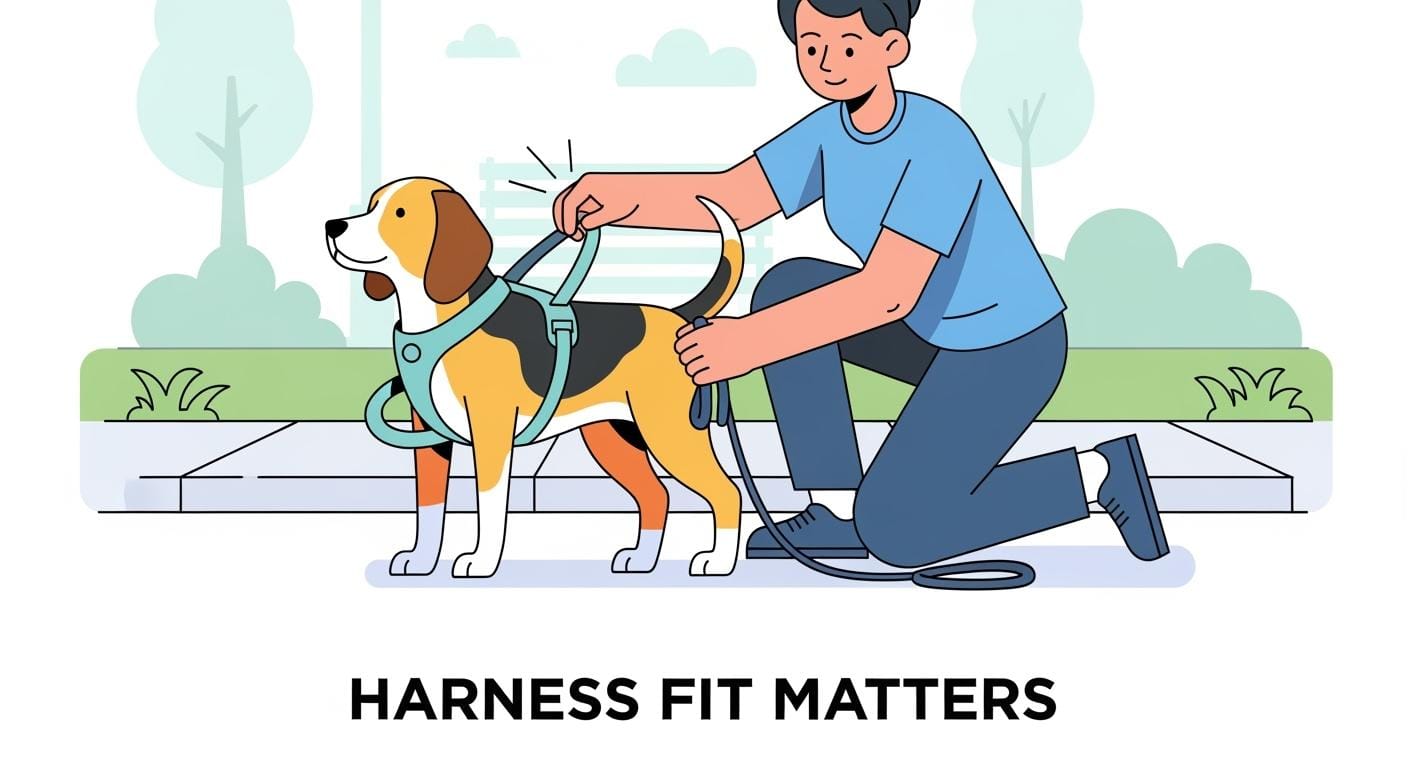
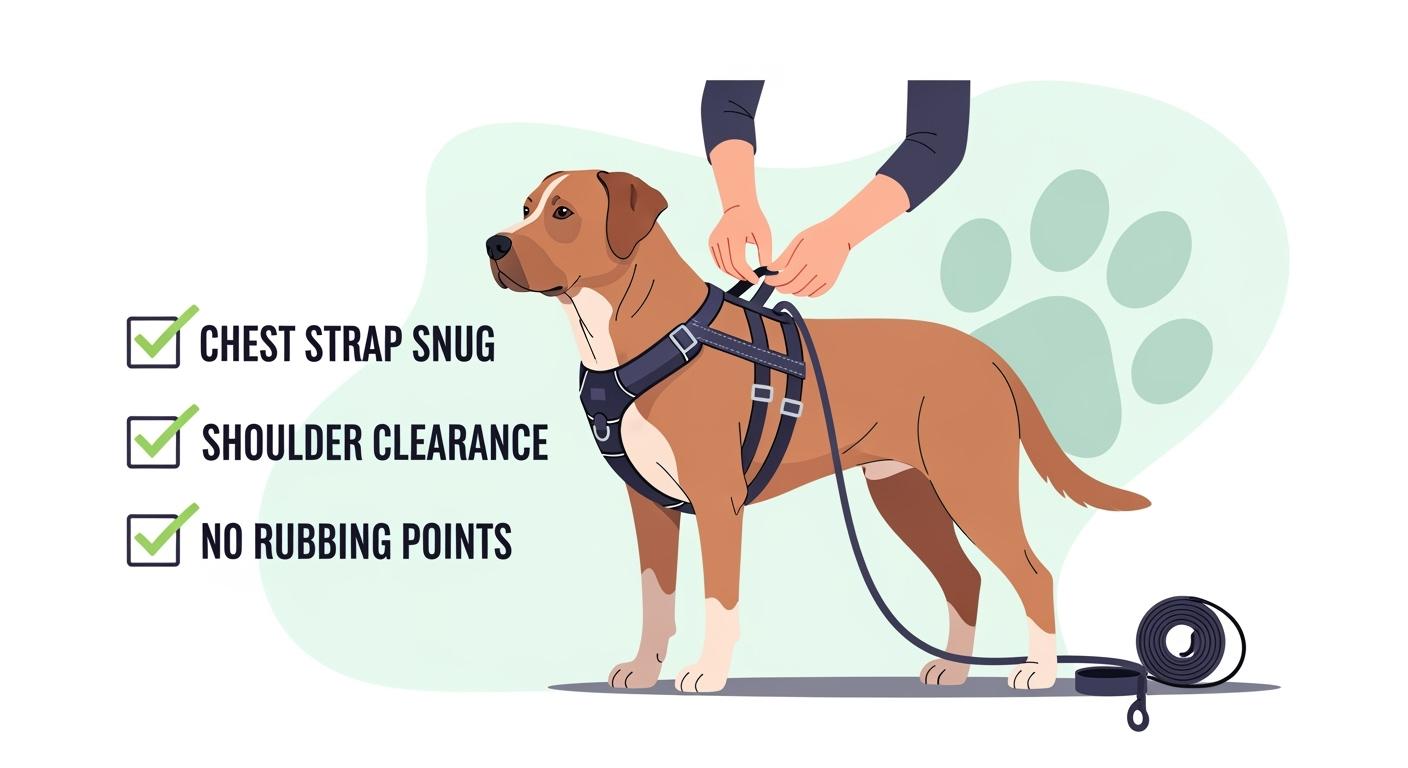
You want the chest panel to sit flat against the widest part of your dog’s chest, just behind the front legs. This spot gives the most stability and helps spread out pressure. If the chest panel slides to one side, the harness fit is off. You may see the harness rotate during a walk. This can cause rubbing or let your dog slip out. Always check that the chest panel stays centered after you adjust the straps.
Tip: Take a short walk and watch the chest panel. If it moves off-center, adjust the straps or try a different harness style.
Armpit clearance to prevent chafing
Straps should never cut into the soft area behind your dog’s front legs. You want enough space so the straps sit behind the armpit, not in it. If the straps touch or rub the armpit, your dog can get sore spots or lose hair. After a long walk, check for redness or swelling. A well-fitting harness keeps the straps clear of this sensitive area.
Scenario A:
Your big dog comes home from a long walk with red, irritated armpits. You check the harness and see the straps sit too close to the armpit. To fix this, loosen the chest straps and shift the harness back slightly. Make sure the padding covers the strap edges but does not bunch up. If the harness still rubs, try a larger size and adjust down for a better fit. Never overtighten to solve rubbing. This can cause new problems.
Neck opening and throat comfort
The neck opening should sit where a collar would, not too high or low. You should fit two fingers between the harness and your dog’s neck. This keeps the harness from pressing on the throat. If the neck opening is too tight, your dog may cough or pull away. If it is too loose, the harness can slip or rotate. Always check for smooth edges and sturdy buckles to avoid hot spots.
Fit checklist table: what to check and adjust
Use this table to spot common harness fit problems and know what to do:
Fit point | What good looks like | What failure looks like | What to adjust |
|---|---|---|---|
Chest panel | Sits flat, centered behind front legs | Slides to side, rotates | Adjust straps, check size/layout |
Armpit clearance | Straps behind armpit, no rubbing | Redness, hair loss, straps in armpit | Loosen, shift back, adjust size |
Neck opening | Two fingers fit, sits like collar | Too tight, coughs, too loose, rotates | Adjust neck strap, check hardware |
Shoulder freedom | Straps clear shoulder point, free movement | Short steps, stiff walk, straps block | Try Y style, adjust front straps |
Slip test | Dog stays in harness with gentle pull | Dog backs out easily | Adjust fit, consider new style |
Padding | Covers contact points, not bulky | Bunched, too thick, causes heat | Smooth padding, check placement |
Below is a feature checklist with target ranges and why each matters for a well-fitting harness:
Parameter | Target range or option | Why it matters |
|---|---|---|
Chest measurement | widest chest, behind front legs | Sizing accuracy and stability |
Neck measurement | where collar sits | Comfort and reduced throat pressure |
Fit check | two fingers at contact points | Avoids tight spots and rubbing |
Adjustability buffer | 2-4 in (5-10 cm) on chest | Fine tuning and coat changes |
Strap width | 0.8-1.5 in (2.0-3.8 cm) | Comfort feel and durability cue |
Armpit clearance | straps sit behind front leg | Prevents chafing |
Shoulder freedom | avoid crossing shoulder point | Reduces restriction risk |
Rotation check | chest panel stays centered | Flags poor fit or layout |
Slip test cue | fails gentle backward pressure | Signals style or fit change needed |
Hardware | sturdy buckles, smooth edges | Reliability and fewer hot spots |
Step-by-step harness fitting and adjustment
Measure your dog’s chest at the widest point, just behind the front legs.
Measure the neck where a collar would sit.
Choose a harness size that matches or is slightly larger than your measurements. Adjust down if needed.
Place the harness on your dog. Make sure the chest panel sits flat and centered.
Adjust the straps so you can fit two fingers between the harness and your dog at all contact points.
Check that the straps sit behind the armpit and do not cross the shoulder point.
Walk your dog and watch for rotation, rubbing, or restricted movement.
Make small adjustments as needed. Look for 2-4 in (5-10 cm) of adjustability for coat changes.
Check hardware for smooth edges and strong clips.
Repeat these checks after washing the harness or if your dog’s body changes.
Safety note: A harness cannot replace training. Poor fit can cause rubbing or escape risk. If your dog panics or backs out, consult a qualified trainer. If you see pain, limping, or skin injury, contact your veterinarian.
A well-fitting harness supports your dog’s comfort and safety. You can prevent most problems by checking each fit point and making small adjustments. A harness fit that works for one dog may not work for another. Always watch your dog’s movement and skin for signs of trouble. You want your big dog to enjoy every walk with a harness that fits just right.
Measure for a well-fitting harness
Chest and neck girth measurement
You want your big dog’s harness to fit snugly but not too tight. Start by measuring the chest at the widest part, just behind the front legs. Measure the neck where a collar usually sits. Use a soft tape measure for accuracy. Always follow the harness maker’s instructions for best results.
Place the tape flat against your dog’s fur.
Write down the chest and neck numbers in both inches and centimeters.
Choose a harness size that matches or is slightly larger than your measurements.
You should fit one or two fingers between the harness and your dog’s fur at all contact points.
Test the fit by letting your dog move and try a gentle escape. The harness should stay in place.
A good fit helps prevent rubbing and slipping. If you see red marks or hair loss, check your measurements again.
Between sizes: adjustability for big dogs
Big dogs often fall between standard harness sizes. You need adjustability to get the right fit. Look for harnesses with multiple adjustment points. These let you fine-tune the neck, chest, and girth for your dog’s shape. Adjustable straps help you avoid overtightening, which can cause discomfort.
Here is a quick guide to helpful features:
Feature | Benefit |
|---|---|
Adjustable neck straps | Secure fit, reduces escape risk |
Adjustable chest straps | Comfort fit, matches your dog’s body |
Multiple adjustment points | Customizes fit, prevents slipping |
Strong handle | Better control during walks and training |
No-pull features | Guides your dog gently, helps prevent lunging |
Choose a harness with 2-4 in (5-10 cm) of chest adjustability. This buffer lets you adjust for coat changes or weight shifts.
Strap width and hardware for strength
Big dogs need strong harnesses. Look for strap widths of 0.8-1.5 in (2.0-3.8 cm). Wider straps spread pressure and feel more comfortable. Check for sturdy buckles and smooth edges. These features help prevent hot spots and make the harness last longer.
Safety note: A harness cannot replace training. Poor fit can cause rubbing or escape risk. If your dog panics or backs out, consult a qualified trainer. If you see pain, limping, or skin injury, contact your veterinarian.
A well-measured and adjusted harness keeps your big dog safe and comfortable on every walk.
Prevent rubbing with movement tests
Walk, sit, turn: what to watch for
You want your big dog to feel comfortable wearing a harness on every walk. To check for discomfort, watch your dog move in different ways. Ask your dog to walk, sit, and turn. Look for signs like short steps, stiff walking, or stopping to scratch. If your dog shakes or tries to rub against objects, the harness may cause discomfort. You should also check if the chest panel stays centered or if the straps shift during movement. These simple tests help you spot problems before they get worse.
Tip: Use a gentle backward pull to see if the harness slips or rotates. If it does, adjust the fit or try a different style to reduce pulling and escape risk.
Coat type, wet fur, and delayed rubbing
Your dog’s coat type can change how a harness fits. Short-haired dogs may feel discomfort faster because there is less fur to protect the skin. Wet fur can make rubbing worse, especially after swimming or walking in the rain. Sometimes, you will not see redness or hair loss until hours later. Always check your dog’s skin after walks, especially if you notice licking or chewing.
Padding placement: more is not always better
Padding can help with comfort, but too much padding can bunch up and cause new problems. Make sure the padding sits flat and covers only the contact points. Thick or loose padding can trap heat and moisture, leading to discomfort. Choose a harness with smooth, well-placed padding for the best results.
Rubbing causes and solutions table
Common cause | What it leads to | What to do next |
|---|---|---|
Straps in armpit | Redness, hair loss | Adjust straps, check armpit clearance |
Chest panel off-center | Rubbing, slipping | Re-center, adjust fit, try new layout |
Too much padding | Heat, bunching, discomfort | Use thinner padding, smooth placement |
Wet or dirty harness | Delayed rubbing, odor | Dry and clean harness after walks |
Harness crosses shoulder | Restricted movement, strain | Adjust front strap, try Y style |
Scenario B:
Your big dog backs up when startled and the harness shifts. You notice the chest panel slides to the side. This means the harness lacks stability. You can improve fit by checking the chest panel placement, choosing a harness layout that stays centered, and using a calm handling routine. These steps help reduce slip risk and keep your dog safe.
Safety note: A harness cannot replace training. Poor fit can cause rubbing or escape risk. If you feel unsafe or your dog panics and backs out, consult a qualified trainer. If you see pain, limping, or skin injury, contact your veterinarian.
Stop slipping and backing out
Rotation signs and harness adjustment
You may notice the harness rotates or shifts to one side during walks. This is a sign that the fit is not right. A harness that rotates can cause rubbing and make it hard to keep better control of your dog. Check the chest panel after a short walk. It should stay centered behind the front legs. If it slides off-center, adjust the straps for a snugger fit. Make sure you can still fit two fingers under the straps. If the harness keeps rotating, try a different layout or size. Some harnesses have extra chest padding or a Y-shaped front that helps keep the harness in place.
Tip: Watch your dog turn and move. If the harness twists or bunches up, it may not give enough support or stability.
Escape risk: neck, chest, and behavior cues
Big dogs can back out of a loose harness, especially if they get startled. You should check for these escape risk signs:
The neck opening sits too low or too loose.
The chest strap hangs down or gaps when your dog moves.
Your dog backs up and the harness slips over the head.
You see your dog pawing at the harness or acting uncomfortable.
A harness that fits well will stay secure during gentle backward pressure. If your dog can slip out, adjust the straps or try a harness with more points of control. Always check for sturdy buckles and smooth edges to keep your dog safe and comfortable.
When to change harness style
Sometimes, you need to switch harness styles for a better fit. For example, German Shepherd puppies often start with a small harness and grow into an extra large adult harness. You should monitor your dog’s growth and adjust harness sizes as needed. Change harness style if:
The harness is adjusted to its maximum and still feels snug.
You cannot fit two fingers under the straps.
The harness restricts movement or causes chafing.
Your dog has a noticeable growth spurt.
Choosing the right harness style helps you maintain control and comfort as your dog grows. Always check fit after washing the harness or if your dog’s body changes.
Safety note: A harness cannot replace training. Poor fit can cause rubbing or escape risk. If you feel unsafe or your dog panics and backs out, consult a qualified trainer. If you see pain, limping, or skin injury, contact your veterinarian.
Strap layout and shoulder freedom
Y style vs H style for big dogs
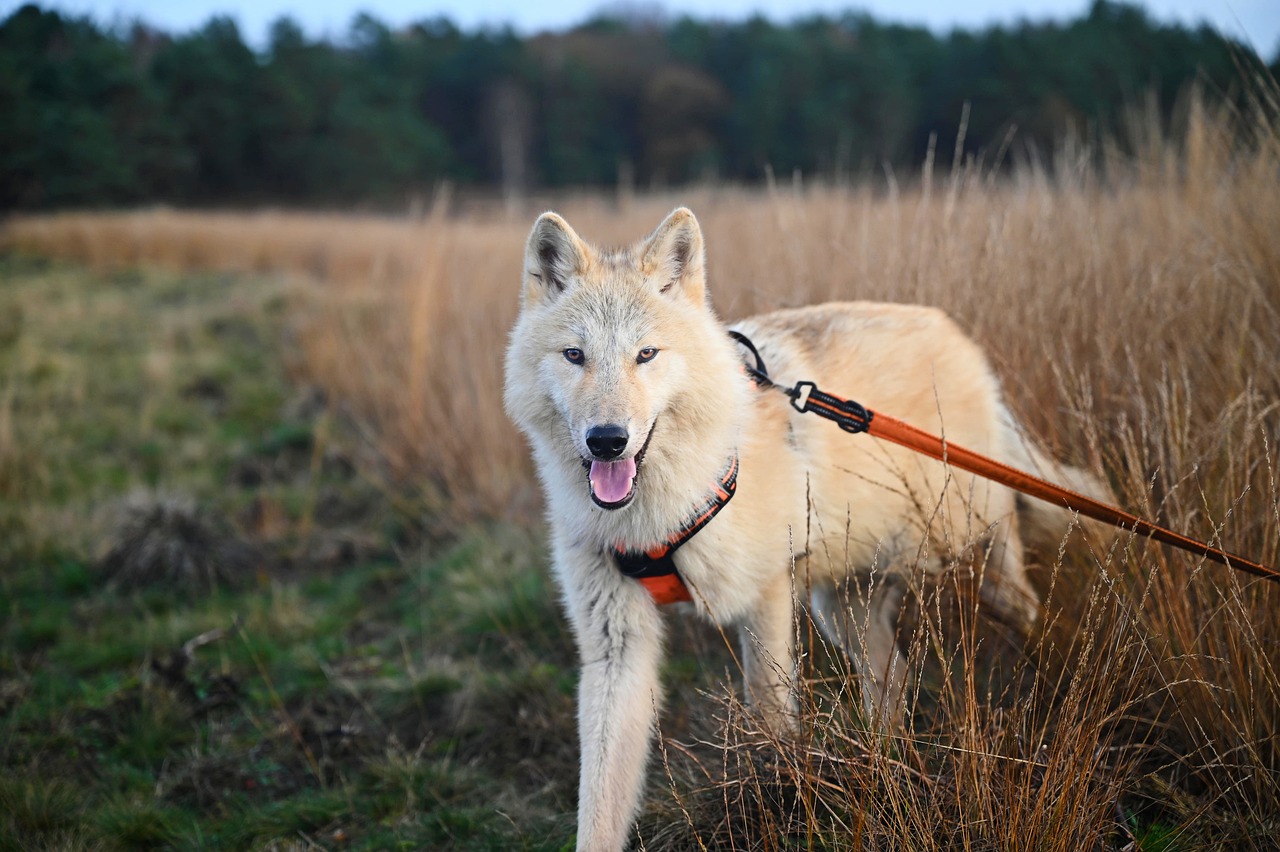
You want your big dog to move easily and feel good. Y-style harnesses have a front strap shaped like a Y on the chest. This shape usually keeps straps away from the shoulders. Your dog can walk and run without feeling blocked. H-style harnesses have a strap that goes across the chest. If you fit them right, they can work well. Sometimes, the front strap crosses the shoulder and stops free movement. Always check that the harness does not block where your dog’s leg swings forward.
Tip: Watch your dog walk. If you see short steps or stiff moves, check if the harness crosses the shoulder.
Front, back, and dual clip fit
Harnesses have different places to clip the leash. A front-clip harness helps stop pulling and can teach better leash skills. A back-clip harness gives your dog more freedom and works for calm dogs. Dual-clip harnesses let you pick control or comfort. Make sure the clip spot matches how you walk and your dog’s needs.
Handle and reinforcement features
Big dogs need strong harnesses for extra control. Look for a handle on top. This lets you hold your dog close in busy places or during training. Reinforced webbing makes the harness stronger for heavy pullers. Metal buckles add safety and last longer. A wider collar area spreads pressure and keeps your dog comfy.
Feature | Benefit |
|---|---|
Tactical Handle | Better control in crowds or training |
Reinforced Webbing | Handles strong pullers, adds durability |
Metal Buckle | Withstands force, improves safety |
Wider Collar | Spreads pressure, increases comfort |
Layout comparison table
Picking the right harness layout helps you get both control and comfort. Use this table to compare choices:
Option | Pros | Cons | Best for |
|---|---|---|---|
Y-Style Harness | Lets shoulders move, less rubbing | Needs good fit to stop slipping | Active dogs, long walks |
H-Style Harness | Simple, easy to adjust | May block shoulders if not fitted right | Calm walkers, short outings |
Dual-Clip Harness | Flexible, gives control and comfort | A bit heavier, needs right leash use | Training, many activities |
Front-Clip Harness | Helps leash skills, stops pulling | Can block shoulders if not fitted right | Pullers, leash training |
Step-In Harness | Easy to put on, less overhead motion | Not much adjustment, less strong | Dogs who dislike overhead fit |
Pull-Stop Harness | Stops pulling, adds control | May block movement if used wrong | Strong pullers, training walks |
Safety note: A harness cannot replace training. Bad fit can cause rubbing or escape risk. If you feel unsafe or your dog panics and backs out, talk to a trainer. If you see pain, limping, or skin injury, call your veterinarian.
Dog profile or context | Best harness fit features | What to avoid |
|---|---|---|
Strong puller | Reinforced webbing, front or dual clip, handle | Thin straps, weak buckles |
Sensitive skin | Wide straps, smooth padding, Y-style layout | Narrow straps, bulky padding |
Escape artist | Secure fit, many adjustment points, metal buckles | Loose neck, poor adjustability |
Active outdoor dog | Y-style, strong handle, tough hardware | Harnesses that block movement |
Dog harness big: retail and wholesale tips
Reduce returns with fit checklists
You can lower return rates by giving buyers a clear fit checklist. Many returns happen because the harness does not fit as expected. When you show step-by-step fit checks, you help customers pick the right size the first time. Add a simple checklist to your product page or packaging. Remind buyers to measure the chest at the widest point, check neck fit, and look for armpit clearance. Suggest the two-finger test at all contact points. Encourage a short walk test before removing tags.
Tip: A fit checklist builds trust and helps buyers feel confident. It also saves time for your support team.
Supplier specs: straps, buckles, adjustability
When you choose harnesses for big dogs, focus on strong, adjustable features. Look for these key specs:
Strap width: 0.8-1.5 in (2.0-3.8 cm) for comfort and durability.
Adjustability buffer: 2-4 in (5-10 cm) on the chest for coat changes.
Hardware: Sturdy buckles and smooth edges to prevent hot spots.
Multiple adjustment points: Neck, chest, and girth for a custom fit.
Feature | Target Range or Option | Why It Matters |
|---|---|---|
Strap width | 0.8-1.5 in (2.0-3.8 cm) | Comfort and strength |
Adjustability buffer | 2-4 in (5-10 cm) on chest | Fine tuning, coat changes |
Buckles | Sturdy, smooth-edged | Fewer hot spots, reliability |
Listing copy: focus on fit outcomes
Write your product listings with a fit-first mindset. Show buyers how your harness solves real problems. Use clear language to highlight features like armpit clearance, shoulder freedom, and escape prevention. Explain how adjustability helps with coat changes and growth. Add a quick fit checklist in your listing to guide buyers.
Highlight fit outcomes, not just features.
Use simple cues: “Check chest panel stays centered,” “Straps sit behind front legs.”
Remind buyers that a harness cannot replace training. Poor fit can cause rubbing or escape risk. If you feel unsafe or your dog panics and backs out, consult a qualified trainer. If you see pain, limping, or skin injury, contact your veterinarian.
Buyers trust listings that help them solve fit problems before they buy. You help them choose with confidence.
You should check your dog’s harness fitting every week. Fitting matters after washing or when your dog’s body changes. Use the fitting checklist and movement tests before every walk. A properly fitting harness reduces the risk of neck injuries and restriction. You want your dog to have a free range of motion. Watch for signs of an ill-fitting harness. Fitting helps prevent rubbing and slipping. Fitting supports comfort and safety. Fitting means straps do not block movement. Fitting keeps the chest panel centered. Fitting avoids chafing. Fitting allows two fingers under straps. Fitting means no rotation. Fitting means no escape. Fitting means your dog enjoys walks.
Safety note: A harness cannot replace training. Poor fitting can cause rubbing or escape risk. If you feel unsafe or your dog panics and backs out, consult a qualified trainer. If you see pain, limping, or skin injury, contact your veterinarian.
FAQ
How do you know if your dog’s harness fits correctly?
You should check that you can fit two fingers between the harness and your dog at all contact points. The chest panel should stay centered. Straps should not cut into the armpit or block the shoulder.
What should you do if your dog’s harness keeps slipping?
Try adjusting the straps for a snugger fit. Make sure the chest panel sits flat and centered. If slipping continues, consider a different harness style with more adjustment points or a Y-shaped front.
How often should you check your big dog’s harness fit?
Check the harness fit every week. You should also check after washing the harness or if your dog’s body changes. Regular checks help prevent rubbing, slipping, and escape risk.
What harness features help prevent rubbing for big dogs?
Look for wide straps, smooth padding, and multiple adjustment points. Make sure the harness does not cross the shoulder or sit in the armpit. A well-placed chest panel and sturdy hardware also help.
Is a harness safer than a collar for big dogs?
A harness can reduce neck pressure and give you better control. However, a harness cannot replace training. Poor fit can cause rubbing or escape risk. If you feel unsafe, consult a qualified trainer. If you see pain or injury, contact your veterinarian.