Have you ever watched your dog slide off the edge of a new bed? Many owners choose a dog cot bed by outer frame size and miss how sleep style affects fit. You need to measure your dog while they rest in their favorite position. Do not just measure when your dog stands. Focus on the usable sleep surface and add extra room so your dog does not curl off the edge. These steps help you avoid signs your dog’s bed is the wrong size and make choosing the perfect bed size simple. Sizing and surface fit reduce edge slip risk but cannot guarantee behavior. Stop use if your dog shows pain, stiffness, or reluctance to step on the cot. Consult your veterinarian for mobility or pain concerns and a qualified trainer if your dog seems stressed by new gear.
Key Takeaways
Measure your dog while they sleep in their favorite way. This helps you get the right length and width. It makes sure the bed fits well and stops your dog from slipping off the edge.
Always look at the size of the sleep surface, not just the outside frame. The sleep surface is usually smaller than the frame.
Add 4-8 inches (10-20 cm) to your dog’s size for more comfort. This gives your dog space to move and keeps them from slipping.
If your dog sleeps in many ways, use the biggest length or width. This makes sure your dog has enough room to rest.
Check the fit after you set up the cot bed. Make sure your dog can lie down, turn, and move without hanging off the edge.
Dog Cot Bed vs Cushioned Bed Fit
Sleep Surface vs Frame Size
When you shop for a dog cot bed, you might see two sets of measurements. The outer frame size includes the legs and border, while the usable sleep surface is the flat area your dog actually rests on. Always check both numbers. For example, if a cot bed lists an outer frame of 36 x 24 in (91 x 61 cm), the sleep surface may be only 32 x 20 in (81 x 51 cm) because the frame and tensioning take up space. You should measure your dog in their favorite sleep position and compare that to the sleep surface, not the frame. This helps you avoid a bed that looks big but feels small.
Tip: Add 4-8 in (10-20 cm) to your dog’s stretched length or curled width for extra comfort and to reduce edge slip risk.
Curlers and Edge Slip Risks
Dogs that curl up tightly often need more width than you expect. Curlers can slide off flat, raised surfaces if the bed is too narrow or if they shift during sleep. You should measure the widest part of your dog’s curled body and add a buffer. If your dog likes to stretch out, focus on length. Mixed sleepers need both. A cot bed with a small sleep surface increases the chance your dog will hang off the edge, especially during naps or turns.
Sleep Style | What to Measure | Why It Matters |
|---|---|---|
Curler | Curled width | Prevents hips from slipping off |
Stretcher | Stretched length | Keeps spine supported |
Mixed | Both | Ensures all positions fit |
When Cot Beds Are Not Ideal
Some dogs may not enjoy a cot bed. If your dog has trouble stepping up, shows stiffness, or seems stressed by new gear, you should stop use and consult your veterinarian or a qualified trainer. Dogs with mobility issues or those who dislike raised surfaces may prefer a cushioned bed on the floor. Sizing and surface fit help reduce edge slip risk, but cannot guarantee safety or behavior.
Sizing Guide: Measuring Your Dog for a Cot Bed
Choosing the right dog cot bed starts with understanding how your dog sleeps. You need a sizing guide that helps you measure your dog in their favorite sleep position. This step prevents edge slip and keeps your dog comfortable.
Measure in Sleep Position
You should always measure your dog while they rest in their natural sleep posture. Dogs stretch, curl, and shift during naps. If you measure your dog while standing, you miss how much space they use when relaxed. Follow these steps:
Watch your dog as they settle into their usual sleep position.
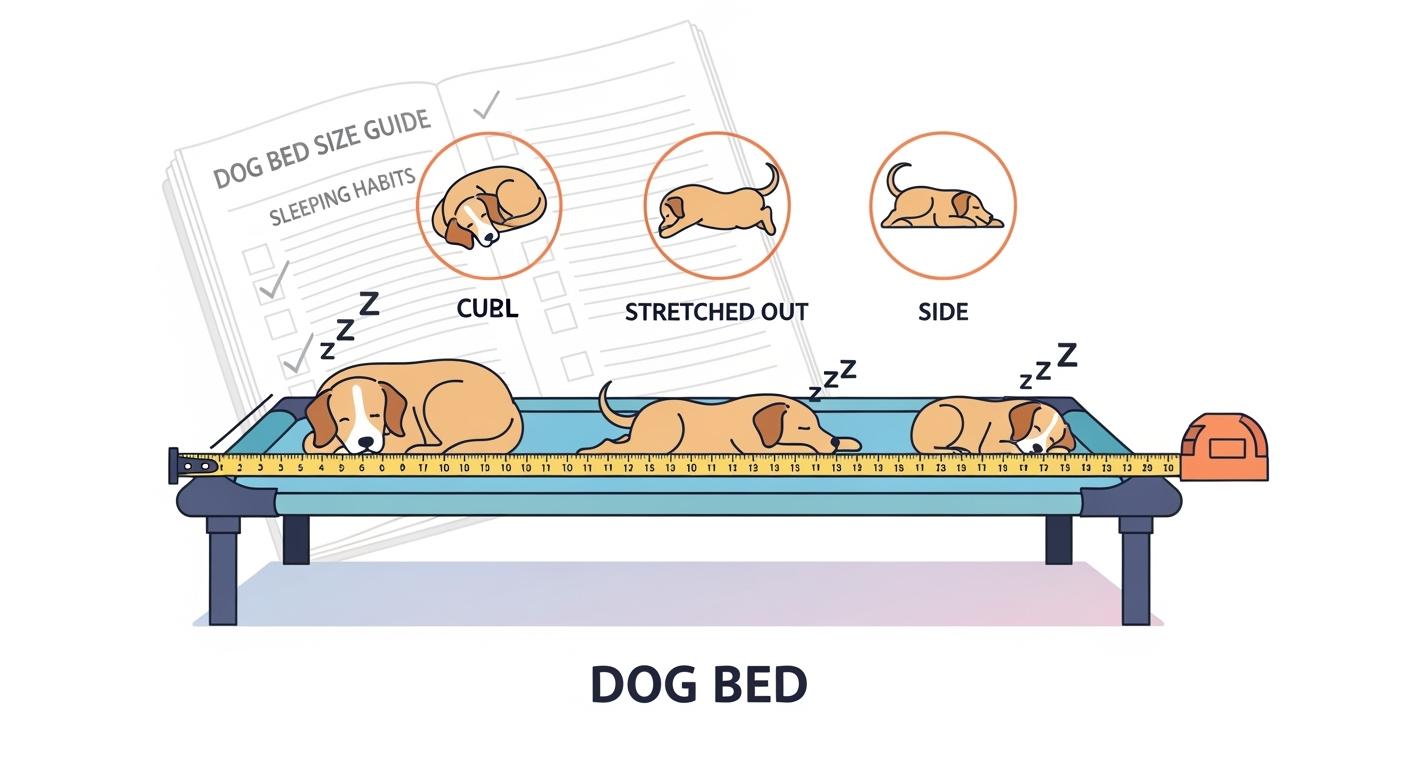
Use a soft tape measure. Measure from the tip of the nose to the base of the tail while your dog lies down.
Measure the widest part of your dog’s body. For curlers, this is often the hips or shoulders.
Write down both the length and width in inches and centimeters.
Tip: Add 4-8 in (10-20 cm) to each measurement for extra comfort and to reduce the risk of edge slip.
Stretched Length and Curled Footprint
Dogs sleep in different ways. Some stretch out with legs extended. Others curl into a tight ball. You must measure your dog for both styles if they switch positions.
Scenario A: Curler Dog Waking Up Half Off Cot
Your dog curls up, but sometimes wakes with hips or shoulders hanging off the edge. Measure the curled footprint as a rectangle. Find the longest and widest points while your dog is curled. Add a buffer of 4-8 in (10-20 cm) to the width so your dog stays on the sleep surface.Scenario B: Stretcher Dog with Paws/Hips Drifting Off Edge
Your dog stretches out, and you notice paws or hips drifting off the cot. Measure from nose tip to tail base while your dog lies flat. Add 4-8 in (10-20 cm) to the length for shifting and stretching.
If your dog sleeps in both styles, use the larger measurement for the cot bed size.
Size Up When Between Sizes
You may find your measurements fall between two cot bed sizes. Always choose the larger size. This gives your dog more room to shift and turn. You can adjust the cot’s placement in your home to fit the space. Never force a tight fit. A larger sleep surface helps prevent edge slip and supports your dog’s comfort.
Safety Note: Sizing and surface fit reduce edge slip risk but cannot guarantee behavior. Stop use if your dog shows pain, stiffness, or reluctance to step on the cot. Consult your veterinarian for mobility or pain concerns and a qualified trainer if your dog shows stress around new gear.
Measurement Table: What, How, Why
Use this table to guide your measurements and understand why each step matters.
What to Measure | How to Measure | Why It Matters |
|---|---|---|
Sleep position | Observe your dog in their favorite posture | Predicts length and width needs |
Stretched length | Nose tip to tail base, lying down (in/cm) | Sets minimum sleep surface length |
Curled footprint | Widest and longest points while curled (in/cm) | Sets minimum sleep surface width |
Buffer for comfort | Add 4-8 in (10-20 cm) to length and width | Prevents edge slip and cramped fit |
Size up rule | Choose larger cot bed if between sizes | Reduces risk of paws or hips hanging off |
Usable sleep surface | Compare measurements to sleep surface, not frame size | Ensures real fit, not just appearance |
You can use this sizing guide to measure your dog and select the best dog cot bed. Always check the usable sleep surface and add a buffer. This helps you avoid common problems like edge slip and cramped sleeping space.
Prevent Edge Slip: Dog Bed Size Rules
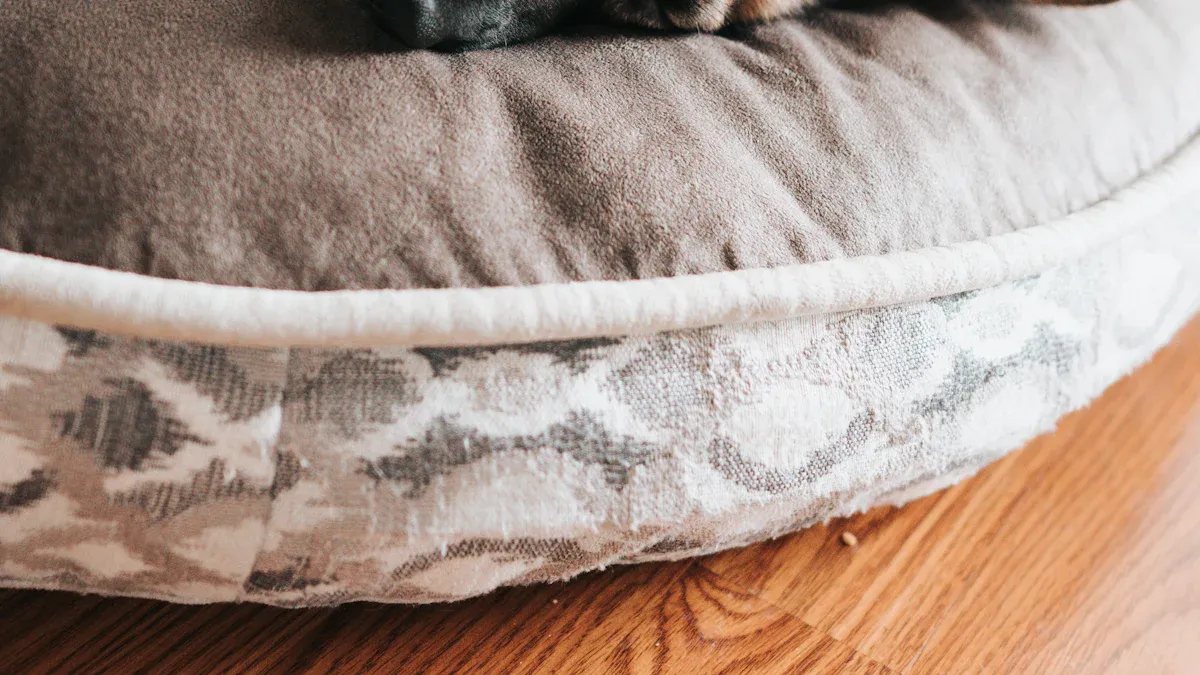
Choosing the right dog bed size helps your dog sleep comfortably and safely. You want to prevent edge slip, which happens when your dog slides off the bed or hangs over the edge. You can use simple rules to measure and select the best fit.
Length for Stretchers and Mixed Sleepers
Dogs that stretch out need extra length on their bed. You should measure your dog from the tip of the nose to the base of the tail while they lie flat. Add a buffer of 4-8 in (10-20 cm) to this measurement. This extra space lets your dog shift and stretch without falling off. If your dog sleeps in both stretched and curled positions, use the larger measurement for the bed length.
Measure your dog while they rest in their favorite stretched position.
Write down the length in inches and centimeters.
Add the buffer to get the minimum sleep surface length.
A bed that is too short restricts movement and comfort. Your dog may wake up with paws or hips hanging off the edge. You want to avoid this problem by sizing up if your measurements fall between two options.
Width for Curlers
Curlers need enough width to keep their hips and spine supported. You should measure the widest part of your dog while they curl up. Add 4-8 in (10-20 cm) to this width. This buffer helps prevent your dog from sliding off the side when they shift or turn.
Watch your dog curl up in their usual spot.
Measure the widest point across their body.
Add the buffer to get the minimum sleep surface width.
If your dog likes to curl tightly, a narrow bed can cause discomfort and edge slip. You want to make sure the bed supports their whole body, especially during naps.
Surface vs Frame Importance
You should always focus on the usable sleep surface, not the outer frame size. The frame and tensioning can reduce the actual area your dog uses by about 2 in (5 cm) on each side. If you only see the frame size listed, subtract this amount to estimate the true sleep surface.
“Dogs who consistently sleep on undersized or unsupportive surfaces are at higher risk for developing musculoskeletal strain over time. A properly fitted bed supports natural posture during rest.” -Dr. Lena Torres, DVM, CCRT
Dogs spend much of their day sleeping. A poorly sized bed can lead to discomfort, disrupted sleep, and joint problems. You want to choose a dog cot bed that matches your dog’s sleep style and body size.
Dogs sleep 12-14 hours a day, sometimes more.
A bed that is too small can cause joint issues.
Proper bedding helps with spinal alignment and pressure relief.
You should use the surface first rule. Always compare your measurements to the sleep surface dimensions, not the frame. This step helps you avoid a bed that looks big but feels small.
Sizing Table: Sleep Style, Minimums, What to Avoid
Use this dog bed size chart to match your dog’s sleep style to the right bed dimensions. The table shows the minimum sleep surface length and width you need, plus common mistakes to avoid.
Dog Sleep Style | Minimum Surface Length (in/cm) | Minimum Surface Width (in/cm) | What to Avoid |
|---|---|---|---|
Curler | Curled footprint + 4-8 in (10-20 cm) | Widest curled point + 4-8 in (10-20 cm) | Narrow beds, small surface |
Stretcher | Stretched length + 4-8 in (10-20 cm) | Body width + 2-4 in (5-10 cm) | Short beds, tight fit |
Mixed | Larger of stretched or curled + buffer | Larger of width or curled + buffer | Undersized surface, guessing |
You should always size up if your measurements fall between two sizes. Check the sleep surface, not just the frame. Make sure your dog can turn and shift without crossing the edge. If you notice your dog hanging off the bed or waking up stiff, the bed may be too small.
Tip: Sizing and surface fit reduce edge slip risk but cannot guarantee behavior. Stop use if your dog shows pain, stiffness, or reluctance to step on the cot. Consult your veterinarian for mobility or pain concerns and a qualified trainer if your dog shows stress around new gear.
You can use these rules and the dog bed size chart to find the best fit for your dog cot bed. Measure your dog in their favorite sleep position, add the recommended buffer, and check the usable sleep surface. This approach helps you solve common sizing problems and keeps your dog comfortable.
Fit Checks for Dog Cot Bed Size
You want your dog to feel safe and comfortable on their new dog cot bed. Fit checks help you confirm that you chose the right dog bed size and reduce the risk of edge slip. Use these simple tests at home to see if the bed fits your dog’s sleep style.
Perimeter Clearance Check
Watch your dog as they settle on the cot. Make sure your dog can lie down and turn without any part of their body crossing the edge. You should see at least 2 in (5 cm) of space around your dog in their favorite sleep position. This extra room helps prevent falls and supports natural movement.
Shift and Turn Test
Let your dog nap on the cot. After a short rest, see if your dog can shift or turn without sliding off. If your dog can change positions and stay on the sleep surface, the bed fits well. If your dog struggles or slips, you may need a larger size.
Paws and Hips Check
Check your dog’s paws and hips after a nap. They should rest fully on the sleep surface, not hang off the edge. If you see paws or hips off the cot, the bed may be too small. Size up to keep your dog supported.
Parameter and Value Table
Use this table to guide your fit checks and understand why each step matters.
Parameter | Target range or option | Why it matters |
|---|---|---|
Sleep style | curler, stretcher, mixed | Predicts length vs width needs |
Stretched length | nose to tail base while lying | Sets minimum surface length |
Curled footprint | curled rectangle footprint | Sets minimum surface width |
Clearance target | 2 in (5 cm) around body | Reduces edge slip risk |
Length buffer | 4-8 in (10-20 cm) | Room for shifting and stretching |
Width buffer | 4-8 in (10-20 cm) | Prevents curling off edge |
Surface first rule | use sleep surface dims | Avoids under sizing |
Frame allowance | 2 in (5 cm) per side | Explains why cots feel smaller |
Size up rule | choose larger if between | Reduces return risk |
Fit check | clearance, shift test, paws and hips | Confirms real world fit |
Stability check | no rocking | Improves confidence and safety |
Tip: Sizing and surface fit reduce edge slip risk but cannot guarantee behavior. Stop use if your dog shows pain, stiffness, or reluctance to step on the cot. Consult your veterinarian for mobility or pain concerns and a qualified trainer if your dog shows stress around new gear.
You can use these fit checks to confirm your dog cot bed is the right size. A good fit means your dog can rest, shift, and turn without slipping or hanging off the edge.
Common Edge Slip Causes and Quick Fixes
Edge slip can frustrate both you and your dog. You want your dog to feel safe and secure on their cot bed. Several common mistakes make edge slip more likely, but you can fix them with simple steps.
Sizing by Outer Dimensions
Many owners choose a cot bed based only on the outer frame size. This mistake often leads to a bed that feels too small. The sleep surface is usually smaller than the frame by about 2 in (5 cm) on each side. If you do not check the usable sleep surface, your dog may hang off the edge or slide during naps. Always measure your dog in their favorite sleep position and compare that to the sleep surface, not the frame.
Tip: Add 4-8 in (10-20 cm) to your dog’s measurements for extra comfort and to reduce edge slip risk.
Slick Covers and Surface Tension
Some cot beds have slick or tightly stretched covers. These surfaces can make it hard for your dog to grip or settle. Dogs may slide when they shift or turn, especially if the cover is too smooth. You can add a washable mat or textured blanket to improve traction. Make sure the cover is tight but not overly slick.
Common Cause Table
Use this table to spot common edge slip problems and learn what to do next.
Common Cause | What It Leads To | What to Do Next |
|---|---|---|
Sizing by outer dimensions | Dog hangs off or slips during naps | Measure sleep surface, add buffer, size up |
Slick covers or tension | Dog slides when shifting | Add mat or blanket, check cover tightness |
Unstable placement | Cot rocks or moves, dog slips | Use non-slip pads, place on rug, check stability |
You can solve most edge slip problems with these quick fixes. Always check the fit, surface, and placement to keep your dog comfortable and safe.
Dog Bed Size Decision Guide by Profile
Puppies and Growing Dogs
You want your puppy to feel safe and cozy, but puppies grow fast. Measure your puppy in their favorite sleep position. Add the recommended buffer of 4-8 in (10-20 cm) to both length and width. If your puppy is a large or giant breed, choose a cot bed that matches their expected adult size. You can use a rolled towel or blanket to fill extra space until your puppy grows. This helps your puppy feel secure and prevents edge slip.
Note: Sizing and surface fit reduce edge slip risk but cannot guarantee behavior. Stop use if your puppy shows pain, stiffness, or reluctance to step on the cot. Consult your veterinarian for mobility or pain concerns.
Long, Broad, or Tall Dogs
Long dogs, like sighthounds, need extra length. Broad dogs, like bulldogs, need more width. Tall dogs often stretch out when they sleep. Measure your dog in their most common sleep position. Add 4-8 in (10-20 cm) to the longest and widest points. Always size up if your dog is between sizes. This gives your dog room to shift and turn without hanging off the edge.
Outdoor, Crate, and Travel Use
You may want a cot bed for outdoor use, a crate, or travel. Measure the space where you plan to place the cot. Make sure the cot fits inside the crate or vehicle. For outdoor use, check that the cot sits flat and does not wobble. Add non-slip pads if needed. Choose a cot with a sleep surface that matches your dog’s measurements plus the buffer.
Tip: Always check the fit in the real space before your dog uses the cot.
Decision Table: Profile, Size, Avoid
Profile/Context | Recommended Size Approach | What to Avoid |
|---|---|---|
Puppy/Growing Dog | Measure in sleep position, add buffer, size for adult dog | Tight fit, skipping buffer |
Long/Broad/Tall Dog | Measure longest/widest points, add 4-8 in (10-20 cm), size up if between | Short/narrow beds, guessing |
Outdoor/Crate/Travel | Measure space, add buffer, check fit in location | Oversized cot, unstable setup |
You can use this guide to match your dog’s profile to the right cot bed size. Measure in sleep position, add the buffer, and check the fit in your space. This helps you prevent edge slip and keeps your dog comfortable.
Retail Notes: Cot Bed Assortments
Sizing Copy to Prevent Returns
You want to help shoppers pick the right cot bed size the first time. Clear sizing copy on product pages makes a big difference. Always show both the usable sleep surface and the outer frame size in inches and centimeters. Remind buyers to measure their dog in its favorite sleep position and add a buffer of 4-8 in (10-20 cm) to both length and width. Suggest that if a dog is between sizes, they should choose the larger option. Add a note that the sleep surface is usually smaller than the frame by about 2 in (5 cm) per side. This helps prevent surprises and reduces returns.
Tip: “Measure your dog while resting, not standing. Compare your measurements to the sleep surface, not just the frame.”
Spec Checklist: Surface, Frame, Height, Tension, Stability
You can use a checklist to compare cot beds and make sure you get the right one for your dog. Here are key features to check:
Sleep Surface Size: Confirm the usable area matches your dog’s measurements plus buffer.
Frame Size: Check the total footprint to plan your space.
Height: Make sure your dog can step up easily.
Surface Tension: Look for a firm but not overly slick cover.
Stability: Test for wobble or rocking on your floor.
Weight Capacity: Choose a cot that supports your dog’s weight with extra margin.
Material Quality: Pick breathable, easy-to-clean fabrics.
Setup Mechanism: Check if assembly is simple and tool-free.
Note: Avoid beds with missing weight ratings or non-removable covers.
Return Reduction: Measurement Script and Fit Checklist
You can reduce returns by guiding buyers through a simple measurement and fit check process. Use this script:
Measure your dog in its favorite sleep position.
Add 4-8 in (10-20 cm) to both length and width.
Compare your numbers to the sleep surface size.
If between sizes, choose the larger cot.
After setup, check that your dog can turn and shift without crossing the edge.
Make sure paws and hips stay on the surface during naps.
Step | What to Do |
|---|---|
Measure | In sleep position, nose to tail, widest point |
Add Buffer | 4-8 in (10-20 cm) to length and width |
Compare | To sleep surface, not frame |
Fit Check | Dog can turn, shift, paws/hips on surface |
Safety Note: Sizing and surface fit reduce edge slip risk but cannot guarantee behavior. Stop use if your dog shows pain, stiffness, or reluctance to step on the cot. Consult your veterinarian for mobility or pain concerns and a qualified trainer if your dog shows stress around new gear.
OEM and ODM Explainer
You may see the terms OEM and ODM when shopping for cot beds. OEM stands for Original Equipment Manufacturer. This means a company makes cot beds for other brands to sell. ODM stands for Original Design Manufacturer. This means a company designs and produces cot beds that other brands can use with their own label. Both types help bring a wide range of cot bed options to the market.
You can choose the right dog cot bed by following a few simple steps. Measure your dog in its favorite sleep position. Pick a dog bed size based on the usable sleep surface, not the frame. Use fit checks to make sure your dog stays safe and comfortable.
Watch for edge slip by adding a buffer to your measurements.
Use the tables and checklists in this guide for confident sizing.
Tip: Sizing and surface fit reduce edge slip risk but cannot guarantee behavior. Stop use if your dog shows pain, stiffness, or reluctance to step on the cot. Consult your veterinarian for mobility or pain concerns and a qualified trainer if your dog shows stress around new gear.
FAQ
How do I measure my dog for a cot bed?
You should measure your dog while they rest in their favorite sleep position. Use a tape measure from nose tip to tail base for length. Measure the widest point for width. Add 4-8 in (10-20 cm) to both.
What if my dog sleeps in different positions?
You should size the cot bed for the largest measurement your dog uses. If your dog stretches and curls, use the longer length or wider width. This helps prevent edge slip and keeps your dog comfortable.
Why does my dog still slip off the cot bed?
Check the sleep surface size, not just the frame. Make sure you added the buffer. Place the cot on a stable surface. Add a mat if the cover is slick. If slipping continues, try a larger size.
Can puppies use cot beds safely?
Yes, but you should measure your puppy and size for their expected adult size. Fill extra space with a blanket. Always supervise young puppies. Stop use if your puppy shows pain or reluctance to use the cot.
What should I do if my dog avoids the cot bed?
Let your dog explore the cot at their own pace. Place familiar bedding on top. If your dog shows stress, stop use. Consult your veterinarian for pain or mobility concerns and a qualified trainer for behavior issues.