Many dog beds tip or slide because people measure only the dog or only the seat. You need to measure both your dog and your car’s space to prevent tipping, slipping, and cramped posture. Start by noting your dog’s natural lying length and width. Then, measure your car’s usable seat or cargo area. Check the footprint of the dog bed for car before you buy. This guide helps you match these numbers and choose stability features. See the Key Takeaways section below for a quick summary.
Key Takeaways
Measure your dog in their natural lying position to find the right bed length and width.
Always measure your car’s usable seat or cargo area to ensure a proper fit for the dog bed.
Choose a bed with non-slip backing and anchors to prevent sliding and ensure your dog’s safety.
Add extra space to your dog’s measurements for comfort, allowing them to stretch and relax during rides.
Re-check the fit of the bed if your dog grows or if you change vehicles to maintain comfort and safety.
Why Sizing Matters for Dog Bed for Car
Tipping and Sliding Risks in Cars
You want your dog to stay safe and comfortable during every ride. If you pick the wrong size, the bed can tip or slide. This happens when the bed hangs over the seat edge or does not fit the space. A bed that slides can make your dog anxious or even cause injury. You can prevent these problems by measuring both your dog and your car.
Tip: Always check the footwell gap and seat depth before you buy a dog bed for car. A bed that fits the seat will not tip forward or slide off during turns.
Cramped Posture and Comfort Issues
A cramped bed can force your dog to curl up tightly or hang off the edge. This can lead to sore joints or restless behavior. You should measure your dog while they lie in their natural position. Add extra length and width so your dog can stretch out. A relaxed posture helps your dog stay calm and happy on long trips.
Signs your dog feels cramped:
Paws or shoulders hang off the bed
Your dog shifts often or cannot settle
Your dog avoids the bed during car rides
Travel Bed vs Home Bed Differences
A travel bed works differently from a home bed. In your car, you need a bed that fits the seat or cargo area and stays in place. Home beds can be larger and softer, but a dog bed for car must balance comfort with safety. Travel beds often have non slip backing, anchors, or stiffer bases. These features help prevent tipping and sliding. You should always match the bed size to both your dog and your car for the best results.
Feature | Home Bed | Travel Bed for Car |
|---|---|---|
Size Flexibility | More space | Must fit seat/cargo |
Stability Needs | Low | High |
Anti Slip Features | Not required | Important |
How to Measure Your Dog for Car Beds
Natural Lying Position Measurement
You want your dog to feel relaxed and safe during every car ride. Start by watching how your dog lies down when they rest. Some dogs curl up, while others stretch out on their sides. Use a soft tape measure. Measure from the tip of your dog’s nose to the base of their tail while they lie in their natural position. This gives you the starting length for the bed.
Tip: Take this measurement when your dog is calm and settled. You get the most accurate number this way.
Here is a quick reference table to help you measure correctly:
What to Measure | How to Measure | Why it Matters |
|---|---|---|
Dog length | Nose to base of tail, lying naturally | Sets the minimum bed length |
Dog width | Across shoulders or hips, side lying position | Ensures enough space for comfort |
Preferred posture | Curled or stretched out | Helps pick the right bed shape |
Buffer Rules for Cushion and Bolster Beds
After you measure your dog, add extra space for comfort. For a flat cushion bed, add 8-12 in (20-30 cm) to your dog’s length. For a bolstered travel bed, add 5-8 in (13-20 cm). This buffer lets your dog stretch or shift without feeling cramped. When you pick the width, make sure your dog can lie on their side with their shoulders fully supported. Their body should not hang off the edge.
Flat cushion: add more buffer for stretching.
Bolster bed: add less buffer, as the sides give support.
When to Size Up or Change Bed Style
You may need to size up if your dog is still growing or likes to sprawl out. If your dog often shifts position or shares the bed with another pet, choose a larger size. If your car seat is narrow, consider a bed with lower bolsters or a stiffer base. This helps keep the bed stable and prevents tipping. Always check that the bed fits both your dog and your car for the proper size.
Note: A good fit means your dog can relax, turn around, and stay safe during travel.
Measuring Your Car’s Space for Dog Beds
Back Seat Width and Depth
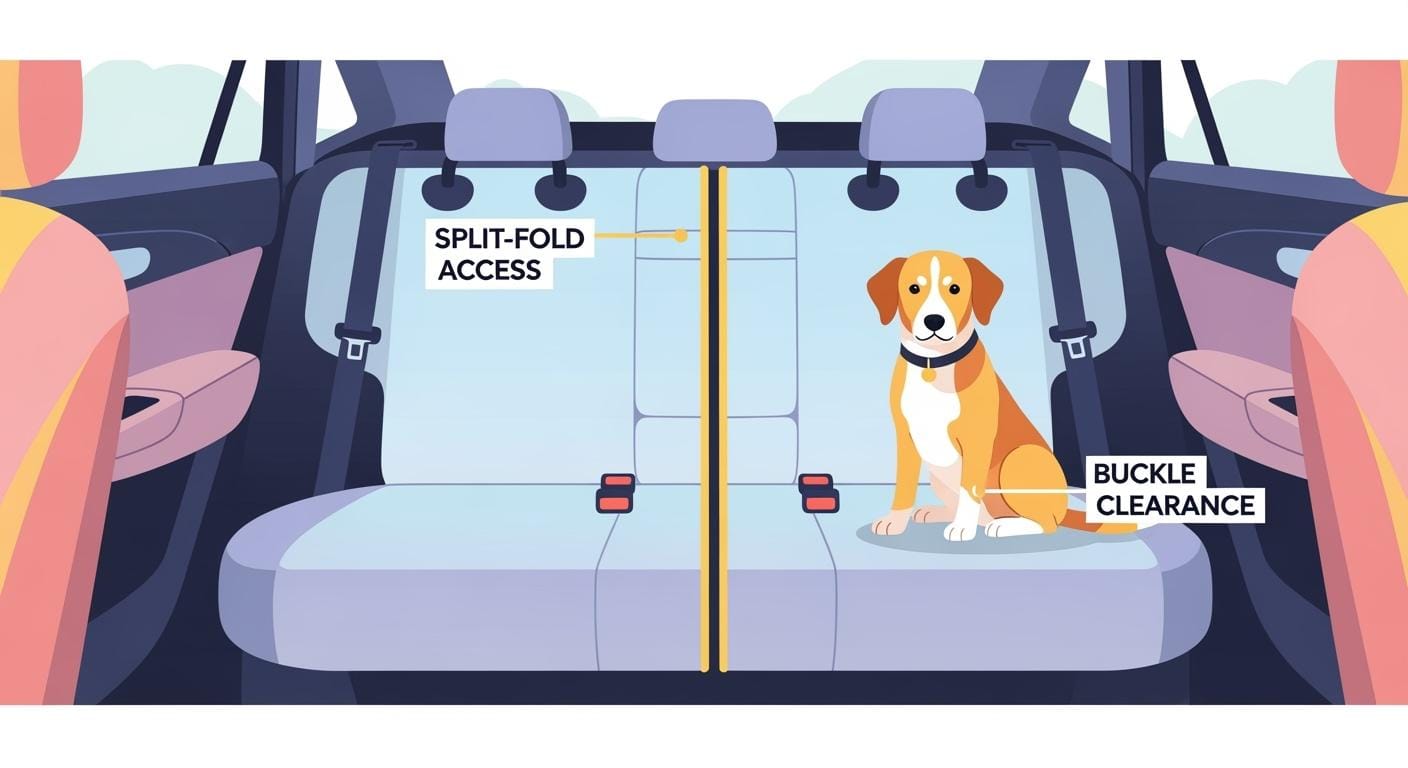
You need to measure your car’s back seat before you choose a dog bed. Start by finding the usable width. Place a tape measure between the inside edges of the doors or armrests. This gives you the clear space where the bed will sit. Next, measure the depth. Put the tape at the crease where the seat meets the backrest and pull it straight to the front edge of the seat. These numbers help you avoid beds that hang over the edge or bunch up. Many car sizing charts use these same steps to match beds to seats.
Measure between door panels or armrests for width.
Measure from seat back to front edge for depth.
Tip: Write down your numbers in both inches and centimeters for easy comparison.
Footwell Gap and Edge Drop
Check for any gap between the front edge of the seat and the floor. This is called the footwell gap. If the gap is large, the bed may droop or tip forward. Dogs can drift into this space during turns, which makes rides less stable. A bed with a stiff base helps spread your dog’s weight and keeps the bed steady. You can measure the drop by holding a tape from the seat edge straight down to the floor.
Look for uneven surfaces or deep drops.
Choose a bed with a firm bottom if your car has a big gap.
Cargo Area and Door Clearance
If you use the cargo area, measure the flat floor space. Start at one side and measure to the other for width. Then, measure from the back of the rear seats to the cargo door for depth. Make sure the bed will fit through the opening when you load it. Leave a little extra space so the bed does not get stuck or bunch up.
Measure the flat floor, not just the widest part.
Check the height of the cargo door if your bed has tall sides.
Here is a quick table to guide your measurements:
Measurement Name | How to Measure | Why It Prevents Failures |
|---|---|---|
Back seat width | Between doors or armrests | Stops edge hang and cramped fit |
Back seat depth | Seat back to front edge | Prevents tipping at seat edge |
Footwell gap | Seat edge to floor drop | Reduces risk of bed collapse |
Cargo footprint | Flat floor area, door clearance | Ensures stable, easy fit |
Note: Always measure your car before you buy a dog bed. This step helps you pick the right size and avoid tipping or slipping during travel.
Matching Dog and Car Measurements for Large Dog Bed Fit
Sizing for Large Breeds
Large dogs need more space and support during car rides. You want to make sure your large dog bed gives enough room for your dog to stretch and turn. Start by measuring your dog while they lie naturally. Add the buffer for comfort—8-12 in (20-30 cm) for a flat cushion or 5-8 in (13-20 cm) for a bolstered style. Next, measure your car’s usable seat or cargo area. Choose a dog bed for car that fits both sets of numbers.
A stable surface is important for large breeds. Look for a flat, non-sagging base. This helps support your dog’s joints and keeps their body in a natural position. Non-slip backing and anchors help your dog feel secure, especially during turns or stops. Easy step-in access is also helpful. Large dogs should not have to jump or climb to get into their bed.
Tip: If your dog looks cramped, keeps turning, or the bed shifts during rides, you may need a larger size. Adjust the buffer rule and pick a wider or longer large dog bed. This change can reduce restless movement and help your dog settle.
Ensuring Enough Turning Space
You want your dog to turn around and lie down without bumping into the sides. After you measure your dog and your car, check that the large dog bed leaves about 1-2 in (2.5-5 cm) of clearance on each side. This space prevents the bed from buckling or shifting. Your dog should be able to turn, stretch, and relax without hanging off the edge.
A large dog bed with a stable base and proper width lets your dog move naturally. If your dog shares the bed with another pet, add extra width. Watch your dog during a test ride. If they struggle to turn or seem restless, the bed may be too small. Try a different style or size to improve comfort.
Step-by-step guide:
Measure your dog’s length and width in their natural position.
Measure your car’s usable seat or cargo area.
Choose a bed style and size that fits both sets of measurements.
Check for 1-2 in (2.5-5 cm) clearance on each side.
Clearance and Movement Test
After you install the large dog bed, you need to test the fit. Use these simple checks to make sure the bed stays safe and comfortable:
Test Type | Description |
|---|---|
Press-Down Test | Press your palm into the center. The bed should rebound to a flat surface. |
Edge-To-Edge Firmness Check | Press near the edges. Support should feel even, not droopy or weak. |
Sit-Weight Test | Sit gently where your dog rides. The surface should stay stable. |
Shake Test | Tug the bed side to side. The base should stay planted when secured. |
Press down in the center and near the edges. The bed should not sag or droop.
Tug the bed gently left and right. It should not slide easily if installed correctly.
Take a short ride. The bed should not shift more than 2 in (5 cm).
Watch your dog. If they look cramped or keep turning, check your measurements and try a larger size.
Note: Re-check the fit and anchors after the first few rides and after any deep cleaning. This helps keep your dog bed for car safe and stable over time.
Comparing Dog Bed for Car Styles for Stability
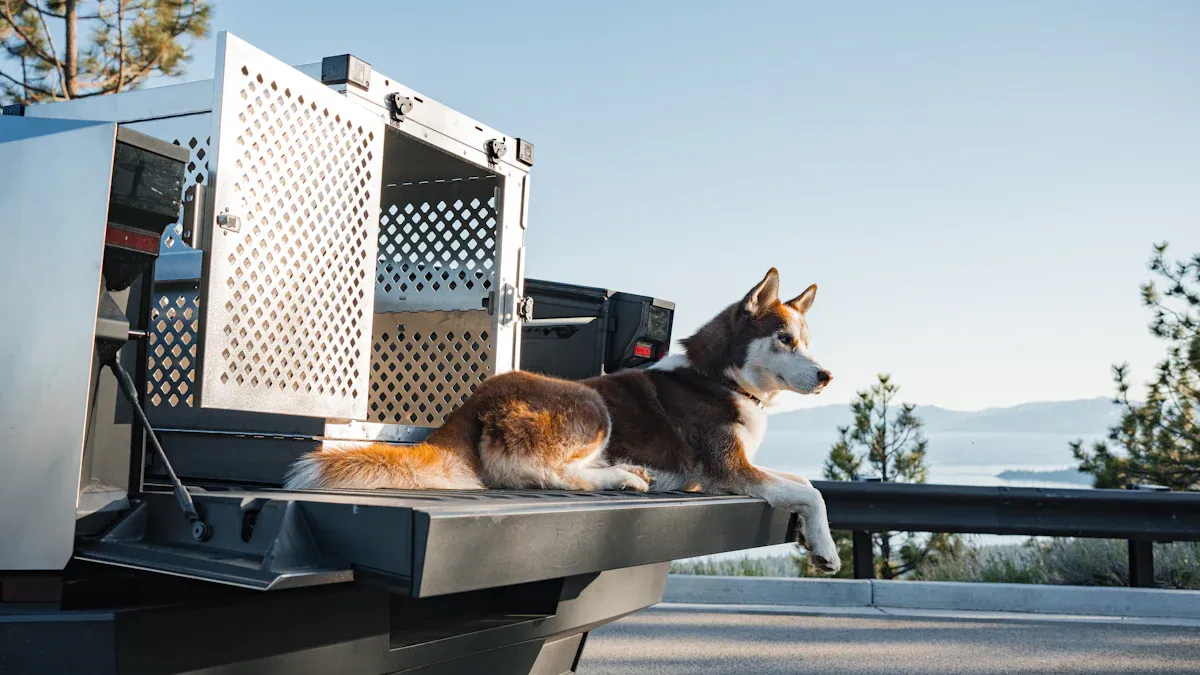
Choosing the right dog bed for your car means thinking about how each style handles tipping, sliding, and comfort. You want a bed that stays put, supports your dog, and fits your car’s space. Let us look at three common styles and how they help prevent problems on the road.
Back Seat Beds with Bolsters
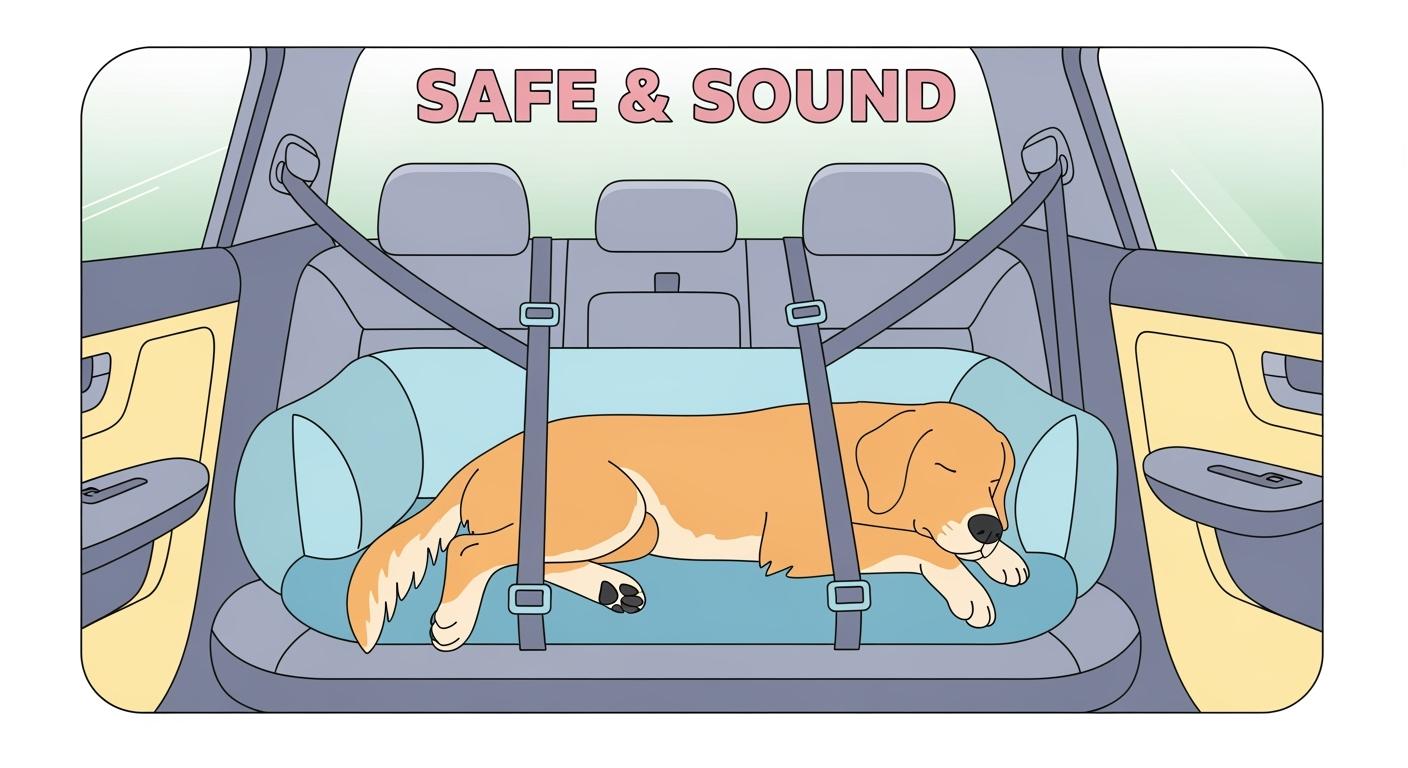
Back seat beds with bolsters give your dog a cozy spot to lean against. The raised sides help keep your dog centered and can reduce rolling during turns. Many of these beds use a non slip bottom to grip the seat. Some also have anchor straps for extra hold. You should check that the bolsters are not too tall, as this can make it hard for your dog to get in or out. These beds work well for dogs that like to curl up or need a sense of security.
Cargo Beds with Non Slip Base
Cargo beds often have a wide, flat base and a non slip bottom. This design spreads your dog’s weight and helps the bed stay in place, even on rough roads. A stiffer base can prevent the bed from sagging into gaps or tipping forward. You should measure your cargo area and leave a little clearance on each side. Dogs that like to stretch out or need more space often prefer this style. The non slip bottom is key for keeping the bed steady during sharp turns or quick stops.
Seat Extender Plus Bed Approach
A seat extender fills the gap between the front and back seats, creating a larger, level surface. When you add a bed with a non slip bottom on top, you give your dog more room and reduce the risk of tipping. This setup works best for large dogs or those that shift positions often. You should always install and anchor the extender and bed, then do a short test ride. Re-check movement to make sure the bed does not slide more than about 2 in (5 cm).
Here is a quick comparison to help you decide:
Option | Pros | Cons | Best For |
|---|---|---|---|
Back Seat Bed with Bolsters | Cozy, secure, fits most seats | May limit space, tall sides | Dogs that curl up, small to medium dogs |
Cargo Bed with Non Slip Base | Wide, stable, easy to clean | Needs flat cargo area | Large dogs, dogs that sprawl |
Seat Extender Plus Bed | Expands space, reduces tipping risk | Needs extra install step | Large breeds, restless travelers |
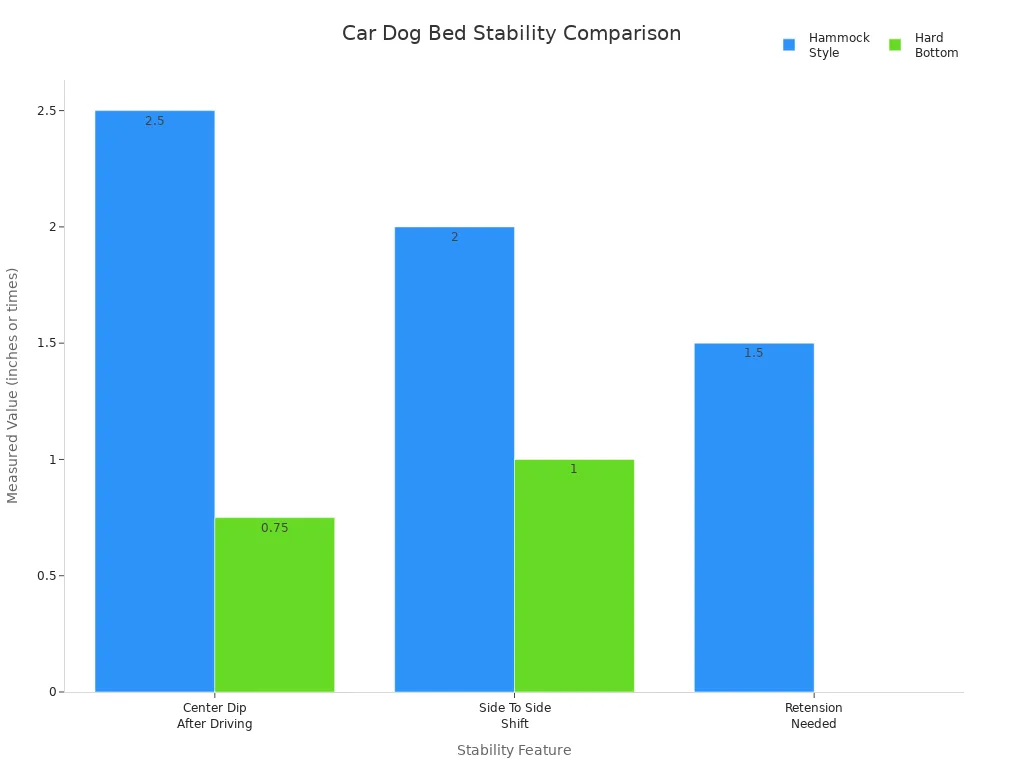
You can see how stability changes by style in the chart below. Hard bottom beds shift less and need less retension than hammock styles. Dogs settle faster on a steady surface.
Step 4: Install and anchor your chosen bed, then take a short test ride. Check if the bed moves more than 2 in (5 cm). Adjust as needed for a safer, more stable ride.
Key Features for Orthopedic Dog Bed and Stability
Non Slip Backing and Anchors
You want your orthopedic dog bed to stay in place during every ride. Non slip backing and anchors help prevent slipping and shifting. These features are important for dogs with joint issues. A stable bed means your dog does not need to adjust their position often. This helps your dog relax and feel secure. When a bed moves, your dog can become anxious or uncomfortable. You can reduce stress by choosing a bed with both non slip backing and anchor points.
Non slip backing grips the seat or cargo floor.
Anchors attach the bed to the seat or cargo hooks.
Both features work together to keep the bed steady.
Base Stiffness and Edge Support
A stiff base gives your orthopedic dog bed the support it needs. This type of base spreads your dog’s weight evenly. You avoid sagging and edge collapse, which is important for large or senior dogs. A stable surface lets your dog relax and keeps their posture neutral. Many people look for soft beds, but you should focus on stability and pressure distribution. A hard-bottom structure helps your dog settle without tipping or sliding.
Bolster Height and Comfort
Bolsters add comfort and help your dog feel secure. The right height supports your dog’s head and body. If the bolsters are too tall, your dog may have trouble getting in or out. If they are too low, your dog may not feel supported. You should check that the bolster height matches your dog’s size and how they like to rest. Proper bolsters can also help prevent rolling during turns.
Tip: Always check the fit and stability of your orthopedic dog bed after the first few rides.
Parameter and Value Table
Parameter | Target Range or Option | Why it Matters |
|---|---|---|
Dog length method | Nose to base of tail, lying naturally | Bed length starts here |
Length buffer, cushion | 8-12 in (20-30 cm) | Room to stretch |
Length buffer, bolstered | 5-8 in (13-20 cm) | Room without excessive sliding |
Side clearance | 1-2 in (2.5-5 cm) | Prevents buckling and shifting |
Shift threshold | About 2 in (5 cm) during test | Flags install or size mismatch |
Seat width | Measure usable width | Prevents cramped fit and edge hang |
Seat depth | Measure usable depth | Prevents tipping at the front edge |
Footwell gap | Measure seat edge to floor drop | Prevents forward collapse risk |
Cargo footprint | Measure flat floor area | Prevents unstable placement |
Anti slip setup | Non slip backing plus anchors | Reduces sliding |
Base style cue | Stiffer base for edge stability | Helps reduce tipping |
Common Cause Table
Common Cause | What It Leads To | What To Do Next |
|---|---|---|
Bed too small | Cramped posture, restlessness | Size up, add buffer |
No non slip or anchors | Bed slides, dog feels anxious | Add non slip mat, use anchors |
Soft or sagging base | Tipping, edge collapse | Choose stiffer base |
Bolsters too tall or low | Entry trouble, poor support | Match bolster height to dog size |
You can use these tables to check your orthopedic dog bed before every trip. This helps you keep your dog safe and comfortable.
Practical Sizing Guide for Real Car Rides
Large Dog vs Upright Sitter
You need to match the bed style to your dog’s habits. Large dogs often sprawl out, so you should pick a bed that gives them enough room to stretch. Upright sitters prefer a firmer, smaller space where they can brace themselves. Always measure your dog’s length and width in their favorite position. Add the right buffer for comfort. If your dog has joint pain, look for orthopedic support. For dogs with allergies, choose hypoallergenic materials.
Watch how your dog sleeps in the car.
Choose a bed that matches their posture.
Make sure the bed fits the seat or cargo area with 1-2 in (2.5-5 cm) clearance.
Dogs That Shift During Travel
Some dogs move around a lot during rides. You want to reduce slipping and sudden bracing. Pick a bed with a steady, flat base and non slip backing. Place your dog in the back seat for a stable zone. Use anchors to keep the bed in place. If your dog has arthritis, a stable surface helps them feel secure. Keep a consistent routine to help your dog relax.
Scenario: The bed slides and tips toward the footwell during braking. You can fix this by measuring the footwell gap, choosing a bed with a wide, stiff base, and using anchors to secure it.
Multi Dog and Shared Space
If you travel with more than one dog, you need a larger bed or two beds. Each dog should have enough space to lie down without crowding. Add extra width for shared beds. Observe your dogs’ habits to pick the best style. Avoid beds that force dogs to pile up or hang off the edge.
Decision Table: Dog and Vehicle Context
Dog and Vehicle Context | Best Bed Sizing Choices | What to Avoid |
|---|---|---|
Large dog, likes to sprawl | Wide, flat bed with stiff base | Narrow or soft beds |
Upright sitter, small breed | Compact, firm bed with low bolsters | Oversized, floppy beds |
Dogs that shift or brace | Non slip base, anchors, flat foundation | Beds without grip or anchors |
Multi dog, shared space | Extra wide bed or two beds, firm support | Single small bed |
Step 5: Maintenance and Safety
Check covers, seams, and anti slip backing before each trip. Wash covers as needed. Inspect anchors and base for wear. A dog bed improves comfort but does not replace a restraint. Stop use if your dog shows distress. Consult your vet or trainer for specific concerns.
You can prevent tipping, slipping, and cramped posture by measuring both your dog and your car before you buy a dog bed for car. Correct sizing helps your dog ride safely and comfortably. Use the tables and checklists in this guide to match your measurements.
Remember to re-check the fit if your dog grows or you switch vehicles. A well-fitted bed makes every trip better for you and your dog.
Measure your dog and car space
Choose the right bed size and features
Test and adjust as needed
FAQ
How do I know if the dog bed fits my car seat?
You should measure the usable width and depth of your car seat. Compare these numbers to the bed’s footprint. Leave 1-2 in (2.5-5 cm) of clearance on each side. This helps prevent shifting and buckling.
What if my dog grows or I change vehicles?
You should re-measure your dog and your car space. Check the fit of the bed again. Adjust the size if your dog gets bigger or you switch cars. This keeps your dog comfortable and safe.
Why does my dog bed slide during car rides?
A bed may slide if it lacks non slip backing or anchors. You should look for beds with both features. Test the bed after installation. If it moves more than 2 in (5 cm), adjust or try a different style.
Can I use my home dog bed in the car?
Home beds often lack stability features. Car beds have non slip bases and anchors. You should use a bed designed for travel. This helps prevent tipping and keeps your dog secure during rides.
How do I clean and maintain a car dog bed?
Remove the cover and wash it as needed. Check seams, anchors, and the base for wear. Inspect the non slip backing before each trip. Regular cleaning helps keep the bed safe and comfortable for your dog.