Collars for Little Dogs Three Steps to Explain Width and Weight Options

Collars for Little Dogs Three Steps to Explain Width and Weight Options

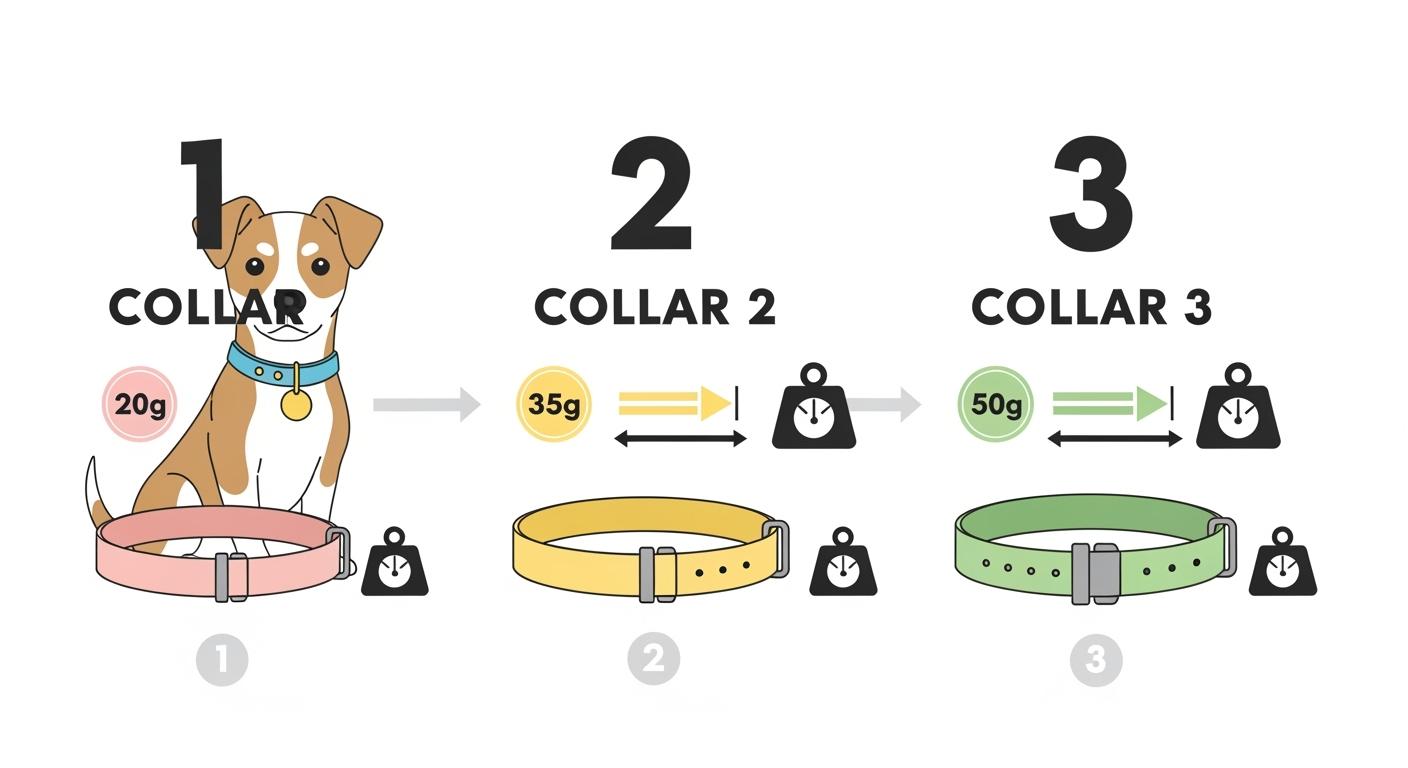
Many people get confused when picking collars for little dogs. The width and weight labels do not always make sense. You can stop returns and questions by using three easy steps. First, measure your dog’s neck in inches or centimeters. Next, look at the collar’s width and weight. Last, pick the right collar size so your dog feels good. This guide has simple tables and scripts. It keeps things easy and does not use hard words.

Key Takeaways

  • Always measure your dog’s neck before buying a collar. Use both inches and centimeters for accuracy.

  • Check the collar’s width and weight. Choose a width that matches your dog’s neck size for comfort.

  • Use the two-finger fit check to ensure the collar is snug but not tight. This helps keep your dog safe and comfortable.

  • If your dog’s neck measurement falls between sizes, select the larger collar and adjust for a secure fit.

  • Watch how your dog reacts to the collar. If it feels heavy or bulky, consider a lighter or narrower option.

Why collars for little dogs cause sizing confusion

Common mistakes when choosing a collar

You may feel lost when picking a dog collar for small breeds. Many shoppers guess the right size by looking at the dog’s breed or age. This often leads to mistakes. A puppy may grow quickly, so a collar that fits today might be too tight next month. Some people choose a collar based only on weight, but two dogs with the same weight can have very different neck sizes. If you skip measuring your dog’s neck in inches or centimeters, you risk buying a collar that is either too loose or too tight.

Here are some common mistakes you might see:

  • Guessing collar size by breed or age

  • Using weight as the only guide

  • Ignoring neck measurement

  • Picking a collar just because it looks cute

  • Forgetting to check the width and hardware

These mistakes can make your dog uncomfortable. You may need to return the collar and try again.

How unclear labels lead to returns

Unclear labels on collars for little dogs can confuse you. Some packages show only a weight range, like 5 to 10 pounds, but do not list neck size in inches or centimeters. Others use terms like “toy” or “mini,” which mean different things for different brands. If you see a collar labeled for small breeds, you might think it will fit any small dog, but that is not always true.

A confusing label can cause you to buy the wrong dog collar. You may get home and find the collar is too wide, too heavy, or does not fit your dog’s neck. This leads to returns and exchanges. Retailers see many returns because shoppers did not measure first or could not understand the label. You can avoid this by always checking the neck size and using the two-finger fit check. Clear tables and simple scripts help you pick the right collar the first time.

Label Type

What It Means

Why It Causes Confusion

Weight Range

Approximate fit

Neck size may not match

Breed Name

General suggestion

Dogs vary within breeds

Age Group

Puppy or adult

Growth rates differ

Width Only

Strap thickness

Comfort depends on neck size

Tip: Always measure your dog’s neck in inches or centimeters before buying a collar. Use weight as a quick double-check, not the main guide.

Measure your dog’s neck size first

How to measure for the correct collar size

You need to measure your dog’s neck size before you choose a dog collar. This step helps you avoid returns and keeps your dog comfortable. Use a soft tape measure. Wrap it around the middle of your dog’s neck, where the collar will sit. Write down the measurement in both inches and centimeters. If you do not have a tape measure, use a piece of string and then measure the string with a ruler.

After you get the neck measurement, use the two-finger fit check. Place the collar around your dog’s neck. Slide two fingers between the collar and the neck. The collar should feel snug but not tight. Your fingers should fit easily, but the collar should not be loose enough to slip over your dog’s head. This check helps prevent accidents and keeps the collar secure.

Tip: Always measure first. Do not guess by breed or age. The two-finger fit check gives you a safe and comfortable fit.

Using weight as a secondary check

Weight helps you double-check your collar choice, but it should not be your main guide. Two dogs with the same weight can have different neck sizes. Use weight only after you measure your dog’s neck size. Look at the collar’s label for the weight range. Find the size where your dog’s neck measurement sits in the middle of the range. If your dog is between sizes, choose the larger size and adjust for a secure fit.

Here is a table showing common collar sizes and their recommended weight ranges:

Collar Size

Weight Range (kg)

30

1.5 – 3.5

35 S

3.6 – 3.9

35 M

4.0 – 5.5

38 S

4.5 – 5.4

38 M

5.6 – 7

38 L

7.1 – 9.5

40 S

7.5 – 8.5

40 M

8.5 – 10

40 L

10 – 12

48 XL

12 and more

Bar chart showing recommended dog collar sizes by weight range

Note: Always use the neck measurement as your main selector. Weight is only a quick double-check.

If you follow these steps, you will pick the right dog collar for your little dog. You will reduce returns and keep your dog safe and happy.

Collar width explained for little dogs

Collar width explained for little dogs

Narrow vs wide collar comfort

You want your little dog to feel comfortable every time you use a dog collar. Collar width plays a big role in how the collar feels on your dog’s neck. A narrow collar width, such as 3/8 inch (10 mm) or 1/2 inch (13 mm), works well for very small dogs with thin necks. These collars feel light and do not add bulk. You should check that the hardware, like buckles and rings, does not feel heavy or stiff. If the collar feels bulky, your dog may not want to wear it.

A wider collar width, such as 5/8 inch (16 mm), 3/4 inch (19 mm), or 1 inch (25 mm), spreads pressure over a larger area. This can make the collar feel more stable and comfortable for some dogs. Wider collars do not guarantee safety, but they can help prevent the collar from digging into the neck. You should always use the two-finger fit check to make sure the collar is snug but not tight.

Tip: Choose a collar width that matches your dog’s neck size and comfort. If your dog seems bothered by the collar, try a different width or lighter hardware.

Choosing the right width for your dog

You can use the width ladder to compare collar width options for collars for little dogs. The width ladder shows the most common sizes you will see in stores and online. You should use your dog’s neck measurement and comfort as your main guide.

Collar Width

Inches

Centimeters

Best For

Narrow

3/8

10

Toy breeds, puppies

Medium

1/2

13

Small adult dogs

Standard

5/8

16

Wider necks, stability

Wide

3/4

19

Extra comfort

Extra Wide

1

25

Broad necks, style

You should start with a narrow collar width if your dog has a thin neck or dislikes heavy collars. If your dog has a broader neck or needs more stability, you can try a medium or wide collar width. You do not need to pick the widest collar just because it looks sturdy. The best collar width is the one that feels comfortable and does not bother your dog.

  • Measure your dog’s neck in inches and centimeters.

  • Try the collar on and use the two-finger fit check.

  • Watch how your dog reacts to the collar width.

  • If the collar feels heavy or stiff, choose a lighter or narrower option.

Note: Collar width changes how the collar feels, not just how it looks. You should focus on comfort and stability, not safety promises.

You can help your customers or team members by showing the width ladder and explaining how collar width affects comfort. This makes it easier to find the right dog collar for every little dog.

Understanding collar weight and fit

What weight range labels mean

When you look at a dog collar package, you often see a weight range. These numbers are only a guide. Weight labels help you compare options, but they do not guarantee a perfect fit. Two dogs with the same weight can have different neck sizes. Always measure your dog’s neck in inches or centimeters first. Use the weight range as a quick check, not your main decision point.

A collar should fit snugly but not tightly. You should always use the two-finger fit check. Slide two fingers between the collar and your dog’s neck. If your fingers fit easily, the collar is not too tight. If the collar slips over the head, it is too loose. This simple check helps you avoid returns and keeps your dog comfortable.

Note: Weight labels are only approximations. Neck measurement is the most important step.

Handling in-between sizes and heavy collars

Sometimes your dog’s neck measurement falls between two collar sizes. In this case, choose the larger size. This prevents the collar from feeling too tight or restricting movement. Adjust the collar for a secure fit using the two-finger check.

If the collar feels bulky or heavy, look for lighter hardware. Small dogs often prefer collars with simple buckles and less metal. Watch your dog after you put on the collar. Make sure your dog moves and acts normally. If your dog scratches, shakes, or seems uncomfortable, try a lighter or narrower collar.

Here is a quick checklist for handling in-between sizes and bulky collars:

  • Measure your dog’s neck in inches and centimeters.

  • If between sizes, pick the larger collar and adjust for comfort.

  • Choose lighter hardware for small dogs.

  • Observe your dog for signs of discomfort.

  • Switch to a lighter or narrower collar if needed.

Situation

What To Do

Between two sizes

Choose the larger collar

Collar feels bulky

Try lighter hardware or buckle

Dog acts uncomfortable

Switch to a lighter or narrower collar

Tip: Always check fit and comfort after you put on a new dog collar. A good fit keeps your dog happy and reduces returns.

Retail copy and scripts for correct collar size

Size selection paragraph and bullets

You want to help shoppers find the correct collar size for every little dog. Use this retail-ready paragraph and bullet list for ecommerce listings or product packaging. This copy guides buyers through the process and reduces returns.

Choose the correct collar size by measuring your dog’s neck in inches or centimeters. Use weight as a quick double-check. Always use the two-finger fit check for comfort and security. If your measurement falls between sizes, select the larger collar and adjust for a snug fit.

  • Measure your dog’s neck where the collar will sit (inches/cm).

  • Check the collar width for comfort and stability.

  • Use weight range as a secondary guide.

  • Try the two-finger fit check: snug but not tight, not loose enough to slip over the head.

  • If between sizes, size up and adjust down for a secure fit.

  • If the collar feels heavy or bulky, choose lighter hardware.

Shelf tag and staff script examples

You can use these shelf tag lines and staff scripts in stores to help shoppers make quick, confident choices. These examples focus on safety and clarity.

Shelf Tag Copy Table

Shelf Tag Line

Purpose

Measure neck first (inches/cm), then check weight

Reduces returns

Two-finger fit: snug, not tight

Safety-first advice

Width changes comfort, not just style

Sets expectations

If unsure, size up and adjust for fit

Helps with in-between sizes

Staff Script Examples

  • “Please measure your dog’s neck in inches or centimeters before choosing a collar. Use weight as a quick double-check.”

  • “If your dog is between sizes, pick the larger collar and adjust for a secure fit. Try the two-finger fit check for comfort.”

  • “If the collar feels heavy or your dog seems uncomfortable, ask for a lighter option with simpler hardware.”

  • “Width affects how the collar feels on your dog’s neck. Choose what looks comfortable for your pet.”

Tip: Never promise escape-proof or guaranteed fit. If a shopper reports coughing or irritation, advise stopping use and consulting a veterinarian.

Stocking and quality checks for collars

Width ladder and size coverage

You want to stock collars that fit the widest range of little dogs. Start with the most popular widths and sizes. The width ladder helps you cover the main comfort needs. Begin with these common widths:

Width (inches)

Width (cm)

Best For

3/8

1.0

Toy breeds, puppies

1/2

1.3

Small adult dogs

5/8

1.6

Wider necks, stability

Stock more of the narrow and medium widths first. These sizes fit most little dogs and puppies. Watch your sales and returns. If you see many returns for collars that feel bulky, increase your stock of lighter and narrower options. If customers ask for more stability, add a few wider collars like 3/4 inch (1.9 cm) or 1 inch (2.5 cm).

Tip: Use your return data to adjust your stock. If you see frequent exchanges for comfort, review your width ladder and size coverage.

Receiving and labeling checks

When you receive new collars, check each item before you add it to your shelves or online listings. You want to prevent mix-ups and mislabeled products. Follow this checklist:

  • Match the collar width to the label. Measure the strap with a ruler in inches and centimeters.

  • Check the neck size range on the label. Make sure it matches the actual collar length.

  • Confirm the weight range is listed as a guide, not the main selector.

  • Inspect the hardware. Make sure buckles and rings feel light and smooth for little dogs.

  • Look for clear, easy-to-read labels. Avoid confusing terms like “mini” or “toy” without measurements.

  • Test the adjustment holes. Make sure you can fit two fingers between the collar and a sample neck form.

Quality Check

What to Verify

Width measurement

Strap matches label (in/cm)

Neck size labeling

Range matches actual collar length

Hardware weight

Light, smooth, not bulky

Label clarity

Easy to read, shows measurements

Adjustment holes

Allows two-finger fit check

Note: Always check collars before listing or stocking. Clear labeling and correct sizing help you reduce returns and keep customers happy.

RFQ template for little dog collars

Size, width, and weight label fields

When you make a Request for Quotation (RFQ) for little dog collars, you should include clear fields. These fields help suppliers send the right products. Each collar needs correct sizing, width, and weight labels. This makes your catalog simple to use. It also helps shoppers find the best fit for their pets.

  • Product scope: Say if you want collars, harnesses, or sets. List who will use them, like toy breeds or puppies.

  • Size run: Give neck size ranges in inches and centimeters. Make sure your SKU list has all popular sizes.

  • Materials: Write down the webbing width, padding thickness, and outer fabric type.

  • Labeling: Ask for clear neck size, width, and weight range labels. Request easy-to-read packaging and inserts.

  • Testing and inspection: Explain what tests you want, how they are done, and what records you need. Include your defect-check rules and sampling plan.

  • Traceability: Ask for lot marking and defect tracking fields.

  • Commercial terms: List your minimum order quantity (MOQ), lead time, and sample cycle.

  • Warranty and returns: Set rules for evidence, replacement parts, and what to do if there is a problem.

Tip: Always ask for neck size in both inches and centimeters. This helps you serve customers in the US and EU.

Hardware and stitching requests

You want every collar to last and feel safe for little dogs. Hardware and stitching are important for comfort and strength. Use this table to help with your RFQ requests:

Specification Type

Recommended Features

Bead Quality

Hand-stitched beads, never glued

Stitching Quality

Tight, even stitching, no sharp edges

Hardware Quality

Solid metal buckles, welded D-rings, rust-resistant finish

Durability Tip

If hardware feels light, it may not last

Tell your supplier to use solid metal buckles and welded D-rings. Ask for tight, even stitching with no sharp edges. Hand-stitched beads make the collar stronger and stop breakage. Always check that hardware feels strong and smooth.

Note: You should never say escape-proof or guaranteed fit. If a collar causes discomfort, tell people to stop using it and see a veterinarian.

OEM means you buy products made to your design and brand. ODM means you pick from a supplier’s designs and add your label. Private label collars need the same sizing labels, width callouts, packaging, and listing copy. This keeps your catalog clear and helps shoppers pick the right collar every time.

Decision and clarity tables for collars

Choosing the right collar for little dogs can feel tricky. You want to make quick, smart decisions. These tables help you compare collar width, weight, label clarity, and common reasons for exchanges. Use them in your store or catalog to guide shoppers and staff.

Width vs weight decision table

You can use this table to match collar width and weight range to your dog’s neck size and comfort. Always measure the neck first in inches and centimeters. Use weight as a secondary check.

Neck Size (in/cm)

Collar Width (in/cm)

Weight Range (lbs/kg)

Comfort Tip

7-9 / 18-23

3/8 / 1.0

2-5 / 1-2.5

Light, best for toy breeds

9-11 / 23-28

1/2 / 1.3

5-8 / 2.5-3.5

Good for small adults

11-13 / 28-33

5/8 / 1.6

8-12 / 3.5-5.5

Stable, spreads pressure

13-15 / 33-38

3/4 / 1.9

12-16 / 5.5-7

Extra comfort, broad necks

Tip: Start with neck measurement. If your dog is between sizes, size up and adjust for a secure fit.

Label clarity table

Clear labels help you and your customers pick the right collar faster. Use this table to check if a collar label gives enough information.

Label Feature

Clear Example

Unclear Example

Why It Matters

Neck Size

9-11 in / 23-28 cm

“Small”

Exact fit, less guessing

Width

1/2 in / 1.3 cm

“Thin”

Comfort, easy compare

Weight Range

5-8 lbs / 2.5-3.5 kg

“Toy breeds”

Quick double-check

Fit Instructions

Two-finger fit check

None

Safety, reduces returns

Note: Always look for neck size and width in both inches and centimeters.

Exchange driver table

Returns and exchanges often happen for the same reasons. You can use this table to spot common issues and prevent them.

Exchange Reason

Prevention Tip

Collar too tight

Measure neck, use two-finger check

Collar too loose

Adjust fit, check neck size range

Collar feels bulky

Choose lighter hardware, narrower width

Label unclear

Use clear measurements on packaging

Dog uncomfortable

Switch to softer or lighter collar

Safety-first: If a dog shows discomfort, advise stopping use and consulting a veterinarian.

You can use these tables in your store, catalog, or training materials. They help you make quick, informed choices and keep little dogs comfortable.

Retail macro pack for collars for little dogs

Sizing paragraph and bullets

You can help your customers choose the right collar for their small pets by following a few simple steps. Always measure the dog’s neck where the collar will sit. Use both inches and centimeters for accuracy. Check the collar width for comfort. Use the weight range as a quick double-check. Try the two-finger fit check to make sure the collar is snug but not tight. If your measurement falls between sizes, pick the larger collar and adjust for a secure fit.

  • Measure your dog’s neck at the spot where the collar will rest (inches/cm).

  • Compare the neck size to the collar’s size range.

  • Check the collar width for comfort and stability.

  • Use the weight range as a secondary check.

  • Try the two-finger fit check: snug but not tight, not loose enough to slip over the head.

  • If between sizes, size up and adjust for a secure fit.

  • If the collar feels heavy or bulky, choose a lighter option.

Shelf tag copy

Shelf Tag Line

Purpose

Measure neck first (inches/cm), then check weight

Helps reduce returns

Two-finger fit: snug, not tight

Promotes safety and comfort

Width changes comfort, not just style

Sets clear expectations

If unsure, size up and adjust for fit

Supports in-between sizes

Staff script

“Please measure your dog’s neck in inches or centimeters before choosing a collar. Use the weight range as a quick double-check. If your dog is between sizes, pick the larger collar and adjust for a snug fit. Try the two-finger fit check for comfort. If the collar feels heavy or your dog seems uncomfortable, ask for a lighter option.”

Safety disclaimer

Safety first: Always check the fit of the collar before each use. Never leave a dog unattended while wearing a collar. If you notice coughing, irritation, or discomfort, stop using the collar and consult a veterinarian. No collar is escape-proof or guarantees a perfect fit.

You can find the right dog collar for little dogs by following three steps. Measure your dog’s neck in inches and centimeters. Check the collar width and weight. Use the two-finger fit check for comfort. Use the tables and scripts in this guide to help you choose a safe, comfortable collar. Retailers can use these tips and ready-made scripts to help customers feel confident. Remember to supervise your dog while wearing a collar. If you see irritation or discomfort, stop using it and consult a veterinarian.

FAQ

How do you measure a little dog’s neck for a collar?

Use a soft tape measure. Wrap it around the middle of your dog’s neck where the collar will sit. Record the measurement in both inches and centimeters. Always use the two-finger fit check to confirm comfort.

What collar width works best for toy breeds?

Start with a narrow collar, such as 3/8 inch (10 mm) or 1/2 inch (13 mm). These sizes feel light and comfortable for small necks. If your dog dislikes bulk, choose lighter hardware.

Should you use weight or neck size to pick a collar?

Neck size is the main selector. Measure your dog’s neck in inches and centimeters. Use weight only as a quick double-check. If your dog is between sizes, size up and adjust for a secure fit.

What if the collar feels heavy or bulky?

Switch to a collar with lighter hardware or a narrower strap. Watch your dog for signs of discomfort. If your dog scratches or shakes, try a different collar width or style.

How do you reduce returns and exchanges for collars?

Always measure the dog’s neck first. Use clear labels with neck size in inches and centimeters. Train staff to recommend the two-finger fit check. Stock popular widths and adjust inventory based on customer feedback.

Get A Free Quote Now !

Table of Contents

Blog

Canine Pulling Harness How to Spot Wear Before a Hard Pull Turns Risky

Spot wear on your canine pulling harness by checking stitching and hardware before each hard pull to ensure durability and keep your dog safe.

Puppy Collars Custom: How to Check Tightness and Prevent Slipping Safely

Puppy collars custom should fit snugly with two fingers under the collar. Use the slip test to prevent loss and keep your puppy safe and comfortable.

Dog Running Leash: How to Select Hands-free or Standard Based on Real Pulling Patterns

Choose the right dog running leash by matching hands-free or standard setups to your dog's pulling and walking style for safety and control.

Dog Carry Bike Risk Checklist: Body Language Warnings and When to Stop Immediately

Spot stress or danger in your dog during dog carry bike rides. Learn body language warnings and when to stop for your dog's safety on hikes or rainy walks.

Which Waterproof Dog Bed Stays Dry on Wet Ground?

A waterproof dog bed with sealed seams, strong base, and high hydrostatic head value keeps your dog dry on wet ground during outdoor use.

Dog Leashes: How to Spot Wear Before a Leash Fails on a Walk

Check dog leashes for fraying, weak stitching, and hardware issues before walks. Spot stress points early to prevent leash failure and keep your dog safe.
Scroll to Top

If You Have Any Questions, Please Do Not Hesitate To Contatct With Us.

Get A Free Quote Now !

Welsh corgi wearing a dog harness on a walk outdoors