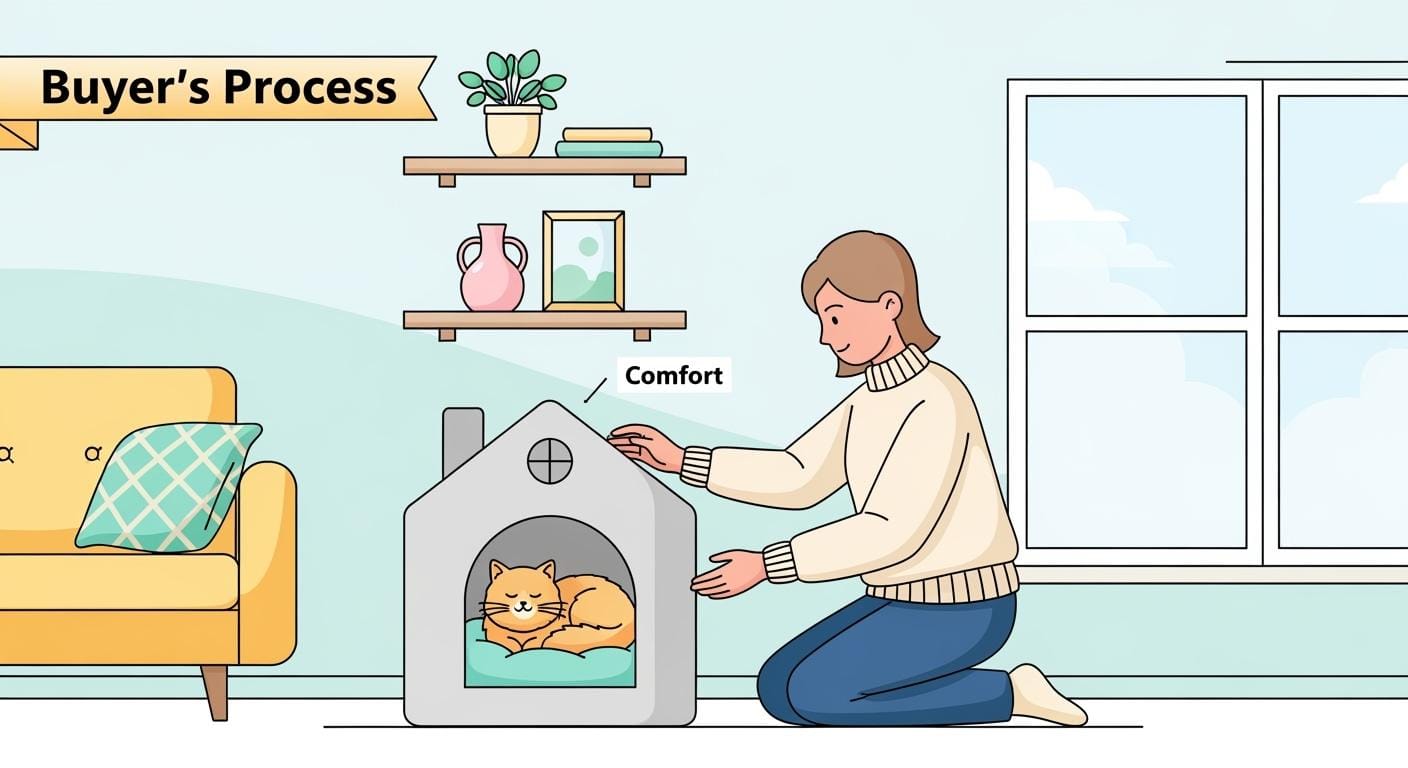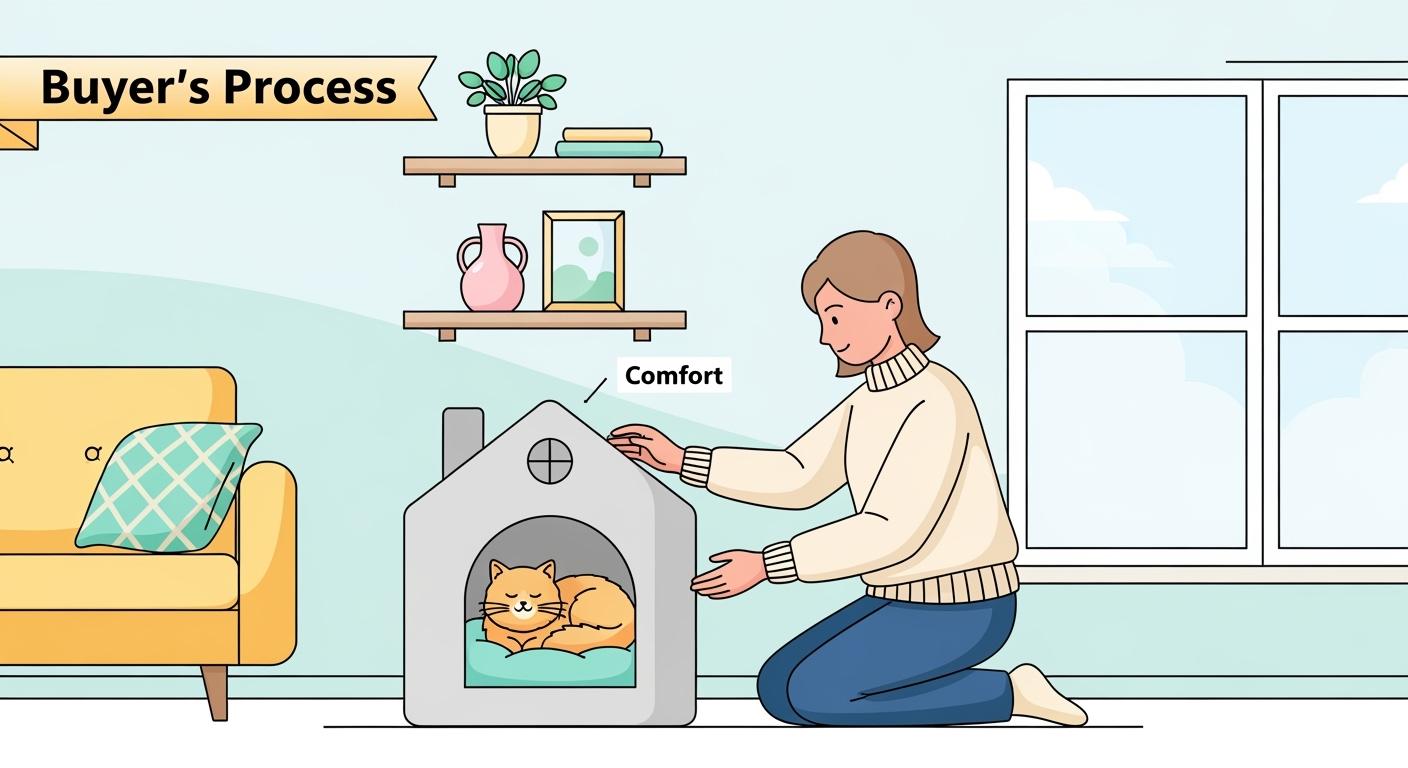
Some cats ignore a new cat bed house even when it looks cozy on the page. Daily comfort depends on how your cat already rests—hidden, open, curled up, stretched out, low to the floor, or up high. Easy entry, a padded dry base, and breathable walls matter more than appearance. Placement matters too, because even a comfortable bed may be ignored if it sits in a noisy or exposed spot.
Key Takeaways
- Watch how your cat sleeps to pick the best bed. Cats like different places to rest because of their personality.
- Make sure the bed is in a calm and safe spot. Cats feel better in private spaces away from loud sounds and busy areas.
- Look for comfort features like a soft base and airy materials. These things help your cat feel warm and safe.
Matching Cat Bed House to Your Cat’s Resting Style
Open vs. enclosed cat bed house
Cats show clear preferences when it comes to where they sleep. Some cats love the security of an enclosed cat bed house, while others stretch out on open beds or perch up high. You might notice your cat hiding in a box, sprawling on the couch, or climbing to a shelf. These behaviors help you choose the right types of cat beds for your home.
Here is a quick guide to common cat resting styles:
| Cat Type | Preference Description |
|---|---|
| Cave Dweller | Prefers enclosed, cozy spaces for privacy and warmth. |
| Sprawler | Likes to stretch out fully on flat, open surfaces. |
| Percher | Enjoys elevated spots to observe surroundings. |
| Cuddler | Seeks warmth and closeness, often snuggling with others. |
If your cat likes to burrow or hide, an enclosed cat bed house or a self-warming cat bed with high sides may work best. If your cat sprawls out, look for open beds with plenty of space. Perchers enjoy beds on shelves or window ledges. Cuddlers may share beds with other pets or people, so a larger, soft bed can help.
Signs your cat ignores or dislikes the bed
You want your cat to feel safe and cozy in their bed. Sometimes, cats ignore a new bed or avoid it altogether. Watch for these signs:
- Your cat sniffs the bed but walks away.
- Your cat chooses other spots, like laundry baskets or under furniture.
- Your cat only uses the bed when you are not around.
Common reasons cats ignore or dislike a new cat bed house include:
- Cats are territorial and rely on scent to feel safe in their environment. A new bed may feel foreign if it lacks familiar scents.
- The location of the bed is crucial; cats prefer quiet, elevated spots for safety and comfort.
- Individual preferences in texture and material can influence a cat’s willingness to use a bed.
Try placing a familiar blanket or item in the bed. Move the bed to a quieter spot. If your cat still avoids it, try a different style or material.
Height, hiding, and comfort preferences
Cats have unique personalities. Some want to feel hidden but not trapped. Others want to see the room from above. In practice, resting preference often depends more on individual temperament and routine than on breed labels alone. Some cats sleep close to their people, while others prefer more distance and privacy. Your cat’s comfort usually comes from feeling safe in the space, not just from the bed’s shape.
When you choose a cat bed house, think about these comfort checks:
- Does your cat like to hide but still peek out? Look for beds with a wide opening.
- Does your cat have trouble jumping or climbing? Pick a low-entry bed with a padded base.
- Does your cat overheat or get cold easily? A self-warming cat bed can help, but make sure the interior stays breathable.
You may need more than one bed. Many homes work best with at least one open and one enclosed option. This gives your cat choices for different moods.
Pass/fail comfort checklist table
Use this quick checklist to see if your cat bed house meets your cat’s needs:
| Check Item | Pass Signal | Fail Signal | Solution |
|---|---|---|---|
| Cat uses bed willingly | Cat sleeps or rests in bed daily | Cat ignores or avoids bed | Try new location or add familiar scent |
| Hidden-but-not-trapped feel | Cat enters and exits bed easily | Cat seems hesitant or gets stuck | Choose wider opening or lower sides |
| Padded, dry base | Cat settles and kneads bedding | Cat stands or leaves quickly | Add or replace cushion, check for dampness |
| Breathable interior | Cat stays in bed for long periods | Cat pants or leaves after short time | Move bed to cooler spot, check fabric |
| Easy entry | Cat steps in without effort | Cat struggles to enter | Use low-sided or ramped bed |
| Stable placement | Bed stays in place when cat enters | Bed slides or tips | Place on non-slip mat or move to stable area |
Tip: Always observe your cat’s behavior. If your cat avoids the bed, adjust the setup or try a different style.
Here is a comparison table to help you evaluate different types of cat beds:
| Feature | Open Bed | Enclosed Bed House | Soft Structure | Hard Structure | High-Sided Bed | Low-Entry Bed | Removable Pad | Fixed Pad |
|---|---|---|---|---|---|---|---|---|
| Privacy | Low | High | Medium | High | High | Low | Yes | No |
| Airflow | High | Medium | High | Medium | Medium | High | Yes | No |
| Ease of Cleaning | High | Medium | Medium | High | Medium | High | Yes | No |
| Best for Older Cats | Yes | Sometimes | Yes | Sometimes | Sometimes | Yes | Yes | No |
| Best for Shy Cats | Sometimes | Yes | Yes | Yes | Yes | Sometimes | Yes | No |
Choosing the right cat bed house means matching your cat’s habits, comfort needs, and personality. Always check if your cat uses the bed and feels safe. If not, try a different type or move the bed to a better spot. Your cat’s comfort comes first.
Materials and Build: What Makes the Best Cat Beds
Breathable vs. heat-trapping fabrics
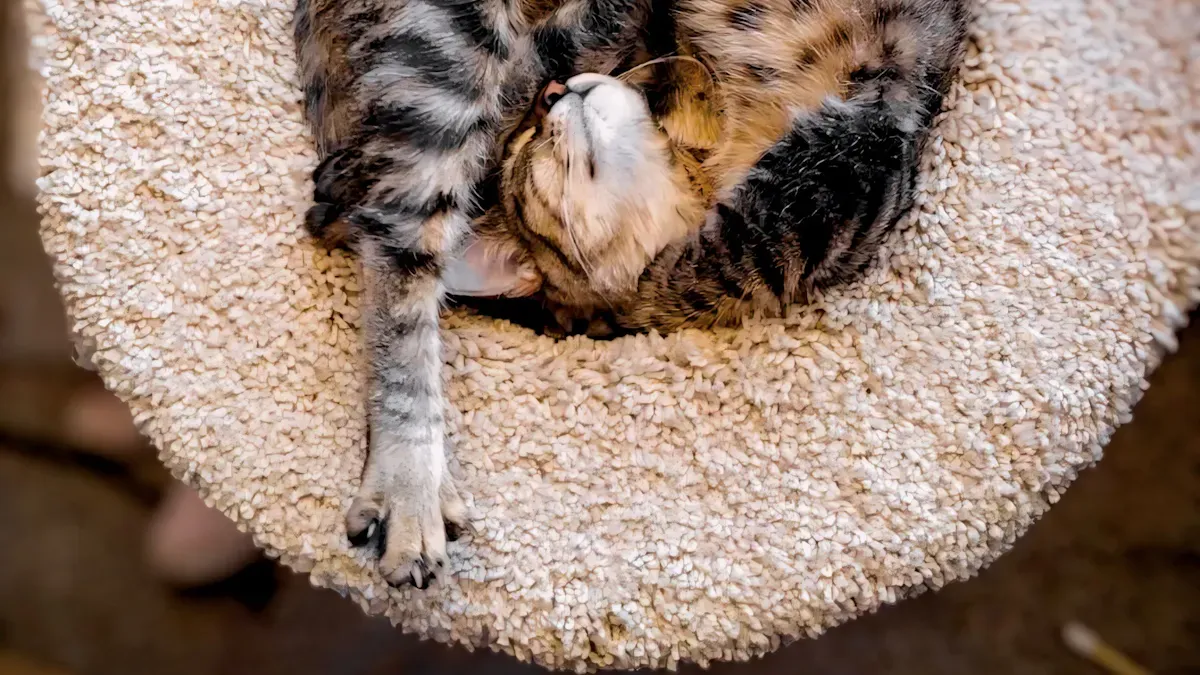
When you choose a cat bed house, you want your cat to stay comfortable in different conditions. Breathable fabrics like cotton and fleece allow air to move through the bed, which can help some cats stay cooler and more relaxed. If a bed traps too much heat, many cats will use it less, especially in warm rooms. Some cats prefer warmer, nest-like beds in colder months, but the interior should still stay dry and not feel stuffy. Avoid bed surfaces that hold moisture or feel clammy after use.
Tip: Place your hand inside the bed for a few minutes. If it feels stuffy or damp, your cat may not find it cozy.
Padded, dry base for best bed for your cat
A padded, dry base gives your cat support and comfort. High-quality fabrics like fleece and cotton feel soft and last longer. These materials keep their shape and comfort even after many washes. Cheaper materials may flatten or bunch up, making the bed less inviting. Always check the base for dampness. Cats dislike wet or musty spots. The best bed for your cat will have a cushion that stays dry and soft.
- Wash removable pads as directed on the care label.
- Let all parts dry completely before letting your cat use the bed.
- Avoid strong-scented cleaners near your cat’s resting area.
Soft walls vs. stable structure
Some cats love to lean against soft, flexible walls. Others prefer a bed with a firm, stable structure. Soft walls can make a bed feel more like a nest. Stable structures, such as wood or metal frames, offer support and keep the bed in place. You may notice your cat kneading or pushing against the sides. If the bed tips or slides, your cat may stop using it. Always check for easy entry, especially for kittens or older cats.
Here is a comparison table to help you decide which materials and builds work best for your cat’s needs:
| Material/Build Type | Breathability | Ease of Cleaning | Structure | Best For |
|---|---|---|---|---|
| Wood | Medium | Wipe clean | Stable | Cats needing support |
| Metal | High | Wipe clean | Very stable | Modern, active cats |
| Fabric (Fleece/Cotton) | High | Machine washable | Soft | Cozy, lounging cats |
| Soft Walls | High | Varies | Flexible | Nesting, shy cats |
| Hard Structure | Medium | Easy | Firm | Cats needing security |
| Removable Pad | High | Machine washable | Soft | Easy cleaning homes |
Note: Always follow the care label for cleaning. Normal washing keeps most beds fresh. Disinfect only when needed, and keep cats away until the bed is dry and safe.
Placement and Use Cases for Cat Bed House
Quiet spots and visual privacy
You want your cat to feel safe and relaxed. Place the cat bed house in a quiet area away from loud noises and busy walkways. Many cats like to rest where they can see the room but not feel exposed. A corner or spot near a wall gives your cat visual privacy. If you use a self-warming cat bed, make sure sunlight or heaters do not overheat the area. Try to offer at least one or two safe resting spaces in your home.
Common mistakes in bed house placement
Many buyers make simple errors when setting up a cat bed house. Some choose by appearance, not comfort. Others pick beds with poor breathability or hard-to-clean materials. Placing the bed in a noisy or high-traffic area can stress your cat. Some people think all cats want an enclosed bed, but many prefer open or elevated spots. Always check if your cat uses the bed. If not, move it or try a different style.
Tip: Choose the right cat bed by watching your cat’s habits, not just by appearance.
Best bed for your cat in multi-cat homes
In homes with more than one cat, each cat needs its own safe space. A self-warming cat bed can help shy or older cats feel secure. Place beds in separate rooms or corners to prevent fights. Older cats may need a low-entry bed for easy access. Avoid putting all beds together. This helps each cat relax and reduces stress.
Troubleshooting table for placement issues
| Phenomenon | Possible Cause | Quick Check | Solution |
|---|---|---|---|
| Cat ignores bed | Bad placement | Is area noisy or busy? | Move to quiet, private spot |
| Cat leaves bed quickly | Poor breathability | Is bed stuffy or hot? | Switch to self-warming cat bed or open bed |
| Cat struggles to enter | Entry too high | Is entry low and wide? | Use low-entry or ramped bed |
| Cats fight over one bed | Not enough beds | One bed per cat? | Add more beds in separate locations |
| Bed smells odd | New or strong scent | Smell bed closely | Wash cover, avoid scented cleaners |
Note: Focus on comfort, safe placement, and daily use first.
- You should check for a hidden-but-not-trapped feel, a padded and dry base, and a breathable interior.
- Easy entry, easy cleaning, and stable placement help your cat feel safe.
- Watch your cat’s habits and adjust the bed as needed.
- Choose what fits your cat’s unique needs.
Use these checks before you buy a new bed or reposition the one you already have.
FAQ
How do you know if your cat feels safe in a new bed house?
You see your cat relax, knead, or sleep inside. If your cat avoids the bed, try moving it to a quieter spot.
Can you use strong cleaners on cat beds?
You should avoid strong-scented cleaners. Always follow the care label. Let the bed dry fully before your cat uses it.
What if your cat prefers the floor over any bed?
You can place a soft mat or blanket where your cat rests. Offer both open and enclosed beds to give your cat more choices.