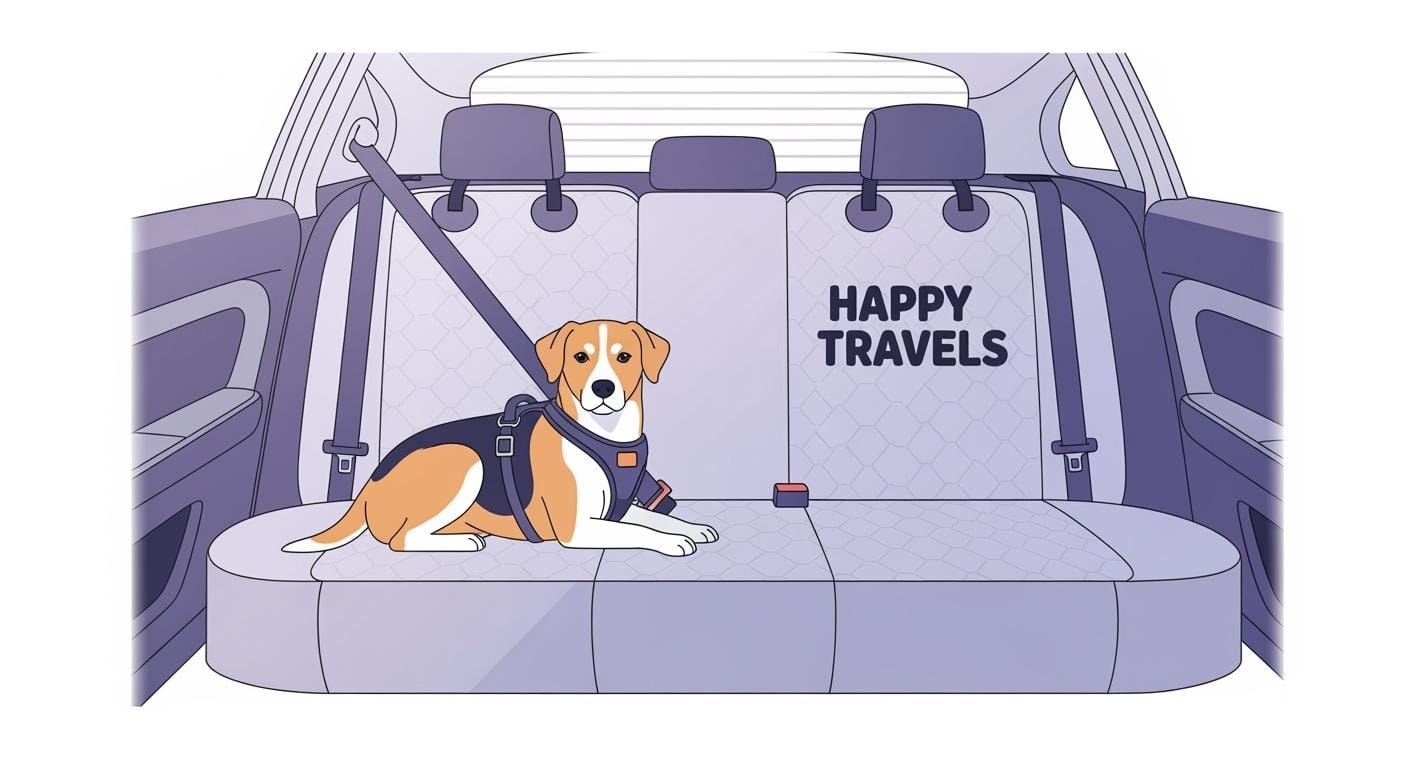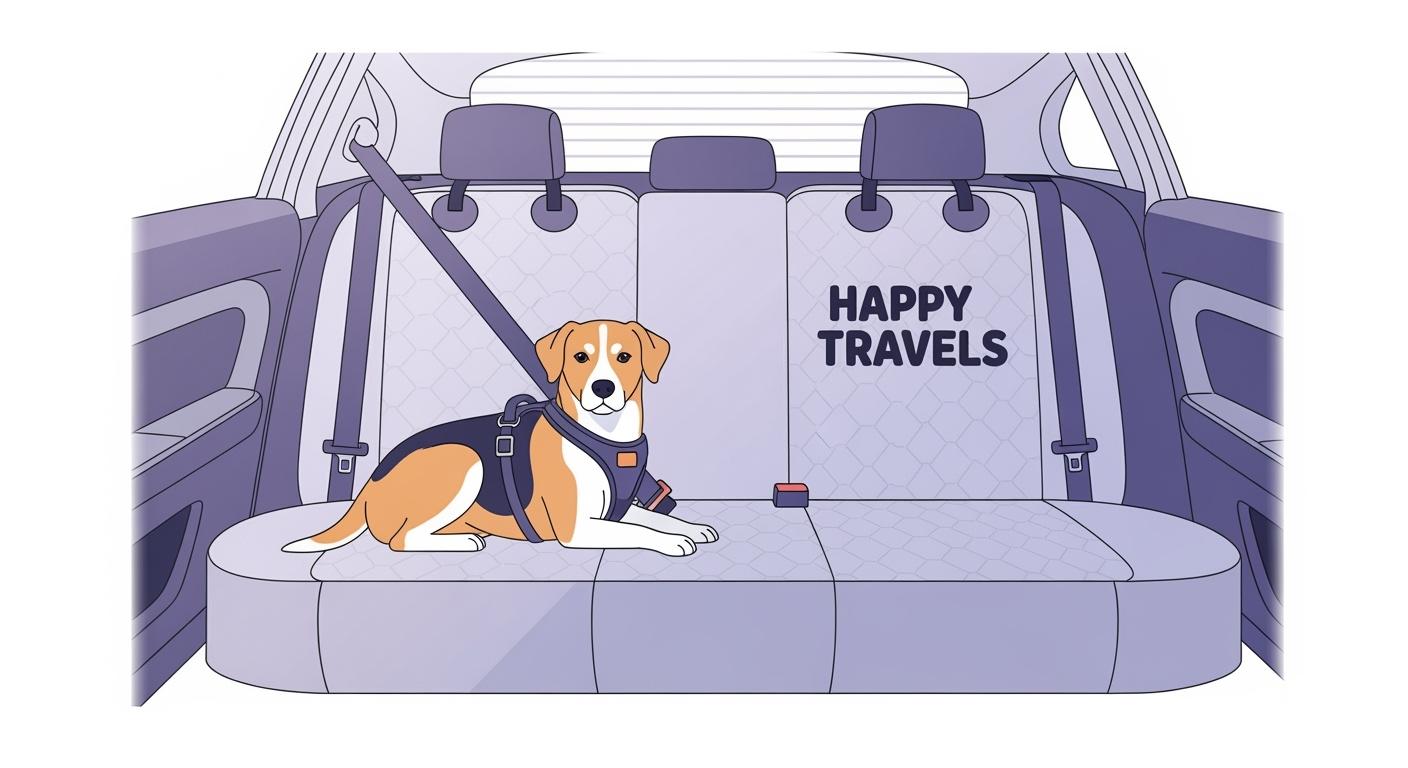
A good car pet seat cover should sit flat, stay in place, and make cleanup easier after daily drives. The cover protects upholstery and helps your dog feel steadier in the back seat, but it does not replace a proper restraint. Fit, surface grip, and easy cleanup matter more than thick padding or generic size claims.
Key Takeaways
- Measure the rear seat and check buckle locations before you buy. A cover that sits flat with fewer gaps is easier to live with every day.
- Look for non-slip backing, seat anchors, and adjustable straps. These details matter more than extra bulk when you want the cover to stay put.
- Choose a wipe-clean, quick-drying surface, but still check seams, buckle openings, and edges after muddy trips or spills.
Car Pet Seat Cover Fit Checks
A car pet seat cover works best when it matches the rear seat, stays planted during normal driving, and gives your dog stable footing. A cover that bunches, drifts, or leaves exposed gaps will feel less useful on every trip. Use these checks before you buy and again after installation.
Seat coverage and side gaps
You want the car pet seat cover to cover the seat area your dog actually uses. Check the outer edges, the seat crease, and the gap toward the footwell. Poor coverage usually shows up as exposed corners, loose side flaps, or fabric that pulls away once your dog turns or lies down.
- Side gaps make it easier for paws, fur, and dirt to reach the seat itself.
- Loose corners can pull up when your dog shifts weight or changes direction.
- A front hammock panel can help stop step-through into the rear footwell, but only if the whole setup stays tight.
- “Universal fit” is only a starting point. Seat shape, bench depth, and buckle placement still decide the real fit.
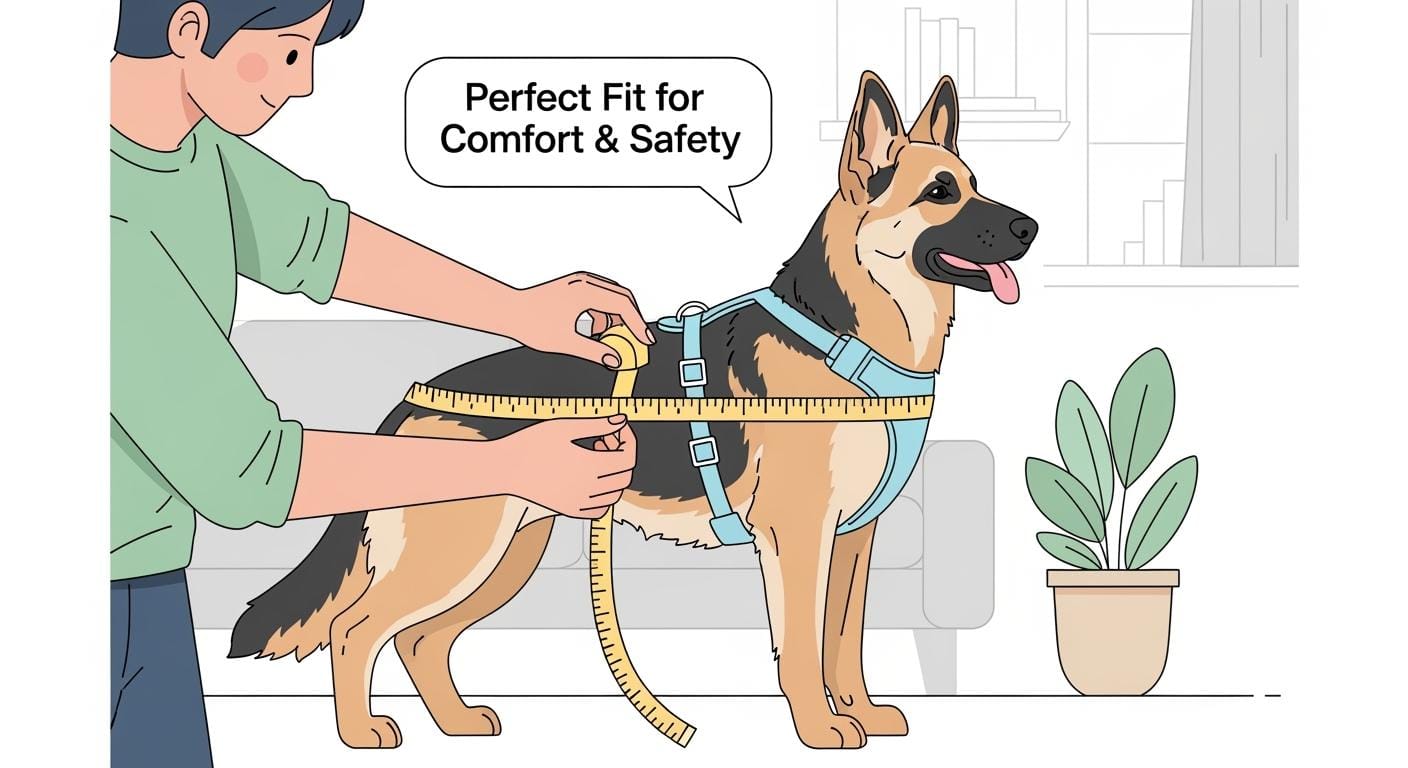
Before purchase, measure the rear bench width and depth. Then compare those numbers to the cover’s usable surface area, not just the product label. A flatter, better-matched cover usually works better than a looser cover with extra material.
Anchor points and install tension
Installation decides whether the cover feels steady or annoying. Look for a setup that uses more than one hold point, such as headrest straps, seat anchors, and a grippy underside. The goal is simple: the cover should lie flat, stay centered, and keep buckle access usable.
- Non-slip backing helps the cover stay planted against cloth or leather seats.
- Headrest straps and seat anchors reduce drifting and bunching during turns or stops.
- Straightforward buckles and strap routing make it easier to reinstall the cover the same way each time.
After installation, smooth the surface by hand and tighten the straps evenly. Then press down on the cover and tug it lightly from side to side. If it shifts too easily, retighten the setup before you put your dog on it.
Stable footing and bunching signs
Your dog notices instability faster than you do. If the surface feels slick, bunches under the paws, or lifts at the edges, your dog may brace, slide, or keep readjusting instead of settling. Stable footing matters just as much as seat protection.
- A textured or rubberized underside helps limit sliding, especially on smoother seats.
- A flatter top surface gives better footing than a loose cover with soft folds or trapped slack.
- Seat anchors should stay centered, and headrest straps should stay tight without twisting.
- Buckle openings should remain accessible without pulling the cover off line.
Take a short drive and watch how your dog stands, turns, and lies down. If the cover drifts, bunches, or makes your dog brace during small movements, adjust the fit or consider a different layout.
Pass/fail checklist table
Use this table to judge the fit and stability of your car pet seat cover after installation. If you notice fail signals, correct the setup before relying on it for longer drives.
| Check Item | Pass Signal | Fail Signal | Solution |
|---|---|---|---|
| Install fit | The cover reaches the main seating area without sagging or pulling at straps | Corners lift, seat surface is exposed, straps sit at odd angles | Reinstall, tighten straps, or choose a better-fitting cover |
| Buckle access | Buckles are easy to find and use without digging under fabric | Openings drift from buckles or bunch around them | Adjust cover position, check anchor alignment |
| Paw grip | Dog steps in, turns, and settles without sliding | Dog braces, slips, or keeps readjusting to stay upright | Add non-slip mat, retighten anchors, check cover material |
| Movement in turns | Cover stays centered during a short drive | Cover creeps to one side or lifts off the seat | Tighten straps, check anchor points, consider custom fit |
| After-cleaning check | Cover returns flat, straps stay usable, shape matches the seat | Fabric shrinks, curls, or feels less stable after washing | Air dry fully, reshape while damp, follow care instructions |
Tip: Test the cover with your dog on a short, ordinary drive first. A stable setup should feel predictable in motion, not just when the car is parked.
Material, Waterproof, and Cleanup Details
Surface grip and wipe-clean options
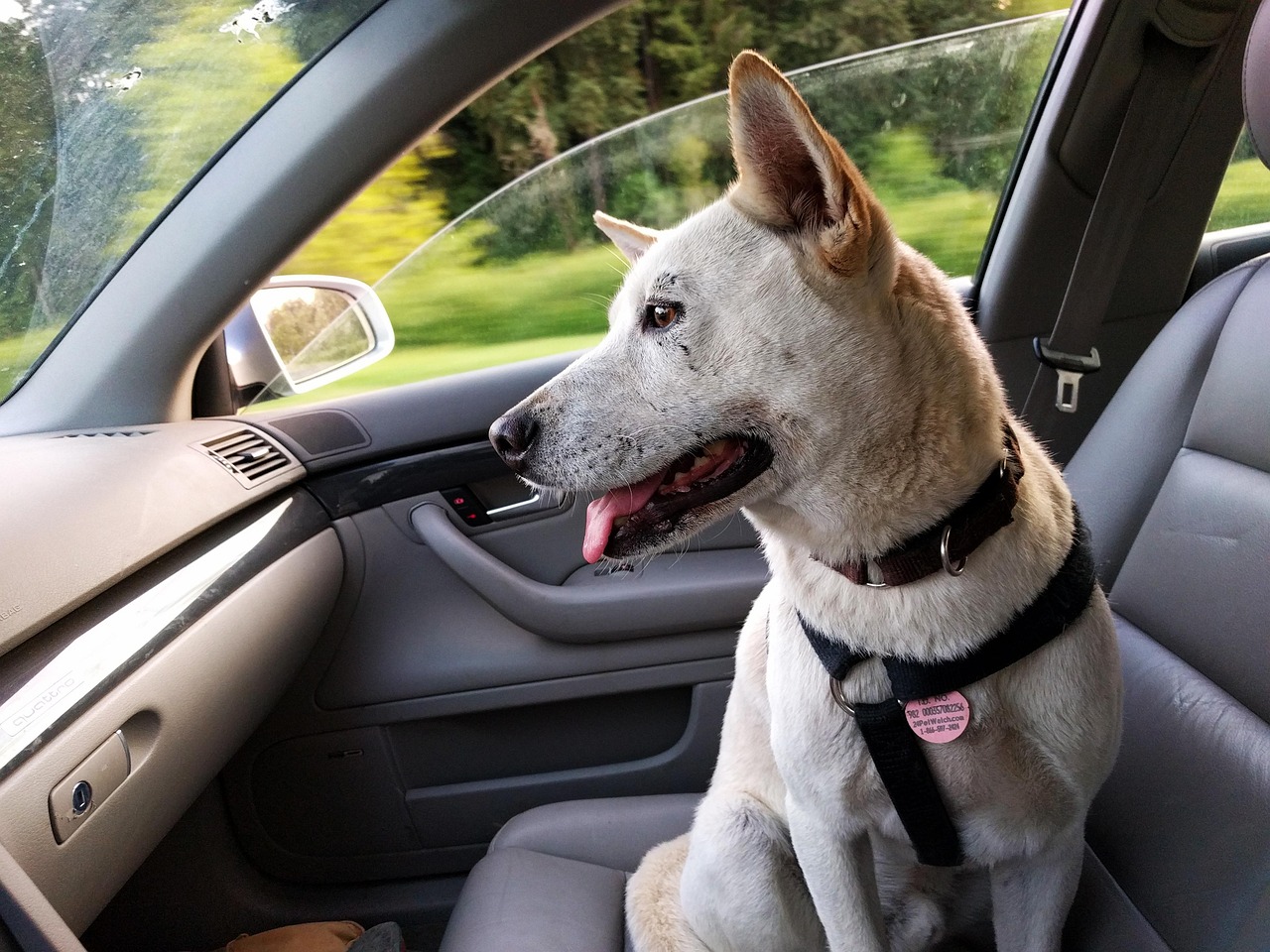
A useful cover should be easy to wipe down and should not slide around under your dog. Surface grip matters first. A slick top can make standing and turning awkward, even if the material looks durable. On the cleanup side, smoother coated fabrics usually lift mud, fur, and drool more easily than soft, absorbent surfaces.
Check how the top layer feels when dry and when slightly damp. A wipe-clean surface can save time after ordinary trips, but it still needs enough grip for everyday footing. Covers with fewer deep folds and fewer exposed seams are also easier to clean well.
Tip: If your dog rides often, choose a cover you can wipe quickly between trips and wash fully when needed.
Seam zones, edge binding, and mess collection
Mess tends to collect at seams, edge binding, anchor slots, and buckle openings. These are also the first places where moisture can linger after a spill or wash. When you inspect a cover, look closely at those small construction details, not just the main center panel.
Strong seams and clean edge finishing help a cover hold its shape over time. They also make it easier to clear fur and dirt from corners after use. If a cover traps grime at every opening, daily cleanup will feel harder than it should.
Non-slip backing and anchor hold
Non-slip backing and anchor hold work together. Backing improves grip against the seat, while anchors and straps help the cover stay centered. If one part is weak, the whole setup tends to creep or bunch during normal use.
A good cover should stay reasonably flat through turns, braking, and routine dog movement. If the backing feels slick, the anchors drift, or the straps loosen too easily, the cover will be less comfortable and less practical over time.
Comparison table
Use this table to compare layout and material choices before you buy:
| Feature/Option | Bench Cover | Hammock Cover | Wipe-Clean Surface | Soft Surface | Padded | Unpadded | Universal Fit | Custom Fit |
|---|---|---|---|---|---|---|---|---|
| Surface Grip | Good with non-slip backing | Best with anchors + backing | Excellent | Fair | Good | Fair | Varies | Best |
| Waterproof | Yes (with waterproof layer) | Yes (with waterproof layer) | Yes | Sometimes | Yes | Sometimes | Varies | Best |
| Easy Cleanup | Yes | Yes | Best | Fair | Good | Fair | Varies | Best |
| Stain Resistance | Good | Good | Best | Fair | Good | Fair | Varies | Best |
| Scratch Protection | Good | Best | Good | Fair | Best | Fair | Varies | Best |
| Hair-Resistant Fabric | Yes | Yes | Yes | Sometimes | Yes | Sometimes | Varies | Best |
| Durability | Heavy-duty | Heavy-duty | Heavy-duty | Moderate | Heavy-duty | Moderate | Varies | Best |
| Mess Collection Zones | Side edges, seams | Side flaps, seams | Minimal | Seams | Seams | Seams | Varies | Minimal |
| Dry-Out Time | Fast | Fast | Fast | Slow | Moderate | Fast | Varies | Fast |
Note: Wipe-clean surfaces and non-slip backing help a lot in daily use, but seams, buckle openings, and edges still deserve a quick check after washing or spills.
Water resistance is helpful, but it is not the only thing to judge. Seams, buckle cutouts, and edges are usually the first places to show leaks or trapped moisture. After cleanup, always check that the cover dries fully and returns to a flat shape.
For everyday use, focus on tough construction, easy cleanup, stable grip, and a layout that matches your seat. Those details do more for comfort and practicality than thicker padding alone.
Choosing the Best Dog Car Seat Covers for Your Needs
Daily use, muddy trips, and shared cars
Some covers work best for daily commuting, while others make more sense for muddy outings or shared back seats. If the cover stays in the car most days, choose something easy to wipe, easy to reinstall, and simple to live with when your dog is only mildly messy.
For wetter or dirtier trips, pay closer attention to water resistance, side protection, and how easily the cover dries. A cover that still feels damp or holds grit in the seams will quickly become annoying.
If the back seat is shared with passengers, child seats, or other gear, check how easily the cover folds back, how clearly the buckle openings stay exposed, and whether the layout still feels neat when only part of the bench is in use.
| Factor | Description |
|---|---|
| Seat fit | Check that the cover matches the rear bench width, depth, and buckle layout you actually use. |
| Everyday practicality | Look for quick installation, easy buckle access, and a surface that does not trap ordinary dirt and fur. |
| Shared-seat flexibility | Make sure the cover still works when passengers, child gear, or cargo use part of the back seat. |
| Cleaning routine | Pick a cover you can wipe, remove, wash, and dry without a complicated reset every time. |
Tip: If the same car switches often between pet use and passenger use, a cover that removes and reinstalls cleanly is usually the easier choice.
Bench, hammock, and restraint-compatible covers
Bench, hammock, and restraint-compatible layouts each solve a different problem. The better choice depends on how your dog rides and how much of the back seat needs to stay usable.
- Bench covers leave the seating area more open. They make more sense when the back seat is shared or when easy buckle access matters most.
- Hammock covers add a front barrier and more enclosed coverage. They often work better for dogs that pace, turn a lot, or try to step into the footwell.
- Restraint-compatible covers keep buckle or tether access usable, but the cover itself is still not the restraint. You still need a proper travel restraint if you use one.
Choose the layout that matches your real routine, not just the product photo. A calm dog on short drives may do fine on a bench cover. A more active rider may feel steadier with a hammock setup.
Note: A seat cover protects upholstery and can improve footing, but it does not replace a restraint system.
Common mistakes and troubleshooting table
Common problems usually come from bad fit, loose installation, or overtrusting product claims. Watch for these before you assume a cover is working well.
- Relying on “waterproof” wording without checking seams, edges, and buckle openings.
- Ignoring actual seat shape and assuming a generic size will automatically stay flat.
- Choosing extra thickness even when it makes the surface less stable.
- Assuming any non-slip backing will stay put on every seat material.
- Thinking covers can replace restraints. Covers do not keep your dog safe in a crash.
Other issues show up after installation: buckle slots drift out of place, the cover traps heat, or the top layer feels more slippery than expected. These are everyday usability problems, not just minor cosmetic ones.
Watch for these warning signs during ordinary use:
- The cover bunches near buckle openings or pulls away from the seat edge.
- Seat-belt access becomes awkward after you tighten the straps.
- Your dog keeps bracing or readjusting instead of settling.
- The cover stays damp or grimy longer than your routine can realistically handle.
Use this troubleshooting table to correct the most common setup problems:
| Symptom | Possible Cause | Quick Check | Solution |
|---|---|---|---|
| Cover slides on seat | Poor fit or no non-slip backing | Check if cover moves when you push on it | Adjust straps, add non-slip mat, try custom fit |
| Bunching near seatbelt openings | Openings not aligned or too large | Inspect buckle holes for gaps or bunching | Reposition cover, tighten anchors, check sizing |
| Dog slips or cannot settle | Surface too slick or cover unstable | Watch dog during turns or stops | Choose cover with more grip, retighten anchors |
| Moisture leaks through seams | Seams not sealed or fabric not waterproof | Look for wet spots after spills | Pick cover with heat-sealed seams, air dry fully |
| Cover interferes with seatbelt | Openings blocked or cover too thick | Try buckling seatbelt with cover installed | Adjust cover, trim openings if allowed |
| Overheating on hard surfaces | Non-breathable or thick material | Feel cover after sun exposure | Use lighter cover, add breathable layer |
Reminder: Recheck the cover after washing and before longer drives. A useful setup should stay flat, keep buckle access workable, and feel predictable under your dog.
Use the checklists to judge fit, grip, cleanup, and daily practicality. The best cover for you is the one that stays flat on your seat, gives your dog stable footing, and does not turn ordinary cleanup into a chore.
| Myth | Reality |
|---|---|
| A thicker cover is always better. | Extra padding only helps if the cover still sits flat and keeps your dog steady. |
| A size label tells you everything. | Rear-seat shape, buckle layout, and real installed tension still decide the fit. |
| Any buckle opening means the cover is restraint-ready. | You still need to check whether the opening stays aligned and usable after installation. |
| Machine washable automatically means easy to live with. | You still need the cover to dry well, hold its shape, and go back on without hassle. |
Check the setup on your own seat, then adjust based on how your dog actually rides. That gives you a much clearer answer than the label alone.
FAQ
Can you use a car pet seat cover with heated rear seats?
Many covers can be used on heated seats, but you should still check the care label and monitor heat buildup during regular use.
When should you replace a worn car pet seat cover?
Replace it when anchors stop holding well, the surface stays bunched, seams leak, or the cover no longer sits flat after cleaning.
Do car pet seat covers fit every vehicle?
No. Many covers fit a wide range of vehicles, but trucks, vans, and unusual rear benches often need closer measuring before you buy.