A good collar should feel easy to wear, stay secure without digging in, and avoid turning the neck line into a hidden friction zone. Most collar discomfort starts with small problems: a strap that sits too tight after grooming, bulky hardware that keeps swinging, trapped moisture after a wet walk, or hair that tangles under the same contact point every day. The right answer is usually not a “special” collar. It is a better fit check, a cleaner contact surface, and a setup that matches your dog’s everyday routine.
This is also why collar comfort makes more sense when you think about it as part of your wider everyday walking gear, not as a single item that solves every problem on its own.
What a comfortable collar fit should look like
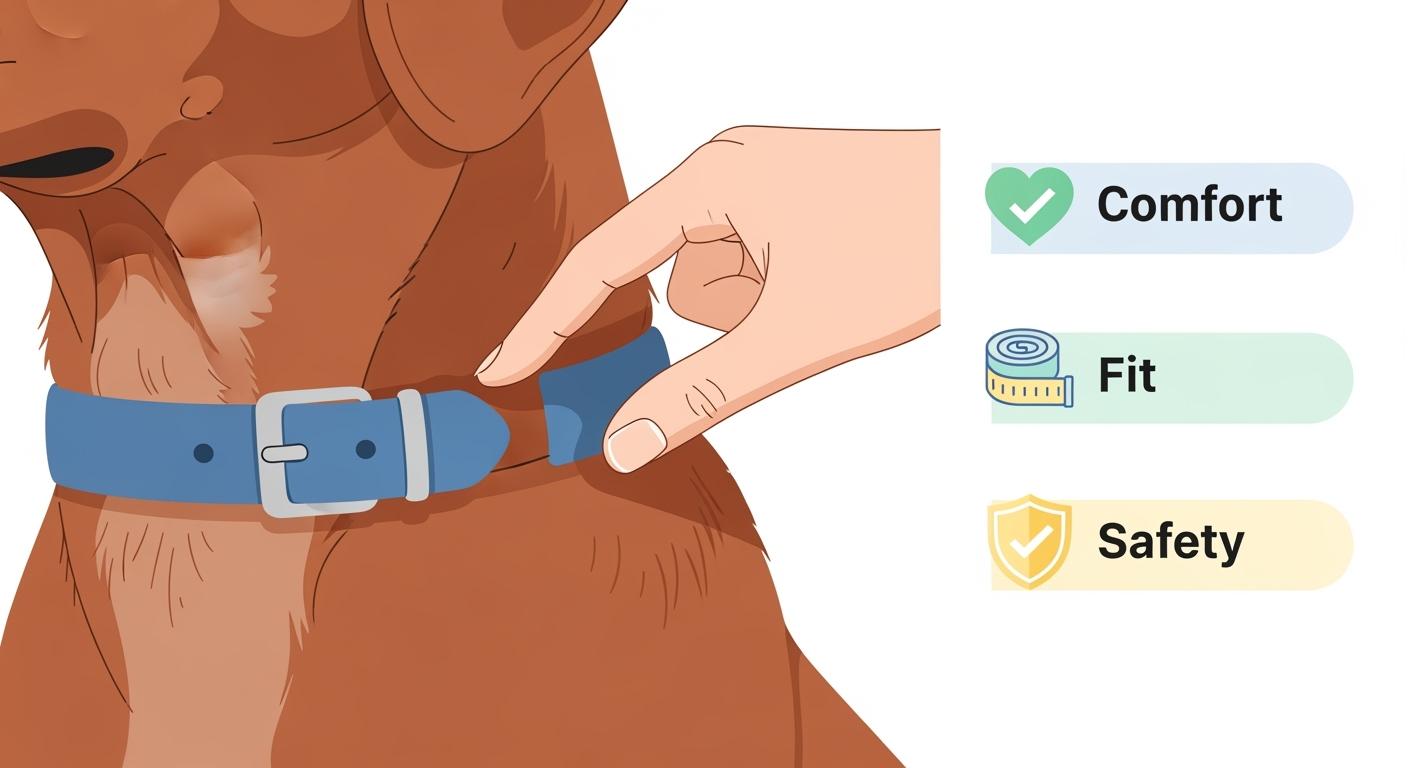
The simplest collar rule is still the most useful one: secure, but not restrictive. A collar that is too loose can slip or rotate so much that tags and hardware keep hitting the same area. A collar that is too tight can trap coat, hold moisture against the skin, and create pressure at the throat or along the back of the neck.
Start with position before you judge tightness
A collar should sit around the middle of the neck and lie flat without riding up into the throat. When it twists repeatedly or slides into a different position every few minutes, that is often a clue that the sizing, width, or hardware balance is off.
Use a simple fit check in motion
- Slide two fingers under the collar and confirm it feels snug, not pinching.
- Let your dog walk a short distance, turn, sit, and lower their head.
- Check whether the collar stays level instead of rotating or creeping upward.
- Part the fur under the strap if your dog has a dense or longer coat.
| Fit sign | What it usually means | What to do |
|---|---|---|
| Collar stays flat and centered | Basic fit and balance are usually correct | Keep checking after grooming, weight change, or wet weather |
| Red line or hair flattening that lasts | Too much pressure or friction | Loosen, recheck width and material, and inspect the skin |
| Constant rotation | Loose fit, heavy tags, or poor weight balance | Reduce tag load and reassess adjustment |
| Coughing or throat pressure | Placement or use problem, not just size | Stop relying on the collar for control and reassess the setup |
Quick rule: the collar should help with identification and calm daily handling. If your dog pulls hard, backs out, or strains at the neck, the problem is usually bigger than collar tightness alone.
How width, material, and hardware affect rubbing
Many comfort problems come from the collar’s shape rather than the closure hole you choose. A narrow, stiff strap can feel sharper under load. A bulky padded style can hold moisture against the coat. Heavy tags or oversized hardware can create repeated impact and rubbing, especially on smaller dogs or dogs with fine coat texture.
Choose width by neck size and coat behavior
Wider collars often spread pressure better, but only if they still sit cleanly and dry well. On longer or double coats, the goal is not “more padding.” It is a smooth contact surface that does not trap damp fur and dirt. On smaller dogs, an overly wide collar can feel clumsy and sit awkwardly under the jaw.
Reduce hardware load before it becomes a friction problem
- Remove extra tags that are not needed every day.
- Check whether rings, clips, or decorative parts swing into the same area.
- Make sure buckles and sliders lie flat instead of digging into one side of the neck.
- Recheck comfort after adding lights, charms, or accessory clips.
Do not overlook low-light add-ons
Visibility features can be useful, but they still need the same fit logic as any other collar. If low-light walks matter to you, the same questions about rotation, coat coverage, and comfort also apply to reflective collar fit, not just to brightness or trim placement.
Daily steps that help prevent matting and pressure points
Matting and rubbing usually build up from repetition. The collar may seem fine for one walk, but if damp fur, grit, and the same contact pressure stay in place day after day, the coat can compact and the skin can get irritated. A short daily check is often enough to catch problems before they become stubborn.
A practical daily routine
- Run your fingers under the collar line and feel for moisture, grit, or trapped hair.
- Part the coat and look for redness, flattened fur, or early tangles.
- Dry the neck and collar after rain, snow, bathing, or heavy play.
- Brush the collar line regularly if your dog has a longer or denser coat.
- Give the neck a break indoors when a collar is not needed.
Why moisture matters more than many owners expect
Wet fur changes how the collar sits, how the coat compresses, and how much friction builds while your dog moves. Even a well-fitted collar can start rubbing once sand, dried mud, or damp undercoat are trapped underneath. This is one reason collar comfort should be checked inside a repeatable daily walking routine instead of only when something already looks wrong.
Common mistakes that make matting worse
- Leaving a damp collar on after wet walks.
- Assuming thick padding always improves comfort.
- Ignoring coat buildup under the same contact point.
- Keeping multiple tags attached because each one seems small on its own.
- Waiting for obvious sores instead of reacting to early rubbing or odor.
Warning signs, common mistakes, and when a collar is not enough
Not every discomfort issue should be solved by simply loosening the collar. If your dog coughs, gags, backs out, or hits the end of the leash with force, the collar may be the wrong tool for the way the dog is being handled. Likewise, if you see recurring hair loss, hot spots, odor, or scabbing under the collar line, the problem has moved beyond a minor fit annoyance.
Warning signs that need attention
- Persistent redness or bald patches under the collar line.
- Strong odor, moisture buildup, or skin debris that returns quickly.
- Coughing, gagging, or obvious throat pressure on walks.
- Repeated twisting that exposes one spot to constant rubbing.
- Discomfort that keeps returning after normal adjustments.
When a collar may not be the best setup
A collar is often fine for identification and calm daily wear, but it may not be the best answer for dogs that pull hard, lunge, slip backward, or need more body-based control. In those situations, tightening the collar more is not the fix. The better move is to reassess the whole walking setup and choose something that reduces neck load instead of concentrating it.
What to change first
Start with the simplest cause: fit, width, hardware load, moisture, and coat care. If the same discomfort returns even after those checks, then the issue may be the role the collar is being asked to play, not just the collar itself.
FAQ
How tight should a dog collar be?
A dog collar should feel secure without digging in. A simple two-finger check is a useful starting point, but you should also watch how the collar sits when your dog moves, turns, and lowers their head.
Why does my dog get mats under the collar?
Matting often comes from friction, trapped moisture, dirt, and repeated pressure in the same spot. Dense or longer coats are especially prone to this if the collar stays damp or the area is not brushed and checked regularly.
Can heavy tags make a collar less comfortable?
Yes. Too many tags or bulky accessories can make the collar rotate more, swing against the coat, and create repeated rubbing on one side of the neck.
Should I leave a collar on all the time?
That depends on your dog’s routine and supervision, but many dogs benefit from collar breaks indoors when identification is not needed. Removing the collar at safe times can reduce trapped moisture and constant pressure on the same contact area.
When should I stop using the collar and reassess?
Pause and reassess if you notice coughing, swelling, sores, odor, bald spots, or repeated rubbing that comes back after adjustment. Those signs usually mean the current fit or use pattern is not working well enough.