A bike dog carrier can feel fine on a smooth street and suddenly feel wrong once the route gets broken, uneven, or full of sharp little impacts. The main question is not only where the carrier sits. It is how that position changes steering, bike balance, your dog’s ability to stay settled, and how much movement the mount has once the road stops being predictable.
For most riders, the safer choice starts with an honest look at the dog, the route, and the bike itself. A front position can work for a very small, calm dog on shorter and smoother rides. A rear position often feels steadier when the surface gets rougher, but only if the rack, mounting points, and carrier body stay rigid enough under repeated vibration. If you are comparing broader pet travel carriers, it helps to treat bike use as its own handling problem instead of assuming every carrier behaves the same once attached to a bike.
What changes when the load sits in front or behind you
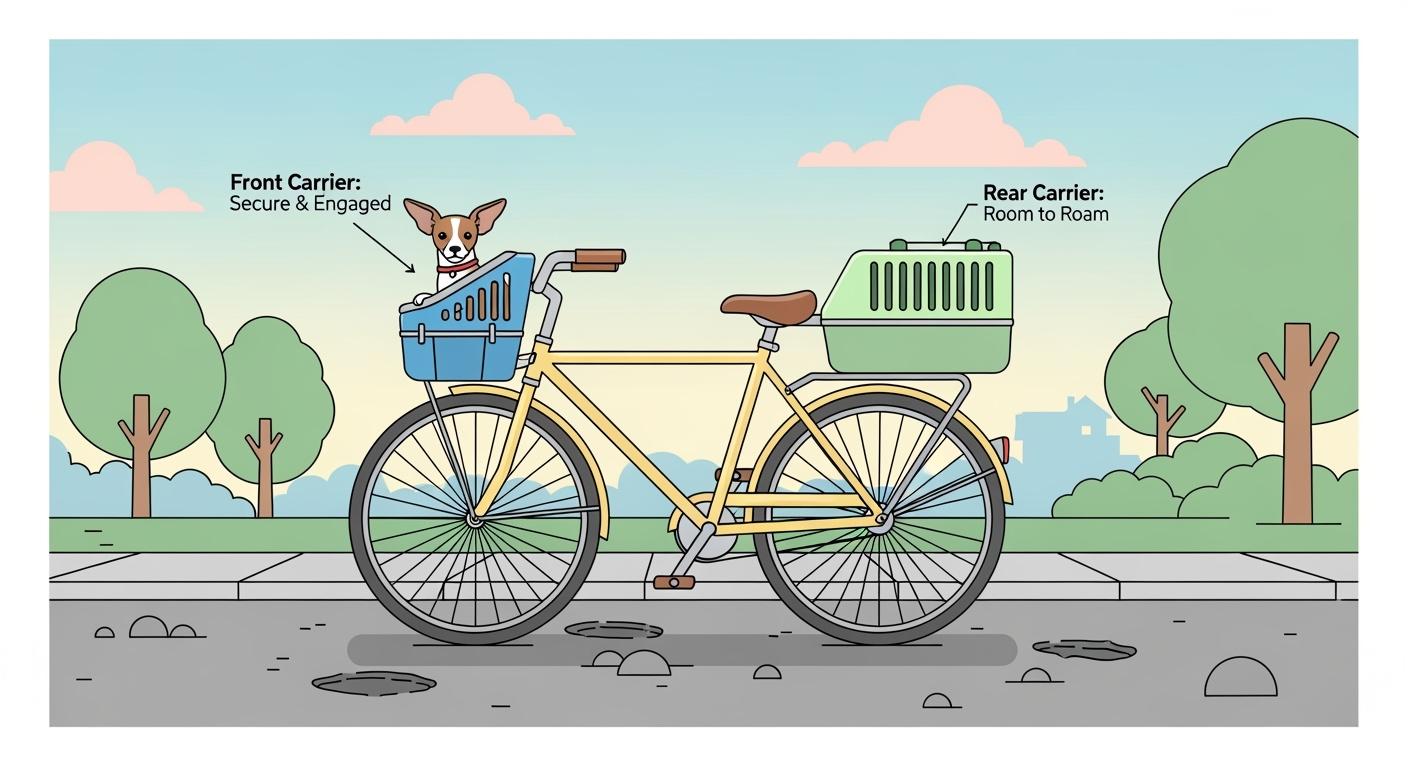
The same dog can feel very different on the bike depending on where the carrier sits. Front-mounted setups put the dog where you can watch them easily, but they also bring the load closer to steering input. On rough roads, even small shifts can feel bigger because your hands and the front wheel are managing the weight directly. Rear-mounted setups usually keep the handlebar area freer, but they move the load behind you, which means the mount and rack need to stay stable instead of swaying after every bump.
| Carrier position | What usually feels better | What usually gets harder | Best match |
|---|---|---|---|
| Front-mounted | You can see the dog easily and notice stress quickly | Steering can feel twitchier when the road is rough or the dog shifts | Very small, calm dogs on smoother and shorter rides |
| Rear-mounted | The handlebar area often feels less disturbed by the load | You must trust the rack, mount, and carrier body more because the dog is behind you | Small to medium dogs when the rear setup stays rigid and balanced |
That difference matters because bumps do not hit as one clean force. They create repeated little corrections. If the front feels light but nervous, or the rear feels delayed and wobbly, the setup is already telling you something important. The better choice is the one that stays predictable after the dog settles, not the one that only feels convenient while standing still.
Choose by dog behavior, not only by carrier position
Position alone does not decide safety. A calm dog that stays low and settled can make a front setup workable where a restless dog makes it feel sketchy almost immediately. On the other hand, a rear carrier can look more stable on paper but still feel wrong if the dog keeps turning, leaning, or shifting weight during the ride.
- If your dog startles easily, turns often, or tries to watch everything around them, rougher routes become harder no matter where the carrier sits.
- If your dog stays tucked in, tolerates light confinement, and settles quickly, you have more room to choose the position based on bike handling.
- If the dog is close to the carrier’s practical fit limit, small balance issues become easier to notice on rough roads.
- If the route includes broken pavement, curb transitions, gravel, or patched bike lanes, setup stability matters more than convenience.
A useful way to think about it is this: front or rear is only the second decision. The first decision is whether your dog belongs in a bike-mounted carrier for that kind of route at all. If your dog cannot stay settled, cannot sit and lie naturally, or becomes tense as soon as the bike moves, changing mount position may not fix the real problem. A wider comparison in this bike basket vs carrier vs trailer guide is more useful once you realize the question may be bigger than front versus rear.
The checks that matter more than mount position
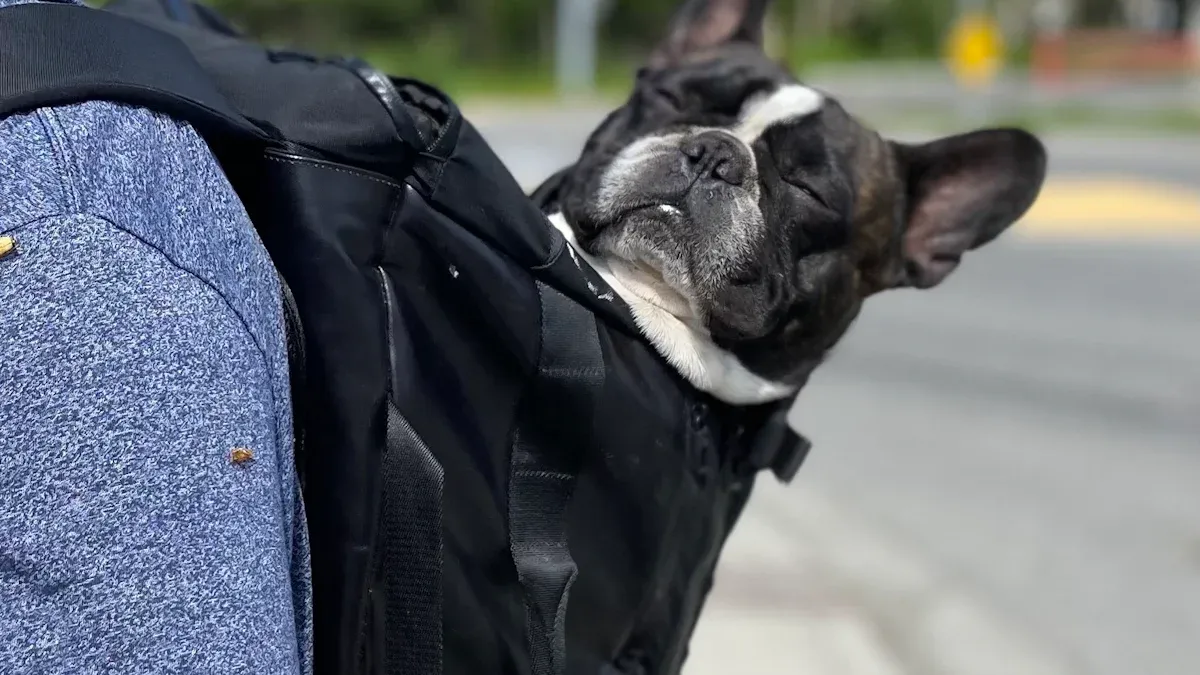
Many unsafe rides start with a carrier that is technically in the better position but poorly secured. A solid rear setup is safer than a shaky front one, but a loose rear rack can still turn a manageable route into a bad idea. The mount, tether, floor grip, and dog posture all need to work together before you worry about making the ride longer or rougher.
- Check that the carrier does not shift when you push and pull it by hand before the dog gets in.
- Make sure the dog can sit and lie down naturally instead of being held in one cramped posture.
- Use an internal tether attached to a harness, not to a collar.
- Check the floor surface so the dog is not sliding when the bike hits small jolts.
- Roll the bike slowly and watch for sway before starting a real ride.
- Stop early if the mount loosens, the dog keeps repositioning, or the bike begins to feel unpredictable.
These checks are more useful than broad claims about one position always being safer. A stable front setup on an easy route can still be the better real-world answer for one rider, while another rider should move the load rearward or change transport style entirely. The better standard is whether the bike stays calm, the dog stays settled, and the setup stays tight after repeated vibration. If you are reviewing the whole outing instead of the carrier alone, this dog travel setup section gives a broader way to think about fit, comfort, and movement across different trip types.
When to stop forcing the setup and switch plans
Sometimes the front-versus-rear debate goes on too long because the real answer is that neither mounted option suits the dog, the bike, or the route you actually use. That is especially true when the road surface is constantly broken or the dog never looks comfortable once the bike starts moving.
| Warning sign | What it usually means | Better next step |
|---|---|---|
| The handlebar feels nervous every time the dog shifts | The front load is affecting steering too much | Move away from a front mount for rougher rides |
| The rear carrier sways or keeps bouncing after bumps | The rack or mount is not rigid enough | Reassess the rear setup before riding again |
| The dog braces, pants, or keeps trying to reposition | The dog is not comfortable with the motion or fit | Shorten practice, slow down, or change transport type |
| You avoid rough sections by instinct because the setup feels unstable | The system is already outside your comfort margin | Choose a steadier alternative instead of forcing it |
The goal is not to prove that one mounting position wins every time. The goal is to create a setup that still feels controlled once real road texture shows up. If the carrier keeps turning small bumps into steering corrections, sway, or visible dog stress, that setup is telling you to stop adjusting around the edges and make a bigger change.
FAQ
Is a front-mounted bike dog carrier always less safe?
No. It can work for a very small, calm dog on smoother and shorter rides. The problem is that front-mounted weight affects steering more easily once the road gets rough or the dog shifts unexpectedly.
Why does a rear carrier often feel better on rough roads?
Because it usually leaves the steering area less disturbed. But that only helps when the rear rack, mount, and carrier stay rigid enough and do not sway after bumps.
What matters more, the dog’s weight or the dog’s behavior?
Both matter, but behavior is often what exposes the weak point first. A calm dog near the practical fit range may still ride better than a lighter dog that keeps turning, leaning, or trying to climb out.
Should I test the carrier with the dog inside right away?
No. Start by checking the empty setup first, then do a slow roll and a short, easy test before trusting the carrier on rougher roads.
When should I stop trying to make a mounted carrier work?
Stop when the bike feels unpredictable, the mount keeps loosening, or the dog never settles into a calm posture. At that point, switching transport style is usually smarter than repeating the same setup with small adjustments.