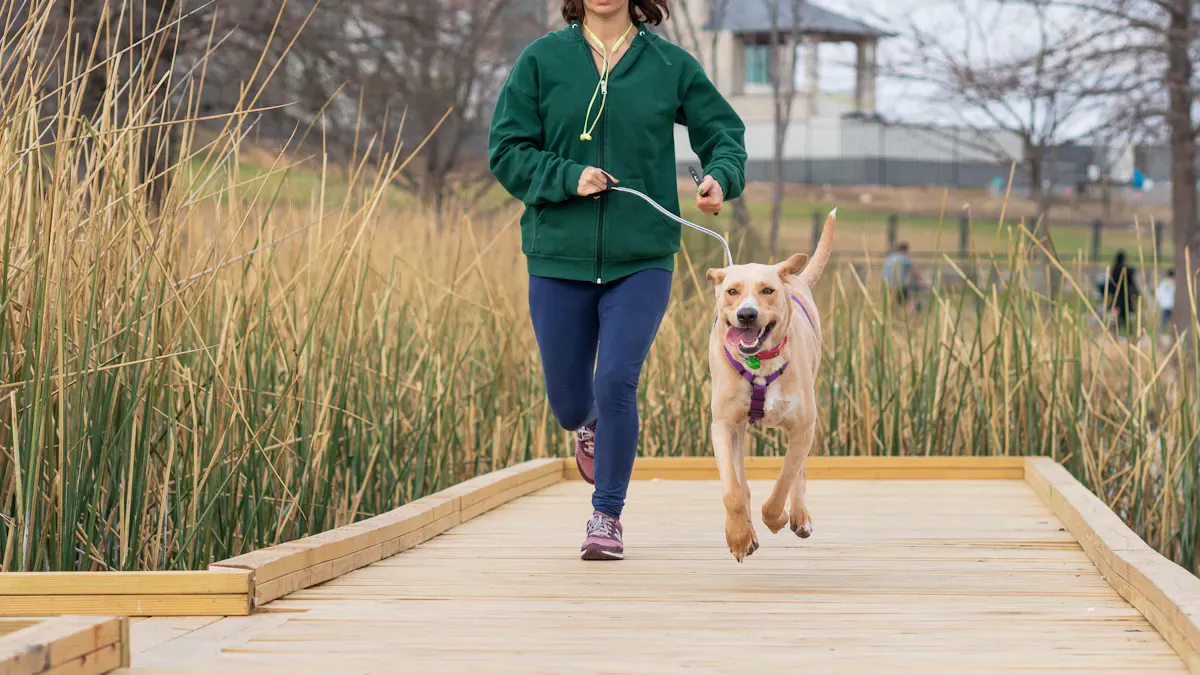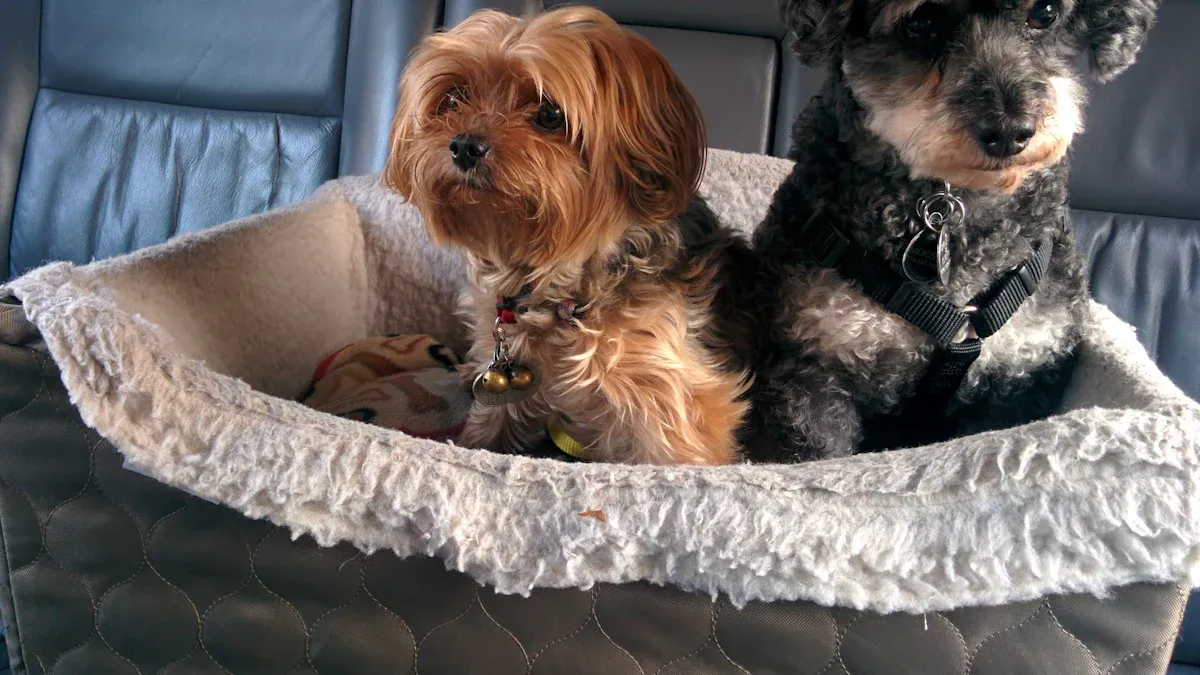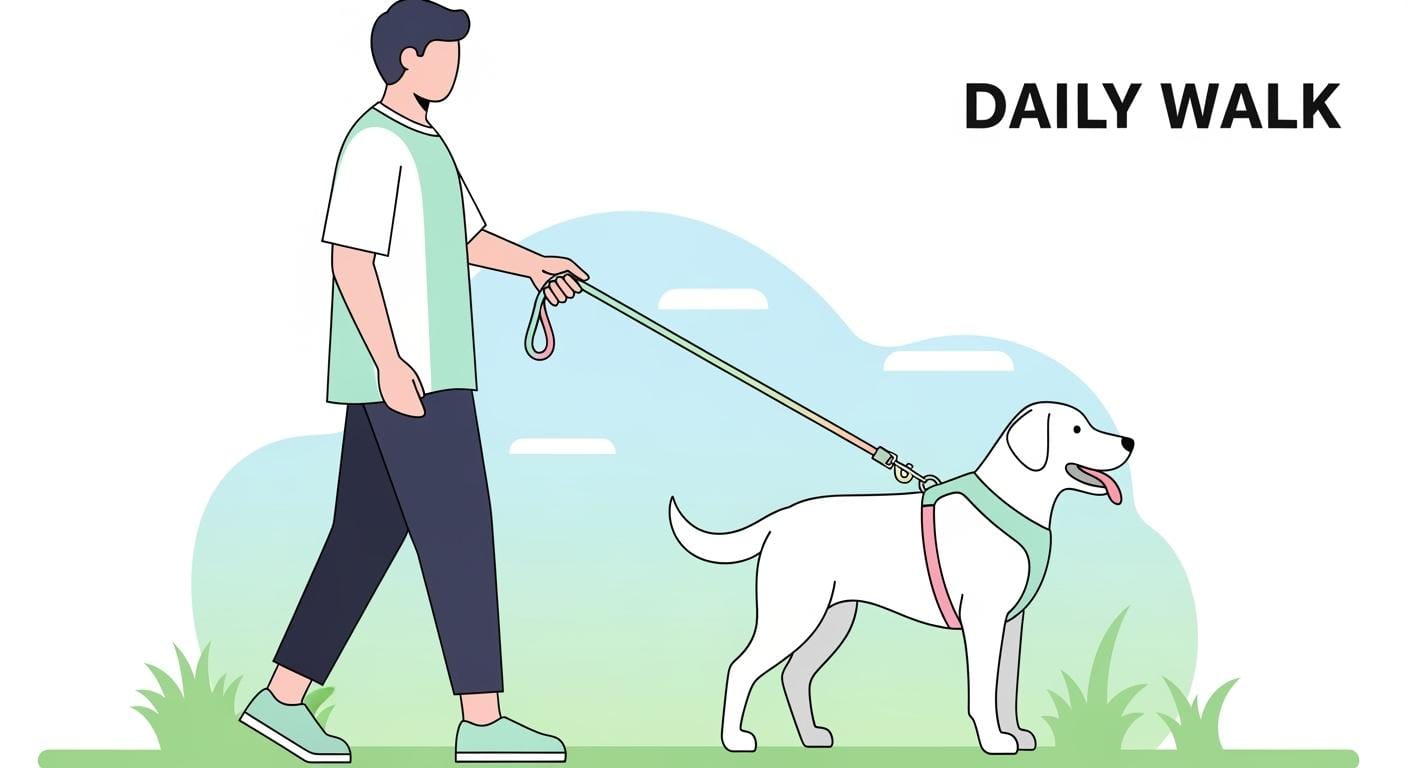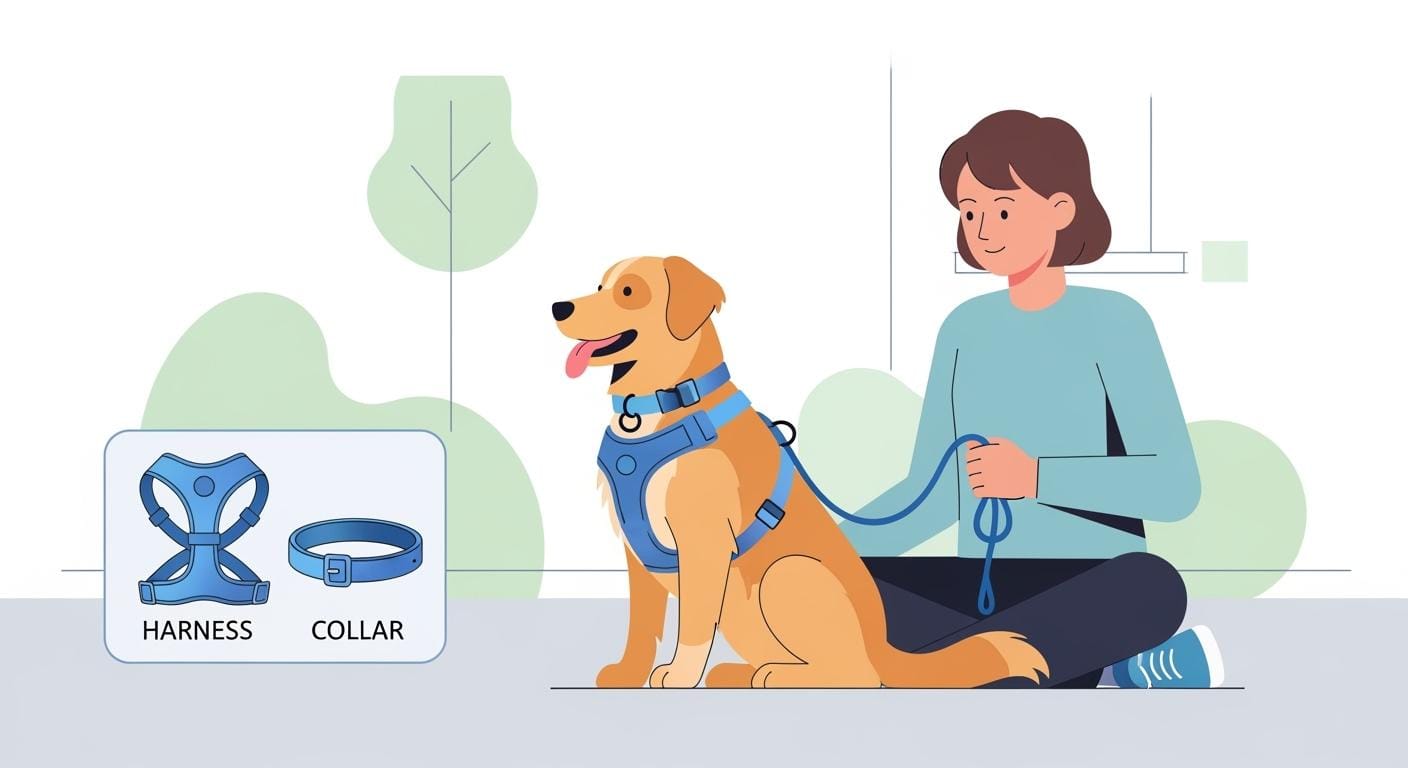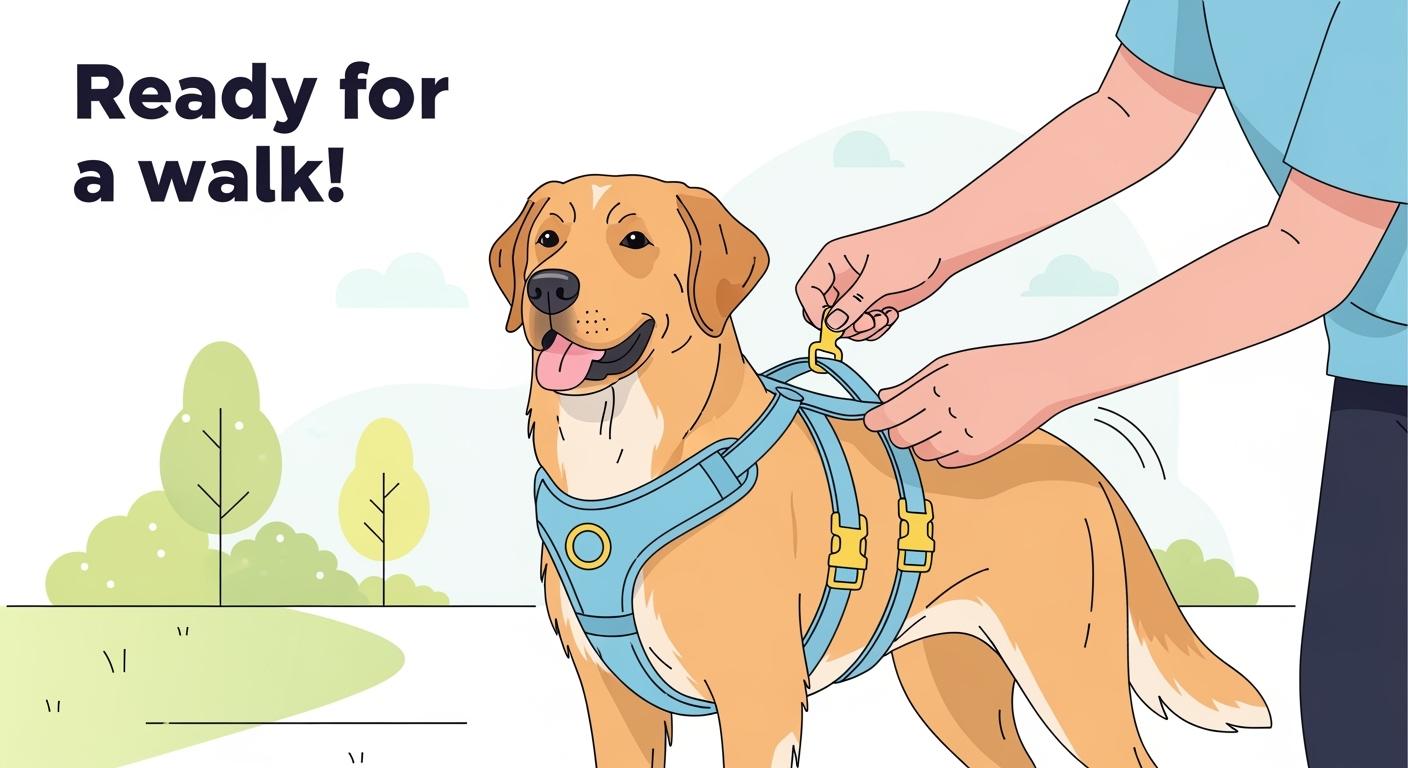
The best large dog harness is not always the one that goes on fastest. For some dogs, quick setup is the real win because the hardest part of the walk is getting out the door calmly. For others, a harness that takes a little longer to fit is worth it because it stays centered, gives cleaner shoulder movement, and feels better on longer walks. Large dogs make fit mistakes more obvious, so the better choice usually comes down to this tradeoff: faster routine or better movement once the walk starts.
Key Takeaways
- Choose a quick-on harness for easy setup. It is often the easier option for doorway frustration, short routine walks, or dogs that hate long fitting sessions.
- Choose an adjustable harness when walking comfort, chest stability, and better control matter more than saving a few seconds before the walk.
- Check the fit during motion, not just while your dog is standing still. A harness that looks fine at the door can still twist, rub, or limit stride once the walk begins.
Quick-On vs Adjustable: Best Large Dog Harness Choices
Fast setup helps most when the walk starts badly
You may need a harness that goes on quickly if your dog spins at the door, hates long handling, or only needs short routine outings where speed matters. Quick-on styles reduce fuss and can make the pre-walk moment calmer for both of you. That matters more than people admit, especially with large dogs that are hard to hold still in a hallway, parking area, or rainy doorway.
- You get into the walk faster, which helps with dogs that escalate during long setup.
- A simpler design is often easier for family members to use correctly.
- Less handling can help dogs that dislike gear being adjusted around the chest and neck.
- Quick-release buckles and fewer steps are useful for daily repetition.
- For calm, non-pulling dogs, a simple quick-on harness may be all you need.
The tradeoff is that large dogs often expose the limits of oversimplified designs. A harness that is fast to clip can still shift sideways, gap at the neck, or ride into the front leg when the dog pulls, turns sharply, or powers forward. That is where “easy to put on” stops being a benefit and starts turning into constant mid-walk correction.
- Some quick-on designs are easy to mis-fit because there is less room for fine adjustment.
- Large dogs that lunge, lean, or back up hard may outmatch a loose or shallow chest fit.
- If the harness goes on fast but needs constant re-centering, the speed benefit disappears.
- Restricted shoulder movement or rubbing often shows up only after several minutes of walking.
- A quick-on style is usually a weaker match for dogs that need better stability than “good enough” fit.
Tip: A fast harness is only truly convenient if it stays quiet on the dog’s body once the walk starts. If you keep re-adjusting it, it is not actually saving time.
Adjustable fit usually wins on longer walks
When you want the best large dog harness for walking comfort, look for one that is easy to adjust. Large dogs vary a lot in chest depth, shoulder width, coat thickness, and neck shape, so extra adjustment points often matter more here than they do on small dogs. A harness that can be tuned more precisely is more likely to stay centered, resist back-out, and avoid rubbing once the dog settles into a real stride.
| Key Point | Description |
|---|---|
| Importance of Fit | A proper fit matters more on a large dog because chest shift and leverage become more obvious once the dog starts moving. |
| Non-restrictive Harnesses | These work well only when the chest panel and shoulder area sit in the right place during motion. |
| Adjustment Points | More adjustment points help fine-tune neck, chest, and body balance instead of relying on one loose overall fit. |
| Recommended Design | Y-front and well-shaped chest designs often feel better on longer walks because they allow cleaner forward movement when fitted correctly. |
You want a harness that is easy to adjust, but the point is not adjustment for its own sake. The point is to reduce the things that go wrong on large dogs: neck gaps, chest drift, rubbing behind the elbow, and unstable leash pull when the dog changes direction fast.
- The neck area should feel secure without pressing into the throat.
- A second body strap can help reduce back-out risk on dogs that reverse suddenly.
- More precise chest adjustment helps the harness stay centered during turns and pulling.
An adjustable harness takes longer to put on, but it often pays that time back once the walk becomes longer, more active, or less predictable.
Comparison table: best dog harness types
You need to match the harness type to your dog’s body, walk style, and daily routine. The table below keeps the comparison focused on real handling, not just feature lists.
| Harness Type | Use Case | Main Benefit | Main Watchout | Who Should Skip It |
|---|---|---|---|---|
| Quick-On (Back-Clip) | Short routine walks, impatient dogs, fast exits | Simple and fast daily handling | Less fine fit control on strong or oddly shaped large dogs | Owners who need high stability for pulling or back-out behavior |
| Multi-Adjust (Dual-Clip) | Mixed routes, training, dogs between easy and difficult walks | Better fit tuning and more flexible leash options | Slower to put on and easier to mis-adjust when rushed | People who want the absolute fastest setup every time |
| More Coverage (Front-Clip/Y-Shape) | Longer walks, stronger dogs, dogs needing better body stability | Better support and often better walking comfort when fitted well | Can feel bulky or warm and may need more fitting time | Dogs that strongly resist extra body coverage |
You want the best large dog harness that fits your lifestyle. If the walk starts with chaos, a quick-on style may genuinely be the better tool. If the dog is powerful, the route is longer, or the harness keeps shifting mid-walk, an adjustable design usually earns its extra setup time.
Note: There is no single “best” harness for every large dog. The better choice depends on what goes wrong first in your actual routine: getting out the door, staying secure on the walk, or keeping the dog comfortable over distance.
Walk Performance: Stability, Freedom, and Ease of Donning
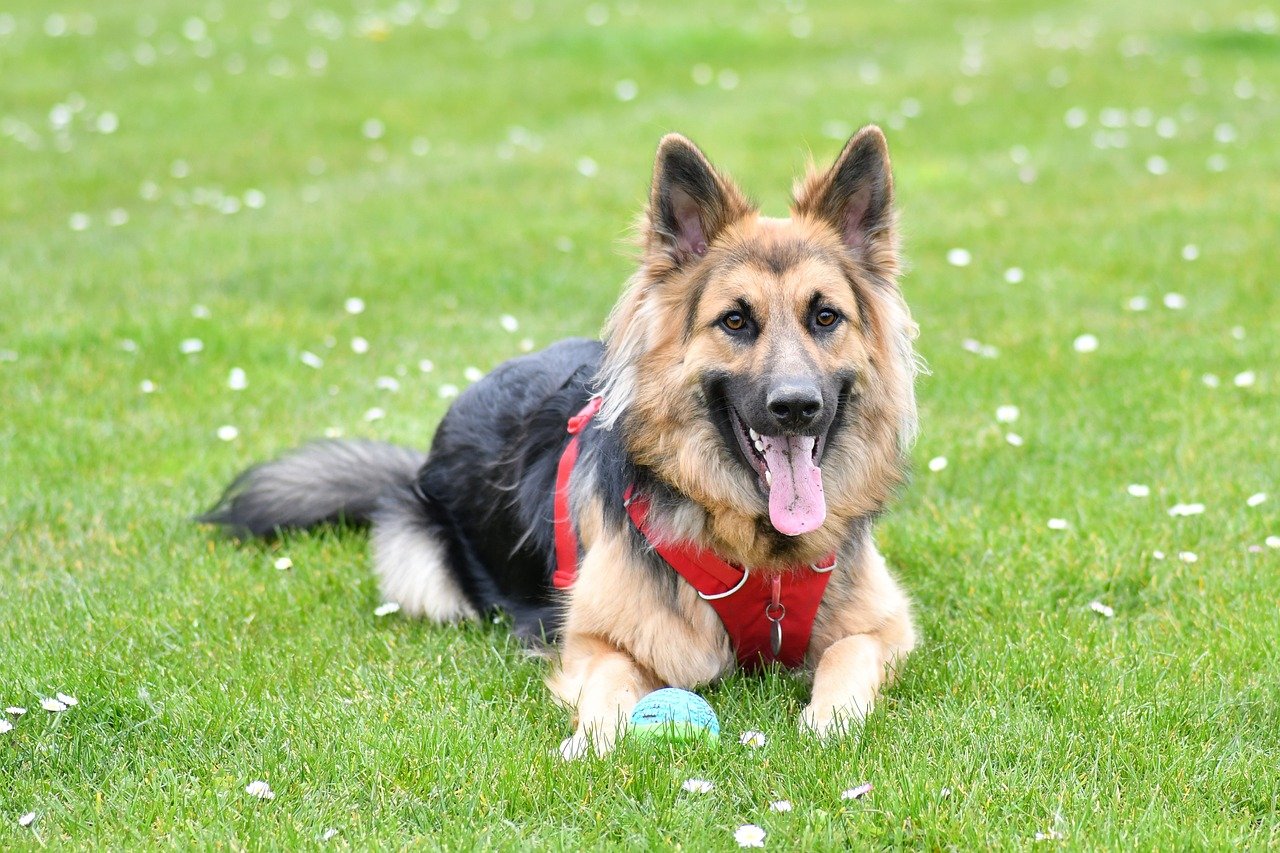
Pass/fail checklist: fit and handling
You want a harness that gives your dog comfort and keeps you in control. The best way to judge that is during real movement, not just in the entryway mirror.
| Test Item | Pass | Fail |
|---|---|---|
| Setup time | You can gear up without a wrestling match | Dog escalates before the walk even starts |
| Fit stability | Harness stays centered after turns and tension | Chest piece drifts or body strap rotates |
| Shoulder freedom | Dog walks out cleanly with even front reach | Short stride, stiff front movement, repeated hesitation |
| Security | No neck gap or backward slip under light pressure | Dog can loosen the harness by backing up |
| Dog response | Dog settles into the walk within minutes | Scratching, freezing, repeated stop-start behavior |
Troubleshooting table: common walk issues
If something feels off during the walk, check whether the problem is really the dog or just the harness choice for that dog and route.
| Symptom | Likely Cause | Fast Check | Fix |
|---|---|---|---|
| Chafing or red marks | Strap position, rough edges, or too much movement | Check behind the elbow and across the chest after the walk | Refit, reposition, or switch to a better-shaped design |
| Dog escapes backward | Body strap too loose or harness shape too shallow | Test gentle backward pressure in a safe area | Tighten body fit or choose a more secure style |
| Slips out forward | Neck opening too large or chest too low | Look for front gap when the leash comes tight | Re-adjust or move to a harness with better neck control |
| Restricted movement | Shoulder area sits too close to the joint or shifts under tension | Watch the dog walk away from you on a loose leash | Refit or choose a design with cleaner shoulder clearance |
| Twisting under load | Harness is too simple or too loose for the dog’s body shape | Notice whether it rotates during hard turns or pulling | Switch from quick-on convenience to more precise adjustment |
Real-world mistakes with large dog harnesses
The most common mistake is buying for the doorway instead of the walk. A harness may feel great because it clips in seconds, but if it shifts across the chest, lets the dog back out, or shortens the front stride, you have only moved the problem to minute three of the walk. The second mistake is assuming that more control features automatically mean better comfort. On some dogs, more structure helps. On others, it adds bulk without solving the real fit problem.
No-pull styles can help with management, but they still need careful fit and realistic expectations. A harness should support better handling, not replace reward-based walking practice or become the reason the dog moves awkwardly.
Failure Signs: When to Switch Your Harness
Spotting harness problems early
You need to watch for early signs that your harness is not working. Large dogs often show the problem through movement first and behavior second.
| Warning Sign | Description |
|---|---|
| Chest shifting | The harness rotates or walks sideways once leash tension appears. |
| Shortened stride | Your dog starts walking carefully, tightly, or unevenly through the front end. |
| Back-out or neck gaps | The dog can create space by reversing or twisting out of tension. |
| Gear resistance | Your dog freezes, ducks away, or becomes harder to harness over time. |
If you notice rubbing, pain signals, or breathing strain, stop and reassess the fit and walking setup. This article is for product judgment, not medical diagnosis.
When to try a different style
You should switch harness styles when the current one solves the wrong problem. If a quick-on design saves thirty seconds but then needs repeated mid-walk correction, it is not the best choice for that dog. If an adjustable harness feels great once fitted but turns every pre-walk session into a struggle, it may be too much setup for your routine.
Try a different style when:
- The harness keeps moving more than the dog does.
- Your dog walks well only when the leash stays tight.
- The dog is secure but clearly not comfortable.
- You keep choosing speed and then spending the walk fixing the fit.
- The harness only works on one kind of walk and fails on the others you actually do most.
Tips for best dog harness fit
Follow these steps for a better fit:
- Measure chest girth and lower neck area instead of guessing by breed or weight alone.
- Check the fit with the dog walking, turning, and backing up, not only while standing.
- Recheck after coat changes, weight changes, or if straps slip during repeated use.
- Use reward-based leash training alongside the harness so the gear is helping a skill, not standing in for it.
Tip: The best large dog harness is the one that stays secure, allows clean movement, and fits your real routine. If you have to choose, pick the style that causes fewer problems once the walk is underway.
You want a harness that matches your routine, not just the product label. For fast setup, look for models with simple entry and minimal pre-walk fuss. For walking comfort, choose designs with better chest balance, better shoulder clearance, and enough adjustment to stay stable on a large dog. Check the fit often, inspect for wear, and let the walk itself tell you whether convenience or comfort should carry more weight.
FAQ
How do you use a step-in harness for a large dog?
You lay the step-in harness flat, guide your dog’s front legs into the openings, pull the body section up, and clip it closed. This can be a practical quick-on option, but it still needs a movement check once your dog starts walking.
What makes a step-in harness different from a no pull harness?
A step-in harness is mainly about entry method and speed. A no-pull harness is mainly about leash position and control strategy. Some harnesses can overlap a little, but they are not solving the same problem.
Can you use no-pull dog harnesses for every walk?
Sometimes, but not always. If the fit is good and the route calls for more control, they can work well. For calmer dogs or relaxed walks, a simpler harness may feel cleaner and more comfortable. The better question is whether that harness matches this walk, not whether it can technically be used every day.