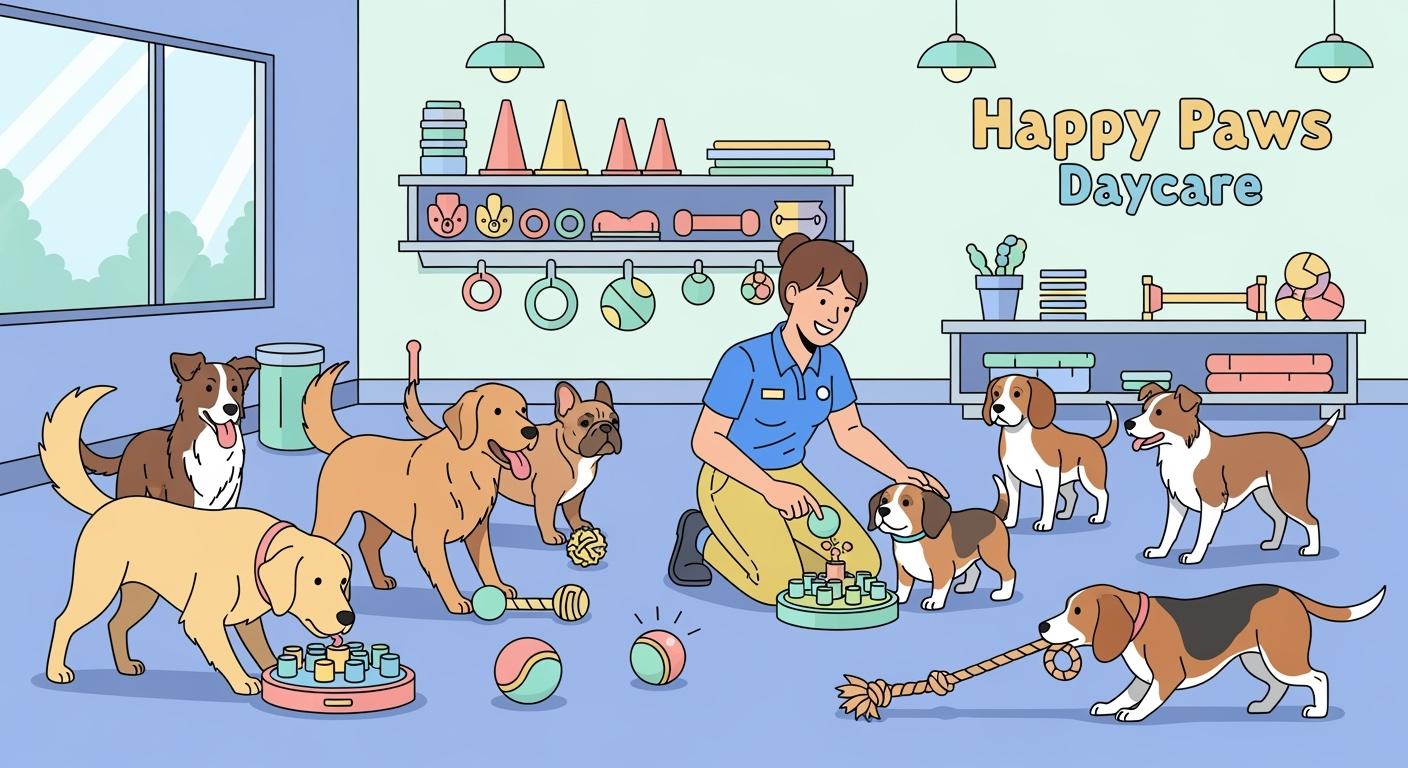
Choosing the best dog toys for daycare is not just about keeping dogs busy for a few minutes. The right toys help lower boredom, spread energy more evenly across a group, and make it easier to interrupt rough play before it escalates. The wrong toys do the opposite. They create crowding, guarding, fast breakage, and extra cleanup.
That is why the best approach is practical. You want toys that fit the dogs in front of you, hold up to repeated use, and stay simple to inspect between sessions. If you are comparing broader gear options first, start with the pet training and activity gear section so your toy choices stay aligned with the kinds of sessions you actually run.
What matters most: size safety, easy inspection, washable surfaces, and a mix of toy types so one play style does not dominate the whole group.
What good daycare toys actually need to do
In a home, one toy can succeed just because one dog loves it. In daycare or training groups, the toy has to work under more pressure. Dogs may crowd around it, grab from different angles, or get overexcited when food, movement, or tugging starts. A toy is useful only when it supports calmer, more structured activity rather than creating a new problem to manage.
Look for toys that do at least one of these jobs clearly:
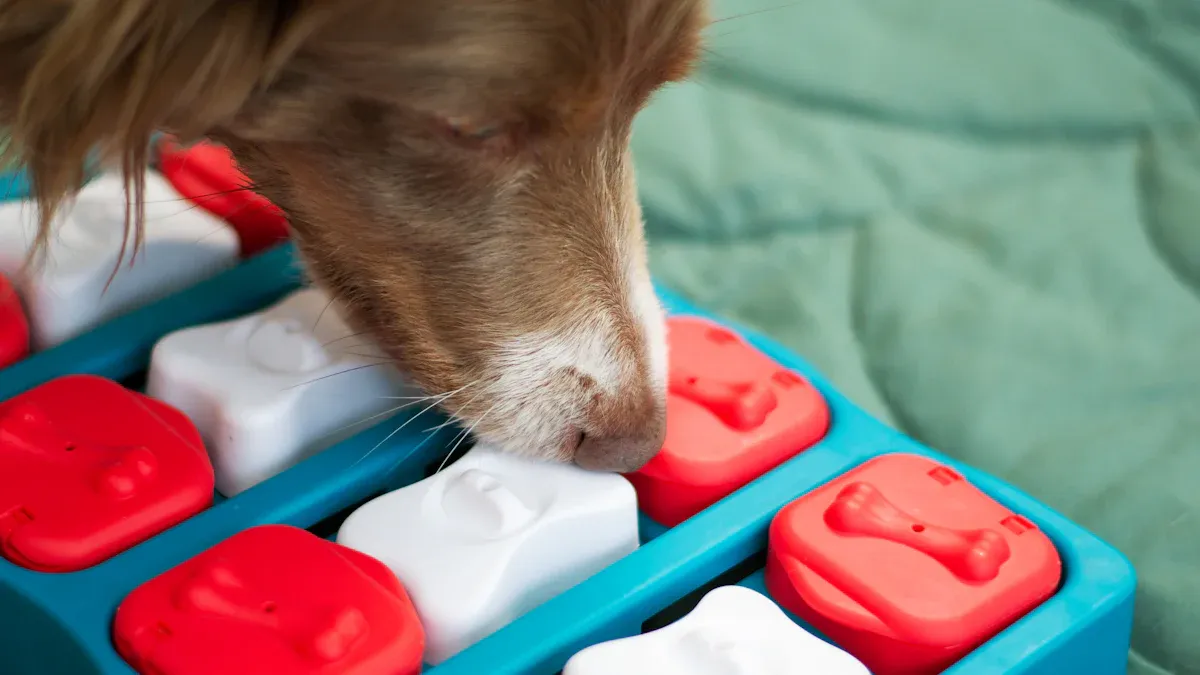
- slow dogs down with sniffing, licking, or problem-solving
- give active dogs a focused outlet without making the group frantic
- hold up to repeated chewing without shredding quickly
- stay easy to rinse, wipe, or machine wash after messy sessions
If a toy seems exciting but instantly creates lunging, guarding, barking, or frantic circling, it is not really helping the group. It may still work one-on-one, but it is a poor match for shared sessions.
How to match toys to group size, energy, and play style
Start by thinking about the dogs, not the toy category. A quiet sniff-heavy group does not need the same setup as a busy adolescent group that wants to chase and grab. Matching the toy to the group reduces conflict and makes supervision easier.
Quick matching checklist
- Nervous or overstimulated dogs: use snuffle mats, simple food puzzles, and slower treat-dispensing toys.
- High-energy groups: use fetch and tug only with clear turns, enough space, and direct supervision.
- Heavy chewers: use dense rubber chew toys sized well above mouth-swallow risk.
- Mixed-size groups: avoid small loose toys that the largest dogs can mouth too deeply.
- Food-sensitive groups: separate dogs if food toys raise tension instead of focus.
It also helps to rotate function, not just individual toys. One day you may lead with scent work, another day with problem-solving, and another with supervised tug or fetch. That keeps the routine fresh without forcing novelty every hour. For a broader comparison of toy categories by play style, this best dog toys guide is the most natural supporting page on your site.
Safety and cleaning checks before toys go into group use
A toy can look fine on the shelf and still fail quickly once several dogs use it. Before regular group use, do a short inspection routine every time. This takes less time than dealing with swallowed fragments, loose threads, or a toy that starts conflict.
| Check point | Pass sign | Fail sign |
|---|---|---|
| Size | Too large to disappear fully into the mouth | Easy to mouth deeply or carry off whole |
| Surface | Smooth enough to rinse or wipe thoroughly | Cracks, deep seams, trapped debris, hard-to-clean folds |
| Structure | No loose threads, weak knots, or lifting parts | Fraying rope, peeling layers, broken edges |
| Group effect | Dogs stay occupied without crowding or tension | Immediate guarding, pile-ons, or frantic chasing |
Cleaning matters just as much as durability. Food toys should be emptied and washed after every use. Rope and fabric toys need closer thread checks because even a small fray becomes a swallowing risk once several dogs grab the same spot. Hard toys with simple shapes are often easier to keep in rotation because staff can inspect them quickly and see damage earlier.
If your sessions depend on food rewards, it also helps to connect toy use with a simple training reward system so toys support calm engagement instead of random treat delivery and inconsistent handling.
Which toy types usually work best in daycare and training settings
No single toy type solves every need. The strongest setups usually mix slower enrichment with a smaller number of active-play tools.
Puzzle toys and treat dispensers
These are useful when you want focus, problem-solving, and lower-arousal engagement. They work well for dogs that get busy or vocal when idle, but they need spacing if food value causes competition.
Snuffle mats and scent games
These are especially helpful for dogs that settle better when they can sniff and search. They are not ideal for messy, crowded free-for-all use, but they are excellent for calmer stations and shorter decompression blocks.
Chew toys
Dense rubber chew toys often stay in rotation longest because they are straightforward to inspect and wash. They are best for solo use or small controlled groups, not chaotic pile-ons where one dog keeps stealing from another.
Tug toys and fetch toys
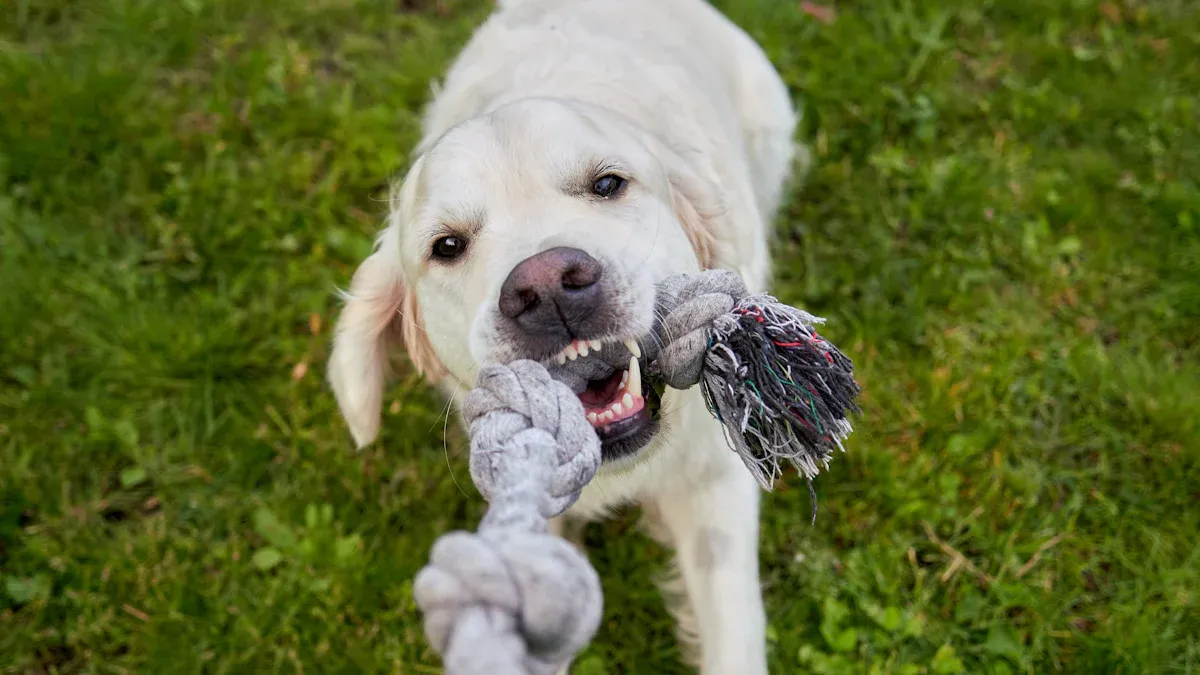
These can be great, but only when rules are clear. Tug and fetch often raise arousal faster than sniffing or food puzzles, so they need more supervision, better turn-taking, and enough space. If a group gets noisy or competitive fast, switch back to slower enrichment before behavior unravels.
Common toy problems in daycare and how to fix them fast
Most toy problems repeat. Once you know the pattern, fixes get easier.
- Dogs crowd one toy immediately. Put out more duplicates, spread them farther apart, or switch to slower individual activities.
- One dog guards food puzzles. Move food-based toys into separated stations or use non-food enrichment for that group.
- Toys get filthy too fast. Reduce soft or absorbent items in heavy-use groups and increase hard-surface toys that rinse faster.
- Rope toys fray too quickly. Retire them earlier and reserve them for short supervised sessions instead of open rotation.
- Chew toys become slippery or hidden. Count them back in after each block so nothing stays under beds, mats, or equipment.
The best long-term fix is usually not a different paragraph on the toy label. It is a cleaner match between the dogs, the activity level, and the amount of supervision available in that exact session.
FAQ
What are the best dog toys for daycare groups?
The best daycare toys are the ones that fit the dogs’ size, chewing strength, and activity level while staying easy to inspect and clean. In many groups, puzzle toys, dense rubber chews, snuffle mats, and supervised tug toys cover most needs better than novelty toys.
Are food toys always a good choice in daycare?
No. Food toys can help dogs focus, but they can also trigger crowding or guarding. They work best when dogs have enough space, similar comfort around food, and direct supervision.
How often should daycare toys be checked?
Check them before each group session and again when putting them away. Heavy-use toys may need mid-session checks if several dogs are chewing or tugging hard on the same item.
Which toys are easiest to clean?
Simple rubber, silicone, and hard plastic toys are usually easiest because they rinse, scrub, and dry faster. Fabric and rope toys need more careful inspection because they trap debris and wear faster.
When should a toy be retired right away?
Retire it immediately if you see cracks, loose threads, peeling layers, stuffing leaks, broken edges, or any piece small enough to swallow. Also remove toys that repeatedly trigger guarding or conflict in a specific group.