Dog Bed Buying Guide: Low Entry or Thicker Cushion for Better Rest
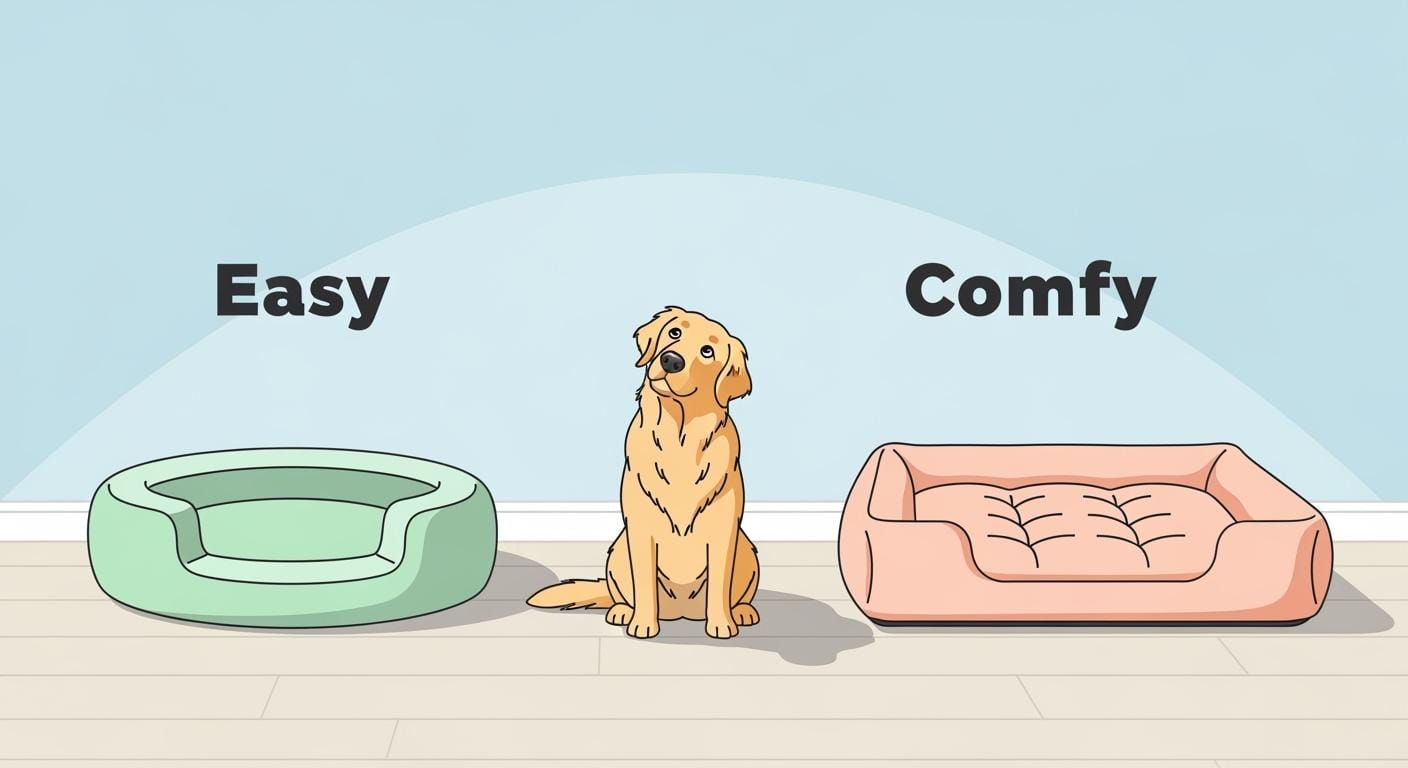
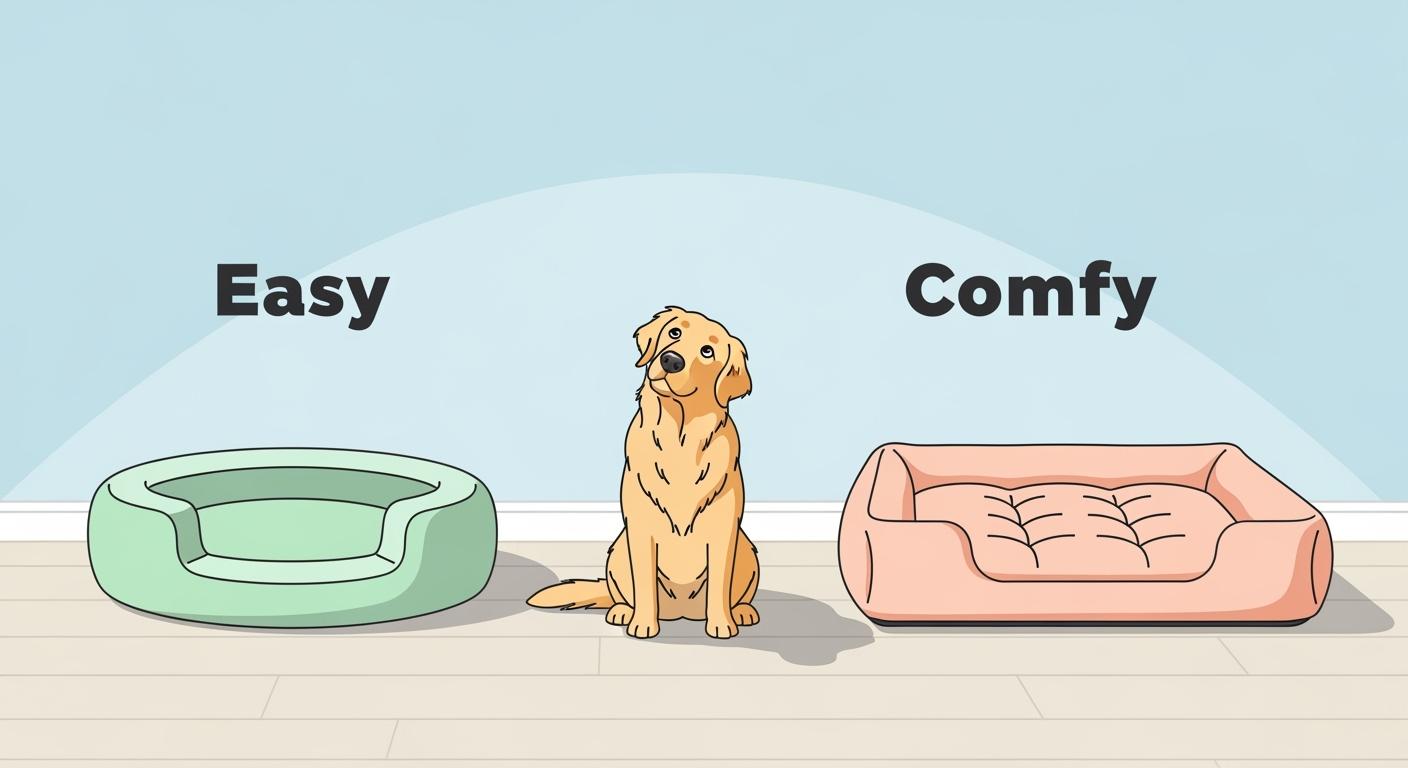
The right dog bed is the one your dog actually chooses to lie on without hesitating at the edge or shifting all night. The trade-off is rarely “thicker is better” — it is whether your dog needs an easier way in, more pressure relief once down, or both. Watching how your dog enters and exits the bed usually answers the question faster than any spec sheet.
Note: A bed cannot fix joint pain or anxiety on its own. Its job is to remove friction from rest — easy entry, even support, a stable surface — so the rest of your dog’s care can do its work.
Key Takeaways
Choose a low-entry mat-style bed when your dog hesitates to step in, sleeps only half-on, or has age-related stiffness that makes climbing hard. Choose a thicker orthopedic cushion when your dog gets in fine but struggles to stand up afterward, or sleeps restlessly on a thin surface. Many dogs benefit from a bed that combines both — a low edge with a firm, supportive interior.
Who This Guide Is For
This guide is written for owners choosing a bed for everyday home use, especially when a dog is aging, recovering from injury, or showing new signs of stiffness. It assumes you can observe your dog’s behavior on and around the bed across several days rather than judging from one nap.
It is not written for crate-only setups, outdoor kennels, post-surgical bedding prescribed by a vet, or working-dog rest gear, all of which have different priorities than household comfort.
How This Guide Was Written
The recommendations below come from hands-on observation of how dogs interact with different bed styles in home settings — entry behavior, sleep posture, stand-up effort, and bed avoidance over time. Where this guide describes how a feature affects comfort, the claim is grounded in what an owner can see across a few days at home, not in lab measurements or clinical trials.
This guide does not cite specific percentages, studies, or veterinary institutions, because the trade-offs discussed here are practical and verifiable by direct observation. If you want clinical evidence on joint disease or sleep quality in dogs, the right source is your veterinarian or a board-certified canine rehabilitation specialist, not a buying guide.
A Short Glossary Before the Trade-Offs
Three terms appear throughout this guide. They are worth defining because the bed trade-offs become much clearer once the vocabulary is shared:
- Entry height — the vertical distance your dog must lift a paw to step onto the bed surface. This is what matters for dogs with stiffness, not the overall bed thickness.
- Pressure relief — how evenly the bed surface distributes a dog’s body weight, especially around bony points like hips, shoulders, and elbows. Firm support spreads load; soft padding lets bony points sink.
- Stand-up effort — how hard your dog has to push to rise from the bed. A bed that swallows the dog into deep foam often raises this effort, even when it feels luxurious to lie down on.
The right bed minimizes entry height when stiffness is the issue, maximizes pressure relief when joint load is the issue, and keeps stand-up effort low in both cases.
When Easier Entry Helps and When Thicker Support Matters More
Who Benefits from a Low-Entry Bed
Entry height usually becomes the deciding factor for puppies still learning to climb, senior dogs with stiff joints, and dogs with chondrodystrophic (short-legged) builds like Dachshunds and Corgis where each step costs more relative to body size. Anxious dogs sometimes hesitate at any raised edge too, regardless of physical ability.
The signal to watch for is hesitation. A dog that pauses, circles, or steps half-on and stops is usually telling you the entry height is past their comfortable range. A dog that walks straight on and settles is telling you the entry is fine, whatever the spec sheet says.
Who Benefits from a Thicker Orthopedic Cushion
Thicker support usually becomes the deciding factor for larger breeds, lean dogs with little natural padding around the joints, and any dog showing slow or heavy stand-ups. The job of the cushion is to keep bony points from bottoming out against the floor, which is why firmness matters as much as thickness — soft foam that compresses fully gives no more relief than a thin mat.
Orthopedic-style beds are sometimes assumed to be a senior-only choice, but a young large-breed dog with developing joints often benefits too. The signal to watch for is restlessness during sleep and visible effort to rise.
Low-Profile Mat vs Thicker Cushion vs Bolster
| Type | Best Use Case | Why It Helps | What to Watch |
|---|---|---|---|
| Low-Profile Mat Bed | Puppies, seniors, dogs that hesitate at edges | Lowest entry height, easiest step-in | Limited pressure relief for heavy or bony dogs |
| Thicker Orthopedic Cushion | Larger breeds, lean dogs, joint-load concerns | Even pressure relief and lower stand-up effort when firm | Higher entry height; soft foam can raise stand-up effort instead of lowering it |
| Bolster Bed | Dogs that prefer to lean or curl while sleeping | Side support for head and body, often calming | Bolster walls add edge height that some seniors find awkward |
For most households, the right pick is the one that matches the specific friction your dog is showing — entry hesitation, mid-sleep restlessness, or hard stand-ups — not the one with the most padding on paper.
Common Mistakes That Cause Real Problems
- Choosing by overall thickness instead of by entry height and firmness separately.
- Assuming “orthopedic” on the label guarantees real support; soft foam labeled orthopedic still bottoms out.
- Buying a bed too small, so the dog hangs off the edge and the support never reaches the joints that need it.
- Skipping a washable cover, then discovering the bed cannot be cleaned without falling apart.
Tip: The most common mistake is treating “thicker” and “softer” as the same thing. A thick bed made of soft foam can be harder to stand up from than a thin firm one.
What Bed Height and Firmness Actually Change
Step-In, Sleep Posture, and Stand-Up
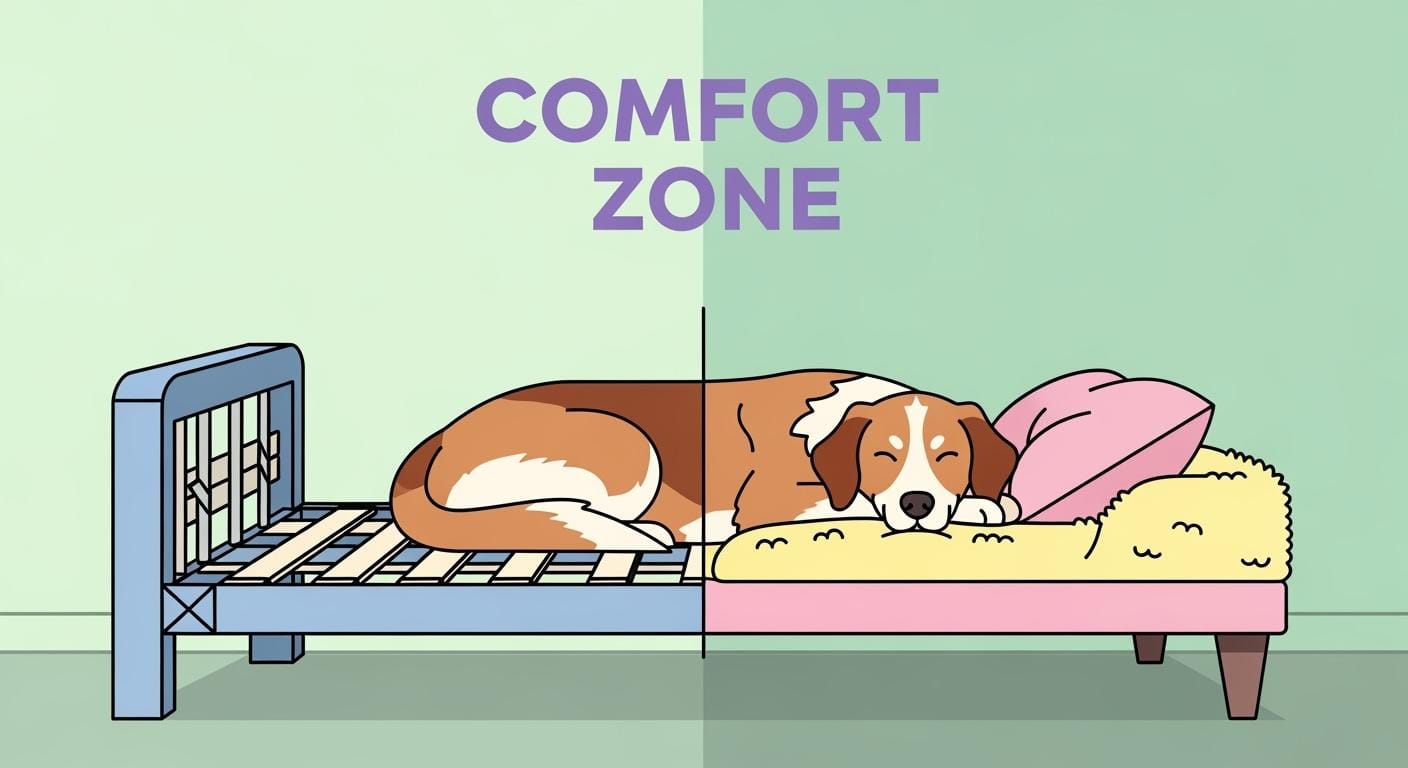
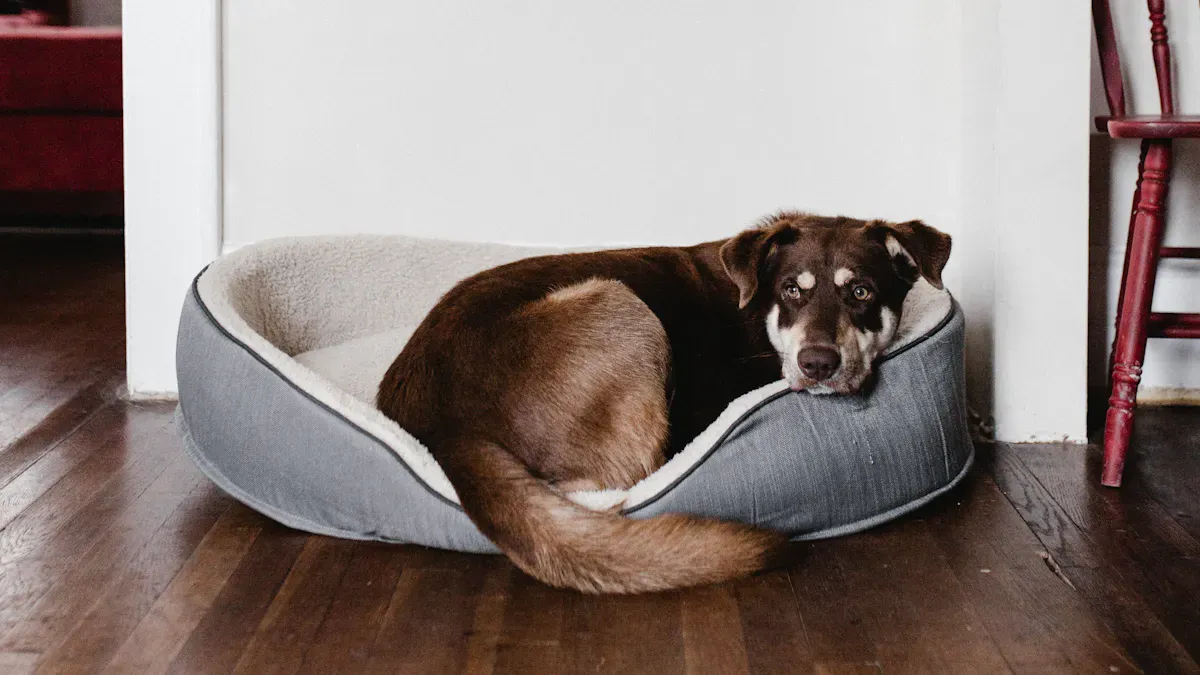
The three observable moments that decide whether a bed is working are the step in, the sleep posture once settled, and the stand-up. A bed can pass one and fail another — the most common pattern is a thick cushion that lies down beautifully but takes visible effort to rise from. Watching all three across several days usually reveals the real fit faster than any single nap.
Sleep posture matters because dogs that cannot get comfortable will keep adjusting. Repeated re-positioning, sleeping half-on, or migrating to the floor mid-night are all signals that the surface is not right — sometimes too soft, sometimes too small, sometimes the wrong shape for how that dog naturally curls or sprawls.
A Simple 3-Day Observation Protocol
- Day 1 — entry and exit: Place the bed in the dog’s usual rest area and watch how they approach it. Note whether they step on smoothly, hesitate at the edge, or avoid it. Do not coax — you want their natural choice.
- Day 2 — sleep posture: Watch how your dog lies down and how they sleep. Note whether they settle quickly, shift often, or sleep only half-on the bed.
- Day 3 — stand-up effort: Watch how your dog rises from the bed several times across the day. Note whether the rise is smooth, slow, or visibly hard, and compare it to how they rise from the floor.
Observation Log Template
Record these five fields across the three test days, so you have something concrete to compare across beds:
- Dog’s age, weight, and any known joint or mobility concerns
- Entry behavior — smooth, hesitates, or avoids
- Sleep posture — fully on and settled, half-on, or restless
- Stand-up effort vs floor stand-up — easier, same, or harder
- Bed choice across the day — chooses bed, splits between bed and floor, or avoids bed
Pass / Fail Fit Check
| Check Item | Pass Signal | Fail Signal | Improvement Plan |
|---|---|---|---|
| Entry and exit | Smooth step on and off, no hesitation | Pauses, half-step, or avoids the edge | Switch to a lower-profile mat or remove bolster walls |
| Sleep posture | Settles fully on the bed and stays there | Sleeps half-on, shifts often, or migrates to the floor | Reassess size first, then firmness |
| Stand-up effort | Rises about as easily as from the floor | Visible push, slow rise, or sinks back down | Switch to a firmer orthopedic cushion |
| Daily choice | Returns to the bed throughout the day | Skips the bed for the floor or another spot | Try a different style before buying again |
| Cover and cleaning | Cover removes, washes, dries fully | Stays damp, hard to clean, or cover does not come off | Use a waterproof or removable cover |
Disclaimer: A bed is not a treatment. If your dog shows new stiffness, pain on rising, reluctance to lie down, or any sudden change in mobility, consult your veterinarian. The signs in this guide help you choose a bed, not diagnose a condition.
Failure Signs in Use: Hesitation, Half-On Sleep, Hard Stand-Ups, Skipped Use
Troubleshooting Common Symptoms
| Symptom | Likely Cause | Fast Check | Improvement Plan |
|---|---|---|---|
| Dog hesitates or avoids the bed | Entry height past their comfort range | Watch step-in across several attempts | Switch to a lower-profile mat or remove bolster walls |
| Half-on sleeping | Bed too small or surface too soft to settle on | Compare bed footprint to dog’s full sprawl | Size up or switch to a firmer interior |
| Slow or heavy stand-up | Foam too soft or too compressed | Press the surface and watch how slowly it rebounds | Switch to a firmer orthopedic cushion |
| Bed sags quickly over weeks | Low-density foam or worn fill | Press near the center and check rebound | Replace fill or upgrade to higher-density foam |
| Bed smells or stains hold | No washable cover or non-permeable surface | Inspect cover after one wash cycle | Switch to a removable, washable, waterproof cover |
Tip: Test any new bed for at least three days before judging it. Dogs often need a short adjustment period before showing their real preference.
When to Switch Style
If the same fit problem returns after adjusting size or position two or three times, the bed shape probably does not match your dog’s actual needs. A larger size will not fix an entry-height problem, and a thicker cushion will not fix a firmness problem. Treat persistent failure signs as a signal to switch style, not as something to wait out.
What This Guide Will Not Tell You
To stay honest about scope, this guide deliberately does not cover:
- Specific brand picks, model numbers, or prices.
- Clinical evidence or percentages on joint disease, pain reduction, or sleep quality in dogs.
- Veterinary treatment of arthritis, dysplasia, or post-surgical recovery — those are vet-and-rehab questions.
- Outdoor kennel bedding, crate-only setups, or working-dog rest gear, which have different priorities than household comfort.
If your question sits in any of those areas, a buying guide is the wrong tool — a veterinarian or canine rehabilitation specialist is the right one.
Quick Recommendation by Dog Type
| Dog Type | Recommended Setup | Key Consideration |
|---|---|---|
| Puppy or short-legged breed | Low-profile mat with soft but supportive fill | Entry height matters most |
| Senior or stiffening dog | Low-edge bed with firm orthopedic interior | Easy entry plus low stand-up effort |
| Large or lean adult dog | Thicker firm orthopedic cushion sized for a full sprawl | Pressure relief at hips, shoulders, and elbows |
| Anxious or curl-up sleeper | Bolster bed with a low front edge | Side support without blocking entry |
FAQ
How do I know if my dog needs lower entry or more cushion?
Watch the step-in and the stand-up — hesitation at the edge points to entry height; visible effort rising points to firmness.
Is a thicker bed always more supportive?
No — a thick bed made of soft foam can compress fully and give less support than a thinner firm one.
How often should I clean a dog bed?
Usually about once a week, more often for dogs that come in muddy or wet, and always let it dry fully before reuse.
Does my dog need an orthopedic bed if they are not a senior?
Not always, but large breeds and lean dogs often benefit from firm pressure relief well before any age-related stiffness appears.