
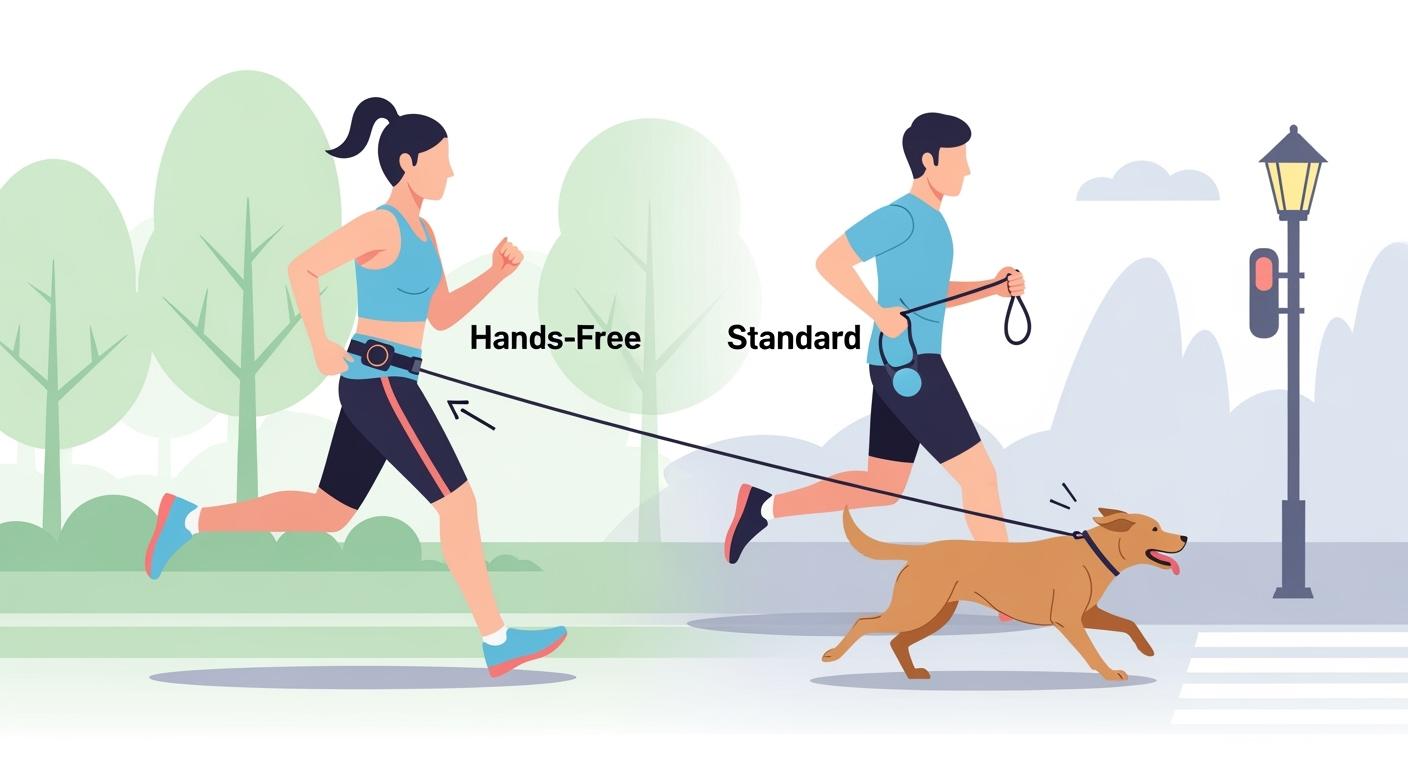
To pick between hands-free and standard leashes, see if you can control your dog when it pulls. If you take too long to get control back or feel a strong tug, use a standard leash instead. Use hands-free only if your dog walks calmly and you can react fast to sudden moves.
Option | Best for | Pros | Cons | Notes |
|---|---|---|---|---|
Hands-free | Dogs that pull gently and predictably | Lets you use your hands freely | Harder to control in emergencies | Needs a harness, quick-release, and bungee |
Standard | Training or dogs that pull hard or act wild | Gives you fast control | Not as comfy for running | Six feet is best for good control |
Hybrid | Both walking and running | Can be set up different ways | You might need to switch by hand | Must have a backup spot to grab |
Long line | Exploring big open spaces | Gives your dog more freedom | Not good for running or control | Don’t use for running, good for recall |
Short leash | Busy places or near traffic | Gives you the most control | Dog can’t move much | Use for safety in risky places |
Always think about safety and control first. If your dog pulls too hard or you can’t control it, switch to a standard leash right away. For running with your dog, consider using a dog running leash that allows for hands-free movement while ensuring safety and control.
Key Takeaways
Pick a leash that matches how your dog pulls. Use hands-free if your dog pulls softly. Use standard if your dog pulls hard.
Always clip leashes to a no-pull harness, not a collar. This helps stop injuries and gives you more control.
Check your leash often for damage or fraying. Clean it to keep it safe and stop skin problems.
Try your leash setup in a quiet place first. If your dog pulls hard or gets wild, use a standard leash right away.
Make safety and comfort most important. Pick leashes with quick-release clips and reflective parts for extra safety.
Dog Running Leash Safety Boundaries
Hands-free Leashes: When They’re Safe
You can use hands-free leashes for running or hands-free walking when your dog shows mild, predictable pulling. Your dog should stay on one side and keep a loose line most of the time. Always connect the dog running leash to a no-pull harness, not a collar. Choose a tugline length between 1.5 and 2.5 meters for hands-free setups. Use a hip belt at least 7 cm wide to protect your spine. Add a bungee segment to absorb sudden jerks, but remember that a bungee does not replace training or control. Make sure your hands-free leash has a quick-release at the belt and a backup grab point for emergencies.
Tip: Inspect your dog leashes often for frayed webbing or weak spots. Clean with mild soap and air dry.
Standard Leash: Required Scenarios
Switch to a standard leash if your dog pulls hard, lunges, or zig-zags. Use a standard leash for training, busy areas, or when your dog cannot recover to a loose line after distractions. The best dog leash for control is a standard fixed-length leash, about 6 feet long. Always connect to a no-pull harness for safety. Standard leashes give you fast control and help teach polite walking. Avoid retractable leashes for running, as they can cause injuries and reinforce pulling.
Leash Type | Length Range | Benefits | Best For |
|---|---|---|---|
Standard Fixed-Length Leash | 4 to 6 feet | Excellent control, ideal for walks and training | Most dogs, especially puppies |
Long Line/Training Leash | 10 to 50 feet or more | Allows exploration, great for recall practice | Training, open spaces |
Retractable Leashes | Varies | Lack control, can cause injuries | Not recommended |
Downgrade and Stop Rules
Follow the downgrade rule if your dog shows explosive lunging, frequent zig-zagging, or sudden stops that pull you off balance. Switch from hands-free to standard immediately. Stop running if you see lameness, sudden stopping, or labored breathing. Always put control first, then run. Use a no-pull harness for every type of dog leashes to reduce risk.
Note: If your dog is still learning loose-leash skills, start with a standard leash before trying hands-free walking.
Assessing Walking Style and Pulling Pattern
Walking Style Types
Walking style describes how you and your dog move together during runs or fast walks. It shows where your dog stays in relation to you and how steady the pace is. Each style affects how much control you have and what leash works best.
Walking Style | Pros | Cons |
|---|---|---|
Casual Stroll | Low effort, calming, ideal for relaxation or recovery days. | May not reach moderate intensity; limited calorie burn. |
Brisk Walking Routine | Meets CDC intensity standards; improves endurance and cardiovascular function. | Requires consistency; some dogs may resist faster pace. |
Interval-Based Walks | Alternating fast and slow segments boosts metabolic demand; keeps walks engaging. | Needs planning; not all dogs adapt well to pace changes. |
Hiking or Trail Walking | Uneven terrain increases muscle activation; higher MET values due to elevation changes. | Limited accessibility; weather-dependent. |
You should notice if your dog walks beside you, in front, or weaves across your path. This helps you pick the best dog leash for your routine.
Pulling Pattern Types
Pulling pattern means how your dog applies force to the leash. Some dogs pull all the time, while others only pull when excited or distracted. Knowing your dog’s pulling issues helps you stay safe and choose the right gear.
Leash Type | Description | Pros | Cons |
|---|---|---|---|
Front-Clip Harness | Attaches to the dog’s chest, redirecting pulling behavior. | Reduces pulling, distributes force evenly | May require adjustment time for dogs |
No-Pull Harness | Designed to prevent pulling without causing harm. | Force-free, aligns with positive training | Improper fit can cause discomfort |
Traditional Collar | Common but can exacerbate pulling and cause injury. | Simple and widely available | Can lead to tracheal and spinal injuries |
You should watch for steady pulling, sudden lunges, or zig-zagging. These patterns show if hands-free running is safe or if you need more control.
Why These Affect Leash Choice
Your walking style and your dog’s pulling pattern both shape your leash decision. Here is how they matter:
Hands-free leashes work best when you and your dog keep a steady pace and your dog does not pull hard.
If your dog pulls or changes direction often, you need a leash that gives you fast control.
Dogs with mild, predictable pulling can use a dog running leash with a harness and bungee for comfort.
Strong or sudden pulling issues mean you should use a standard leash and a no-pull harness for safety.
Always match your leash to your real walking habits and your dog’s behavior. This keeps both of you safe and comfortable.
Tip: Watch your dog’s behavior on every walk. If you see new pulling issues, switch to a more controlled setup right away.
Step-by-Step: Matching the Leash to the Dog
Low-risk Test Run
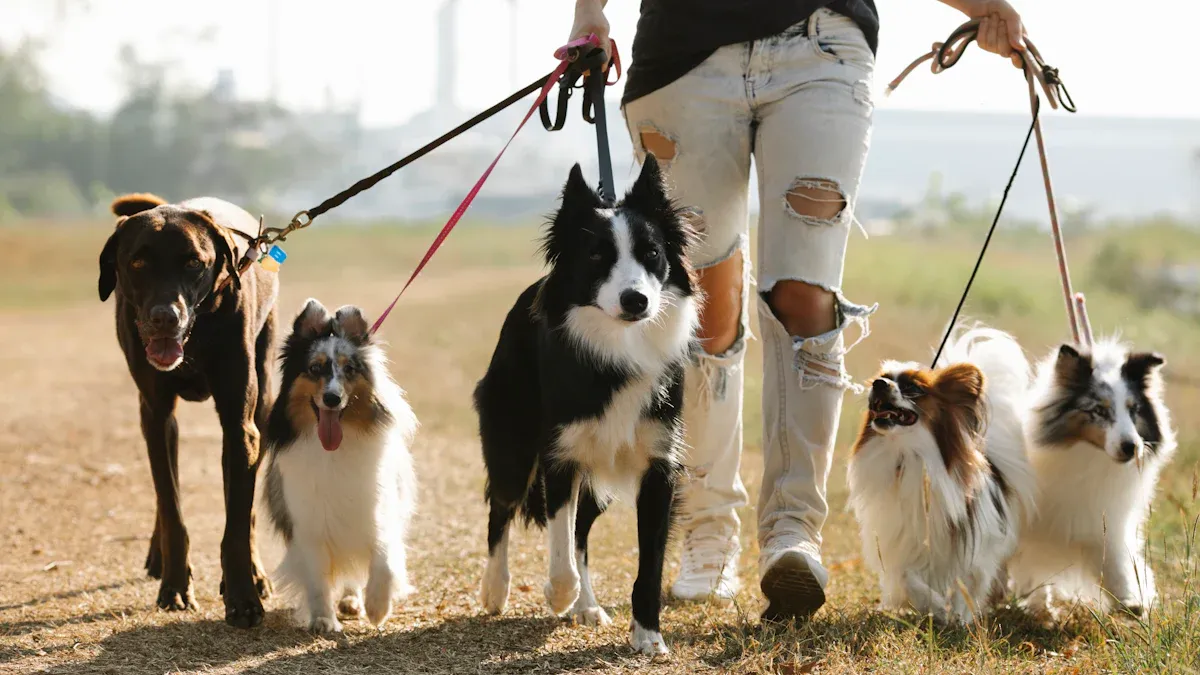
Try a low-risk test run first. Pick a quiet place with few people. Keep the test short, about 5 to 10 minutes. Watch your dog closely during the run. If your dog keeps a loose line and stays on one side, you pass. If your dog lunges, zig-zags, or pulls you off balance, you fail. You must use a standard leash if you cannot get control back quickly.
Tip: Always connect your dog running leash to a harness, not a collar. This helps prevent injuries and makes you more comfortable.
Choosing Hands-free or Standard
Pick the leash type that matches your dog’s real pulling pattern and your walking style. Use hands-free only if your dog pulls gently and you know what to expect. Use a standard leash if your dog pulls hard, changes direction a lot, or gets distracted easily. Think about your own comfort and safety first.
Here is a table to help you compare hands-free and standard leashes:
Advantages (Hands-free) | Disadvantages (Hands-free) |
|---|---|
Frees hands for natural running form | Risk of imbalance if dog pulls aggressively |
Distributes pulling force across your body | Possible back strain if not fitted correctly |
Ideal for multitaskers and runners | Not suitable for very large or untrained dogs |
Supports better posture | May interfere in tight spaces |
Can handle two dogs efficiently | Learning curve for tension adjustment |
Follow these steps to pick the best dog leash for you:
Choose your main activity, like running or walking.
Measure your waist or hips for a good belt fit.
Check your dog’s pulling pattern and how it reacts.
Look at the leash’s weight limit.
Make sure it has emergency quick-release clips.
If you use two leashes, check for swivel connectors.
Test adjustable straps for easy setup.
Read the store’s return policy.
Leash Features and Setup
Pick dog leashes that are safe and comfortable. Look for these features:
Feature | Description |
|---|---|
Secure, twist-lock carabiner | Keeps the leash attached during movement |
Shock-absorbing bungee design | Reduces strain from sudden pulls |
Smooth side-to-side movement | Prevents tangling and awkward resistance |
Double handle control | Waist handle for hands-free, secondary handle for close guidance |
Reflective stitching | Improves visibility in low light |
Adjustable leashes let you change length and tension for different activities. Use a bungee segment between the harness and belt. Always add a backup grab point, like a traffic handle, for emergencies. Pick a leash with a grip that works when wet or muddy. Check local leash laws before you go running.
Actionable Checklist for Setup:
Connect leash to a harness, never a collar.
Put the bungee segment between harness and belt.
Use a quick-release at the belt for emergencies.
Add a backup hand control, like a traffic handle.
Pick reflective materials for safety.
Choose a grip that works in wet or muddy conditions.
Check local leash laws to follow the rules.
When to Downgrade Immediately
Switch to a standard leash if your dog lunges hard, zig-zags a lot, or stops suddenly and pulls you off balance. Stop running if your dog limps, breathes hard, or acts strange. Control is more important than speed. Always be ready to change setups to stay safe.
Note: If your dog cannot get back to a loose line after distractions, hands-free is not safe. Use a standard leash until your dog learns better control.
Objection Handling:
Worried about safety? Use a harness and quick-release for fast control.
Concerned about bungee risks? Bungee absorbs shock but does not replace training.
Occasional pulling? Start with short walks and upgrade only after consistent loose-leash behavior.
Bad weather or fear of falling? Use a standard leash in rain, snow, or on slick surfaces.
Unsure about hands-free? Test in a safe area and downgrade if you feel unsafe.
Training and Maintenance Tips
Teach your dog basic commands like “left,” “right,” “stop,” and “easy” before running. Start with short walk-jog intervals. Train your dog to stay on one side to avoid tangling. Check your leash and harness often for damage. Clean your gear as the directions say to stop odor and skin problems. Bring water for your dog on long runs. Watch for signs of overheating, like heavy panting or falling behind. Use reflective gear when it is dark outside. Stay on routes where dogs are allowed.
Owner note: Walk before you run. Teach your dog to stay on the same side every time for smoother runs.
By following these steps, you make sure you match the leash to your dog based on real pulling patterns and walking style. Adjustable leashes and hands-free setups work best when you focus on safety, comfort, and training.
Fit, Not a Fit, and Next Steps
Hands-free Fit Criteria
You want to make sure your hands-free leash setup matches your dog’s behavior and your running style. Use this checklist to decide if hands-free is a good fit:
Watch your dog’s behavior. If your dog walks calmly and does not react strongly to distractions, hands-free may work.
Measure your dog’s size. Make sure the harness fits well for both small and large breeds.
Check your dog’s activity level. Active dogs need padded, breathable harnesses. Occasional walkers can use simpler models.
Think about the climate. Mesh works best in hot weather. Water-resistant materials help in wet conditions.
Look for safety features. Choose comfortable grips, secure clasps, and reflective details.
Read user feedback. See what other owners say about durability and fit.
Avoid flimsy hardware or unclear sizing guides.
Red Flags: Not for Hands-free
Hands-free leashes do not suit every dog or situation. Watch for these warning signs:
Your dog lunges, zig-zags, or stops suddenly and pulls you off balance.
The leash hardware feels weak or sizing is unclear.
Crowded trails, icy sidewalks, or places where a fall could cause injury.
Your dog cannot recover to a loose line after distractions.
If you see any of these, switch to a standard leash right away.
Alternatives and Adjustments
If hands-free is not safe, try these options:
Use a harness-based design that spreads pressure evenly.
Pair a front-clip harness with a control leash for dogs that pull.
Pick adjustable straps and durable materials like nylon or polyester.
Try a dual-handle leash for close control.
Start with walking before running to build loose-leash skills.
You can find the best dog leash by matching your dog’s needs and your activity level.
Buyer note: Clarify use cases, training requirements, downgrade rules, and safety statements in product descriptions and inserts. This helps reduce returns and incidents.
B2B Actions and Support
If you need more details for your business or organization, you can request a quote, sample, or spec sheet. Reach out for support on leash selection, training resources, or bulk orders. You can improve safety and satisfaction by choosing the right dog running leash for your clients.
You need to pick a leash that matches your dog’s pulling and walking style. This helps keep you and your dog safe and in control. Experts say you should do these things:
Pick a leash that works for your dog’s actions and your plans.
Use a harness for running or strong pulls, not a collar.
Check your leash and harness often. Follow the rules in your area.
Good Leash Choice Benefits | Bad Leash Choice Problems |
|---|---|
You can control your dog better and stop escapes. | Your hands can get hurt by rough or thin leashes. |
Both you and your dog feel more comfortable. | Your dog might choke or feel pain if the leash is attached wrong. |
Training works better because you give clear signals. | The leash can tangle, break, or not work when stressed. |
You and your dog stay safer near cars or in busy places. | The leash may not work well everywhere you go. |
Always be ready to change your leash setup if your dog starts pulling too hard. Use the guide to help you pick the best leash for your dog. Ask for help or more info if you need it.
FAQ
What is the safest way to run with my dog?
You should use a harness, not a collar. Pick a leash with a quick-release and a backup grab point. Test your setup in a quiet area first. Always watch for signs of discomfort or overheating.
How do I know if hands-free leashes are right for my dog?
Check your dog’s pulling pattern. If your dog walks calmly and keeps a loose line, hands-free may work. If your dog lunges or zig-zags, switch to a standard leash for better control.
What length should my running leash be?
For hands-free running, choose a tugline between 1.5 and 2.5 meters. For standard walking, use a leash about 6 feet long. These lengths help you keep control and follow safety guidelines.
Can I use the same leash for walking and running?
Some leashes adjust for both activities. Make sure your leash has a backup handle and fits your harness. Always check if your dog’s behavior matches the activity before switching.
How do I find the best dog leash for my needs?
Look at your dog’s size, pulling pattern, and your activity. Choose a leash with strong hardware, a quick-release, and a comfortable grip. Test different setups to see which works best for you and your dog.






