
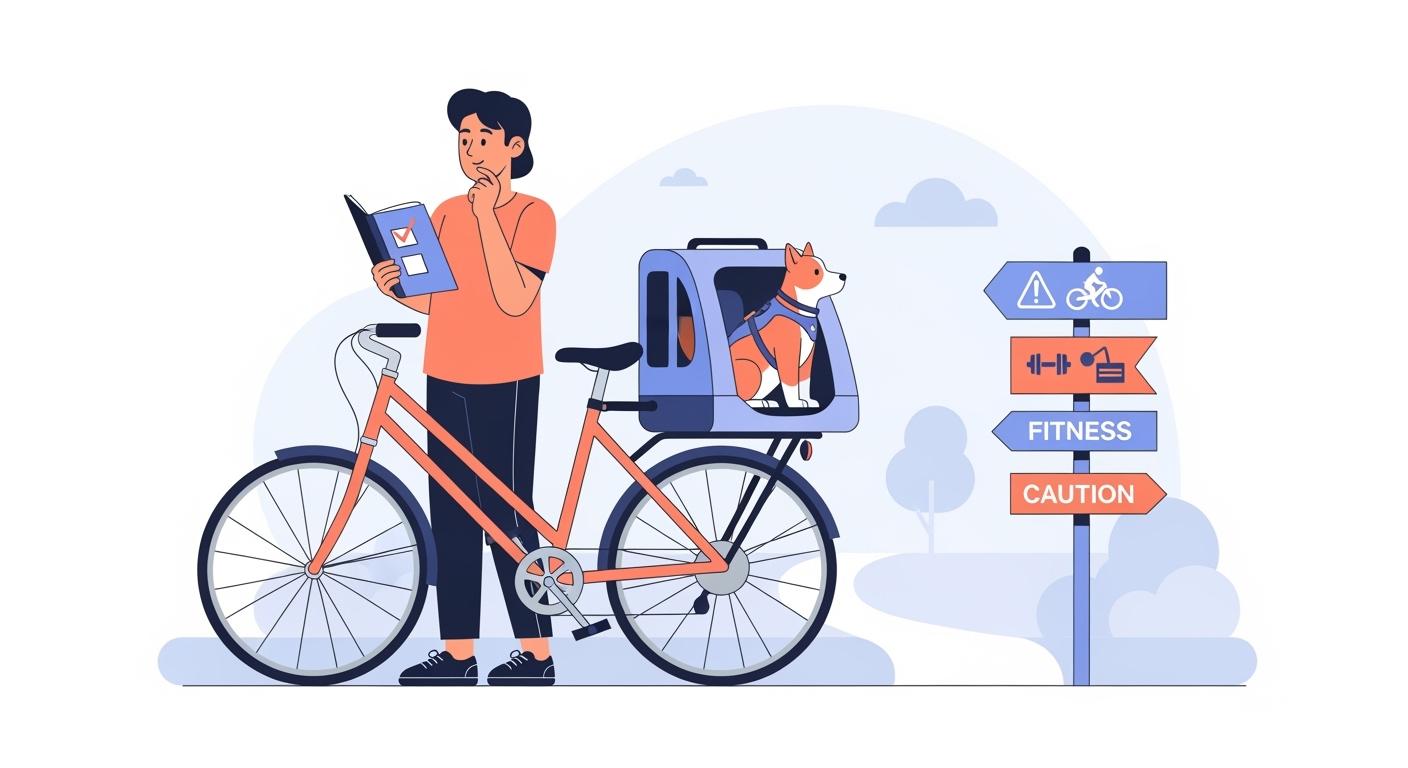
A carry dog bike setup can be safe when the carrier is firmly mounted, the dog is restrained with a harness tether, and the fit matches your dog’s size and posture. Start by measuring your dog, confirming the carrier’s labeled weight limit, and checking that your dog can sit, turn, and breathe comfortably with good airflow. If your dog is new to riding, build up with short practice sessions before longer trips.
Tip: Use the Quick Reference Card for numbers and clear choices.
Most safety problems come from three avoidable mistakes: choosing a carrier that wobbles, installing it on a bike that it doesn’t properly fit, or guessing at size instead of measuring. Prioritize solid mounting hardware, clear weight limits, and real-world stability feedback from riders—then test the setup at walking speed before you ride farther.
Key Takeaways
- Always secure your dog with a harness tether to prevent falls during rides.
- Choose a carrier that fits your dog’s size and weight to ensure safety and comfort.
- Plan safe routes with little traffic and avoid steep or rough paths for a smoother ride.
- Watch for signs of stress in your dog, such as panting or trying to escape, and stop riding if you see them.
- Use a carrier with good airflow and stability features to keep your dog cool and secure.
Carry Dog Bike Safety: Main Risks and How to Reduce Them
Main Safety Risks for Dog Bike Carriers
There are three big risks when you use a dog bike carrier. First, your dog might fall or get out if the harness or tether is not secure. Second, the bike can tip over if you go over the weight limit or use a weak attachment. Third, your dog can get too hot or stressed, especially if it is warm or there is not enough air.
To lower these risks, always follow the weight limit on the carrier. Use a harness and the inside tether, not just a collar. Make sure your dog can sit and lay down without squishing its chest. The carrier should have good airflow. Watch your dog for signs of stress or getting too hot. If you use an e-bike with dog carrier, check the mount before every ride. Never ignore if the attachment feels loose or moves.
Essential Safety Features for Safe and Comfortable Rides
You need to look for important safety features when you pick a dog bike carrier. The table below shows which features help stop accidents and keep your dog happy.
| Safety Feature | Description | Effectiveness in Preventing Accidents | Comfort Consideration |
|---|---|---|---|
| Secure Attachment Systems | Keeps the dog safely fastened to the bike so it does not fall. | High | N/A |
| Adjustable Frames | Lets you change the size for your dog, making it more steady. | Medium | High |
| Proven Stability | Rear-mounted trailers are very steady and safe. | High | N/A |
| Proper Harness Use | Very important for keeping your dog safe on rides. | High | N/A |
| Weight Capacity | Makes sure the carrier can hold your dog’s weight. | High | N/A |
| Ventilation | Helps your dog stay cool and comfy during rides. | N/A | High |
Always check that the carrier’s attachment does not move when your dog is inside. Adjustable frames help you fit the carrier to your dog. Rear-mounted trailers are best for big dogs because they are steady. Use a harness and inside tether every time. Never go over the weight limit. Good airflow keeps your dog cool and happy.
Route and Riding Tips for Safety
You can make rides safer by planning your route and getting ready. Here are some tips:
- Pick wide, smooth roads or trails for your first rides.
- Choose routes with little traffic to keep things calm.
- Find shady paths if it is hot outside.
- Check how far and how steep the ride is. Dogs get tired fast.
- Bring water and a bowl that folds for your dog.
- Take your dog to the vet before you start riding often.
- Watch the weather, especially heat and humidity.
- Look up trail conditions so you do not hit mud or slippery spots.
- Pack first aid supplies for you and your dog.
If you use an e-bike with dog carrier, start with short and slow rides. Test the carrier to make sure it is steady before going faster or farther. Always watch your dog for any signs of being upset.
Warning Signs to Stop the Ride
You must stop riding if you see any of these warning signs:
- Your dog is panting a lot, drooling, or has red gums (these are signs of heat stress).
- Your dog tries to jump out or escape the carrier.
- The carrier moves or feels loose on the bike.
- Your dog whines, barks, or looks scared.
- Your dog cannot sit or lay down easily.
- You see your dog breathing hard or acting weak.
If you see any of these signs, stop the bike and check your dog. Move to a cool, shady spot. Give your dog water and let it rest. Do not ride again until your dog feels better and the carrier is safe.
Tip: Always care about your dog’s comfort and safety more than finishing your ride. A safe and comfy ride is best for both you and your dog.
Dog Size, Carrier Types, and Rear-Mounted Trailers
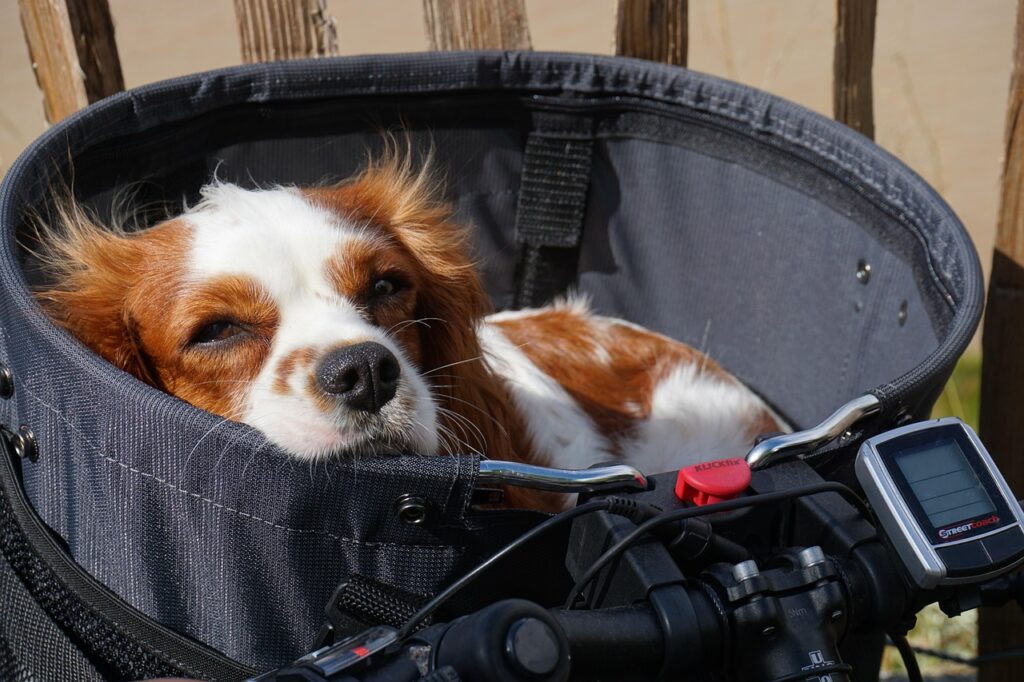
Why Weight and Fit Matter Most
You need to match your dog’s size and weight to the right carrier. If you pick a carrier that is too small or weak, your dog may not stay safe. A carrier that is too big can shift and make the bike unstable. Always check the weight limit on the label. Never guess. The right fit lets your dog sit and lie down without squeezing its chest. Your dog’s head and airway must stay clear. Good airflow keeps your dog cool.
The table below shows how size and weight affect carrier choice:
| Factor | Small Dogs | Large Dogs |
|---|---|---|
| Carrier Type | Soft carriers for brief outings | Hard shell for security |
| Type of Travel | Flexible, can use soft carriers | Requires hard-sided carriers for air travel |
| Health Considerations | May prefer soft for airflow | Needs secure carriers to lower crash risks |
| Escape Risk | Lower risk | Higher risk, needs secure latches |
Tip: Always use a harness and internal tether, not a collar, for any dog size.
Comparing Front, Rear, Trailer, and Backpack Carriers
You have four main options for carrying your dog on a bike. Each type works best for certain dogs and situations. Use the table below to compare them:
| Option | Best for | Pros | Cons | Notes |
|---|---|---|---|---|
| Front-mounted basket/bag | Small dogs (up to 13 lb) | Easy to watch your dog, quick access | Affects steering, limited to light dogs | Use a well-ventilated front basket for airflow |
| Rear-mounted rack bag | Medium dogs (up to 20-25 lb) | Less steering impact, more stable | Harder to monitor dog, needs strong rack | Check attachment and weight balance |
| Trailer style | Large dogs (over 20 lb), long rides | Very stable, best for big dogs, low escape risk | Needs space, harder to store, more setup | Dog bike trailers are safest for heavy dogs |
| Backpack style | Small, calm dogs, short trips | Good for errands, easy to carry off bike | Can strain rider, less stable for long rides | Only use for short, low-risk rides |
Note: Front-mounted carriers are for small dogs within labeled limits. Heavier dogs need rear-mounted or trailer style.
Sizing Rules for Safe and Comfortable Rides
You must follow these sizing rules for every ride:
- Check the carrier’s weight limit. Never exceed it.
- Make sure your dog can sit and lie down naturally.
- The carrier must not compress your dog’s chest.
- Your dog’s head and airway must stay clear.
- The internal tether must be short enough to stop jumping but long enough for comfort.
- Always test the carrier with your dog before your first real ride.
For example, most handlebar baskets hold up to 13 lb. Some larger front baskets go up to 20 lb, but always check the label. Rear-mounted carriers can hold more, but you must check your bike’s rack strength. Trailers work best for large dogs and long rides.
Buyer Checklist for Dog Bike Carriers
Before you buy, use this checklist to avoid common mistakes:
- Make sure the weight limit fits your dog and any gear.
- Check that the basket or carrier matches your dog’s length and height.
- Test if your bike frame can hold the carrier without tipping.
- Confirm the mounting system stays tight and does not loosen.
- Look for mesh panels or vents for airflow.
- Choose strong materials for protection.
- Ensure there is an internal harness tether and secure anchor point.
- Check if the mounting can adjust or come off easily.
- Test your bike’s brakes and handling with the added weight.
- Look for weather protection and visibility features.
- Make sure you can clean the carrier easily.
- Review the instructions for clarity.
- Ask about replacement parts and warranty.
- Check that fit labeling is clear and easy to follow.
- Review any safety claims for real-world proof.
Buyer note: Most returns and complaints come from unclear fit limits, weak mounting, or poor restraint and ventilation. Always check specs, instructions, and safety checks before listing or buying.
Where Safety Claims Fail
Some carriers claim to fit all dogs or promise universal safety. These claims often fail in real use. If a carrier does not have a secure attachment, it can shift or fall. If the internal tether is missing or too long, your dog can jump out. Poor ventilation can cause heat stress, especially for short-muzzle dogs or in hot weather. Always check the real limits, not just the marketing. Test the carrier with your dog before any long ride. Never trust a carrier that feels loose or unstable.
Owner note: Your dog’s safety depends on your choices. Always measure, test, and watch your dog during every ride.
Temperament Fit and Training for Safe and Comfortable Rides
Temperament Green Flags for Carry Dog Bike Use
You want your dog to feel safe in the carry dog bike. Dogs that recover quickly from surprises and can stay settled in a confined space tend to do best. Look for steady body language, basic cue response, and comfort around traffic noise and passing bikes. A calm temperament reduces sudden movements that can affect balance and makes every ride safer for both of you.
Temperament Red Flags and High-Risk Dogs
Some dogs should not use a dog bike carrier. If your dog jumps at moving things, gets scared in tight spaces, or tries to get out, do not use a carrier. Dogs that are very active or react to animals or loud sounds can be risky. Dogs with breathing problems, heat issues, or anxiety need extra care. If your dog shows these signs, try a trailer or go for walks instead.
Remember: Temperament is as important as size. Even small dogs are not safe if they panic or try to jump out.
Acclimation and Training Plan for Dog Bike Carriers
Start with short, happy times in the carrier. Put treats inside and let your dog look around. Slowly close the carrier, move it gently, and make each session longer. Milo, a Chihuahua, liked his carrier after weeks of gentle practice and treats. Always use a harness tether and take your time.
| Do’s | Don’ts |
|---|---|
| Use soft words and keep routines the same | Never use the carrier to punish your dog |
| Keep first rides short, about 10–15 minutes | Don’t ignore signs like panting or whining |
| Use a harness to keep your dog safe | Don’t put too many things in the carrier |
| Clean the inside every week to keep it fresh | Don’t leave your dog alone in the carrier |
| Give water after longer rides | Don’t skip training steps to save time |
- Make sure the carrier is clean and locked.
- Let your dog go potty before loading up.
- Check the weather to make sure it is safe.
- Bring treats and water for your dog.
- Set a goal, like staying calm for two minutes.
- Plan how to get your dog out if it gets scared.
Harness and Tether Safety Habits
Always use a harness tether, not a collar. Attach the tether to a harness that fits well. This stops jumping and keeps your dog safe. Check the tether and attachment before every ride. Crash-tested designs and crash-tested construction help keep the carrier steady and safe. Never leave your dog alone in the carrier.
Mistakes List: Common Safety and Training Errors
- Skipping training steps
- Using a collar instead of a harness
- Not watching for stress signs
- Putting too much stuff in the carrier
- Forgetting to check the attachment
- Using a carrier with bad airflow
If you use the right dog bike setup, have a calm dog, use a harness tether, and pick a stable carrier, you can have safe rides. If you use an e-bike with dog carrier, always check safety before each trip.
Fit vs Not a Fit: Decision Checklist, Alternatives, and FAQs
Fit Checklist for Carry Dog Bike Safety
Use this quick checklist before your first ride:
- Your dog fits within the carrier’s labeled weight and size limits.
- The carrier attaches securely and does not shift when loaded.
- Your dog stays calm, sits, and lies down without stress.
- The harness tether keeps your dog safe inside.
- The carrier has good airflow and space for your dog’s posture.
- You plan to ride on low-risk routes with steady bike handling.
Owner note: Always watch your dog for signs of stress or discomfort during every ride.
Not a Fit Checklist and High-Risk Scenarios
Stop and reconsider if you see any of these:
- Your dog exceeds the carrier’s weight or cannot sit comfortably.
- The carrier mount feels loose or unstable on your bike.
- Your dog panics, tries to escape, or reacts to noise and motion.
- The carrier lacks a secure harness tether or proper ventilation.
- Your dog has breathing issues or heat stress risk.
Buyer note: Most sizing returns and complaints come from unclear fit, weak mounts, or missing restraint features. Always check specs and test before listing or buying for pet bike solutions.
Alternatives: Rear-Mounted Trailers and Other Options
If your dog is not a fit for a carry dog bike, try these:
- Use a rear-mounted dog bike trailer for larger or anxious dogs.
- Choose a rear-mounted carrier for better stability and higher weight limits.
- Walk, run, or use a pet stroller for pet-friendly transportation on busy routes.
Dog Bike Carrier FAQs
- Can any e-bike with dog carrier pull a trailer?
- What is the safest speed for towing a dog trailer with an e bike?
- How do you get dogs used to the trailer?
- Is a trailer better than a basket or dog seat?
Next Steps for Buyers
Measure your dog. Review the fit checklist. Test the carrier on your bike before your first real ride. If you have doubts, contact the carrier maker. Always choose the safest option for your dog and your bike.
Quick Reference Card:
- Fit: Secure mount, calm dog, harness tether, airflow, labeled weight limit
- Not a fit: Overweight, unstable, reactive, no tether, poor ventilation
- Alternatives: Rear-mounted trailers, rear carriers, walking, stroller
You can keep your dog safe by following these main rules.
- Always check the carrier’s weight limit before you ride.
- Never put in more weight than the carrier allows.
- Measure your dog so it has enough space inside.
- Use a harness tether and a strong leash clip every time.
- Pick carriers with mesh panels for good airflow.
- Shock-absorbing floors help make rides smoother.
- Brake early and go slow when you carry extra weight.
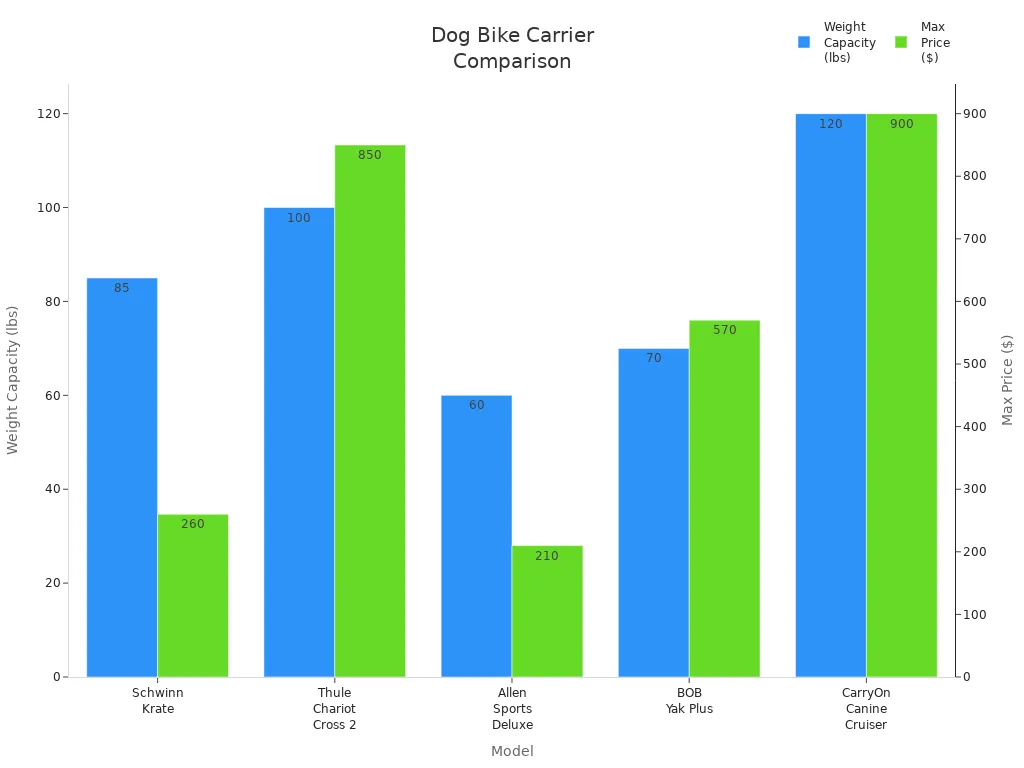
Look at the table below to see how top models compare:
| Model | Weight Capacity | Suspension | Hitch Type | Price Range |
|---|---|---|---|---|
| Schwinn Krate | 85 lbs | Basic shock absorption | Quick-release clamp | $220–$260 |
| Thule Chariot Cross 2 | 100 lbs (2 passengers) | Advanced front/rear | Thule Hitching System | $700–$850 |
| Allen Sports Deluxe | 60 lbs | None | Universal fit clamp | $180–$210 |
| BOB Yak Plus | 70 lbs | Front-only | Swiveling coupler | $500–$570 |
| CarryOn Canine Cruiser | 120 lbs | Optional upgrade | Customizable | $650–$900 |
If you have questions, ask the carrier maker for help and verify compatibility with your bike. You can request a quote, sample, or spec sheet. Measure your dog, check the carrier, and pick the safest choice for your pet.
FAQ
How do you measure your dog for a bike carrier?
Use a tape measure. Measure your dog’s length from nose to tail base. Measure height from floor to shoulder. Weigh your dog. Check these numbers against the carrier’s label. Make sure your dog fits inside with room to sit and lie down.
Can you use a collar instead of a harness with the carrier tether?
No. Always use a harness. A collar can choke your dog or let it escape. Attach the carrier’s tether to a well-fitted harness for safety. Check the harness before every ride.
What should you do if your dog gets anxious during the ride?
Stop the bike right away. Move to a quiet spot. Give your dog water and comfort. Let your dog rest until it calms down. Try shorter rides next time. Use treats and praise to build confidence.
Are bike trailers safer for large or anxious dogs?
Yes. Bike trailers offer more space and stability. You can use them for bigger dogs or dogs that get nervous. Always follow the trailer’s weight limit. Check the mount and harness before each ride.






