
A dog bed for car rides should make travel calmer and cleaner, but the useful choices are usually simpler than they look. The best setup is not just the softest bed or the thickest padding. It is a bed that fits your dog’s resting posture, sits flat on the seat, stays stable during turns and braking, and is easy to clean after real trips.
If you want to compare the broader in-car category first, start with pet car travel gear. That makes it easier to tell the difference between a comfort bed, a booster-style seat, and a restraint-based setup before you buy.
What a dog bed for car rides should actually do
A car bed should give your dog a defined resting space, reduce sliding, and make routine trips more comfortable. It can also help protect upholstery from fur, dirt, and moisture. What it should not do is create a false sense of safety. A bed improves comfort and helps with organization, but by itself it is not a crash-protection device.
This matters most on longer drives, stop-and-go traffic, and trips where your dog shifts positions often. A good bed should let your dog lie down naturally without slumping into a corner or perching awkwardly on a raised edge. If your dog likes to lean or curl up, supportive bolsters can help, but they should not crowd the usable sleep surface so much that the bed becomes smaller than it looks.
If the bed includes an internal tether, treat that as a movement-control feature, not proof of full restraint performance. The tether should clip to a harness, not a collar, and it should be set short enough to prevent jumping out without forcing an awkward position. If you need a deeper look at how tether setups work and where they fail, this car tether compatibility guide is the most useful next read.
Fit and stability checks before you drive
Start with two measurements: your dog’s relaxed lying length and the usable width and depth of the seat where the bed will sit. A bed that looks roomy in a product photo can still be a poor fit if the sidewalls eat into the usable space or the base bridges unevenly across the seat. Your dog should be able to lie down naturally without half the body resting on a bolster or hanging over an edge.
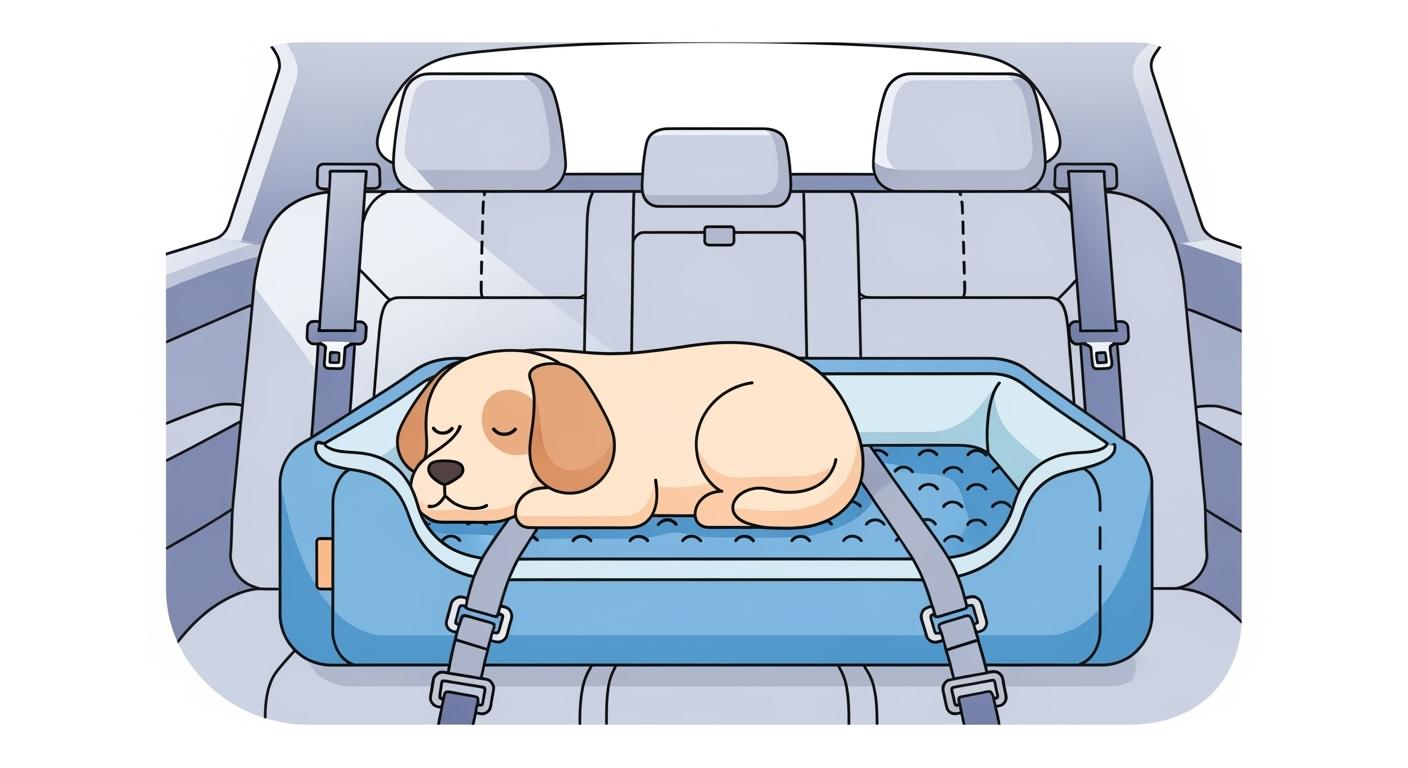
Then check the bed on the actual seat. The base should sit flat. It should not rock, tilt, or fold upward near the seat gap. Push it forward and side to side before your dog gets in. If it slides easily on leather, bunches at the corners, or tips when weight shifts, the setup is not ready yet.
Pay attention to where the bed sits in relation to seat belt buckles and restraint access points. The bed should not block the hardware you still need to reach. A common mistake is choosing a bed that feels cozy but covers the buckle area so completely that every adjustment becomes awkward.
Which materials matter most in daily use
Materials matter less for marketing and more for cleanup, temperature, and how the bed keeps its shape. A cover that looks soft but traps hair, holds odor, or stays damp after wiping can become annoying quickly in real use. Easy-clean fabric, removable covers, and a base that does not collapse after repeated use usually matter more than decorative trim.
Padding should support the dog without sinking too deeply. If the base compresses too much, your dog may start leaning into the sides or bracing during turns. If the bolsters are too high or stiff, smaller dogs may end up sitting awkwardly instead of settling into the bed. On warm trips, heavier plush materials can also trap heat faster than buyers expect.
Durability matters most around seams, zipper areas, tether attachments, and anchoring points. These are the places that usually age first. If stitching loosens, the bottom loses grip, or the bed starts collapsing into the seat gap, comfort and stability both get worse at the same time.
Installation tips that make the first ride easier
Place the bed in the back seat whenever possible. Use every anchor or strap included with the design instead of assuming one connection point is enough. Tighten the setup so the bed stays flat, then test it with firm pushes before your dog gets in. If your dog’s weight immediately makes the bed tilt or shift, stop and correct it before driving.
For the first real ride, keep the trip short. Watch whether your dog settles, keeps a natural posture, and stays inside the sleeping area without constant repositioning. If the bed slides, bunches, or starts leaning toward the footwell, that is not a small issue to ignore. It usually means the bed is the wrong size for the seat, the anchoring is weak, or the base is too soft for the dog’s weight.
At each break, check anchor tension, trapped moisture, tangled tethers, and any new rubbing points. A simple dog travel essentials kit helps here because wipes, water, towels, and cleanup supplies are easy to reach without digging through the car while the dog waits.
Common mistakes and quick fixes
Choosing by padding alone: Soft does not always mean supportive. Fix it by checking whether the bed still keeps a level resting surface under your dog’s full weight.
Ignoring seat shape: A bed can fit the dog but not fit the car. Fix it by measuring the actual seat and testing for rocking or bunching before the first drive.
Using the bed as the only safety plan: A bed improves comfort, but it does not replace an appropriate restraint strategy. Fix it by pairing the setup with a harness-based tether or another suitable travel solution when needed.
Skipping heat and moisture checks: Some fabrics warm up quickly, especially on longer drives. Fix it by checking your dog at stops and choosing covers that are easier to wipe and dry.
Leaving installation half-finished: Loose straps and partially used anchors are a common reason beds slide. Fix it by using every anchoring feature the design provides and testing movement before every trip.
FAQ
Is a dog bed for car travel safer than letting my dog ride loose?
It is usually better for comfort, boundary-setting, and reducing sliding, but a bed alone is not a full restraint. It should not be treated as crash protection unless the system clearly says it was tested for that use.
Should I put the bed in the front seat or back seat?
The back seat is usually the better place. It keeps your dog away from front airbags and usually gives you more stable placement options.
How do I know the bed is the wrong size?
If your dog cannot lie down naturally, keeps leaning into the walls, hangs over the edge, or the bed bridges awkwardly across the seat, the size or shape is wrong for the dog or the vehicle.
What is the most important installation check?
The bed should sit flat and stay stable when you push it side to side and forward. If it tilts, slides, or folds into the seat gap before the ride starts, the setup is not ready.
Which material is easiest to live with?
Usually a durable, wipe-friendly fabric with a removable cover. Easy cleaning matters more than it seems because car beds collect fur, dirt, moisture, and odor quickly on normal trips.






