

You want to know how to put on a dog harness for the first time, or how to put on a dog harness. The key is to build positive associations and use small steps. Reward your dog for calm behavior instead of using restraint. Gradual exposure and treats make this process easier for both you and your dog. Watch for stress signals like freezing or backing away. If you notice pain, coughing, breathing changes, or mobility issues, consult your veterinarian. For fear, biting, or repeated refusal, seek advice from a qualified trainer. Need help? Reach out to a professional for guidance.
Key Takeaways
Use a reward-based approach to help your dog feel safe and curious about the harness.
Keep training sessions short, around 1 to 3 minutes, to prevent stress and maintain your dog’s interest.
Always check the harness fit to ensure comfort and safety; adjust as needed to avoid rubbing or chafing.
Watch for stress signals from your dog, and if you see them, simplify the next step in the training process.
If your dog resists or shows signs of pain, pause and consider seeking help from a professional trainer.
Calm Cooperation: What to Do and What to Avoid
Willing approach vs. restraint
You want your dog to feel safe and curious about the no-pull dog harness. Start with a reward-based plan. Show the harness, then give a treat. Let your dog sniff or look at it. Do not grab or hold your dog in place. You build trust by letting your dog choose to come closer. This method uses gradual desensitization and counter-conditioning. Each step should feel easy for your dog. If you see stress, make the next step simpler. End every session with a win, even if it is just a sniff. If you need more tips, ask a certified trainer for help.
Tip: Keep sessions short and positive. One to three minutes is enough for most dogs.
Never force the harness
Never force the no-pull dog harness onto your dog. Forcing can create fear and make future sessions harder. Dogs show stress in many ways. Watch for these signals:
Tucked tail or lowered body
Flattened ears or wide eyes
Lip licking, yawning, or shaking off
Avoiding, hiding, or freezing
Barking or growling
If you see these signs, pause and give your dog space. Lower your expectations for the next try. Forcing the harness can break trust and increase resistance. You want your dog to feel safe and relaxed.
Phase | Description | Outcome |
|---|---|---|
1 | Baseline Assessment | You spot stress signals and know your dog’s comfort level |
2 | Micro-Stress Exposure | You start with easy steps to build confidence |
3 | Progressive Challenge | You add new steps slowly as your dog relaxes |
4 | Integration and Maintenance | Your dog wears the harness calmly in real life |
When to pause or seek help
Sometimes, you need to stop and get help. Watch for these signs:
Pain or distress when wearing the harness
Broken skin, swelling, or trouble walking
Harness issues that do not improve with practice
If you see these problems, contact your veterinarian or a professional dog trainer. They can help you find a better fit or a new plan. If you have questions, reach out to a local expert for support.
Need advice? Many trainers offer online help for harness training.
You can teach your dog to love the no-pull dog harness with patience and rewards. Always check for comfort and safety. If you feel stuck, ask for guidance.
Step-by-Step: how to put on a dog harness for the first time
Learning how to put on a dog harness for the first time can feel overwhelming, but you can make it easy with a calm, step-by-step plan. You want your dog to feel safe and curious. Reward-based training and gradual exposure work best. Always check for comfort and safety as you go.
Harness equals treats, no touching yet
Place the harness on the floor in a quiet room.
Let your dog see or sniff the harness.
Give a high-value treat every time your dog looks at or approaches the harness.
Do not touch your dog with the harness yet.
If your dog backs away, pause and reward any interest from a distance.
Keep this session short, about five to ten minutes, to prevent stress.
Tip: End the session while your dog is still happy. You can repeat this step several times a day.
Touch and reward: brief contact
Pick up the harness and gently touch your dog’s shoulder or chest with it.
Give a treat right after the touch.
Remove the harness and let your dog relax.
Repeat this step until your dog stays calm when touched.
Watch for stress signals like freezing or lip licking. If you see them, go back to the previous step.
Note: Short, positive sessions help your dog learn faster. You can use a calm voice and slow movements.
Practice head-through or step-in
For a head-through harness, hold a treat on the other side of the opening.
Let your dog put their nose through to get the treat.
For a step-in dog harness, reward your dog for placing one paw near the opening, then two, then stepping in.
Do not rush. Give a treat for each small success.
If your dog hesitates or backs away, make the step easier and reward any approach.
Tip: Use treat scattering or a target cue to encourage movement. Calm body language helps your dog feel safe.
Buckle, reward, short indoor walk
Once your dog is comfortable, buckle the harness gently.
Give a treat right after buckling.
Check the fit. The harness should stay centered and allow freedom of movement.
Let your dog wear the harness for a short time indoors.
Walk a few steps together and reward calm behavior.
Remove the harness before your dog gets annoyed or starts pawing at it.
Comfort check: Make sure the harness does not rub behind the front legs or ride into the throat.
Quick Cooperation Improvement Tips:
Teach your dog to touch your hand (targeting) for easier harnessing.
Practice a chin rest on your palm for calmness.
Scatter treats on the floor to keep your dog relaxed.
Need help choosing the right harness or planning your dog’s first session? Ask your local trainer or pet store for advice.
You now know how to put on a dog harness for the first time using a calm, reward-based approach. Short, positive sessions work best. Always check for comfort and safety. If your dog resists, slow down and reward small steps. This method helps your dog enjoy wearing a harness and makes walks more fun for both of you.
Troubleshooting: resistance when you put on a dog harness
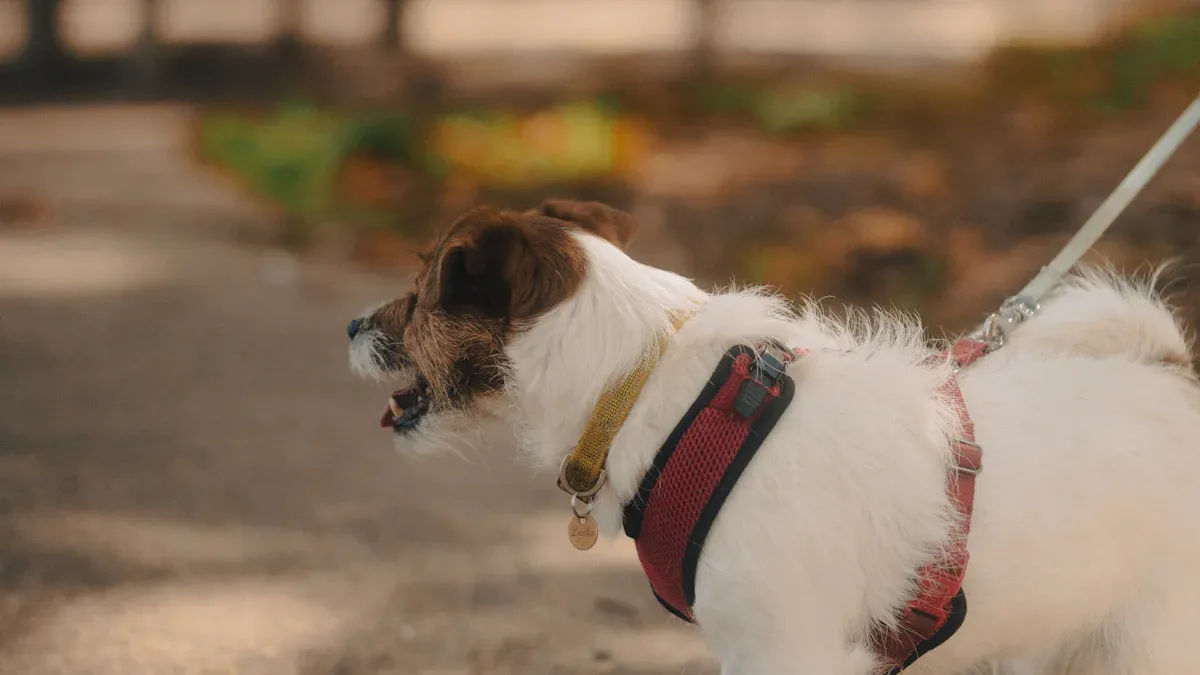
Dogs sometimes resist harness training, even with a calm plan. You may see freezing, backing away, pawing, mouthing, or sensitivity to touch. These are normal stress signals. You can help your dog feel safe and build trust with a few simple steps.
Freezing: go back a step
If your dog freezes when you try to put on the harness, pause right away. Freezing means your dog feels unsure or scared. Here is what you can do:
Check the harness fit. Make sure it does not pinch or rub.
Stop the session and let your dog relax.
Next time, start with an easier step. Show the harness, give a treat, then put it away.
Try again later when your dog feels calm.
Do not punish fear. Make the next session easier and reward any calm behavior.
Backing away: reward approach
When your dog backs away, reward any movement toward the harness. Give a treat when your dog sniffs or looks at the harness. This teaches your dog that approaching the harness brings good things. Over time, your dog will feel more confident and less likely to back away.
Pawing or mouthing: shorten wear, check fit
If your dog paws at the harness or mouths your hands, keep sessions short. Remove the harness before your dog gets annoyed. Check the fit to make sure nothing rubs or feels tight. Reward your dog for calm moments. If you see rubbing or discomfort, adjust the straps or try a different style.
Handling sensitivity: practice separately
Some dogs dislike being touched. Practice gentle touches without the harness first. Use treats to reward calmness when you touch your dog’s chest, shoulders, or legs. Go slow and keep sessions short. This helps your dog feel safe during harness training.
Need help choosing a harness or fitting it for the first time? Ask your local trainer or pet store for support.
Reward-based, gradual harness introduction works best. Always check for comfort and safety. If your dog struggles, slow down and celebrate small wins.
Mistakes, safety tips, and FAQs
Common mistakes to avoid
Many first-time dog owners make simple mistakes that can lead to stress or discomfort for their dogs. You can prevent these issues by learning what to avoid. Here is a table of common mistakes, why they cause problems, and how you can fix them:
Mistake | Why It’s Problematic | Solution |
|---|---|---|
Harness too loose | Dog may wriggle out; lack of control | Adjust girth strap until only two fingers fit underneath |
Chest panel too high | Restricts shoulder movement; causes chafing | Lower panel so it sits just behind front legs |
Forcing paws roughly | Creates fear or resistance over time | Use treats and patience; stop if dog shows stress |
Using incorrect size | Poor weight distribution and potential injury | Measure girth behind ribs and consult sizing chart |
Ignoring stress signals | Increases fear and resistance | Watch for freezing, lip licking, or backing away |
Skipping comfort checks | Leads to rubbing, chafing, or escape | Check fit and adjust before every walk |
Rushing the process | Breaks trust and slows progress | Use reward-based, gradual introduction |
Tip: Always use patience and positive reinforcement. Never rush or force the harness.
Safety and comfort do-not list
You want your dog to feel safe and comfortable every time you use a harness. Follow these safety tips:
Do not use a harness that is too tight or too loose.
Do not let straps twist or buckle rotate.
Do not allow the chest panel to ride up into the throat.
Do not ignore redness, hair loss, or signs of chafing.
Do not skip checking for shoulder freedom.
Do not use a harness with broken or worn parts.
Do not leave the harness on for long periods indoors.
Do not force your dog’s paws through openings.
Do not use a harness that restricts movement.
Do not walk your dog if the harness shifts sideways.
Do not ignore signs of pain or reluctance to walk.
Do not use a harness that touches the elbows during movement.
Safety check: The harness should stay centered, allow shoulder movement, and never rub behind the front legs.
Fit basics for stress-free walks
Proper fit keeps your dog safe and happy. You should:
Adjust the girth strap so only two fingers fit underneath.
Make sure the chest strap sits just behind the front legs.
Keep about one hand’s width between the belly strap and the front leg.
Ensure the chest strap allows the shoulder blades to move freely.
Place the chest bridge junction at the upper end of the sternum, away from the larynx.
Watch for signs of discomfort like hunching, redness, or reluctance to walk.
Choose the correct size by measuring your dog’s girth behind the ribs.
Use a padded or mesh harness if your dog has sensitive skin.
Check all straps for proper alignment before each walk.
Remove the harness if you see any rubbing or shifting.
If you need help with fit or choosing an over-the-head dog harness, ask your local trainer or pet store for support. Prepare your dog’s measurements and note any past issues for faster help.
FAQ
How do I know if the harness fits my dog?
Check that you can fit two fingers under the girth strap. The harness should stay centered and not rub behind the front legs. Your dog should move freely and show no signs of discomfort.
What if my dog refuses to wear the harness?
Go back to rewarding your dog for approaching or sniffing the harness. Use high-value treats. Keep sessions short and positive. If your dog still resists, ask a professional trainer for help.
Can I use a harness for a puppy?
Yes, you can use a harness for a puppy. Choose the correct size and adjust the straps for a snug fit. Watch for signs of discomfort. Puppies may need extra patience and shorter sessions.
How often should I check the harness fit?
Check the fit before every walk. Dogs grow and change shape over time. Adjust the straps as needed to keep the harness comfortable and safe.
What are the most important safety checks?
Always check for a centered harness, free shoulder movement, and no rubbing behind the front legs. Reward calm behavior and use gradual steps for harness introduction.






