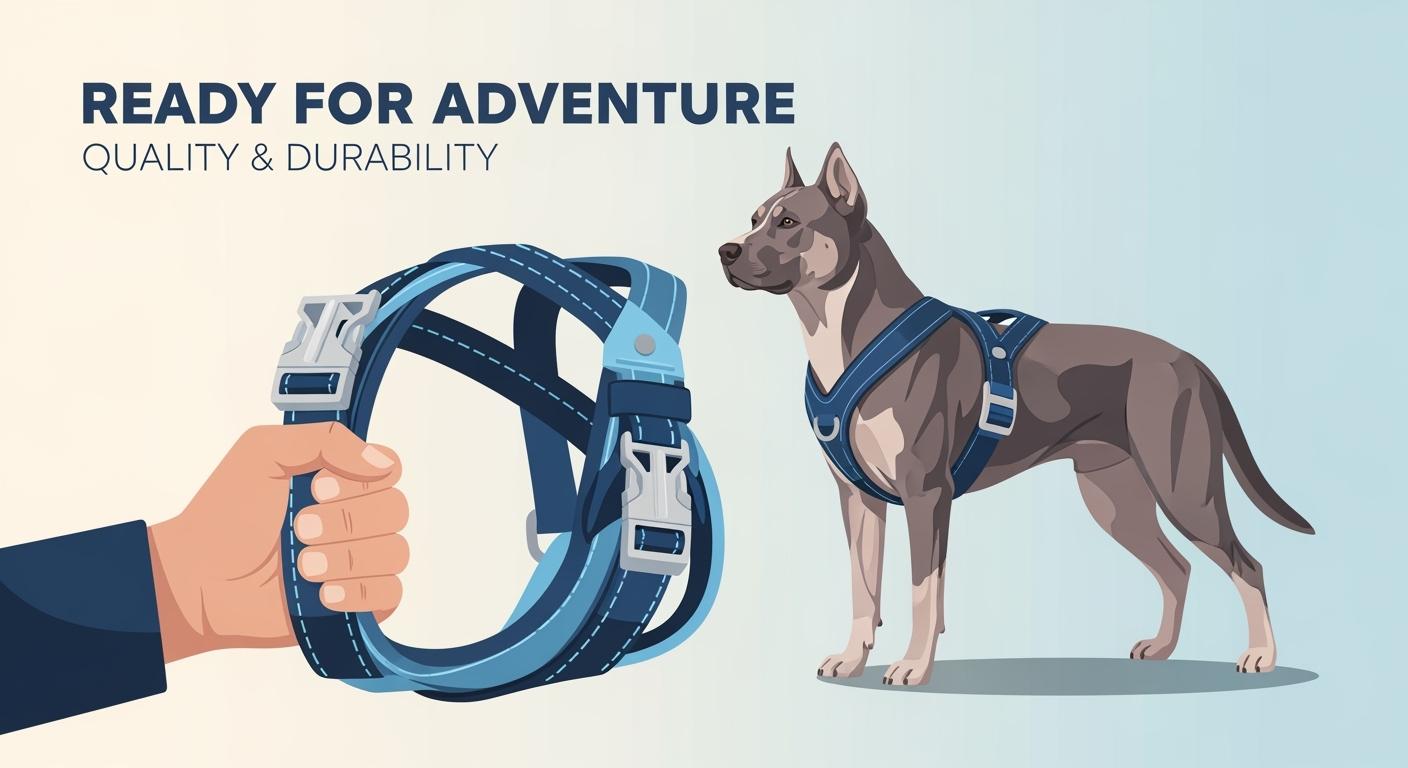
Choosing a durable canine pulling harness starts with finding the weak spots: hardware, stitching, and strap junctions. Strong pullers put extra stress where parts connect, so a quick hands-on inspection matters more than “thicker fabric” or price. A stable, snug fit also reduces twisting, seam stress, and chafing.
General safety note: For many dogs that pull, a well-fitted harness can reduce pressure on the neck compared with a collar. If your dog has pain, breathing issues, or a history of injury, follow your veterinarian or trainer’s guidance.
This is general advice, not medical advice. For strong pulling, ask a trainer. For pain or injury, call your vet.
Quick verdict: the durability checks that matter most
For strong pullers, pay for sturdy hardware, reinforced stitching at load points, and webbing that does not stretch or fray quickly. Skip designs that twist, ride into the armpits, or use light buckles that flex under tension.
| Pay for | Skip if possible |
|---|---|
| Reinforced seams, smooth webbing, secure clips/rings, stable fit | Thin straps, loose adjusters, hardware that cracks, harnesses that shift easily |
Key Takeaways
- Look at your dog’s harness before each walk. Check for weak spots like the hardware, stitching, and fit. This helps keep your dog safe.
- Pick a harness that fits your dog well. A tight fit stops twisting. It also lowers the chance of pain or injury when walking.
- Find harnesses made with strong materials. Nylon that is load-rated and tough hardware last longer. These give better support for your dog.
- Check the harness often for damage. Fix any fraying, cracks, or loose parts right away. This keeps the harness working well.
- Try a front-clip harness for dogs that pull hard. This type spreads force evenly. It also lowers strain on your dog’s neck.
Durability for Strong-Pulling Dogs
What Makes a Harness Durable
A strong-pulling dog puts extra force on every part of a harness. Prioritize webbing that feels dense and resists stretching, reinforced stitching at stress points, and hardware that closes securely without wobble. An open-shoulder shape can help your dog move naturally, and breathable padding can reduce rubbing on long walks. If a brand offers a warranty, treat it as a bonus—not a substitute for inspection.
Tip: Before buying, check the product page for details about materials and design features. If you have questions, ask the seller for more information.
Common Failure Points
You must inspect the harness for weak spots. The table below shows common issues and what you can do:
| Wear Points | Common Issues | Causes | Recommendations |
|---|---|---|---|
| Buckles | Cracks, loose fit | Lots of use, hard hits | Replace if broken |
| Adjustment clips | Stiff, broken | Sand, dirt, pulling | Clean or get new ones |
| Straps | Fraying, stretching | Rubbing, getting wet | Cut frays, check fit |
| Stitching | Loose threads, holes | Pulling, getting wet | Fix or replace |
| Material integrity | Soft, thin spots | Wet, rough play | Check, maybe get new one |
Help: If you notice any of these problems, stop using the harness until you fix or replace it.
Fit and Its Impact on Safety, Comfort, and Effectiveness
Proper fit and adjustment matter as much as strong materials. A harness that fits well spreads force evenly across the chest and avoids seam stress. You should measure your dog’s chest and neck before buying. Use a two-finger check to make sure the harness is snug but not too tight. Regularly inspect the harness for signs of wear. Poor fit can cause twisting, ride up, and uneven pressure. This leads to discomfort, chafing, and even injury. The table below lists safety risks:
| Safety Risk | Description |
|---|---|
| Discomfort | An ill-fitting harness can rub or chafe the dog’s skin. |
| Potential for Escape | A harness that does not fit properly may allow the dog to escape. |
| Injury | Restriction of movement can lead to injuries or increased pulling. |
Help: If your dog’s gait changes or the harness shifts during walks, check the fit and adjust as needed.
A well-fitted canine pulling harness improves safety, comfort, and effectiveness. Make sure you check the harness after every use, especially if your dog pulls hard or plays in rough areas.
Action step: Do a 60-second inspection before walks. If you find cracks, popped seams, deep cuts, or shifting fit, repair minor issues or replace the harness before the next outing.
Canine Pulling Harness: Weak Spots to Inspect

When you choose a canine pulling harness for your dog, you need to know where most harnesses fail. Pulling puts stress on certain areas, so you must inspect these weak spots often. The right design and materials help, but regular checks keep your dog safe and comfortable. Use this checklist to spot early signs of wear and understand why each area matters.
Attachment Points and Hardware
Attachment points and hardware take the most force during pulling. You should check these areas before every walk. Look for:
- Metal D-rings and heavy-duty buckles made from ripstop nylon, biothane, or reinforced polyester. These materials resist bending and breaking.
- Cracks, sharp edges, or corrosion on hardware. Even small flaws can lead to sudden failure.
- Misaligned clips or rings. Twisted hardware creates friction and weakens stitching.
- Signs of deformation at the base of the attachment point. This can mean the harness is not distributing weight evenly.
Tip: Always check that the attachment point sits flat against your dog’s chest. If it twists or pulls to one side, the harness may not fit or the design may not suit your dog’s build.
Strap Junctions and Stitching
Strap junctions and stitching hold the harness together. These areas often fail first because they handle the most movement and tension. Inspect them closely:
| Stitch Area | What Good Looks Like | Red Flag | What It Leads To |
|---|---|---|---|
| Load Points | Box-x or zigzag, tight, no gaps | Loose, skipped, broken | Sudden failure, break |
| Edges and Binding | Smooth, covered, no fray | Exposed, curling, sharp | Fraying, skin irritation |
| Seams and Padding | Straight, even, outward-facing | Twisted, bunched, rough | Poor fit, discomfort |
| Thread Type | Durable thread, no fuzz | Fuzzy, sun-damaged | Weakening, early wear |
- Look for loose threads, gapping stitches, or layered fabric peeling at the strap junctions.
- Check for seam separation, especially where straps meet the chest panel.
- Reinforced stitching, like triple-reinforced or bar-tack patterns, adds strength at stress points.
Help: If you see any broken stitches or fraying at the strap junctions, stop using the harness until you repair or replace it. This prevents sudden breaks during walks.
Adjusters and Webbing Wear
Adjusters let you change the fit of the harness. They must hold tight under tension. Webbing connects all parts of the canine pulling harness and faces constant rubbing.
- Examine all adjusters for slipping, sharp edges, or broken parts. Slipping adjusters can cause the harness to loosen during use.
- Check webbing for cuts, tears, burns, or fraying. Material fatigue happens faster than you might expect, especially after washing or in humid weather.
- Look for webbing fuzz or color fading. Slight fuzzing is normal in non-load areas, but deep cuts or exposed fibers mean the harness is unsafe.
- Make sure the adjustment holds steady when you pull on the harness.
Note: Always inspect the webbing and adjusters before each use. Confirm the harness fits snugly around the chest and does not restrict movement.
Abrasion Zones and Fabric Thinning
Abrasion zones are where the harness rubs most against your dog’s body. These areas wear out quickly, especially near the chest, armpits, and edges.
- Check interior seams for roughness or raised edges. These can cause chafing and skin irritation.
- Inspect mesh panels and fabric types. Nylon and polyester can thin under pressure or sunlight.
- Look for thinning fabric, especially in high-friction spots. Mesh that wears out can irritate your dog’s skin.
- Watch for hair loss or redness on your dog’s chest or armpits. This can signal the harness is wearing out or does not fit well.
Help: If you notice any irritation or pressure points on your dog, adjust the harness or try a different design. A good fit and the right materials prevent most problems.
Quick checklist for your harness
- Attachment points: No cracks, no twisting, sits flat on the chest.
- Hardware: No sharp edges, no corrosion, no deformation.
- Strap junctions: Tight stitching, no loose threads, no seam separation.
- Adjusters: Hold adjustment, no slipping, no sharp edges.
- Webbing: No deep cuts, no exposed fibers, no excessive fuzz.
- Abrasion zones: No thinning, no rough seams, no skin irritation.
Call to Action: Check your canine pulling harness today. Confirm the design and durability features match your dog’s needs and daily activities. If you find any weak spots, repair or replace the harness. Your dog’s safety depends on it.
Quick Durability Check Routine
You can keep your dog safe by using a quick hands-on check before every walk. This routine takes about 60 seconds and helps you spot problems early. You do not need special tools. You only need your eyes and hands.
Stitching and Hardware Test
Start by scanning the harness for loose threads or uneven stitching. Focus on stress points where straps meet the chest panel and the D-ring area. Gently pull on these spots to check for weak seams. Look at the handle base and strap junctions for reinforced stitching. Next, test all hardware. Open and close clips, buckles, and rings. Check for bending, cracks, or sharp edges. If you see any damage, do not use the harness until you fix or replace it.
Help: Write down three details about your dog, such as weight, pulling style, and activity level. Also, note how often you use the harness. This information helps you choose the right canine pulling harness and know when to replace it.
Pull and Movement Test
Put the harness on your dog and apply gentle tension to the chest straps. Make sure the adjustment holds steady and does not slip. Walk your dog in a straight line and turn left and right. Watch for twisting or ride up near the chest or armpits. If the harness shifts or rubs, check the fit and make changes. A harness that stays flat against the chest and does not twist keeps your dog comfortable and safe.
Tip: If you notice the harness riding up or twisting, stop and adjust the fit. A snug fit across the chest prevents seam stress and skin irritation.
After Rough Use: Re-Check Triggers
Always re-check the harness after your dog crosses water, moves through heavy brush, climbs hills, or lunges hard. Water crossings and thick brush can loosen or twist the straps. Snags from branches or rocks may move the harness out of place. If your dog backs away quickly, the harness may slip off, especially if the chest straps are not snug.
Note: If you see cracked hardware, popped seams, webbing cuts, or loose attachment points, replace the harness right away. Your dog’s safety depends on a strong harness.
Front Clip Dog Harness and Other Safety Tips
Choosing the Right Harness Type
You want the best dog harness for a strong-pulling dog. The front clip dog harness gives you more safety and control by shifting force to the chest instead of the neck. This design helps guide your dog’s gait and reduces pulling. A y-shaped chest piece supports custom fitting and spreads pressure evenly. Some harnesses offer a padded dog harness style for extra comfort. If you use a no-pull harness, check that the chest panel sits flat and does not twist. When choosing the right collar or harness, look for a design that matches your dog’s activity level and body shape. Some products include a hands-free waist belt and an elastic leash. The elastic leash absorbs shock but may not offer precise control. Always read the product page for details.
Help: Try different harness designs to see which one fits your dog’s chest best and supports a natural gait.
Mistakes That Accelerate Wear
Many owners make mistakes that shorten the life of a canine pulling harness. Here are six common errors:
- Poor adjustment leaves the chest straps loose or too tight.
- Ignoring regular inspection for frayed webbing or cracked hardware.
- Using the harness in rough terrain without checking for damage afterward.
- Washing with harsh chemicals or machine drying, which weakens fibers.
- Storing the harness in direct sunlight, causing UV damage.
- Allowing constant tension on the chest panel, which stresses seams.
Other mistakes include skipping custom fitting, not replacing worn parts, and using the wrong design for your dog’s build.
Safety Tips for Extending Harness Lifespan
Follow these tips to keep your harness safe and long-lasting:
- Inspect the harness regularly for frayed webbing, cracked buckles, or damaged stitching.
- Clean by hand with mild soap. Avoid bleach or machine drying.
- Store in a cool, dry place away from sunlight.
- Replace after any significant impact, even if no damage is visible.
- Check the chest panel and adjustment before each walk.
- Watch for changes in your dog’s gait or signs of discomfort.
- Use a harness with a design that matches your dog’s chest shape.
- Avoid constant pulling or tension on the chest straps.
- Make sure the y-shaped chest piece sits flat and does not twist.
- Use a padded dog harness for extra comfort if your dog pulls hard.
- Try custom fitting for the best support.
- Read the product page for specific features and care instructions.
Help: If you notice any wear or discomfort, stop using the harness and inspect all chest and strap areas.
When to Repair or Replace
A harness supports comfort, mobility, and biomechanical integrity. If you see wear that affects these areas, replace the harness instead of repairing it. Minor issues like loose threads or small frays may allow for repair, but damage to the chest panel, adjustment points, or hardware means you should retire the harness. Always monitor for discomfort and check the fit. If the harness no longer supports your dog’s gait or chest, choose a new design.
Help: Keep a checklist of harness inspections and note any changes in fit or chest support.
Call to Action: Inspect your dog’s harness today. If you find damage or poor fit, repair minor issues or replace the harness for safety and control.
You want your canine pulling harness to last and keep your dog safe. Always check these steps:
- Inspect all weak spots, like hardware and stitching, before each walk.
- Make sure the harness fits well to support your dog’s gait and comfort.
- Watch for signs of wear that could affect safety or effectiveness.
Regular checks and timely replacement help you protect your dog and get the most from your canine pulling harness.
Help Prompt:
Before you choose a canine pulling harness, check the fit, inspect weak spots, and consider solutions for strong pulling. Pet owners, confirm your dog’s comfort and safety. Businesses, ask about wholesale and OEM/ODM support for harness needs.
FAQ
How do I know if my dog’s harness fits correctly?
You should check that two fingers fit between the harness and your dog’s chest. The harness should not twist or ride up. Watch your dog walk and turn. If you see rubbing or slipping, adjust the straps for a better fit.
What are the most common weak spots in a canine pulling harness?
You often find weak spots at attachment points, strap junctions, adjusters, and abrasion zones. Look for loose threads, fraying webbing, cracked hardware, and thinning fabric. Regular inspection helps you catch problems before they affect safety.
How often should I inspect my dog’s harness for wear?
You should inspect the harness before every walk. After rough use, like running through mud or water, check again. Look for popped seams, webbing cuts, and hardware cracks. Replace the harness if you see any damage that could risk safety.
Is a no-pull harness better for strong-pulling dogs?
A no-pull harness helps you guide your dog and spread force across the chest. This design reduces strain on the neck and improves control. You should choose a harness that matches your dog’s activity level and body shape for best results.
Can I repair a damaged harness or should I replace it?
You can repair minor issues like loose threads or small frays. If you see damage to the chest panel, adjusters, or hardware, you should replace the harness. Safety comes first. Always check for comfort and support after any repair.