
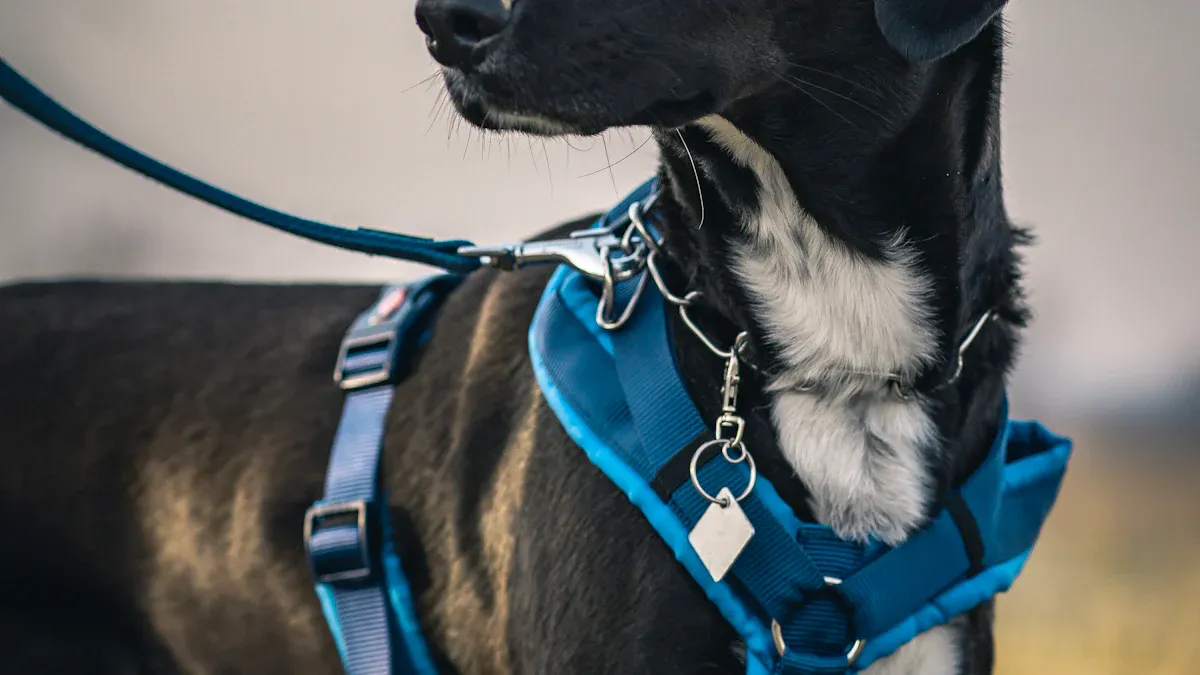
A trail-ready harness can make hikes safer and more comfortable, but the fit has to survive slopes, brush, and sudden back-steps. Use the quick checks below before you start and after common trail triggers to reduce slip-out risk.
Note: This guide offers general tips for harness safety. If your dog continues to escape or shows signs of distress, consult a professional trainer or veterinarian.
If your dog has escaped a harness before, start in a controlled area, then practice the fit check and a calm back-out test before heading to tougher trails.
Quick verdict: a safe harness fit for hiking
A hiking fit is “safe enough” when the harness stays centered, you can slide two fingers under each strap, and a gentle backward pull does not move the neck opening toward the ears. If the harness can be pulled over the head during the back-out test, stop and re-adjust or switch styles before you continue.
Key Takeaways
- Do the 60-second fit check at the trailhead every time.
- Use the two-finger rule: snug, not tight, on chest, belly, and behind the front legs.
- Run a gentle back-out test in a safe spot before you hike.
- Re-check after water, brush, steep climbs/descents, or any sudden lunge.
- Inspect stitching and hardware before each trip; replace worn gear.
Quick Fit Check for Dog Harnesses
Why Hiking Increases Slip Out Risk
Hiking with your dog brings excitement and new challenges. Trails add steep slopes, water crossings, thick brush, and sudden surprises. These conditions can loosen your dog’s harness or cause your dog to back out of it. When your dog moves backward quickly, the harness may slip off if it is not fitted correctly. You need to check the fit before every hike to keep your dog safe.
Here is a table showing the most common causes of harness slip outs on hiking trails and what you should do next:
| Common Cause | What It Leads To | What To Do Next |
|---|---|---|
| Straps too loose | Harness slips or rotates | Tighten straps, check two-finger fit |
| Wrong size | Discomfort, escape risk | Re-measure, choose larger if between |
| Asymmetrical design | Rotation, uneven pressure | Pick symmetrical harness, adjust fit |
| Accessories on one side | Harness imbalance | Remove extras, balance load |
| Lack of adjustability | Poor fit, rubbing | Use harness with multiple adjustments |
Placement and Snugness: How to Fit a Dog Harness
You want your dog harnesses to sit flat and centered on your dog’s chest. Make sure nothing rides up into the throat. Use the two-finger rule to check snugness. You should be able to slide two fingers under the straps, but the harness should not feel loose. Check the fit behind the front legs, around the belly, and across the chest. Look for adjustment points for proper fit. This helps prevent discomfort and escape risk.
- Use the two-finger rule to check snugness.
- Perform a gentle pull test to confirm the harness does not slip off.
- Check the fit behind the front legs, around the belly, and across the chest.
Movement and Back Out Test
After you adjust the harness, let your dog walk, turn, sit, and shake. Watch for twisting or riding up. Next, perform a gentle backward pull test in a safe space. Hold the leash and apply gentle backward pressure. If the harness shifts toward your dog’s head or feels loose, you need to re-adjust or try a different style. This step helps you prevent slip outs during sudden retreats or steep descents.
Re-Check After Triggers
You should re-check the fit after certain trail events. Water crossings, heavy brush, long climbs, or sudden lunges can change the fit of your dog harnesses. Stop and check placement and snugness after these triggers. If you notice repeated backing out attempts, panic, limping, heavy panting, or obvious rubbing, end the hike and reassess with a trainer or vet.
Trailhead Fit Check: Step-by-Step
- Place the harness flat and centered on your dog’s chest.
- Adjust straps for snugness using the two-finger rule.
- Check adjustment points for proper fit behind legs, belly, and chest.
- Let your dog move and watch for twisting or riding up.
- Perform a gentle backward pull test.
- Re-check after water, brush, climbs, or sudden pulls.
Tip: Make this checklist a habit before every hike. It takes less than a minute and helps keep your dog safe.
If you are a pet owner or a business looking for reliable dog harnesses, prepare 3-5 details about your dog and hiking needs. Contact us for tailored recommendations.
Trail Slip Out Triggers and Handling Tips
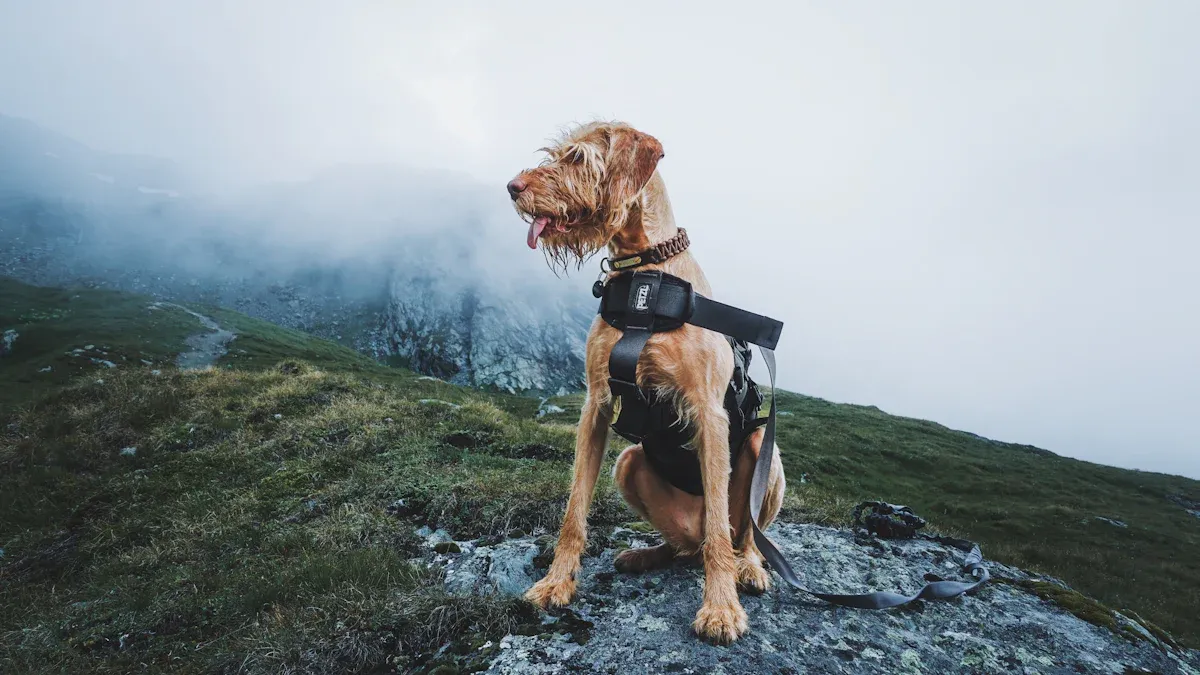
Backward Motion and Steep Descents
You may notice your dog tries to back away when startled or when facing a steep slope. This backward motion creates a high risk for slip outs, especially if the harness is not snug. Steep descents can also shift the harness toward your dog’s head. You can reduce escape risk by:
- Shortening the leash before steep sections.
- Slowing your pace and letting your dog move with confidence.
- Using calm commands to guide your dog through tricky spots.
A well-fitting harness helps keep your dog secure during these moments. Always check the fit before you start your hike.
Water, Brush, and Snag Risks
Water crossings and thick brush can loosen straps or twist the harness. Snags from branches or rocks may pull the harness out of place. After your dog moves through water or heavy vegetation, stop and check the harness placement and snugness. If you see rubbing or signs of discomfort, end the hike and consult a veterinarian or trainer.
| Trail Hazard | What Can Happen | What You Should Do |
|---|---|---|
| Water crossings | Harness loosens | Re-check fit after crossing |
| Thick brush | Straps twist or snag | Inspect harness for damage |
| Rocky terrain | Harness shifts | Adjust straps as needed |
Meeting Dogs or Wildlife
Encounters with other dogs or wildlife can cause sudden lunges or panic. Your dog may try to back out of the harness to escape. You can keep your dog safe by:
- Shortening the leash and keeping your dog close.
- Using calm, steady commands.
- Moving to a quiet area if your dog shows signs of stress.
If your dog harnesses show signs of wear or your dog tries to escape repeatedly, seek advice from a professional.
Hands Free and Bungee Leash Nuance
Hands free leashes and bungee styles offer comfort and shock absorption. These leashes can stretch under tension, which may reduce control in tight areas. You should use them with a plan for close control in risky zones. Always monitor your dog’s movement and adjust your approach as needed.
Common mistakes that lead to slip-outs
Mistakes That Loosen Fit
You can stop many problems by learning from mistakes. Six errors often make dog harnesses loose or let dogs escape:
- Some people only check fit inside, not at the trailhead.
- Placing the harness too high or too low is a mistake.
- Leaving the leash long near ledges or water is risky.
- Using bungee leashes in tight spots can be unsafe.
- Ignoring discomfort or rubbing can cause bigger problems.
- Forgetting to check gear for damage is a common error.
Other mistakes are picking the wrong size, not fixing fit after water, and skipping recall training. Always check your dog’s harness before and during hikes.
Tip: If you own a pet or run a business, get 3-5 details about your dog and hiking plans. Ask for advice on dog harnesses.
Panic and Backing Out
A bad fit can make your dog panic and try to escape. If the harness sits wrong, your dog may wriggle out. The table below shows how this happens:
| Step | Description |
|---|---|
| A | Harness sits wrong, like around the neck or half-off |
| B | Dog wriggles out of harness |
| C | Harness comes off and dog can run away |
If you see panic, stop and fix the harness. Never force your dog when it is scared.
Gear Inspection: Stitching and Hardware
Check your dog’s harness for damage before every hike. Look for these signs:
| Signs of Wear and Damage | Description |
|---|---|
| Cuts and Abrasions | You see cuts or scrapes on the harness |
| Melted Fibers | Fibers look melted from rubbing |
| Deformed Buckles | Buckles are bent or do not close right |
| Broken or Pulled Stitching | Stitching is loose or broken |
| Cracks or Corrosion | Hardware has cracks or rust |
| Distorted Hardware | Hardware is bent or looks wrong |
| Malfunctioning Gates | Gates do not open or close right |
| Missing Labels | Labels are gone or hard to read |
| Expired Service Life | Harness is older than it should be used |
Note: Never use gear that is damaged. Replace your dog harness if you see any of these problems.
Choosing the Best Dog Harnesses
The best dog harnesses for hiking keep your dog safe and comfortable. They also help stop escapes. Look for these features:
- Many places to adjust for a snug fit
- Quick-release buckles that stay secure
- Both back-clip and front-clip leash spots
- Padding to stop rubbing
- Reflective parts for safety in the dark
- Strong materials like ripstop nylon or neoprene
- Wide straps to spread weight evenly
- Easy to put on and take off
- Machine-washable for easy cleaning
| Feature | Why it helps on trails | Quick check |
|---|---|---|
| Multiple adjustment points | Maintains fit when wet or after long climbs | Re-check after water/brush |
| Open-shoulder front (Y-shape) | Reduces rubbing while allowing stride | No strap digging into the armpit |
| Secure buckles + sturdy stitching | Handles sudden back-steps and pulls | Listen/feel for a full buckle click |
Safety Notes:
- Never hike off-leash in unsafe places
- Do not use gear that is damaged or old
- Do not trust equipment alone for control
- Always check fit after water or brush
- Watch for discomfort early
- Keep your dog close near danger
- Use reflective parts for safety
- Practice recall training often
- Adjust harness after long climbs
- Watch for panic or escape tries
- Pick the right size and style for your dog
- Clean harnesses often
Sizing basics and no-pull options for trails
How to Measure Your Dog for a Harness
You want your dog harnesses to fit well for every hike. Learning how to measure your dog for a harness helps you avoid problems like chafing or slipping out. Start by measuring your dog’s chest at the widest point, usually right behind the front legs. Next, measure around the neck where a collar would sit. Write down these numbers. Always check the size chart for the harness you plan to buy.
A harness that fits too tightly can cause skin irritation or restrict movement. If it is too loose, your dog may slip out or you may lose control. You should check the fit often, especially if your dog is active on the trail. Choose a harness that matches your dog’s size, breed, and activity level. Different activities may need different harness styles.
Tip: If you are unsure about sizing, prepare your dog’s measurements and hiking plans. Reach out for help choosing the right fit.
No-Pull Dog Harnesses for Trail Safety
No-pull dog harnesses give you better control on the trail. These harnesses help guide your dog without putting pressure on the throat. Many no-pull dog harnesses have adjustable straps for a custom fit. You can use them for energetic dogs or those that pull hard during hikes.
Here is a table showing how no-pull dog harnesses improve trail safety and control:
| Feature | Benefit |
|---|---|
| Reduces throat pressure | Keeps your dog comfortable and safe during trail activities |
| Adjustable design | Lets you fit the harness to your dog for better control |
| Durable materials | Stands up to outdoor use and keeps your dog secure |
| 3-foot leash length | Keeps your dog close and helps prevent tangles or sudden escapes |
No-pull dog harnesses work well for both new and experienced hikers. They help you manage your dog in busy or risky areas. The best no-pull harnesses use strong materials and offer several adjustment points.
Need advice on no-pull dog harnesses? Share your dog’s size and trail plans for expert tips.
You should always perform the 60 second fit check before every hike. Proper harness fit keeps your dog safe and comfortable on the trail. Make this quick check a routine, no matter your experience level.
- Check placement and snugness every time.
- Watch for triggers that can loosen the harness.
- Inspect gear for signs of wear.
A minute spent checking your dog’s harness can save you hours of worry and keep every adventure safe.
FAQ
How can you tell if your dog might escape a harness?
Watch for loose straps, shifting harness position, or your dog backing up easily. If you can pull the harness over your dog’s head without much effort, your dog may slip out on the trail.
What fit checks should you do at the trailhead?
Check placement so the harness sits flat and centered. Adjust for snugness using the two-finger rule. Let your dog move, then perform a gentle backward pull test. Re-check after water, brush, or sudden lunges.
Should you use the front or back clip on your harness?
Use the front clip for more control if your dog pulls. Use the back clip for relaxed walks or steady hikers. Switch as needed based on your dog’s behavior and the trail environment.
Are bungee leashes good for hiking with dogs?
Bungee leashes absorb shock and reduce strain during sudden pulls. They may feel longer under tension and offer less control in tight spots. Use them with a plan for close handling in risky areas.
What should you do if your dog keeps escaping the harness?
Stop the hike and check the harness fit. Try a different style or size if needed. If your dog still escapes, consult a professional trainer or veterinarian for help.






