
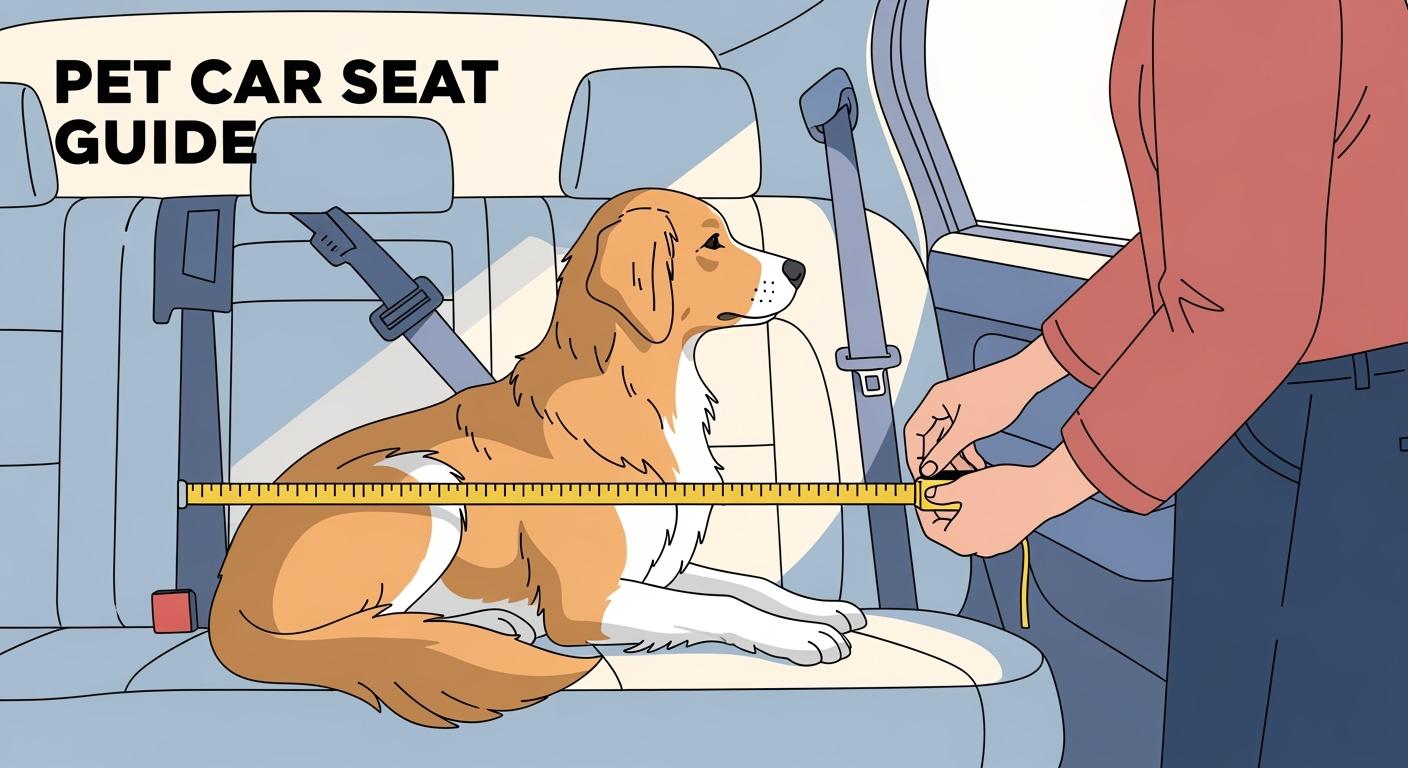
To stop tipping and sliding, measure your dog’s size. Measure your car’s seat area too. Match these sizes to the inside and bottom of the car seat for dogs. Stability and safety keep your pets safe on every trip. Setting up the seat right helps you avoid mistakes. It also keeps your dog safe. Always follow the instructions from the car and seat makers. Crash safety needs tested restraints. This is just general advice. Use the quick checklist to feel sure about your choice. When picking a dog car seat, remember safety starts with a good fit.
Quick verdict: A stable dog car seat is wide enough for your dog to turn, and wide enough at the base to sit flat on your vehicle seat. If the base overhangs, straps cannot remove wobble.
- Measure your dog (curled length, chest width, sitting shoulder height).
- Measure your vehicle seat (usable width, depth, and strap routing path).
- Choose a seat with a wide, non-slip base and anchors that remove all slack.
- Before driving, do a push test and a short low-speed turn/stop test.
- Dogs need room to sit, turn, and lie down to stay safe.
- Small seats make pets stressed and can hurt them.
- Bad fit makes dogs crouch or move all the time.
- The seat should be 2-4 inches wider than your dog’s body and 4-8 inches longer than when lying down.
- Strong closures and tether points make the seat safer.
Key Takeaways
- Measure your dog well so the car seat fits. This keeps your dog calm and safe when you travel. Pick a dog car seat that is 2-4 inches wider than your dog. Make sure it is also 4-8 inches longer than your dog. The extra room lets your dog move and stay comfy. Always check if the dog car seat is steady before you drive. A steady seat helps stop tipping and sliding on turns and stops. Use non-slip stuff and strong anchor straps to hold the seat in place. This makes your pet safer and more comfortable. Look at the car seat and harness often for damage. Change any broken parts to keep your dog safe when you travel.
Key Stability Measurements
Why Tipping and Sliding Occur
Tipping and sliding happen when the car seat for your dog does not match the right measurements or setup. Several factors increase the risk:
- Tall seats with a narrow base tip more easily, especially when your dog shifts weight or leans during turns.
- Loose anchor straps let the seat move, which makes it unstable.
- Slick upholstery causes the seat to slide, even if the anchors are tight.
- Dogs often brace themselves or lean harder when the seat shifts, which can make tipping worse.
- A stable surface helps your dog settle and relax faster.
You can reduce these risks by checking the base size, tightening anchors, and choosing non-slip materials.
Common Stability Mistakes
Many people make simple mistakes that lead to instability:
- Not measuring the car seat base and your dog’s curled length before buying.
- Leaving slack in anchor straps or not routing them as the instructions show.
- Placing the seat on a sloped or uneven part of the car seat.
- Ignoring how much your dog moves or turns around during travel.
Dog movement can cause the seat to wobble. Wobbling makes your dog anxious and can lead to motion sickness. A wide base and non-slip bottom help keep the seat steady and give your dog a safe place to rest.
Safety vs. Crash Protection
Stability and crash protection are not the same. Stability means the seat stays in place during normal driving. Features like non-slip bottoms and anti-tip legs help with this. Crash protection means the seat can handle a collision. Only crash-tested seats with certified restraints offer this level of safety.
Note: Always use the right measurements for both your dog and your car seat. This helps you pick a seat that fits well and stays stable.
Dog and Car Seat Measurements
Choosing the right car seat for dogs starts with measuring your dog and your vehicle seat. You want a secure fit that keeps your dog safe and comfortable. Follow these steps to make sure you select the best dog car seat for your needs.
Measuring Your Dog: Length, Height, Turning Space
You need to measure your dog in several ways to get the right fit. Use a soft tape measure and let your dog relax before you start.
Tip: Measure your dog when it is calm. This helps you get the most accurate numbers.
Here are the key measurements to take:
| Measurement | Description | Importance |
|---|---|---|
| Dog Height | Measure from the floor to the top of the shoulders while sitting | Ensures a comfortable fit in the booster seat |
| Dog Length | Measure from the nose tip to the base of the tail while standing | Provides enough space for lying down |
| Chest Width | Measure the widest part of the chest/ribs while standing | Prevents cramped posture and allows turning |
| Dog Weight | Use a pet scale to determine weight | Matches the dog to the correct seat size |
Follow these steps for a secure fit:
- Measure your dog when it is relaxed.
- Add 4-8 inches to your dog’s length for moving and stretching.
- Add 2-4 inches to your dog’s width for turning and sitting.
- Make sure the wall height supports your dog’s shoulders without causing them to hunch.
- Check if your dog can sit up straight in the dog car seat without bumping its head.
- Make sure your dog can turn around inside the seat. Your dog should be able to sit, lie down, and pivot without pressing against the sides.
Dogs need enough space to sit, lie down, and turn around in the car seat for dogs. If your dog feels cramped, it may become anxious or restless. Measuring your dog in its natural lying position and adding extra space helps improve dog comfort and safety.
Measuring Your Car Seat: Base, Depth, Anchor Reach
Next, measure your vehicle seat to make sure the dog car seat will fit securely. Use a tape measure and write down each number.
- Measure the base footprint where you plan to place the car seat for dogs.
- Check the seat depth from the front edge to the backrest.
- Measure the wall height if your car seat has raised sides.
- Find the anchor path and make sure you can route straps tightly.
- Look at the upholstery. Slick surfaces may need anti-slip pads for a secure fit.
A fitted dog car seat cover should contour to the shape of your car’s seat, including headrests and seatbacks. This design helps prevent shifting during transit. The depth of your seat affects how well the dog car seat fits. Deeper seats may need covers with higher walls for active or anxious dogs.
Make sure the dog car seat does not block seat belts or interfere with passenger safety. Your dog should have enough space to sit, lie down, and turn to avoid feelings of anxiety.
Matching Dog and Seat Measurements
Now match your dog’s measurements to the car seat for dogs. This step helps you get a secure fit and keeps your dog safe.
- Compare your dog’s curled length and shoulder height to the inside dimensions of the dog car seat.
- Make sure the base footprint of the car seat for dogs fits your vehicle seat without hanging over the edge.
- Check that the wall height supports your dog’s shoulders and prevents leaning or tipping.
- Confirm that anchor straps reach and tighten fully for a secure fit.
- Test if your dog can sit, lie down, and turn inside the seat. Your dog should not press against the sides or feel squeezed.
Note: Always check both the dog’s measurements and the car seat for dogs dimensions before buying. This helps you avoid common mistakes and ensures a secure fit for every trip.
Dog comfort depends on having enough space to move and relax. A good fit reduces stress and keeps your dog safe. If you have questions about sizing or setup, use the help prompt below.
Need help confirming the right size or setup?
- Pet Owners: Measure your dog and your car seat. Compare these numbers to the product details for your chosen dog car seat or dog car seat. Make sure your dog can sit, lie down, and turn comfortably.
- Businesses: Check your vehicle seat dimensions and match them to the car seat for dogs you offer. Confirm that anchor paths and base footprints fit a range of dog sizes for a secure fit.
If you need more guidance, contact the product support team or consult your car’s manual for anchor locations.
Setup and Safety Checks for Dog Car Seat
Anchor and Strap Tightening Order
You need to start with proper installation to get the best protection for your dog. Place the dog car seat flat on the back seat. Make sure the base sits evenly and does not tilt. Route anchor straps through the secure attachment systems as shown in the instructions. Pull each strap tight to remove slack. Check that the dog car seat does not shift when you push it. Repeat this process for every attachment point. Tight anchors give your dog the protection needed for dog travel safety.
Tip: Always double-check the installation security before each trip. Look for fraying or cracks in the straps and buckles. Replace any damaged parts to maintain protection.
Anti-Slip Tips for Upholstery
Non-slip backing is key for pet travel protection. If your car seat has slick upholstery, use a dog car seat with non-slip backing or add a heavy-duty front seat pet cover. Non-slip materials help keep the seat stable. You can place a non-slip pad under the dog car seat for extra protection. Make sure the base covers the seat area fully. Non-slip backing works best when you remove slack from the anchor straps. This setup gives your dog a safe and comfortable ride.
Note: Non-slip backing and secure attachment systems work together to prevent sliding. Always check the non-slip surface before each drive.
Stability Test: Turns and Stops
You should test the dog car seat for protection before every trip. Use these methods to check stability:
| Test Method | Description |
|---|---|
| Press Test | Press down firmly in the center where your dog stands. If it dips easily, the floor relies on tension. |
| Edge Check | Press near the left and right edges. If the sides droop, dogs can drift toward the gap during movement. |
| Reposition Check | Tug the platform slightly left and right. If it slides and recenters, it indicates instability when dogs swap sides. |
If the dog car seat passes all tests, you have good protection against tipping and sliding. If it fails, adjust the non-slip backing or tighten the attachment points.
Harness and Restraint Basics
You must use a harness for protection instead of a collar. Attach the harness to the secure attachment systems on the dog car seat. Choose a harness with adjustable straps and padded features for comfort. Always check the fit using the two-finger rule. Make sure the harness connects to the seatbelt with a metal loop or reinforced stitching. Inspect the harness and tether for wear before each trip. Crash-tested harnesses offer the best protection for pet-friendly travel protection.
- Look for travel restraints that are crash-tested by the brand or an independent lab, and follow the manufacturer instructions for your vehicle.
- Use high-tensile webbing and reinforced stitching for durability.
- Padded straps and breathable mesh help prevent chafing.
- Adjust the tether length so your dog cannot reach the front seat.
- Regularly inspect all attachment points for damage.
Safety Reminder: Never leave your dog unattended in the car. Always use the back seat for extra protection. Avoid the front seat to reduce airbag risks.
If you need help with installation or protection, contact your product support team or check your car manual for anchor locations.
Common Mistakes and Safety Do Nots
Wobble and Tilt Errors
Many pet owners make mistakes that lead to wobble or tilt in a dog car seat. You might choose a seat based only on your dog’s weight, but this does not guarantee stability. Tall seats with a narrow base can tip when your dog moves or leans. Loose straps allow the dog car seat to shift during turns. If you place the seat on uneven or sloped upholstery, your dog may feel unstable. Some people forget to check if the dog car seat blocks access to seatbelt or child seat areas. This can create pressure zones and make the setup unsafe for both your dog and passengers.
Common mistakes include:
- Picking a dog car seat by weight only, not by your dog’s size or movement needs
- Ignoring the base width and height of the dog car seat
- Leaving slack in anchor straps
- Using a dog car seat on slippery upholstery without anti-slip pads
- Placing the dog car seat where your dog leans into buckle or child seat areas
- Not testing for wobble before driving
Sliding and Slack Issues
Sliding happens when the dog car seat does not grip the seat well. Slick upholstery increases this risk. If you do not tighten the straps fully, your dog can slide with the seat during stops. Always check that the base of the dog car seat covers the seat area and that all straps are tight. A high-quality dog car seat uses non-slip backing and strong anchor points. If you notice the seat shifts more than a small amount when pushed, adjust the setup before driving.
Airbag and Front Seat Warnings
Never place a dog car seat near an active airbag. Airbags can deploy with great force and cause serious harm to your dog. You should avoid letting your dog ride in the front seat, especially if there is an active airbag. Always use the back seat for your dog’s safety. Placing a dog car seat near side airbags is also dangerous. The safest spot for your dog is in the back seat, away from all airbags.
Safety Do Nots:
- Do not use a dog car seat in the front seat if airbags are active
- Do not let your dog ride in the front seat
- Do not block seatbelt or child seat access with a dog car seat
- Do not use a collar for restraint; always use a harness
- Do not leave your dog alone in the car
- Do not drive if the dog car seat wobbles or slides
- Do not use a dog car seat with damaged or frayed straps
- Do not skip the stability test before each trip
- Do not use a dog car seat that does not fit your dog’s size
When to Replace Straps or Buckles
Inspect straps, tethers, and buckles often. Replace any part that shows fraying, cracks, loose stitching, or hardware deformation, and replace the system after any crash.
Tip: Always choose a high-quality dog car seat and inspect it before every drive. Your dog’s safety depends on the quality of the seat and hardware.
You can keep your dog safe in the car by doing a few easy things. First, measure your dog and the car seat. Then, match these numbers to the right dog car seat. Always check if the seat is stable before you drive. Double-check the fit and setup so you do not make mistakes. Stability helps during turns and stops, but only crash-tested restraints protect your dog in a crash. Use the quick checklist every time you travel. Look for helpful features like strong build, full floorboard coverage, waterproof and easy-to-clean surfaces, and a secure fit with smart design extras.
| Key Feature | Description |
|---|---|
| Heavy-Duty Construction | Makes the seat last longer and stops ripping or slipping from pets. |
| True Floorboard Coverage | Covers the footwell to stop messes and gives dogs a steady base. |
| Waterproof & Easy-Clean Surface | Helps clean up spills and messes fast with good materials. |
| Secure Fit with Smart Design Add-Ons | Stops the seat from moving and keeps dogs safe with non-slip backing and clips. |
FAQ
How do you know if a booster fits your dog?
You measure your dog’s length and shoulder height. Compare these numbers to the inside of the booster. Your dog should sit, lie down, and turn easily. If your dog feels squeezed or cannot move, you need a larger booster.
Can you use booster seats for puppies?
You can use booster seats for puppies if they meet the minimum weight and size listed by the manufacturer. Always check the booster’s restraint system. Puppies need a harness that fits snugly. Never use a collar with a booster.
What stops a booster from tipping during turns?
A wide base and tight anchor straps keep the booster stable. Non-slip backing helps prevent sliding. You should test the booster by pushing it side to side before driving. If the booster moves more than an inch, adjust the setup.
How do you clean a booster after your dog rides?
Most booster covers are removable. You take off the cover and wash it with mild soap and water. Let it dry fully before putting it back. Always check the booster for loose stitching or damage after cleaning.
Do booster seats work for large dogs?
Booster seats work best for small and medium dogs. Large dogs may not fit or may tip the booster. You should measure your dog and compare it to the booster’s size chart. For big dogs, look for travel crates or harnesses.






