
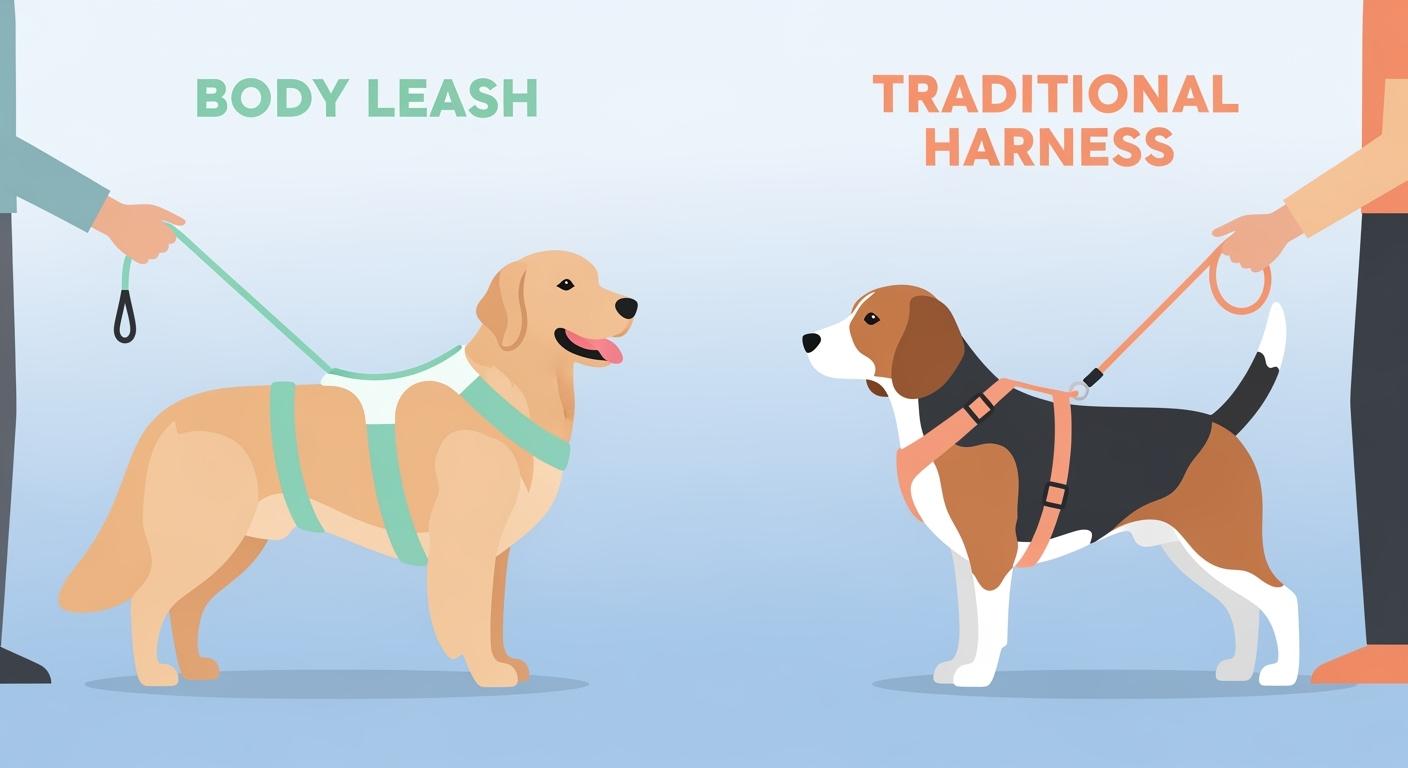
Body leashes for dogs are not just another leash style. A hands-free leash changes where pulling force goes, how quickly the handler can shorten distance, and how much control remains when the dog reacts. Compared with a traditional harness and handheld leash, the better setup depends on the use case: jogging and hiking may favor steady hands-free movement, while traffic, crowds, narrow paths, and strong pullers usually need faster close control. This guide compares both control setups so buyers can match the leash system to the real walking environment instead of treating one option as universally safer or better.
For quick handling in traffic, crowded sidewalks, or reactive moments, a traditional harness + handheld leash is usually easier to shorten and manage. For calm dogs in open areas, a body leash system can reduce arm strain and improve walking rhythm. The wrong choice can lead to poor control, twisting, leash tension, customer dissatisfaction, or unsafe use in the wrong environment.
Buyer note: A body leash should not be positioned as a universal control product for strong pullers. It works best when paired with a stable harness, a short emergency grab option, and clear use-case limits.
Quick Verdict for Product Selection
- Best for steady outdoor pacing: Body leash systems are useful for jogging, hiking, and open walking routes when the dog already walks with reasonable control.
- Best for fast correction: Handheld leash and harness setups are stronger for traffic, crowded areas, narrow paths, and dogs that need quick distance control.
- Highest fit-risk point: A waist leash can transfer sudden pulling force to the handler, so balance, leash length, and emergency grip design matter.
- Most important product detail: Harness stability decides whether either setup works. Poor fit causes twisting, rubbing, backing out, and weaker control.
- Safer merchandising angle: Sell each setup by use case, not by claiming one is always better.
Which Setup Gives Better Control in Real Use?
Control is not one feature. It comes from how quickly the handler can shorten distance, how well the harness stays centered, how much pulling force transfers to the body, and whether the dog can be redirected before a lunge becomes a safety problem. That is why the same product may perform well on a quiet trail but poorly at a crosswalk.
| Use case | Body leash system | Traditional harness + handheld leash |
|---|---|---|
| Jogging and hiking | Good for hands-free rhythm and lower arm fatigue in open areas. | Works, but the handler may feel more arm strain over longer routes. |
| Crowds and traffic | Riskier if the dog surges because distance is harder to shorten instantly. | Better for quick shortening, close handling, and immediate correction. |
| Strong pullers | Can pull the handler off balance if the dog lunges suddenly. | More controllable, especially when used with a stable front-clip harness. |
| Retail fit guidance | Needs clear warnings on dog size, pulling behavior, and leash length. | Easier for broad daily-walk use, but still depends on proper harness fit. |
Decision shortcut: choose a handheld leash setup when the user must shorten distance quickly. Choose a body leash only when the expected use is steady movement in open space, with a dog that can already walk without repeated lunging.
Product Details That Decide Whether Body Leashes Work
Body leash system for hands-free walking
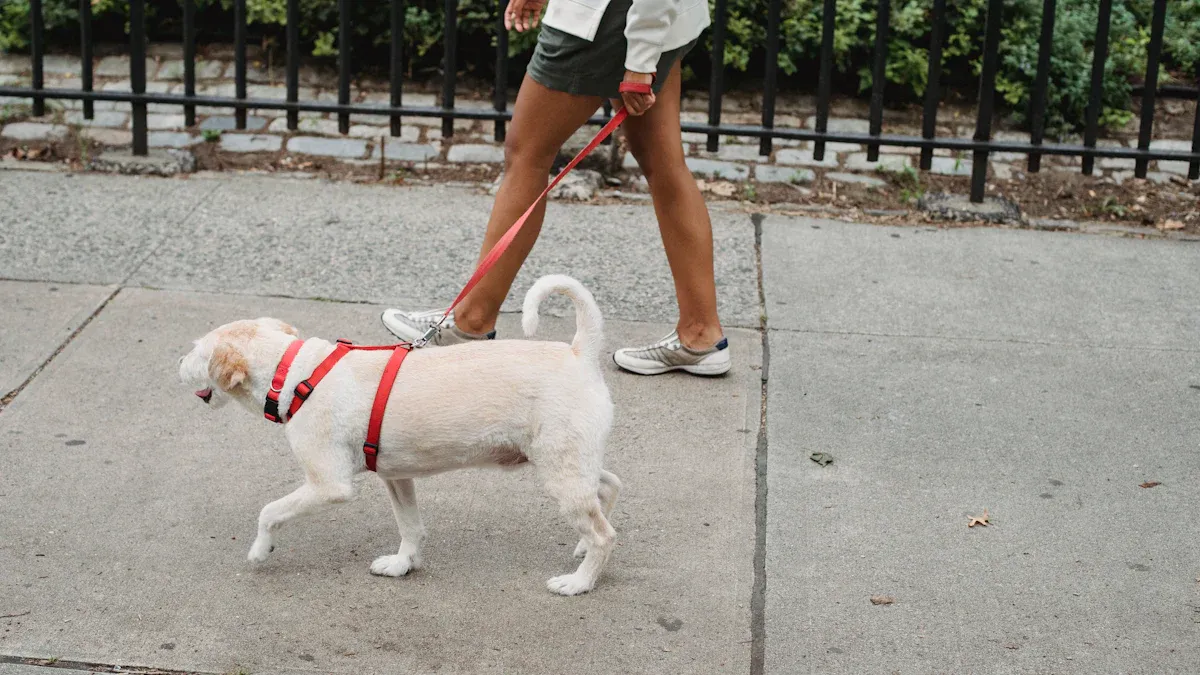
A body leash system normally uses a waist belt, leash line, and dog harness. The main benefit is hands-free movement, but the main risk is delayed close control. For a B2B product line, the waist belt should be evaluated by width, padding comfort, buckle reliability, adjustment range, and whether the leash can be grabbed quickly when the environment changes.
Bungee sections can reduce sharp tension, but too much stretch can weaken timing when the handler needs to stop forward movement. A useful body leash design should balance shock absorption with predictable control.
Traditional harness with handheld leash
A handheld leash gives the user faster distance control. This is why it usually performs better for city walking, training, public spaces, and dogs that may suddenly pull toward people, vehicles, or other dogs. It is also easier to explain to customers because the use case is familiar and the safety boundary is clearer.
For daily walking programs, the harness structure matters as much as the leash. Chest strap position, shoulder clearance, buckle placement, webbing width, and leash attachment point all affect stability and comfort.
Attachment point and steering control
Attachment location changes the walking experience. A back clip may feel smooth for calm dogs, but it can encourage forward pulling when the dog surges. A front clip provides more steering and can make the dog easier to redirect. If the product line is aimed at pulling control, the front-attachment approach is usually the more relevant comparison point.
Fit stability and the two-finger check
A poor fit makes both systems fail. If the harness twists, rides up, rubs behind the front legs, or leaves too much room at the chest, the leash setup cannot provide reliable control. Buyers should treat the “two-finger” rule as a basic fit check, then confirm stability with movement, turning, and pulling tests.
Where Buyers Should Set Clear Use-Case Boundaries
The safest way to position body leashes for dogs is to define where they work well and where they should not be the first recommendation. This is especially important for private-label programs, retail listings, and product descriptions because customers may otherwise use the gear in the wrong environment.
- Use body leashes for: calm dogs, jogging, hiking, open trails, steady walking, and users who need lower arm fatigue.
- Use handheld leash setups for: traffic, crowds, reactive dogs, narrow paths, training sessions, and situations that require fast shortening.
- Avoid vague claims: “better control” should be tied to the exact use case, not stated as a universal benefit.
- Check hardware: clips, buckles, stitching, adjustment points, and grab handles should match the expected dog size and activity level.
- Plan packaging guidance: simple warnings about strong pullers, leash slack, and close-control use can reduce wrong-use problems.
Common Product-Selection Mistakes
- Selling body leashes as a fix for strong pulling: They may reduce arm strain, but they can also transfer force to the handler’s waist and balance.
- Choosing by dog weight only: Chest girth, neck opening, strap position, and body shape are more useful for fit stability.
- Ignoring the emergency grab point: A top handle, traffic handle, or short-control option helps when the user must react quickly.
- Using too much bungee stretch: Stretch can improve comfort, but too much delay makes close control harder.
- Forgetting rub zones: Armpit clearance, chest strap width, and edge binding affect whether customers keep using the product.
FAQ
Are body leashes for dogs safe for strong pullers?
They are not the best first choice for strong pullers. They may work after training and proper fit, but sudden pulling can affect the handler’s balance. A stable harness and handheld leash usually provide better close control.
Do body leashes reduce pulling?
They can reduce arm strain, but they do not directly solve pulling. Pulling control depends more on harness attachment, fit stability, leash length, and handling habits.
Which setup is better for B2B product lines?
Both can work if they are positioned clearly. Body leashes fit outdoor pacing and active walking use cases. Traditional harness and leash sets are safer for broad daily-walk use, traffic, and quick handling.
What detail should buyers check first?
Check harness stability first. If the harness shifts, rubs, or allows backing out, neither a body leash nor a handheld leash will deliver reliable control.






