
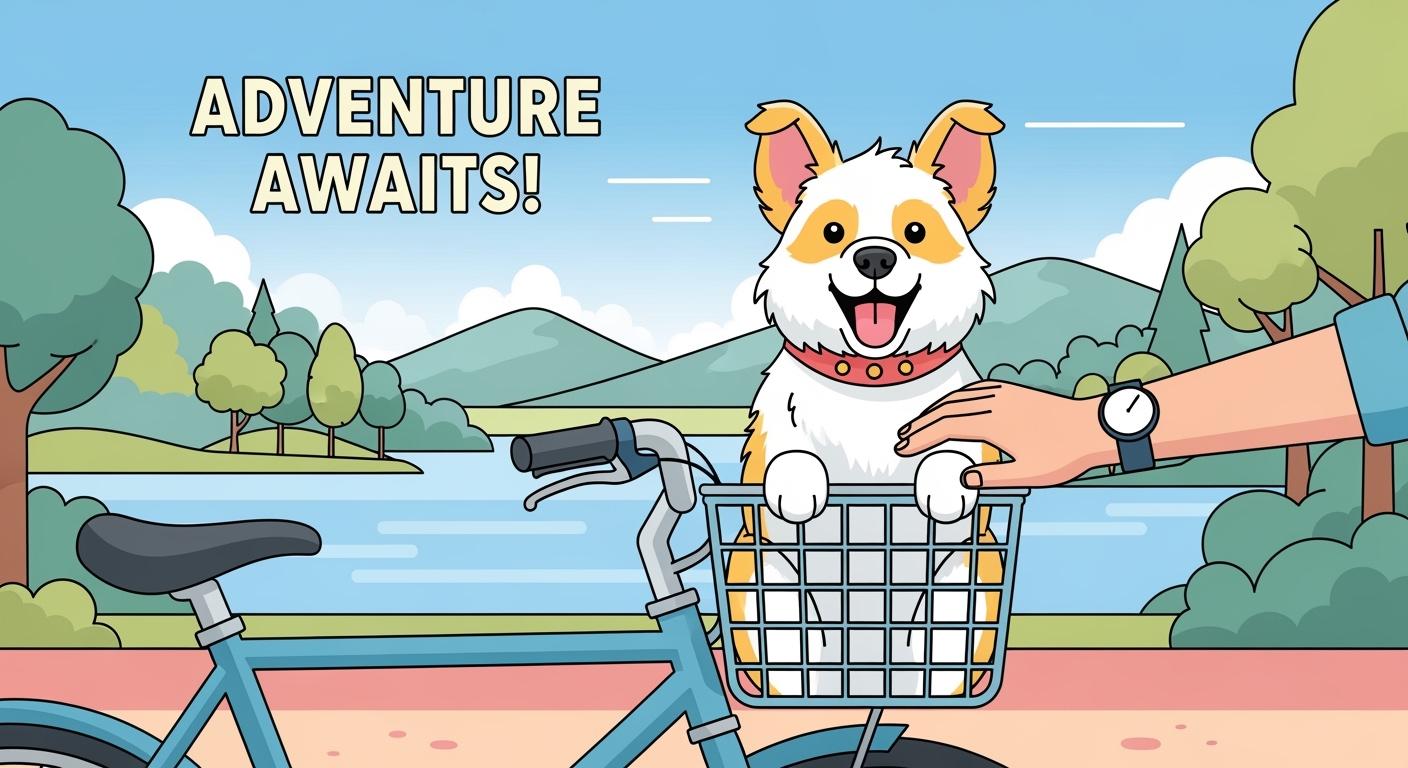
A dog bike basket feels unstable on trails when the mount twists, the load sits too high, or your dog shifts weight. For trail days and water outings, the goal is simple: keep the basket low, centered, and locked against rotation. Use the push-pull shake test, a short test ride, and a harness tether to reduce wobble and improve control.
- Confirm the basket does not twist or wobble with a push-pull test.
- Make sure your dog fits without feeling cramped.
- Attach the tether to a harness point.
Key Takeaways
- Do a 10-second push-pull test on your dog bike basket before every ride to confirm it does not twist or wobble.
- Tether to a harness point (never a collar) to reduce escape risk during stops and bumps.
- If your dog is larger or the bike feels twitchy, switch to a rack mount or trailer for steadier handling.
- Keep the load low and centered; high placement increases wobble on uneven paths.
- Stop and adjust if you see stress signals, unstable posture, or hardware loosening.
Dog bike basket stability and limits
Uneven paths and steering wobble
When you ride on uneven trails, your dog bike basket can wobble more than you expect. Bumpy ground makes the basket twist and shake. This can make steering feel twitchy, especially if you use a handlebar mount. You may notice the bike feels less stable when the basket moves. Always check that your basket has multi-point support and anti-twist features before you start your ride.
Many bicycle baskets for dogs are labeled under 20 lb (9 kg). For best stability, keep your dog well below the stated limit and verify the label for your specific model. Your dog should weigh well under this limit for best stability. The dog should fit comfortably and not feel cramped. If the basket feels loose or shifts during a push-pull test, adjust the mount or choose another option.
Dog movement and handling changes
Your dog’s movement affects bike handling more than you might think. When your dog shifts, stands, or leans, the basket can tilt or sway. This can make the bike harder to control. Sudden dog movement can cause you to swerve or brake quickly. These actions increase the risk of losing control or crashing.
- Panicking can lead to erratic movements or sudden braking, which might upset your dog.
- Fast movement can trigger your dog’s chase instinct.
- Swerving to avoid a dog or obstacle can make you lose control.
- Even careful riders can struggle to keep balance if the dog moves suddenly.
Always use a harness tether in your pet bike basket. Stop riding if your dog seems stressed or uncomfortable. Safety comes first.
When to use a trailer instead
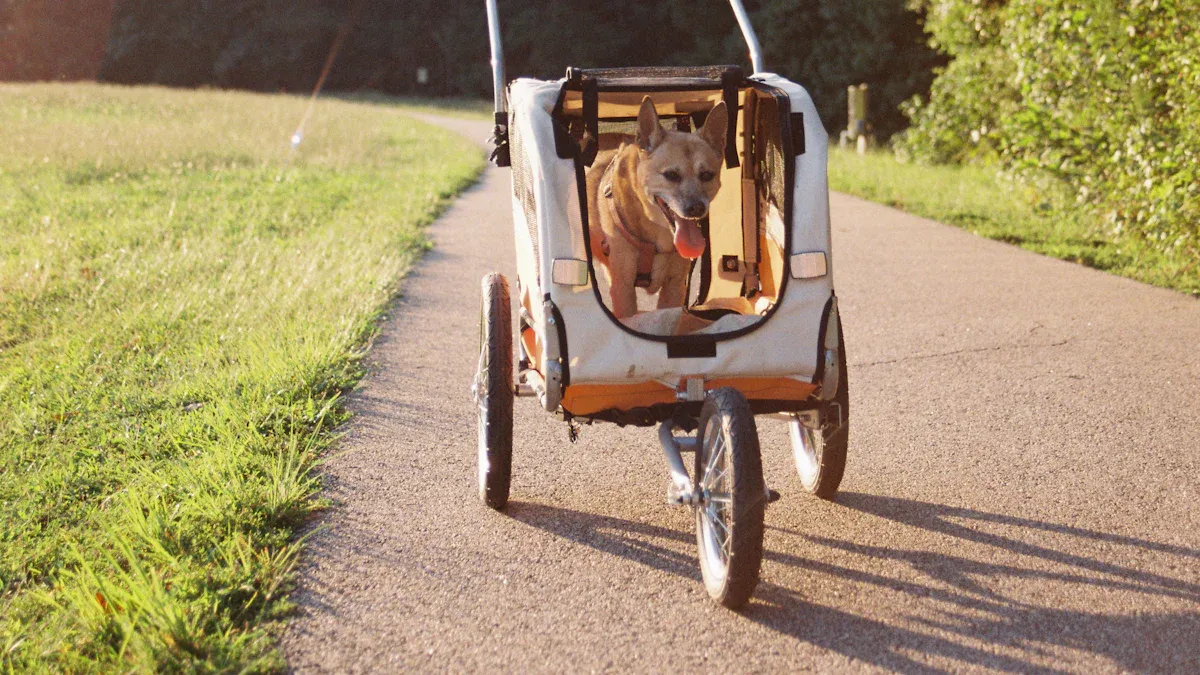
Some dogs are too large or active for a front-mounted dog basket. If your dog weighs more than 20-25 lbs (9-11 kg), or if you notice frequent wobble, consider a trailer. Trailers offer more space and stability for bigger dogs. Use the table below to help decide when to switch:
| Dog Size Category | Weight Limit |
|---|---|
| Bike Basket | Under 20-25 lb (9-11 kg) |
| Bike Trailer | Up to 100+ lb (45+ kg) |
Choosing the best bicycle basket for dogs means thinking about your dog’s comfort, your bike’s handling, and overall safety. Always stop using the basket if your dog shows signs of discomfort or illness.
Dog bike basket mounting styles
Choosing the right mounting style for your dog bike basket makes a big difference in stability and safety. You want your dog to feel secure and comfortable, especially on rough trails or wet outings. Let us look at the main options and see how each style affects your ride.
Handlebar mounts and twitchy feel
Handlebar-mounted baskets attach high on the bike. You may notice a twitchy feel when you steer, especially on bumpy paths. This happens because the basket moves with the handlebars. The weight sits above the steering mechanism. You might feel something called “wheel flop,” which makes the bike harder to control. Here are the main causes of twitchy steering with handlebar mounts:
- The basket sits high on the handlebars and changes how the bike steers.
- The setup can lead to instability and a sensation called wheel flop.
- Low weight capacity can make the problem worse.
- The basket may interfere with brake and shifter cables, which affects control.
If you ride on uneven ground, the basket can twist or shift. You may need to upgrade to a mount with anti-twist support. This means using extra straps or brackets that hold the basket steady. If you sell or list this product: Show clear photos of anti-twist features and explain how they help stability.
Case A: Handlebar instability and anti-twist upgrade
You notice your dog shifts in the basket and the bike feels twitchy. You add a second strap or bracket to the basket mount. The basket now stays level and does not twist as much. Your steering feels smoother, and your dog seems more relaxed.
Safety tip: Always check the basket before each ride. If your dog feels uncomfortable or the basket moves too much, stop and adjust the mount.
Fork/head-tube supported mounts
Fork or head-tube supported mounts attach lower on the bike. These mounts use the bike’s frame for support. You get less twisting and a steadier feel, especially on rough terrain. The basket stays in place when you turn the handlebars. Your dog sits lower and closer to the bike’s center of gravity. This helps with stability and comfort.
You may need to check fork clearance before installing this type of mount. Measure the front fork area and make sure nothing blocks the mounting zone. If you sell or list this product: Include fork height and clearance details in your product listing.
Safety note: Changes in mounting style can affect how your bike handles. Practice short rides and watch your dog for signs of stress.
Rack mounts and two-point support
Rack-mounted baskets use the bike’s rear or front rack. These baskets often have two or more attachment points. You get the most stable feel on uneven paths. The basket does not move with the handlebars. Your dog sits low and centered, which helps with control. Rack mounts work well for longer rides and heavier dogs.
You need to measure the rack width before installing a basket. Most racks fit baskets with a width of 4-7 in (10-18 cm). If you sell or list this product: Add rack width and mounting instructions to your listing.
Safety reminder: Always secure the basket and check for loose fasteners. Stop using the basket if your dog shows discomfort or illness.
Wet condition performance comparison
Some mounting styles work better in wet conditions. You want a basket or carrier that keeps your dog dry and comfortable. The table below shows how different models perform in wet weather:
| Setup type | Wet-condition notes |
|---|---|
| Basket with rain cover | Works for light spray and brief rain when the cover fits tightly and ventilation remains open |
| Basket without cover | Best for dry days only; water and grit can soak liners and shift weight |
| Trailer with cover | More weather protection and space; can feel steadier for larger dogs, but needs extra room and visibility checks |
| Drying routine | After wet rides, wipe hardware, dry fabric fully, and re-check fasteners before the next outing |
If you plan water outings, choose a basket or carrier with a rain cover and sealed pouch for wet gear. Keep your dog dry and comfortable. Always dry the basket after each ride.
Which mounting style feels most stable?
Rack mounts with two-point support give you the most stable feel on rough terrain. Fork/head-tube supported mounts also help reduce twisting. Handlebar mounts can feel twitchy, but you can improve stability with anti-twist upgrades. Always keep the load low, centered, and secure. Use a harness tether for your dog in the pet bike basket.
Safety tip: Stop using the basket if your dog feels uncomfortable or unwell. Your dog’s safety comes first.
Dog bike basket fit and compatibility
Measuring bike contact points
You should measure your bike before picking a dog bike basket. First, check the handlebar size where you will attach the basket. Most handlebars are between 0.9 and 1.25 in (23-32 mm) wide. Use a ruler or caliper to get the right measurement. For rack mounts, measure how wide the rack is. Most racks fit baskets that are 4 to 7 inches wide. If you want a front basket, look at the front fork area. Make sure nothing blocks where you want to put the basket.
Dog fit and posture cues
Your dog needs to fit well in the basket to stay safe. The dog should be able to sit and move without feeling squished. Practice sit and stay commands while your dog is in the basket. Clip a harness to the basket so your dog cannot jump out. Gently rock the basket to show your dog how it feels to move. Roll the bike forward slowly and give treats if your dog stays calm. Do not put your dog too high in the basket. This can make the bike tip over and feel unsafe.
Water outing gear planning
Get ready for water trips by packing the right gear. Pick a carrier that is safe and lets air flow through. Use a harness that is tight and secure. Add reflective gear and LED lights so others can see you. Bring a foldable water bowl and fresh water for your dog. Put wet things in a sealed pouch so the weight does not move around while you ride.
Table 1: what to measure | how to measure | why it matters
| What to Measure | How to Measure | Why It Matters |
|---|---|---|
| Handlebar diameter | Use ruler or caliper at the spot you attach | Makes sure the basket clamp fits tight |
| Rack width | Measure the part of the rack you use | Matches the basket base to the rack |
| Fork clearance | Look for things blocking the mounting spot | Checks if there is room for a front basket |
| Dog posture | Watch your dog sit and move in the basket | Stops the dog from feeling squished or unsafe |
| Carrier height | Compare to your dog’s shoulder height | Keeps the basket from being too tall or tipping |
Safety tip: Changing the basket setup can change how your bike feels. Stop using the basket if your dog seems unhappy or sick.
Stability-first setup checklist
| Parameter | Target range or option | Why it matters |
|---|---|---|
| Mount style goal | multi-point support, anti-twist | Reduces wobble on uneven paths |
| Handlebar mount cue | turns with the bars | Can feel twitchy on bumps |
| Supported mount cue | fork or head-tube support | Can reduce twisting vs handlebar-only |
| Load placement | low, centered, secured | Helps stability and control |
| Shake test | push-pull for twist and shift | Catches loose installs early |
| Short test ride | 5-10 minutes | Confirms real handling feel |
| Re-check rhythm | every 10-15 minutes | Helps catch strap loosening |
| Dog size reference | under about 20 lb (9 kg) | Common front-mount range, verify label |
| Tether setup | tether to harness point | Helps reduce escape risk |
| StridePaw example size | 14.5 x 10.6 x 9.4 in (36.8 x 26.9 x 23.9 cm) | Concrete listing example |
| StridePaw install method | buckles, hook-and-loop, steel wire | Clarifies mounting expectation |
| Fork height example | 11 in (28 cm) | Example compatibility field for listings |
| Rain cover | emergency cover feature | Helps manage spray and light rain |
| Ventilation | mesh windows | Comfort cue for short rides |
Two-point attachment and anti-twist
Start your setup by checking the basket mounts. Look for two or more attachment points. Multi-point support helps keep the basket steady on uneven terrain. Anti-twist features, such as extra straps or brackets, stop the basket from shifting during bumps. You want the basket to stay in place when you ride over rough ground.
Step-by-step setup:
- Find all mounting points on your basket and bike.
- Attach each point firmly using the recommended fasteners.
- Add anti-twist straps or brackets if your basket allows.
- Push and pull the basket to check for movement.
- Adjust until the basket does not twist or wobble.
Level base and low center of gravity
A level base keeps your dog comfortable and safe. The basket should sit flat on the bike, not tilted. Place the basket as low as possible. A lower position brings the center of gravity closer to your body, which improves stability and control. Your dog will feel more secure and less likely to tip the basket.
- A front-mounted dog bike basket keeps the center of gravity near you.
- The lower your dog sits in the basket, the steadier your ride will be.
- Always check that the basket base is flat before each ride.
Harness tether setup
Safety features matter most when you ride with your dog. Always use a pet bike basket with a built-in safety tether. Attach the tether to your dog’s harness, not the collar. This setup helps prevent your dog from jumping out or falling during sudden stops or bumps. High sides or mesh windows add extra protection and pet comfort.
- Use a dedicated carrier with a safety tether.
- Clip the tether to your dog’s adjustable harness.
- Make sure the basket has high sides or mesh windows for pet comfort.
- Check the harness fit before each ride.
Table 2: common cause | what it leads to | what to do next
| Common Cause | What It Leads To | What To Do Next |
|---|---|---|
| Loose fasteners | Basket shifts or twists | Tighten all bolts and straps |
| High basket position | Bike feels unstable | Lower the basket if possible |
| Single-point attachment | Increased wobble on bumps | Add a second mount or anti-twist strap |
| Tether on collar | Risk of choking or escape | Switch to harness tether |
| Cramped dog posture | Stress or discomfort | Adjust basket size or position |
| Wet gear not secured | Weight shifts during ride | Use sealed pouch for wet items |
Practical stability rules for uneven paths and water outings
- Always use multi-point mounts and anti-twist support for best stability.
- Keep the basket base level and the load low and centered.
- Secure all fasteners before each ride.
- Use a harness tether and check the fit every time.
- Separate wet gear in a sealed pouch to prevent shifting weight.
- Stop riding if your dog shows discomfort or stress.
- Test the basket with a short ride and re-check every 10-15 minutes.
Seller note: Add step-by-step setup guides plus a compatibility chart (handlebar diameter, rack width, fork clearance) to reduce wrong-fit returns.
Test ride protocol for trail days
Shake test before riding
You want your dog to feel safe and steady in the basket before you start your ride. Begin with a shake test. Hold the basket and gently push and pull it. Check for any twisting or shifting. The basket should stay firm on the bike. If you notice movement, tighten the fasteners or adjust the mount. This step helps you catch loose parts early and keeps your pet bike basket secure.
Short test ride and re-checks
Start with a short test ride. Ride for about five to ten minutes in a quiet area. Watch how your dog reacts in the basket. If your dog seems calm, you can slowly increase the ride time. If your dog looks nervous, keep the ride short and offer praise or treats. Stop every ten to fifteen minutes to check the basket and your dog’s comfort. Look for any signs of shifting or loose straps. Make sure the harness stays attached and the basket sits level.
- Let your dog explore the basket while the bike is still.
- Use treats to help your dog feel relaxed.
- Try short rides first, then add time as your dog adjusts.
Watch for heat and stress signals
You must watch your dog for signs of stress or heat during every ride. Hard panting, limping, or acting tired can mean your dog feels too hot or uncomfortable. Skin irritation, panic, or breathing problems are also warning signs. High humidity can make your dog overheat quickly. If you see any of these signals, stop the ride right away and let your dog rest.
- Always check your dog’s posture and breathing.
- Make sure the basket has good airflow.
- Use a harness, not a collar, for safety.
Safety tip: Changes in basket setup can change how your bike handles. Stop riding if your dog shows discomfort or illness.
Bikepacking with your dog: mounting style guide
Smooth paths and short rides
You can enjoy bikepacking with your dog on smooth paths using a front-mounted basket. This setup works well for short rides. Your dog sits close to you in the pet bike basket, which helps with comfort and control. You should check that the basket fits your bike and your dog can sit or shift without feeling cramped. Use a harness tether for safety. If you sell or list this product: Add clear fit and harness instructions to your product page.
Uneven paths and frequent bumps
Riding on uneven trails with your dog needs a stable basket or trailer. A rack-mounted basket with two-point support helps reduce wobble. For rough terrain, single-wheel trailers offer better handling and stability. You can avoid tipping and keep your dog safe.
Tip: For rough trails, stability often improves when the dog rides in a lower, more centered position. If a front basket feels twitchy or wobbly, consider a rack-mounted setup or a trailer that keeps weight low and steady.
Water outings and wet gear
Water outings need extra planning. Choose a basket with a rain cover and mesh windows for airflow. Keep wet gear in a sealed pouch so weight does not shift. Make sure your dog stays dry and comfortable. Always dry the basket after each ride. If you sell or list this product: Highlight rain cover and ventilation features for water trips.
Table 3: dog/context | best mount/features | what to avoid
| Dog/Context | Best Mount/Features | What to Avoid |
|---|---|---|
| Small dog, smooth path | Front basket, harness tether, padding | High basket, loose fasteners |
| Medium dog, uneven trail | Rack mount, anti-twist, single-wheel trailer | Handlebar-only mount |
| Water outing | Basket with rain cover, sealed pouch | Open basket, no cover |
Table 4: option | pros | cons | best for
| Option | Pros | Cons | Best For |
|---|---|---|---|
| Front basket | Easy access, close to rider | Less stable on bumps | Smooth paths, short rides |
| Rack mount | Stable, low center of gravity | Needs rack, heavier setup | Uneven trails |
| Single-wheel trailer | Best handling, high stability | Bulky, needs extra space | Off-road, long trips |
Safety tip: Changes in basket setup can affect bike handling. Stop using the basket if your dog feels uncomfortable or unwell.
Retailer and brand notes
Listing fields for compatibility
You want buyers to pick the right basket for their bike and pet. Clear listing fields help stop returns from wrong fits and set good expectations. Always list handlebar diameter (0.9-1.25 in / 23-32 mm), rack width (4-7 in / 10-18 cm), and fork height (11 in / 28 cm) in your product details. Add a spot for the best dog size, like under 20 lb (9 kg), and show where the basket mounts with photos.
Photo/copy checklist for expectations
Photos and easy-to-read descriptions help buyers know what they will get. Show every mounting point, anti-twist support, and where the basket sits on the bike. Include pictures of the basket with a harness tether attached. Use captions to explain how the basket stays level and low.
- Show the basket on different bikes if you can.
- Point out rain cover and mesh window features for water trips.
Supplier spec requests
You can ask suppliers for more details to make your product listing better. Ask for outside measurements in inches and centimeters, what materials are used, and how the basket mounts. Request photos of the basket on a bike, showing fork clearance and rack fit.
OEM/ODM explainer
OEM means a factory makes your custom design under your brand. ODM means you start from an existing design and customize details to launch faster.
Safety disclaimer: Changing the basket setup can change how your bike feels. Stop using the basket if your dog seems unhappy or sick.
You keep your dog safe by training them to sit and stay in the basket, using a harness tether, and checking the basket before each ride. Inspect your bike and basket for loose bolts or worn parts every time. Choose a mounting style that matches your dog’s size and your riding habits. If you sell or list this product: Add a reminder for buyers to share their trail tips or water outing experiences. Always stop using the basket if your dog feels uncomfortable or unwell.
Changes in basket setup can affect handling. Safety comes first for every ride.
FAQ
How do you check if your dog bike basket is stable before a ride?
You should push and pull the basket to see if it twists or shifts. If you notice movement, tighten the fasteners. Always check the basket before each ride for safety.
What is the best way to secure your dog in the basket?
You should use a harness tether, not a collar. Clip the tether to your dog’s harness. This setup helps prevent escape and reduces risk during sudden stops.
Safety tip: Stop riding if your dog feels uncomfortable or shows stress signals.
Can you use a front basket for medium or large dogs?
Front baskets work best for small dogs under 20 lb (9 kg). For medium or large dogs, you should use a trailer or rack mount for better stability and comfort.
What should you do if your dog seems nervous during a ride?
You should stop the ride and let your dog rest. Offer praise or treats. Check the basket setup and make sure your dog fits comfortably. Never force your dog to continue.
How do you keep wet gear from shifting in the basket?
You should place wet items in a sealed pouch. This keeps the weight from moving around and helps maintain stability during water outings.






