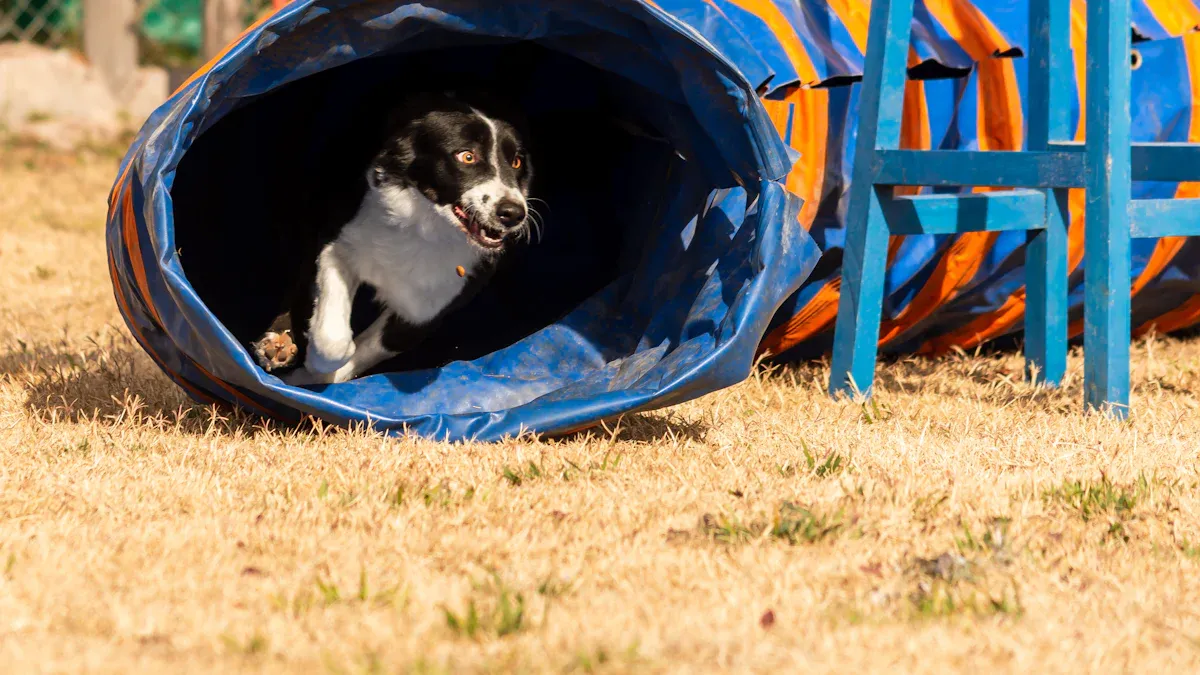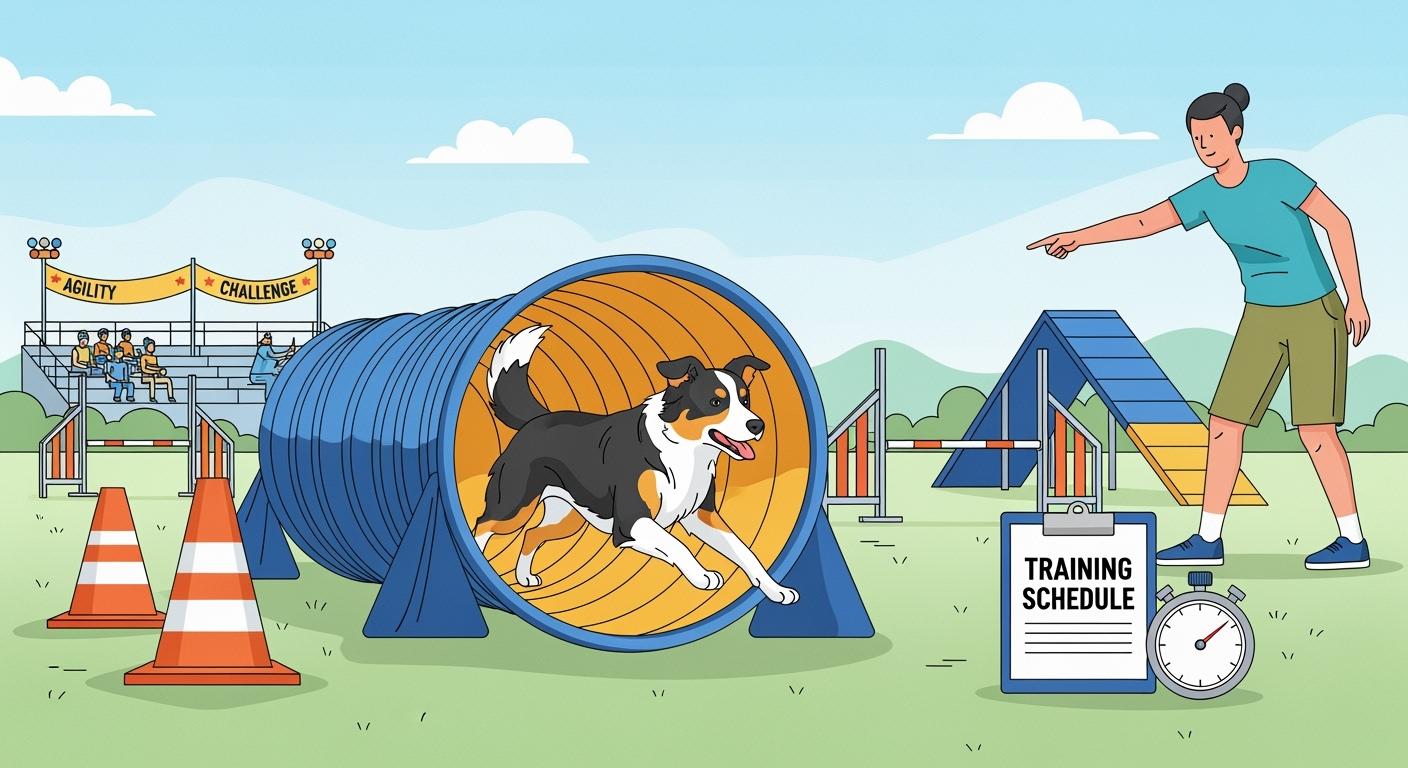
Want to build confidence and focus for agility sessions? Training with a dog tunnel can help many dogs learn to drive forward, follow handler cues, and stay engaged. This guide walks through safe setup, equipment choices, step-by-step training, and simple checks that reduce refusals and off-course exits.
- Moving helps dogs stay healthy
- Thinking hard helps dogs focus
- Rewards help dogs feel good about themselves
You get easy steps and useful tips for safe and good training.
Key Takeaways
- Dog agility tunnels help your dog feel braver and pay attention. They also help your dog trust you and make fast choices.
- Pick a tunnel that fits your dog’s size and what you want to teach. Training tunnels are lighter and good for new dogs. Competition tunnels are stronger and for dogs with more skill.
- Make sure the tunnel does not move and is safe. Put weights or bags on it so it stays in place when your dog trains.
- Begin with easy steps to help your dog feel sure. Give treats and toys to make your dog want to go in and out of the tunnel.
- Check your tunnel often for any rips or problems and clean it after every use. This keeps your dog safe and helps the tunnel last longer.
Dog agility tunnels: purpose and buyers
Training benefits for dogs
Dog agility tunnels help your dog move with more control. When your dog goes through a tunnel, they learn to trust you. They also learn to make quick choices. Each time your dog tries the tunnel, they get braver and faster. Tunnels help your dog learn skills for any obstacle course.
Here is a quick look at the main purposes of dog agility tunnels:
| Purpose of Agility Tunnels | Description |
|---|---|
| Build Confidence | Dogs run through flexible tubes to feel braver and move faster. |
| Encourage Forward Drive | Tunnels help dogs learn where to go and move forward. |
You will see your dog’s confidence grow as they use tunnels. Agility training helps your dog control how fast they go. It also helps them turn the right way. Your dog learns to listen for your voice and follow you. Working together builds trust and makes training fun.
- Agility training helps dogs feel braver by using fun activities that make them think and move.
- Dogs must make quick choices in agility, so they get better at turning and running at the right speed.
- Training together helps you and your dog trust each other and talk better, which is important for agility.
Who should use dog tunnels
A dog tunnel is good if you want your dog to get better at agility. Dog agility tunnels are great for trainers, clubs, and people with active dogs. If you teach classes or run a club, tunnels help you make a full obstacle course. You can use tunnels with jumps and other things to make new challenges. Many tips say to start with tunnels because they are safe and simple.
When not to start with a tunnel
Wait to use a dog tunnel if your dog feels scared or unsure. If your dog is afraid or stays away from the tunnel, try easy games first. Some dogs need time to get used to the sound or feel of tunnels. You can start with easier things before using tunnels. Always check that your tunnel is safe and steady before you train.
Types of dog tunnels for agility
Open tunnel basics and stability
You will see open tunnels in almost every dog agility course. These tunnels have a round opening, usually 24-26 inches (61-66 cm) wide. Most tunnels range from 10 to 20 feet (3.0-6.1 m) long. The wire rings that hold the tunnel’s shape sit about 4 inches (10 cm) apart. This design helps the tunnel stay open and safe for your dog.
Tip: Always check that your tunnel sits flat on the ground. Use tunnel bags or sandbags to keep it from moving. A stable tunnel helps your dog feel safe and confident.
Training vs competition tunnels
You can choose between training tunnels and competition-style tunnels. Training tunnels often use lighter materials. These work well for puppies or small dogs learning the basics. Competition tunnels use heavier fabric and stronger rings. They hold their shape better and last longer, even with big or fast dogs.
| Tunnel Type | Diameter (in/cm) | Length (ft/m) | Ring Pitch (in/cm) | Best Use |
|---|---|---|---|---|
| Training | 24-26 / 61-66 | 10-15 / 3.0-4.6 | 4 / 10 | Home practice, beginners |
| Competition-style | 24-26 / 61-66 | 15-20 / 4.6-6.1 | 4 / 10 | Trials, clubs, advanced |
If you plan to enter dog agility events, pick a competition-style tunnel. For home use or early training, a lighter tunnel may be enough.
Straight and curved tunnel setups
You can set up tunnels in straight lines or curves. A straight tunnel helps your dog learn to run through quickly. Curved tunnels teach your dog to follow your cues and handle changes in direction. You can shape the tunnel by bending it between the rings.
- Use a straight tunnel for speed and confidence.
- Try a gentle curve to practice turning and control.
- Make sure the tunnel stays anchored, even when curved.
Remember: Always check that the tunnel does not shift or collapse, no matter the shape. This keeps your agility training safe and fun.
Choosing the right dog tunnel: specs and features
Picking the best dog tunnel helps you train your dog safely. The tunnel should fit your dog’s size and your training plans. Look for features that make the tunnel stable and easy to see. It should also be simple to set up. This guide explains the most important specs and how they help your training.
Diameter, length, ring pitch explained
The tunnel’s size and shape matter for every course. Most competition tunnels have an opening that is 24-26 inches wide. The tunnel is usually 10 to 20 feet long. You often see tunnels at 15 or 20 feet in trials. Wire rings inside the tunnel keep it open and steady. These rings are about 4 inches apart.
A tunnel with the right opening lets your dog move easily. The right length gives you choices for straight or curved setups. The ring pitch stops the tunnel from falling down when your dog runs. Always check these details before you buy or use a tunnel.
Tip: Pick a tunnel with strong rings and thick fabric. This helps the tunnel keep its shape and last longer, even if you use it a lot.
Surface grip and noise factors
Surface grip keeps the tunnel from sliding around. Look for tunnels with non-slip bottoms or rough fabric. These features stop the tunnel from moving on grass or floors. You can use weighted bags or stakes for extra safety. Your dog will feel safe and not slip.
Noise can bother or scare some dogs. Tunnels made from HDPE or PVC can be quieter. Softer materials also help lower loud sounds. If your dog seems scared, check for loose rings or fabric that rattles.
Note: Always test the tunnel for noise and grip before you start training. A quiet and steady tunnel helps your dog feel brave.
Indoor vs outdoor tunnel needs
Indoor and outdoor tunnels need different things. Indoor tunnels can be lighter and smaller. They are easy to clean and set up fast. Outdoor tunnels need to be stronger and handle bad weather. Look for UV protection and fabric that does not crack in cold. Bigger tunnels give your dog more space to run and turn.
| Feature Requirement | Indoor Dog Tunnels | Outdoor Dog Tunnels |
|---|---|---|
| Climate Control | Stable inside | Important outside |
| Security | Basic safety | Strong safety |
| Size | Smaller works | Larger can help |
| Maintenance Needs | Easier to clean | Needs more cleaning |
Bright colors like orange or yellow help you see the tunnel in dim light. Some organizations discourage black tunnels for visibility. Always check the rulebook before you buy a tunnel. Opaque fabric is often needed for competitions. Always check the rules before you buy a tunnel.
Decision table: choosing a dog agility tunnel
Use this table to match your goals with the right tunnel. This helps you avoid mistakes and set up your course safely.
| User Goal | Recommended Tunnel Features | Setup Priorities | Common Mistakes to Avoid |
|---|---|---|---|
| Home practice | Lightweight, foldable, bright colors, 10-15 ft (3.0-4.6 m) | Easy setup, basic anchoring | Using slick or noisy materials |
| Club training | Reinforced PVC, 15-20 ft (4.6-6.1 m), strong rings | Secure anchoring, visibility | Skipping stability checks |
| Competition prep | HDPE or industrial-grade rubber, opaque, 24-26 in (61-66 cm) | Rule-compliant setup, weatherproof | Ignoring rulebook specs |
| Puppy introduction | Soft fabric, small diameter, gentle curves | Quiet area, slow introduction | Rushing speed or ignoring fear |
Alert: Always read the rulebook for your event. Some competitions need certain tunnel sizes, colors, and materials.
When you pick a dog tunnel, think about safety, how easy it is to see, and how long it will last. Make sure the tunnel fits your space and your dog’s skills. Test the tunnel before each session to keep your course safe and fun.
Safe setup and anchoring for dog agility tunnels
Placement and approach paths
You want your dog to feel safe and confident every time they run through the tunnel. Place the tunnel on a flat surface with enough space for your dog to enter and exit without sharp turns. Make sure the approach line is straight or gently curved. The exit line should lead to a clear area, so your dog does not trip or get confused. Avoid placing the tunnel near walls, fences, or other obstacles.
Tip: Check the ground for bumps or holes before you set up. A smooth surface helps your dog move safely.
Anchoring options and stability
A stable tunnel keeps your dog focused and prevents accidents. Use tunnel bags filled with at least 20 pounds (9.1 kilograms) of sand or about 3 gallons (11.4 liters) of water for each bag. Place these bags along the tunnel, especially at the ends and curves. This stops the tunnel from sliding or flipping when your dog runs fast. Choose holders that fit under the tunnel and do not stick up more than 1.5 inches (3.8 centimeters). Never use rigid uprights or holders that could poke into the tunnel path.
| Anchoring Method | Weight Needed | Placement Tips |
|---|---|---|
| Sandbags | 20 lb (9.1 kg) each | Ends and curves |
| Water bags | 3 gal (11.4 L) each | Evenly spaced |
| Tunnel holders | Max 1.5 in (3.8 cm) | Under tunnel, no protrusions |
Common setup mistakes
You can avoid problems by checking your setup before each session. Some common mistakes include using holders with sharp edges, skipping anchoring, or placing the tunnel on uneven ground. If the tunnel moves or collapses, your dog may get scared or hurt. Always inspect the tunnel for loose threads, holes, or slick fabric.
Setup Checklist for Stability and Safety:
- Anchor both ends and curves with proper weights
- Check approach and exit lines for clear paths
- Test surface grip to prevent sliding
- Inspect tunnel for damage or wear
- Avoid holders with rigid uprights or sharp edges
Alert: A safe dog tunnel setup helps your dog train with confidence and reduces the risk of injury.
Dog tunnel training: step-by-step plan

Portable dog agility tunnel practice works best when your dog stays relaxed and curious. Start with short, easy repetitions and increase difficulty only after your dog is comfortable. Focus on confidence first, then add speed and distance.
Confidence-building games
You can use games to help your dog feel brave inside the tunnel. Try these activities to make dog tunnel play fun and stress-free:
- Toss a favorite toy or treat just inside the tunnel entrance. Let your dog sniff and explore at their own pace.
- Sit at the exit and call your dog through. Use a happy voice and reward them when they come out.
- Place the tunnel in a straight line. Keep both ends open and clear. This helps your dog see the way out.
Tip: If your dog hesitates, shorten the tunnel to 5 ft (1.5 m) or less. Stand close and encourage gentle steps. Never rush or force your dog.
Some training centers run short tunnel-skills series (often around 4 weeks) that focus on confident entries, steady speed, and handling for curves. Ask your local club or instructor for a program that matches your dog’s level.
| Class Name | Description | Duration |
|---|---|---|
| Some training centers run short tunnel-skills series (often around 4 weeks) that focus on confident entries, steady speed, and handling for curves. Ask your local club or instructor for a program that matches your dog’s level. | A short series that builds confident tunnel entries and smooth exits. | About 4 weeks |
Entry and exit value
You want your dog to love entering and exiting the tunnel. Use rewards at both ends to make dog tunnel play exciting. Try these steps:
- Place treats or toys at the tunnel exit. Call your dog from the entrance and cheer when they come out.
- Practice sending your dog into the tunnel from different angles. Use simple cues like “Tunnel!” or “Go!”
- Stand at the exit and reward your dog for coming through. Switch sides and repeat.
Signs of success:
- Your dog enters the tunnel quickly and looks for you at the exit.
- Your dog shows excitement and wags their tail during agility training exercises.
If your dog stops or turns back, check for noise or movement inside the tunnel. Make sure the tunnel sits flat and does not slide. Lower the difficulty and try again.
Adding speed and distance
After your dog feels confident, you can add speed and distance to dog tunnel play. Follow these steps:
- Increase the tunnel length to 10 ft (3.0 m) or more. Use tunnel bags with 20 lb (9.1 kg) of sand or 3 gal (11.4 L) of water to keep the tunnel stable.
- Send your dog from farther away. Use a clear cue and reward fast entries.
- Add gentle curves to the tunnel. This helps your dog learn to follow your direction during agility training.
What success looks like:
- Your dog runs through the tunnel without stopping.
- Your dog responds to your cues and enters from different spots.
If your dog hesitates, reduce noise and movement. Check for loose rings or slick fabric. Go back to shorter tunnels and build up again.
Training in new locations
Dog tunnel play in new places helps your dog get ready for competitions and busy environments. You can set up the tunnel in your yard, at a club, or indoors. Follow these tips:
- Choose a flat surface with no bumps or holes. Make sure the tunnel is anchored with weights or holders.
- Practice agility training exercises with other obstacles nearby. This helps your dog focus and ignore distractions.
- Use bright colors for easy visibility. Avoid black tunnels, as some rules do not allow them.
Signs of success:
- Your dog enters and exits the tunnel confidently in any location.
- Your dog listens to your cues, even with noise or movement around.
If your dog seems nervous, slow down and use more rewards. Make the tunnel shorter and quieter. Build confidence before adding speed or distance.
Note: Always check your tunnel for damage before each session. Look for loose threads, holes, or slick surfaces. Safe equipment makes agility training fun and keeps your dog happy.
Step-by-step training plan for dog tunnel play
You can follow this plan to help your dog succeed with agility training:
- Step 1: Build Confidence
- Goal: Help your dog feel safe and curious about the tunnel.
- What to do: Use treats and toys at the entrance. Keep the tunnel short and straight.
- Success: Your dog enters the tunnel without fear.
- If hesitant: Stand closer, use gentle encouragement, and shorten the tunnel.
- Step 2: Teach Entry and Exit
- Goal: Make entering and exiting the tunnel rewarding.
- What to do: Place rewards at the exit. Practice sending your dog from different angles.
- Success: Your dog runs through and looks for you at the exit.
- If hesitant: Check for noise or movement. Lower the difficulty.
- Step 3: Add Speed and Distance
- Goal: Increase your dog’s speed and confidence.
- What to do: Lengthen the tunnel to 10-20 ft (3.0-6.1 m). Anchor with tunnel bags. Add curves.
- Success: Your dog runs through quickly and follows your cues.
- If hesitant: Reduce noise, check stability, and go back to shorter tunnels.
Dog tunnel play helps your dog master agility training exercises and prepares them for any obstacle. You can use these steps to solve problems and make training safe and fun.
Agility handling and cues for tunnels
Send, threadle, and recall cues
You guide your dog through the tunnel using clear cues. The “send” cue tells your dog to enter the tunnel from a distance. You can point or use a word like “Tunnel!” to help your dog know where to go. The “threadle” cue helps your dog change direction after exiting the tunnel. You use your body and voice to show the new path. The “recall” cue brings your dog back to you if they miss the tunnel or get distracted.
Tip: Practice each cue with your dog in short sessions. Use treats or toys at the tunnel exit to reward quick responses.
| Cue Type | Purpose | How to Use |
|---|---|---|
| Send | Direct dog into tunnel | Point, say “Tunnel!” |
| Threadle | Change direction after tunnel | Use body, call dog’s name |
| Recall | Bring dog back to you | Call dog, use happy voice |
Preventing off-course exits
You want your dog to exit the tunnel in the right direction. Place the tunnel so the exit points to a clear area. Use tunnel bags (20 lb (9.1 kg) sand or 3 gal (11.4 L) water) to keep the tunnel stable. Stand near the exit and use your voice or hand signal to guide your dog. If your dog turns the wrong way, reset the tunnel and try again.
- Check the tunnel for movement before each run.
- Use bright colors for better visibility.
- Practice exit cues in different setups.
Alert: A stable tunnel helps your dog stay focused and prevents off-course exits during agility training.
Fast vs cautious dog handling
You adjust your handling style based on your dog’s speed. Fast dogs need clear, early cues. Stand farther from the tunnel and use strong signals. Cautious dogs need encouragement and gentle guidance. Stay close to the tunnel and use soft words. You can shorten the tunnel to 5 ft (1.5 m) for nervous dogs. For confident dogs, use a full-length tunnel (up to 20 ft (6.1 m)).
| Dog Type | Handling Tips |
|---|---|
| Fast | Give early cues, stand farther away |
| Cautious | Stay close, use gentle encouragement |
Note: Every dog learns at their own pace. Adjust your cues and tunnel setup to match your dog’s needs. Agility training becomes more fun when you support your dog’s style.
Troubleshooting dog tunnel problems
Dog agility tunnels can have some common problems. You want your dog to feel safe and happy, but issues can happen. This guide helps you find and fix problems fast.
Refusal or slow entry
If your dog will not go in or goes in slowly, look for things that scare or distract them. Sometimes dogs try to go around the tunnel instead of through it. Put cones or barriers on the sides so your dog must use the tunnel. Place a favorite treat or toy just inside the entrance. Stand at the exit and call your dog with a cheerful voice. Start with a short tunnel, about 5 ft (1.5 m), and give a reward for every try.
Early exit or turning back
Some dogs run out the side or turn around inside the tunnel. This can happen if the tunnel moves or falls down. Make sure you use bags with at least 20 lb (9.1 kg) of sand or 3 gal (11.4 L) of water to hold the tunnel in place. Check that the tunnel stays open and does not droop. Practice with short runs and slowly make the tunnel longer, up to 10 ft (3.0 m), as your dog gets braver.
Fear of noise or movement
Loud sounds or a moving tunnel can scare your dog. Pick a tunnel made from quiet, strong fabric. Test the tunnel for rattling or sliding before each session. If your dog seems scared, lower the noise by putting the tunnel on grass or a mat. Add more weights to stop movement. Use gentle words and keep training short.
Tip: Always check for loose rings or slippery fabric. Fix these before you train again.
Gear vs training issues
Sometimes the problem is with the tunnel, not your dog. Look for holes, ripped seams, or bent rings. Replace any broken parts. If the tunnel is safe and steady, help your dog feel brave with easy games and rewards.
Here is a quick troubleshooting table to help you:
| Symptom | Likely Cause | Quick Fix | Longer-Term Training Plan |
|---|---|---|---|
| Refusal or slow entry | Fear, distraction | Block sides, use treats, shorten tunnel | Gradually increase length and difficulty |
| Early exit or turning back | Tunnel moves or sags | Add weights, check tunnel shape | Practice short runs, build confidence |
| Fear of noise/movement | Loud or unstable tunnel | Use quiet surface, add weights, check rings | Desensitize with gentle sessions |
| Avoids tunnel entirely | Equipment or fear | Inspect gear, use high-value rewards | Play confidence games, reward progress |
You can fix most tunnel problems with patience, safe gear, and positive training.
Competition prep for dog agility tunnels
Trial-like practice routines
Use Practice routines that mimic trial flow to help your dog generalize tunnel skills. Start with a steady, full-length tunnel, then vary entries, exits, and gentle curves so your dog learns to respond to your cues instead of relying on sight lines.
- Use a tunnel with strong rings and thick fabric for stability.
- Anchor the tunnel with tunnel bags filled with 20 lb (9.1 kg) of sand or 3 gal (11.4 L) of water.
- Change the tunnel shape and entry points to match competition setups.
Tip: Practice in different locations to help your dog adjust to new environments.
Warm-up and stress management
Before any competition, help your dog warm up. Walk your dog around the area and let them sniff. Use short games to get your dog moving and focused. Stretch your dog’s legs gently. This lowers stress and gets your dog ready for action. If your dog seems nervous, keep the warm-up calm and positive. Bring a favorite toy or treat to help your dog relax.
- Start with easy tunnel runs.
- Use praise and rewards to build excitement.
- Watch for signs of stress, such as yawning or pacing.
Note: A good warm-up helps your dog perform better and stay safe during agility.
Rulebook checks for events
Every dog agility competition has rules for equipment and setup. Always read the rulebook before the event. Check tunnel specs, such as diameter, length, and color. Most competitions require tunnels to be opaque and avoid black fabric for safety. Make sure your tunnel matches the required size, usually 24-26 in (61-66 cm) wide and up to 20 ft (6.1 m) long. Inspect your tunnel for damage, such as loose threads or bent rings. Bring extra tunnel bags and carry straps for quick adjustments.
| Rulebook Check | What to Do |
|---|---|
| Tunnel size | Measure diameter and length in both in/cm and ft/m |
| Color | Use bright, opaque fabric; avoid black |
| Stability | Anchor with proper weights |
| Inspection | Check for wear and damage before each run |
Alert: Following the rulebook keeps your dog safe and avoids penalties during competition.
You prepare for competition by practicing with real equipment, warming up your dog, and checking every rule. This helps you and your dog succeed on any agility course.
Maintenance and inspection for dog tunnels
Cleaning routines
You need to keep your dog tunnel clean. This keeps your dog healthy and helps the tunnel last longer. Use a soft brush or cloth to wipe away dirt and hair after each use. For a deeper clean, mix mild soap with water. Scrub the tunnel fabric gently. Rinse with clean water. Let the tunnel dry all the way before you put it away. Do not use strong chemicals because they can hurt the material. If you train outside, look for mud or grass stuck to the tunnel. Clean these spots right away so they do not leave stains.
Tip: Always let the tunnel dry in the shade. Sunlight can make the fabric weak over time.
Wear and damage signs
Check your tunnel often to find problems early. Look for loose threads, holes, or ripped seams on the tunnel. Check if the fabric layers are coming apart. Look at the wire rings to see if they are bent. Run your hand inside to feel for sharp spots. Notice if the fabric feels slippery when wet or if a bad smell stays after cleaning and drying.
| Red Flag | What to Check |
|---|---|
| Loose threads | Seams and edges |
| Holes | Tunnel body and ends |
| Delamination | Fabric layers |
| Torn seams | Stitching |
| Deformed rings | Wire supports |
| Slick fabric | Surface texture |
| Persistent odor | Smell after cleaning |
Alert: Get a new tunnel if you see these problems. This keeps your dog safe during agility practice.
Storage tips
Put your dog tunnel in a cool, dry place. Roll or fold it gently so it does not get creases. Use straps or bags to carry it easily. Keep the tunnel off the ground so it does not get wet. If you use tunnel bags, empty out the sand or water before you store them. Check the tunnel for damage before you pack it away. Good storage helps your tunnel last longer and keeps it safe for every training session.
Buyer checklist for clubs and trainers
Materials and specs
Pick a dog tunnel that fits your training needs. Make sure the tunnel keeps your agility course safe. Choose strong fabric like reinforced PVC or HDPE. These materials do not tear easily and last a long time. Check the diameter. It should be 24-26 inches (61-66 cm). The tunnel length should be between 10 and 20 feet (3.0-6.1 m). Look at the ring pitch. The space between wire rings should be about 4 inches (10 cm). This keeps the tunnel open and steady. The tunnel should be opaque and have bright colors. This makes it easy to see. Use accessories like tunnel bags with 20 lb (9.1 kg) of sand or 3 gal (11.4 L) of water. Carry straps and holders help you set up the tunnel safely.
Procurement checklist:
- Tunnel diameter and length in both inches/cm and feet/m
- Ring pitch and wire thickness
- Fabric type and color
- Tunnel bags and holders
- Carry straps and packaging
Tip: Always check each item for damage before using it on your agility course.
Customization options
You might need to change tunnel specs for your club or group. Customization lets you pick the size, material, color, and accessories that work best. Some suppliers offer OEM and ODM services. OEM means you can order tunnels made just for you. ODM means you can help design new features or packaging. These choices help you build your own agility course or match your club’s look.
| Customization Option | What You Can Choose |
|---|---|
| Size | Diameter, length |
| Material | PVC, HDPE, rubber |
| Color | Bright, opaque, rule-compliant |
| Accessories | Tunnel bags, straps, holders |
| Packaging | Custom labels, storage bags |
FAQ section
Q: What tunnel size works best for most agility training?
A: Most clubs use tunnels with a diameter of 24-26 inches (61-66 cm) and a length of 15-20 feet (4.6-6.1 m).
Q: How do I keep the tunnel stable during training?
A: Put tunnel bags with 20 lb (9.1 kg) of sand or 3 gal (11.4 L) of water at both ends and curves.
Q: Can I use DIY dog agility equipment for club training?A: You can make your own agility course with homemade gear. Always check that each tunnel is safe and meets competition rules.
Q: What signs show a tunnel needs replacing?
A: Look for loose threads, holes, delamination, torn seams, bent rings, slippery fabric, or bad smells.
Note: Always check your tunnel and accessories before every training session. This keeps your agility course safe.
You can help your dog succeed in dog agility by following clear steps. Start with a stable dog tunnel and use tunnel bags with 20 lb (9.1 kg) of sand or 3 gal (11.4 L) of water. Build your dog’s confidence before adding speed. Inspect your tunnel for damage after each session. Join a club or enter beginner dog agility events to learn more and meet other handlers.
Tip: Regular cleaning and safe setups keep your training fun and injury-free.
FAQ
What size tunnel should you choose for most dogs?
Most dogs do well with a tunnel that has a diameter of 24-26 in (61-66 cm) and a length of 15-20 ft (4.6-6.1 m). This size fits most breeds and matches common competition standards.
How do you keep a dog tunnel from moving during training?
You should use tunnel bags filled with at least 20 lb (9.1 kg) of sand or 3 gal (11.4 L) of water at both ends and curves. This keeps the tunnel stable and safe for your dog.
How often should you inspect your dog tunnel for damage?
Check your tunnel before every training session. Look for loose threads, holes, torn seams, bent rings, or slick fabric. Regular inspection helps you catch problems early and keeps your dog safe.
Can you use a dog tunnel indoors and outdoors?
Yes, you can use a tunnel in both places. For indoors, choose a lighter tunnel that is easy to clean. For outdoors, pick a tunnel with UV protection and strong fabric that handles weather changes.
What is the best way to store a dog agility tunnel?
Roll or fold the tunnel gently. Store it in a cool, dry place off the ground. Use carry straps or a storage bag to protect the tunnel from dirt and damage.