
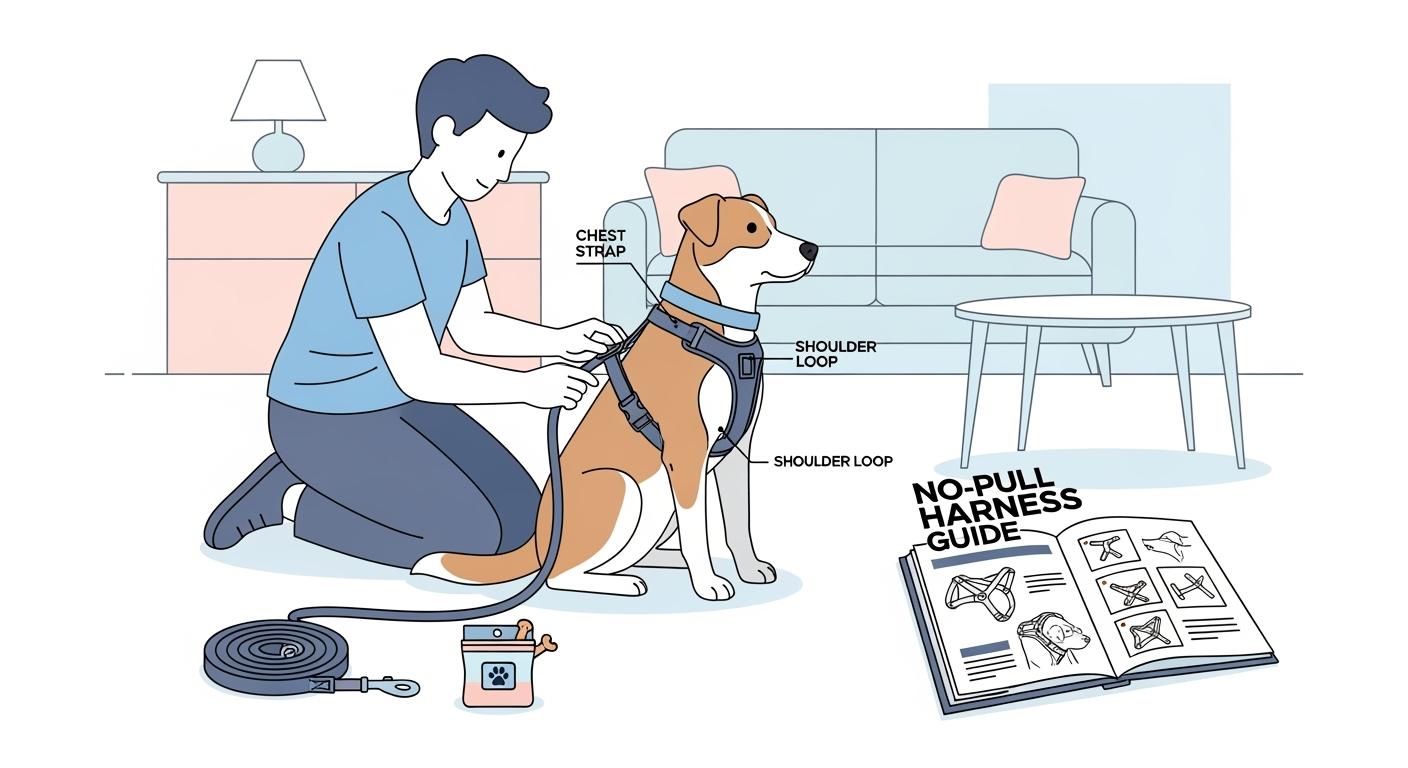
No-pull harnesses change the way your leash works, but you still need to check fit and use training. Many owners get frustrated because their dog keeps pulling, even with a dog harness no pull. You might notice your dog feels anxious or uncomfortable, or training results seem weak. Sometimes, pulling gets worse because the harness only changes leverage, not habits. Always look for signs like limping, skin irritation, or heavy stress. If you see these, stop and ask your veterinarian for advice. Remember, gear helps, but training and supervision matter most. Test each fix step by step, and make small changes to see what works.
Key Takeaways
A no-pull harness can help reduce pulling, but it does not replace the need for training. Use both gear and training together for best results.
Always check the fit of the harness before each walk. Look for signs of discomfort like rubbing or restricted movement.
If your dog pulls, stop walking and wait for the leash to loosen. This teaches your dog that pulling does not lead to forward movement.
Make small adjustments to the harness fit, changing one strap at a time. Test each change to see what works best for your dog.
Watch for distractions or stress that may cause pulling. Start with low-distraction walks and gradually increase difficulty.
Dog Harness No Pull-What It Does and What It Can’t
Expectations vs Reality
When you use a no-pull dog harness, you hope your dog will pull less. Walks should feel easier. The harness changes how the leash pulls. It makes pulling less fun for your dog. You might feel more control at first. But the harness cannot teach your dog leash manners alone. You still need training and to watch your dog. No-pull dog harnesses can turn your dog’s chest and move force to the side. But they do not fix why your dog pulls. If your dog pulls from excitement or stress, the harness only helps with the problem you see.
Many owners notice fast changes for a few days, but then pulling comes back. This is because the harness does not change your dog’s habits. You need to use gear and training together to make real progress.
Why Leash Pulling Is Reinforced
Dogs pull because moving forward feels like a reward. If you keep walking when your dog pulls, you teach them to keep doing it. A no-pull dog harness can make pulling less comfy, but it does not stop the reward. If the harness fits badly, is always tight, or there are lots of distractions, it may not work well. If the harness turns, slips, or blocks the shoulders, your dog may feel bad or pull harder. Studies show that harnesses with a back clip can make dogs pull more and make the leash tighter than collars.
Table: Harness Functions and Limitations
Harness Type | Functionality | Limitations |
|---|---|---|
Non-tightening front-clip harness | Better control for dogs that pull without being restrictive | May not address the root cause of pulling behavior |
Chest-strap and Y-shaped harness | Suitable for dogs that do not pull | Less effective for dogs that pull |
Collars | Appropriate for dogs that walk on a loose leash | Can be harmful for brachycephalic dogs |
When to Reassess Gear
Check your no-pull dog harness again if you see problems like turning, slipping, rubbing, or tight shoulders. Handling problems show up as a tight leash or your dog moving forward while pulling. Situation problems happen when distractions or stress are too strong for the harness to help. If you see limping, skin problems, panic, or big stress signs, stop and ask your veterinarian for help.
Scenario Walkthrough A:
You use a no-pull dog harness and it works for a week. Then your dog starts pulling again.
Step 1: Look around. Are there new things or stress?
Step 2: Watch how you hold the leash. Do you keep it tight or let your dog walk ahead when pulling?
Step 3: Check the leash and harness fit. Is the harness in the middle and not blocking the shoulders?
Change one thing at a time. Make strap changes by 1-2 in (3-5 cm). Test each change before you try another.
Failure Table
Symptom | Likely Cause | Quick Test | Fix |
|---|---|---|---|
Harness rotates | Poor fit | Check harness position | Adjust straps by 1-2 in (3-5 cm) |
Dog pulls hard | Handling habit | Pause on tension | Change direction, reward loose leash |
Dog limps | Discomfort | Inspect for rubbing | Stop use, consult veterinarian |
A no-pull dog harness can make pulling weaker, but it cannot promise perfect results. Always use gear, training, and watch your dog for the best outcome.
How No-Pull Dog Harnesses Work
Front Clip Mechanics
You clip the leash to the front of the harness. This changes how the leash pulls your dog. Pulling forward does not feel as good. The front clip turns your dog’s chest to the side. It makes your dog move sideways instead of straight ahead. You can steer your dog more easily. Pulling forward feels strange for your dog. This helps your dog walk calmly.
The front clip harness lets you steer your dog better. The leash attaches at the front, so you can guide your dog.
It works against your dog’s reflex to pull harder when there is pressure.
The harness controls your dog’s chest, so pulling feels weird and less fun.
Dr. Sophia Yin, a veterinarian and animal behaviorist, said: “The front-clip harness works because it changes what happens when a dog pulls. Instead of moving away, the dog faces you. That’s negative reinforcement done right—taking away the reward of moving forward.”
If the harness turns, slips, or blocks the shoulders, it will not work right. Always check the fit and comfort before every walk.
Dual Clip Control
Some harnesses have both front and back clips. You can use both clips for more control. The dual clip helps you steer and keep your dog steady if you hold the leash the right way. You steer with the front clip and keep your dog steady with the back clip. This setup helps with strong or very active dogs. If you use both clips, pick the one that matches your training goal. Keep your leash handling clear so your dog does not get confused.
If you feel the leash is always tight or your dog keeps pulling, your handling is not working. Stop or turn around when you feel tension. Give your dog a treat for walking with a loose leash.
Strap Fit and Rotation
How the straps fit is important for comfort and control. Straps should not block your dog’s shoulders. Make sure the harness stays in the middle and does not twist. Straps and buckles should not touch your dog’s armpits. This helps stop rubbing. Change the straps by 1-2 in (3-5 cm) at a time, then check the fit. Only change one thing at a time so you know what works.
Watch for problems like twisting, slipping, rubbing, or blocked shoulders. If you see limping, skin problems, panic, or big stress signs, stop and ask your veterinarian for help.
Mechanism Table
Design Element | What It Changes | What You Feel | Common Setup Mistake |
|---|---|---|---|
Front clip | Changes leash angle, reduces straight line drive | Easier steering, less forward pull | Clip too low or straps too loose |
Dual clip | Balances steering and stability with consistent handling | More control, less zig-zag motion | Using both clips without clear handling |
Strap layout | Keeps straps clear of shoulder motion | Smooth movement, no rubbing | Straps in armpit zone, causing chafing |
Rotation check | Harness stays centered, resists twisting | Stable fit, harness does not rotate | Harness rotates, breaks mechanism |
Adjustment method | Change one thing at a time by 1-2 in (3-5 cm) | Predictable results, easy testing | Changing too many things at once |
No-pull harnesses can make pulling weaker and less fun. They do not promise perfect results. You need to use gear, training, and watch your dog for the best results. Always check fit and comfort. Make small changes and test them. If you see pain, limping, skin problems, panic, heavy stress, or breathing trouble, stop and ask your veterinarian for help.
No-Pull Dog Harness Failures and Causes
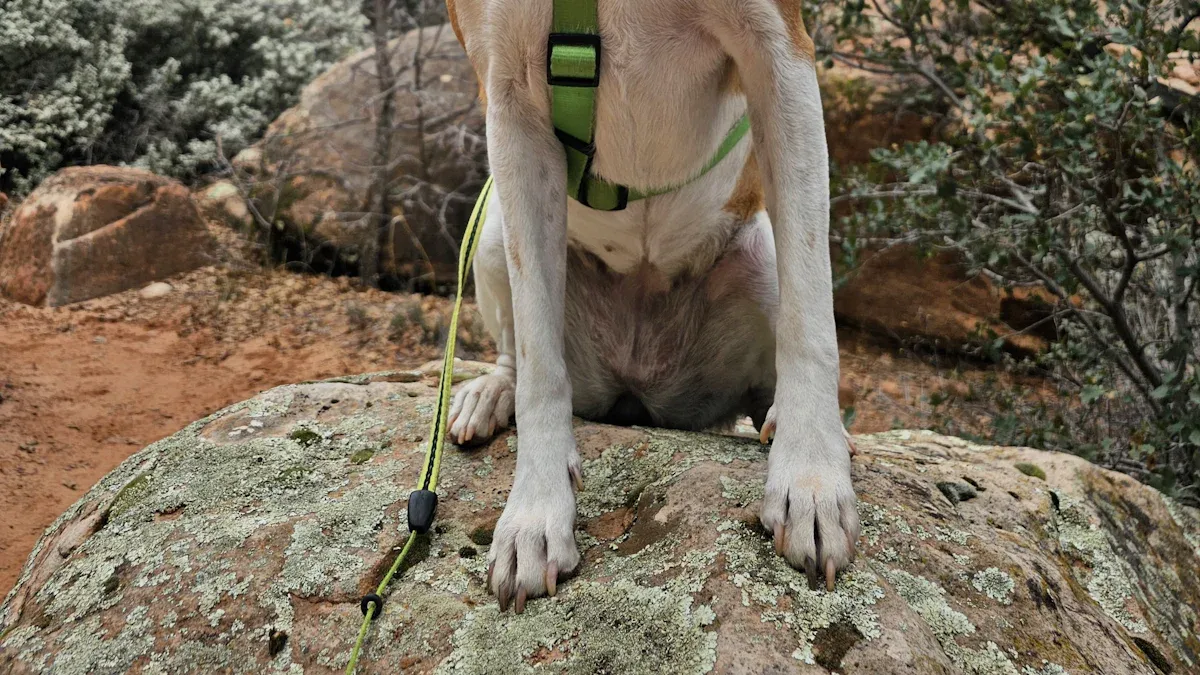
Fit Failure Signs
You may notice your dog stops excessive pulling, but new problems appear. Fit failures often show up as discomfort, odd movement, or skin issues. You need to check for these signs every time you use a no-pull harness. Look for:
Adjustment issues: Straps may not fit snugly. Loose straps allow rotation. Tight straps restrict movement.
Chafing and irritation: Redness, missing fur, or raw skin can mean the harness rubs or pinches.
Restricted movement: Your dog may walk stiffly or take short steps. This shows the harness blocks the shoulders.
Indentations: Deep marks on the skin after removing the harness mean the harness was too tight.
Behavioral changes: Restlessness, anxiety, or refusal to walk can signal discomfort.
Ignoring comfort and body language: Resistance, chewing at the harness, or wide eyes show your dog feels bad.
Tip: Always check the harness position. Make sure straps stay clear of the armpit zone and shoulder joints. Adjust straps by 1-2 in (3-5 cm) and test movement after each change.
Handling and Leash Pulling Habits
Your leash handling can reinforce leash pulling behavior, even with a no-pull harness. If you keep tension on the leash or let your dog move forward while pulling, you reward the habit. Dogs learn that pulling gets them where they want to go. You need to use loose leash walking techniques to prevent dogs from pulling.
Pause when you feel tension.
Change direction if your dog pulls.
Reward your dog for walking with a loose leash.
Avoid constant tension. This keeps the harness from working.
Use the front clip or dual clip based on your training goal.
Ordinary dog collar and back ring setups often make excessive pulling worse. The back ring does not change the leash angle. It allows your dog to use full strength. You need to match your clip choice to your training stage. The back ring works best for stability, not for steering or reducing pulling.
Situation Failure-Distractions and Stress
Sometimes, the harness works well until you face a new situation. High distractions or stress can override the mechanical effect of the harness. Your dog may ignore discomfort and pull harder. You need to watch for these cues:
Sudden lunging or barking at other dogs or people.
Refusal to respond to leash cues.
Heavy panting, drooling, or wide eyes.
Panic or frantic movement.
If you see pain, limping, skin irritation, panic, heavy stress signals, or breathing issues, stop and consult your veterinarian. No-pull harnesses can reduce leverage, but they cannot guarantee outcomes. Training and supervision matter most.
Note: Start with low-distraction walks. Increase difficulty slowly. Always check fit and comfort before each walk.
Scenario Walkthrough B
Your dog stops excessive pulling, but now you see rubbing or odd movement. You need to diagnose the problem step by step.
Check strap angles. Are straps clear of the shoulders and armpits?
Watch for rotation. Does the harness stay centered, or does it twist?
Test movement. Does your dog walk smoothly, or take short steps?
Inspect for skin marks. Are there indentations or redness after the walk?
Adjust fit. Change one strap by 1-2 in (3-5 cm). Test again.
If you see restricted movement, discomfort, or behavioral changes, the harness may be too tight or the wrong size. Make small adjustments and test each change. If problems continue, try a different harness type or consult a professional.
Failure Table
Symptom | Likely Cause | Quick Test | Fix | Next Step |
|---|---|---|---|---|
Harness rotates | Loose straps or wrong size | Check harness position | Adjust straps by 1-2 in (3-5 cm) | Re-test fit and movement |
Dog walks stiffly | Restricted shoulder movement | Observe gait and stride | Loosen shoulder straps | Check for rubbing or chafing |
Redness or missing fur | Chafing or irritation | Inspect skin after walk | Move straps out of armpit zone | Use padding or change harness |
Deep skin indentations | Harness too tight | Look for marks after removal | Loosen straps by 1-2 in (3-5 cm) | Monitor for improvement |
Refusal to walk | Discomfort or anxiety | Watch body language | Check fit and comfort | Consult veterinarian if needed |
Excessive pulling returns | Handling or situation failure | Pause and change direction | Reward loose leash walking | Reduce distractions |
Rubbing or odd movement | Strap angle or rotation issue | Check harness alignment | Adjust strap angles | Test with short walk |
Trainer and Veterinary Reports Table
Issue | Description |
|---|---|
Restricted Movement | No-pull harnesses limit the dog’s shoulder and leg movement, leading to unnatural gait and discomfort. |
Muscle Strain and Joint Issues | Dogs may develop muscle and joint injuries due to compensatory movements caused by restricted motion. |
Increased Frustration and Stress | Discomfort from the harness can lead to anxiety and frustration in dogs, making walks unpleasant. |
Safety Reminder: Gear cannot replace training and supervision. Poor fit can cause discomfort or setbacks. Always make small, testable changes. Change one variable at a time and observe your dog’s response.
Loose leash walking helps prevent dogs from pulling and reduces stress. The back ring provides stability, but you need to use the front clip for steering and training. If you see any pain or distress, stop and seek professional help.
Setup and Fit Tests for Dog Harness No Pull
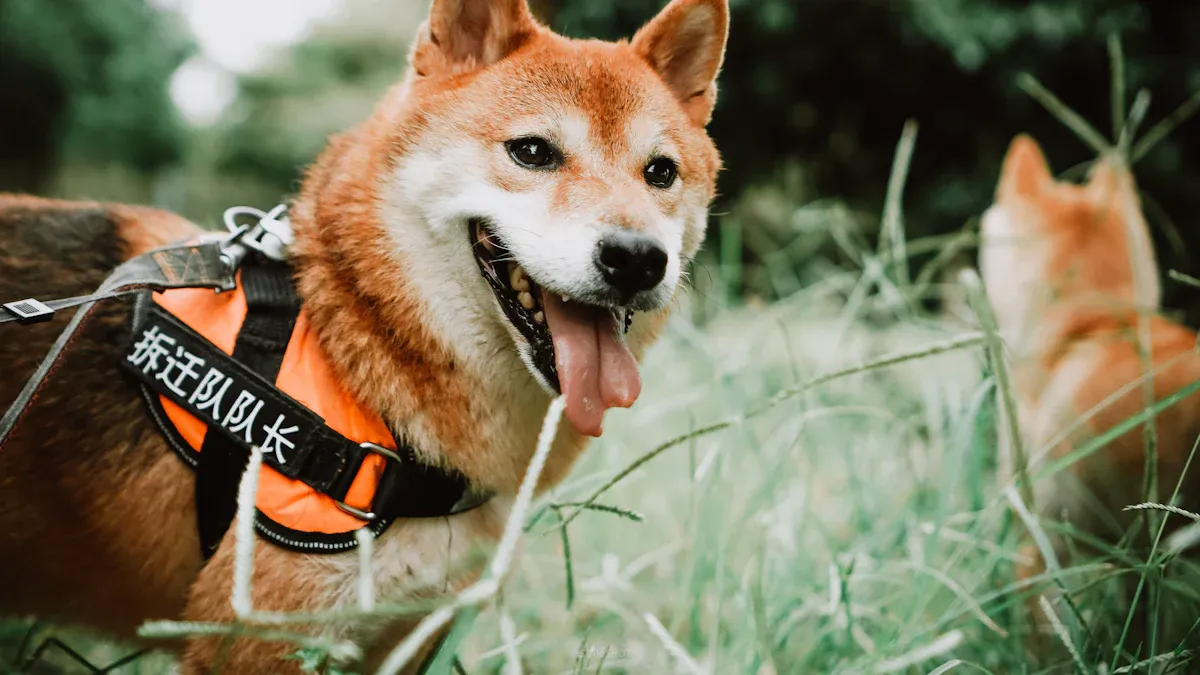
Measuring and Sizing (in and cm)
You need the right measurements to choose a harness that fits well. Use a soft measuring tape and write down each number in both inches and centimeters.
Gather your measuring tape, pen, and paper.
Measure your dog’s neck where a collar sits. Place two fingers under the tape for comfort. Write down the neck girth in in and cm.
Measure the chest at the widest part, just behind the front legs. Keep the tape snug but not tight. Record the chest girth in in and cm.
Measure the body length from the base of the neck to the base of the tail.
Measure the height from the withers to the paw while your dog stands straight.
Measure the widest part of the head for breeds with large heads.
If your dog grows or gains weight, repeat these steps. Always check after a seasonal coat change.
Fit Checks for Shoulders and Rotation
Check the harness fit every time you use it.
Make sure straps do not block the shoulders or touch the armpits.
The harness should stay centered and not twist when your dog moves.
Look for smooth walking and no short steps.
Check for redness, missing fur, or deep marks after walks.
If you see rotation, rubbing, or restricted movement, adjust one strap by 1-2 in (3-5 cm) and test again.
Leash Routing and Clip Use
Choose the leash and clip setup that matches your dog’s size and needs.
Dog Size | Minimum Width | Recommended Material | Hardware Grade |
|---|---|---|---|
60-80 lbs (27-36 kg) | 1 in (2.5 cm) | Leather or military nylon | Heavy-duty clip |
80-100 lbs (36-45 kg) | 1.25 in (3.2 cm) | Full-grain leather | Locking carabiner |
100+ lbs (45+ kg) | 1.5 in (3.8 cm) | Double-layer leather | Climbing-grade carabiner |
For reactive dogs, use a short, thick leash with a padded handle.
For pullers, pick a leash with a no-slip grip.
For chewers, use biothane or chain-reinforced leashes.
For anxious dogs, choose a leash with a consistent feel and quiet hardware.
Always match the clip to your training goal. Use the front clip for steering and the back clip for stability.
Parameter and Value Table
Parameter | Target option or rule | Why it matters |
|---|---|---|
Harness type | Front clip or dual clip based on dog profile | Changes control mechanics |
Clip choice | Match clip to goal and training stage | Prevents mixed signals |
Leash length | Choose a length that supports loose leash training | Affects timing and tension habits |
Strap angles | Keep straps clear of shoulder motion | Prevents restriction and rubbing |
Rotation check | Harness stays centered and resists twisting | Predicts stability |
Armpit clearance | Keep straps and buckles out of armpit zone | Reduces chafing |
Adjustment method | Change one thing at a time using the step size | Makes troubleshooting reliable |
Reward timing | Reward the right choice, not the pull | Prevents accidental reinforcement |
Reset pattern | Pause or change direction on tension | Stops forward reward |
Difficulty plan | Start low distraction, then increase | Prevents overwhelm |
Fit Test Table
Test | Pass Sign | Fail Sign | What to Change |
|---|---|---|---|
Shoulder clearance | Free movement, no short steps | Stiff walk, short stride | Loosen shoulder straps |
Rotation check | Harness stays centered | Harness twists or slips | Tighten chest or belly straps |
Armpit clearance | No rubbing or redness | Redness, missing fur | Move straps out of armpit zone |
Skin check | No deep marks after removal | Deep marks or indentations | Loosen straps by 1-2 in (3-5 cm) |
Tip: Make small changes, one at a time. Test after each adjustment. If you see pain, limping, skin irritation, panic, heavy stress, or breathing issues, stop and consult your veterinarian. No-pull harnesses can reduce leverage but cannot guarantee outcomes. Gear cannot replace training and supervision.
Training Plan to Reduce Leash Pulling
Reward Timing and Release Cues
You can help your dog walk calmly by giving rewards for good choices. Give a treat or say “good job” when your dog walks next to you with a loose leash. Use a clear word like “free” or “okay” to tell your dog when it’s time to move forward. The timing of your reward is important. Give the treat right when your dog is not pulling. Do not wait until after the leash gets tight. This stops you from rewarding pulling by mistake. If your dog pulls, stop and wait until the leash is loose again. This teaches your dog that only walking with a loose leash lets them go forward.
Walk Start Routine
Begin every walk with a simple plan. Use a short leash so you have more control. Ask your dog to sit quietly before you open the door. If your dog pulls or gets too excited, stop and wait until your dog is calm. Give a reward for quiet behavior. Only start walking when your dog is calm. This shows your dog that being calm means they get to move. You can use a front-clip harness to help guide your dog’s chest and stop pulling early.
Strategy | Description |
|---|---|
Use Shorter Leash | A short leash gives you more control and helps stop pulling. It helps your dog learn to walk calmly. |
Stop and Wait | If your dog gets too excited, stop moving. This teaches your dog that calmness is needed to go forward. |
Reward Calmness | Give treats or praise for calm actions. This helps your dog connect calmness with rewards. |
Reset Patterns for Tension
Reset patterns help your dog stop pulling. When your dog pulls, turn around or stop walking. This breaks the habit of pulling to move forward. You can try new gear like a front-clip harness or head halter to change how your dog feels the leash. Change the leash length a little to see how your dog reacts. Try a double-clip leash for more control. Always make small changes and watch what happens. Change only one thing at a time and see how your dog acts.
Turn around if your dog pulls.
Wait until the leash is loose before moving.
Try new gear if your dog keeps pulling.
Make the leash a little longer or shorter for better control.
Weekly Plan Table
Day | Goal | Exercise | Success Sign |
|---|---|---|---|
Monday | Practice loose-leash walking | Walk inside for 10 minutes | Dog walks next to you, leash is loose |
Tuesday | Add distractions | Walk outside, turn often | Dog follows when you change direction |
Wednesday | Work on reward timing | Give a treat for every loose step | Dog looks at you for clues |
Thursday | Try reset patterns | Stop or turn when leash is tight | Dog slows down after you reset |
Friday | Walk longer | Walk for 20 minutes, reward calmness | Dog keeps the leash loose |
Saturday | Check fit and comfort | Look at harness fit, fix straps if needed | Dog moves well, no rubbing |
Sunday | Rest and review | Take a short walk, praise calm behavior | Dog starts walk calmly |
Tip: Always look for signs like limping, skin problems, panic, heavy stress, or trouble breathing. Stop and ask your veterinarian if you see these signs. No-pull harnesses can help, but they do not fix everything. Training and watching your dog are most important. Make small changes and test one thing at a time.
Buying Guide for No-Pull Dog Harnesses
Strong Pullers vs Sensitive Dogs
You need to pick a harness that matches your dog’s strength and comfort. Strong pullers need harnesses that give you more control. These harnesses also give feedback to the dog. Sensitive dogs need gentle harnesses that do not use harsh pressure. Look at the table below to see the features:
Harness Type | Features | Best For |
|---|---|---|
Front-Clip Harnesses | Turns the dog to the side when pulling; Y-shape is comfy. | Beginners and sensitive dogs |
Martingale-Style Harnesses | Gets a little tighter when pulling; gives feedback but does not hurt. | Strong pullers and escape artists |
Combination Harnesses | Puts pressure under the front legs; gives two ways to control pulling. | Powerful breeds and determined pullers |
Tip: Always check if the harness fits right. Change the straps by 1-2 in (3-5 cm) and see how your dog moves after each change.
Walks, Hikes, and Travel Needs
Different activities need different harness features. For hiking, you want a harness that fits well and has a handle for rough ground. For daily walks, comfort and fit are most important. For travel, pick a harness that is light and easy to put on or take off.
Activity | Harness Features | Considerations |
|---|---|---|
Hiking | Comfy fit, strong design, handle for tough ground | Dog’s age, how strong they are, and weather |
Walks | Good fit, does not need to be super tough | How your dog acts (pulling, training) |
Travel | Light, easy to put on or take off | Good for short or long trips |
Note: Always check the harness fit before every activity. Make small changes and see if your dog is comfortable.
Red Flags to Avoid
When you buy a no-pull harness, watch out for these warning signs:
Harnesses that say “one size fits all” usually do not fit every dog.
No reviews or unclear material details are not a good sign.
Slip-on harnesses with no chest straps may move around too much.
Leg loops that are too tight can hurt your dog.
Safety Reminder: A harness that does not fit can make your dog uncomfortable or cause problems. If you see pain, limping, skin problems, panic, heavy stress, or trouble breathing, stop and ask your veterinarian for help.
Decision Table
Use this table to help you pick the best harness for your dog and where you walk:
Dog Profile | Environment | Best Setup | What to Avoid |
|---|---|---|---|
Strong puller | Busy sidewalks | Martingale-style or combo harness, dual clip | Slip-on harnesses, tight leg loops |
Sensitive dog | Quiet parks | Y-shaped front-clip harness, soft padding | Harnesses with rough material |
Large breed (80-100 lbs / 36-45 kg) | Hiking trails | Good fit, handle, reflective stitching | One-size-fits-all harnesses |
Small breed (15-25 lbs / 7-11 kg) | Travel | Light, easy on/off, fits snug | Bulky or heavy harnesses |
Make small changes you can test. Only change one thing at a time and check if your dog is comfortable and moves well.
Retail and Wholesale Notes-OEM and ODM Explained
Listing Copy and Expectations
When you look at a product listing for a dog harness, you want simple details about fit, features, and safety. The listing should tell you the harness type, how you can adjust it, and what size dog it fits in both in and cm. Good listings explain how the harness changes the leash angle and helps stop straight pulling. Honest listings tell you what to expect. No-pull harnesses can make pulling weaker, but they do not promise perfect results. You still need training and to watch your dog for the best results.
Spec Checklist
You need to check important details before you buy or sell a harness. Use this checklist to compare choices:
Feature | OEM (Original Equipment Manufacturer) | ODM (Original Design Manufacturer) |
|---|---|---|
Product Control | You decide the design and details | You change branding and small parts |
Customization | Many choices for size, material, and hardware | Mostly looks and style changes |
Intellectual Property | You own the design | Factory owns the design |
Time to Market | Takes longer, needs full design work | Faster, uses designs already made |
Cost | Costs more at first | Costs less at first |
OEM: You give the idea and design. The factory makes the harness from the start.
ODM: The factory has ready designs. You change the brand and small things.
Check these things before you buy or sell:
Neck girth range in in and cm
Chest girth range in in and cm
Strap width in in and cm
Adjustment step size: 1-2 in (3-5 cm)
Escape prevention features
Material and hardware quality
Support Script for Fit and Training
You can use these steps to help customers or yourself fit and train with a no-pull harness:
Measure your dog’s neck girth in in and cm. Make sure the harness is comfy.
Measure the chest girth behind the front legs in in and cm. This stops slipping.
If needed, measure the back length from neck base to tail base in in and cm.
Check strap width. Pick the right size for comfort and strength.
Look for extra length on chest straps. This helps if your dog grows or gets a thicker coat.
Do a slip test. Pull gently backward to see if the harness stays on.
Pick a harness with escape prevention if your dog backs up or gets scared.
Use treats and praise when fitting. Help your dog feel safe and happy.
Safety Reminder: If you see pain, limping, skin problems, panic, heavy stress, or trouble breathing, stop and ask your veterinarian for help. Gear cannot replace training and watching your dog. Make small changes you can test and only change one thing at a time.
No-pull dog harnesses can reduce pulling by changing leash mechanics, but they cannot guarantee outcomes. You need to check fit, use training, and watch your dog’s environment for better safety and comfort. Before switching gear, try these steps for better control:
Adjust straps so your dog moves freely during daily walks.
Straighten twisted straps and inspect hardware for wear.
Use the front clip for pullers and the back clip for calm dogs.
Reassess fit with coat or weight changes.
Test with a short walk and observe movement.
Seek help from a veterinarian or trainer if problems continue.
Progress takes time. Every dog learns at a different pace.
FAQ
How do you know if your dog harness fits correctly?
Check that the harness stays centered and does not twist. Straps should clear the shoulders and armpits. Adjust straps by 1-2 in (3-5 cm) if needed. Look for smooth movement and no redness after walks.
What should you do if your dog still pulls with a no-pull harness?
Stop walking when you feel tension. Change direction and reward your dog for a loose leash. Make small changes to fit or handling. If pulling continues, test one fix at a time and watch for improvement.
Can a no-pull harness hurt your dog?
A poor fit can cause discomfort, rubbing, or restricted movement. Watch for limping, skin irritation, or anxiety. If you see pain or distress, stop using the harness and consult your veterinarian.
Do you need to train your dog even with a no-pull harness?
Yes. Training teaches your dog what you expect. Gear changes leash mechanics, but only training changes habits. Use rewards for calm walking and reset patterns when tension appears.
What is the best way to adjust a harness for growing dogs?
Measure neck and chest girth in in and cm often. Adjust straps by 1-2 in (3-5 cm) as your dog grows. Test fit after each change. Make sure your dog moves freely and shows no signs of discomfort.






