
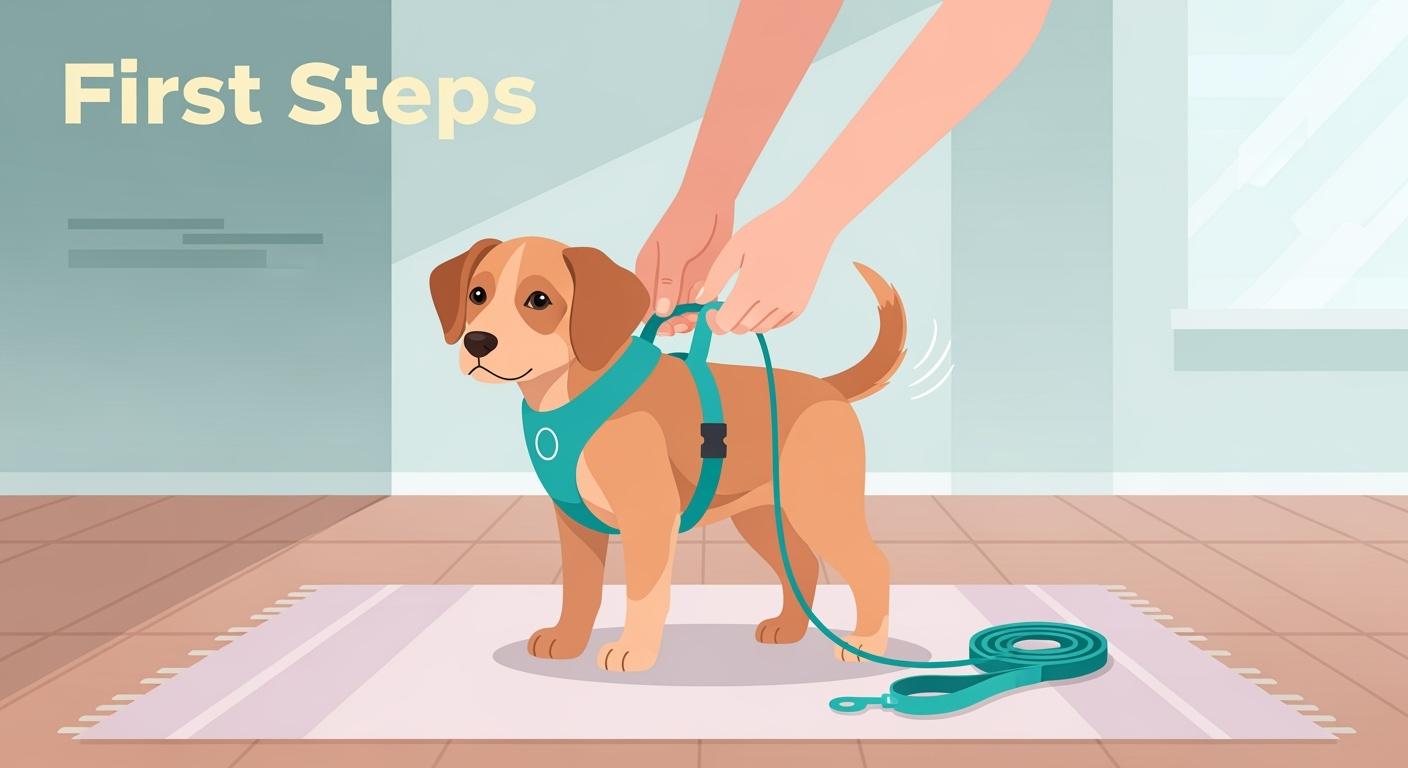
Puppies change and grow at a surprising pace. You help your puppy with harness training succeed when you choose the right harness and focus on fit that supports comfort. Begin with short, calm sessions and reward quiet moments. This guide helps you build good walking habits step by step. Remember, patience matters most. Check fit often and stop using the harness if your puppy shows pain or refuses to move. Consult a veterinarian or trainer for any concerns. Every puppy learns best with gentle, steady practice.
Key Takeaways
Pick a harness that you can adjust as your puppy grows fast. This helps your puppy stay safe and feel comfortable.
Check the harness fit often. Make sure it is snug so your puppy cannot escape. This also helps keep your puppy from getting hurt.
Begin harness training with short and calm times. Give treats when your puppy acts well. This helps your puppy trust you.
Watch your puppy for any signs of pain or discomfort. If you see skin problems or pain, stop using the harness. Talk to a vet for help.
Teach your puppy to walk with a loose leash. Give rewards when your puppy walks close to you. This helps your puppy learn good walking habits.
Why a puppy with harness needs a unique plan
Growth and adjustability for puppies
Puppies grow very quickly. Your puppy can get much bigger in just months. You need a harness that can change size as your puppy grows. Pick one with straps you can adjust on the chest, shoulders, and belly. These help the harness fit as your puppy gets bigger. Measure your puppy’s chest behind the front legs. Also check the neck opening at the base of the neck. Add about half to one inch for comfort and growth. Try to keep your puppy’s size in the middle of the harness range. Check the fit often, especially after your puppy grows fast. If you see pain, limping, or skin problems, stop using the harness and ask a vet.
Tip: Puppies get bigger fast. Adjustable harnesses save you from buying new ones all the time.
Body shape changes and harness fit
Your puppy’s body shape changes as it grows. The chest, shoulders, and neck grow at different speeds. A harness that fits now may not fit next week. Harnesses with adjustable straps help you keep up with these changes. If you use a harness made for adult dogs, it might not fit right. Always check for rubbing behind the elbows. Make sure straps do not block shoulder movement. A good fit helps your puppy walk calmly and keeps it safe. After each walk, look for twisted straps or sore spots. If you find problems, fix the harness or try a new style.
Harness Feature | Why It Matters |
|---|---|
Multiple adjustments | Changes with puppy’s growth |
Chest girth fit | Stops squeezing or escaping |
Neck opening fit | Keeps puppy safe and comfy |
When not to use a harness
Do not use a harness if it hurts your puppy or stops it from moving. Stay away from harnesses that block shoulder movement or press on the throat. Some harnesses with chest straps can move and sit wrong. Bad harnesses can make your puppy pull or escape. Do not use a no-pull harness without a chest clip or control for training. If the harness is not made for puppies, it may not fit and cause problems. Stop using the harness if your puppy is in pain, will not move, or has skin issues. Ask a vet for help with movement or skin problems. Ask a trainer for help with fear or escaping.
Limited movement stops shoulders from stretching.
Pressure on the throat can hurt your puppy.
Straps that move can cause pain.
Bad fit makes escaping and pulling worse.
Not every harness works for training or growing puppies.
Safety Note: The right size helps comfort and control but does not promise good behavior. Always check the fit as your puppy grows.
Puppy harness styles and first choices
Picking a harness for your puppy means knowing the main types. Each kind helps your puppy feel safe in its own way. You want a harness your puppy will like and one you can adjust as it grows.
Step-in vs overhead harness
Step-in harnesses let you put your puppy’s paws in first. Then you pull the harness up and clip it on the back. Overhead harnesses go over your puppy’s head and buckle around the chest. Step-in harnesses are good for puppies who do not like things over their heads. Overhead harnesses are faster if your puppy stays calm. Always make sure the harness does not rub behind the elbows or block the shoulders.
Many people like anti-pull harnesses for puppies. Reviews say these harnesses help with walking and pulling.
Y-shape vs H-shape harness
Y-shape harnesses have a front that looks like a Y on your puppy’s chest. H-shape harnesses have straps that make an H on the back and chest. The Y-shape lets your puppy move more and spreads pressure better. The H-shape can pinch under the arms and limit movement.
Feature | Y-Shaped Dog Harness | H-Shaped Dog Harness |
|---|---|---|
Chest Pressure Distribution | Spreads pressure well | Can pinch under arms |
Shoulder Freedom | Puppy can move shoulders | Shoulders move less |
Winter Coat Accommodation | Easy to adjust | Can slip out of place |
Control on Slippery Ground | Good control | Not as much control |
Front-clip vs back-clip options
Front-clip harnesses have a leash ring on the chest. Back-clip harnesses have the ring on the back. Front-clip harnesses help guide your puppy and stop pulling. Back-clip harnesses are best for puppies who already walk calmly.
Harness Type | Advantages | Disadvantages |
|---|---|---|
Front-Clip Harness | Spreads pressure, gives control, stops pulling. | Can change how your puppy walks and hurt tendons. |
Back-Clip Harness | Comfortable, good for calm dogs, lets puppy move. | Can make pulling worse, less control, not best for training. |
Style comparison table
Harness Type | Best Starter Use | Watch-Outs | Fit Focus |
|---|---|---|---|
Step-in | For puppies scared of overhead harnesses | Watch paw placement and twisted straps | Check chest and elbows |
Overhead | For calm puppies, easy to put on | Puppy may not like head part, check neck opening | Neck and strap length |
Y-shape | Good for active puppies and training | Watch shoulder fit and strap angle | Shoulders and chest |
H-shape | Good for simple walks, easy to use | Can rub under arms, straps may move | Underarm space, adjust straps |
Front-clip | Good for training and stopping pulling | Can change walk, leash may tangle | Chest fit and leash angle |
Back-clip | Good for calm puppies, daily walks | Can cause pulling, less control | Back strap and comfort |
Safety Note: The right size and fit help your puppy feel good and safe but do not promise good behavior. Stop using the harness if your puppy is in pain, limping, has skin problems, or will not move. Puppies grow fast, so check the fit often. Ask a vet for health problems and a trainer for behavior help.
Measure for the right size dog harness
Choosing the right size dog harness starts with careful measurement. Puppies grow fast, so you need to check fit often. A harness that fits today may feel tight next week. Always use clear sizing information from the product chart before you buy or adjust a harness.
Chest girth and neck opening methods
Start with these steps to measure your puppy for a dog harness:
Use a soft fabric measuring tape for accuracy.
Measure the chest girth at the widest part, just behind the front legs.
Measure the neck opening at the base of the neck, not where a collar sits.
Make sure you can fit two fingers between the tape and your puppy’s skin.
Write down your measurements in both inches and centimeters.
Add 0.5-1 in (1-2.5 cm) to your chest girth measurement for comfort and growth.
Compare your numbers to the sizing guidelines on the harness chart.
Safety Note: Correct sizing supports comfort and handling but does not guarantee behavior. Stop use if your puppy shows pain, limping, or skin irritation.
Adjustment range and growth checks
A growing puppy needs a harness with an adjustment range that matches its changing size. Look for straps that can shorten or lengthen without reaching their limits. Aim for your puppy’s measurements to sit near the middle of the adjustment range. Recheck the fit every week, especially during growth spurts. If the harness feels tight or loose, adjust the straps or try a new size.
Adjustment range: how much the straps can change length
Growth check: routine re-measurement to keep up with your puppy’s size
Measurement and parameter table
Use this table to guide your measuring and fitting process:
What to Measure | How to Measure | Why it Matters |
|---|---|---|
Chest girth | Widest part behind front legs | Main sizing driver |
Neck opening | Base of neck, not collar spot | Prevents squeeze or escape |
Adjustment range | Check product chart for strap limits | Room for growth |
Allowance | Add 0.5-1 in (1-2.5 cm) to chest girth | Comfort starting point |
Entry style | Overhead or step-in | Changes tolerance |
Finger check | Two fingers under straps | Quick validation |
Elbow clearance | No rubbing behind elbows | Reduces hotspots |
Shoulder freedom | No restriction across shoulders | Improves movement |
Post-walk check | Re-check after short walk | Catch twist and rub |
Intro sessions | Short and calm | Reduces stress |
Always match your measurements to the clear sizing information on the product chart. This helps you pick the right size dog harness and keeps your puppy comfortable as it grows.
Reminder: Puppies grow quickly. Check the fit often and adjust as needed. Consult a veterinarian for mobility or skin concerns and a trainer for fear or escape behavior.
Harness fit and adjustment steps
Getting a proper harness fit for your puppy starts with the right routine. You want your puppy to feel safe and comfortable. Use this step by step guide to help you adjust the harness and check for comfort.
Overhead harness routine
Start by holding the harness open. Gently slip it over your puppy’s head. Make sure the neck opening sits at the base of the neck, not on the throat. Bring the straps under the chest and buckle them. Check that the harness sits flat and does not twist. Adjust the straps so they are even on both sides. Use the two-finger starting check at each strap. Place two fingers between the harness and your puppy’s body. This helps you find a snug but flexible fit. If you feel pinching or see rubbing, loosen the straps.
Step-in harness routine
Lay the harness flat on the ground. Guide your puppy’s front paws into the openings. Pull the harness up and around the chest. Buckle the straps on the back. Make sure the harness does not twist or bunch up. Adjust the straps for symmetry. Use the two-finger starting check at every contact point. The harness should not press into the skin or leave marks.
First-fit adjustment order
Follow this step by step guide for fit fundamentals:
Put the harness on your puppy using the overhead or step-in method.
Buckle all straps and check for symmetry.
Adjust the chest and belly straps first, then the neck.
Use the two-finger starting check at each strap.
Make sure your puppy’s chest girth sits near the middle of the adjustment range.
Run fit tests: check for hotspots, centering, rotation, and slip.
Take a short walk and re-check all fit points.
Safety Note: Correct sizing and harness fit support comfort and handling but cannot guarantee behavior. Stop use if your puppy shows pain, limping, skin irritation, or refuses to move.
Step table for fitting
Step | Pass Sign | What to Adjust |
|---|---|---|
1. Place harness | Puppy stands calm, harness sits flat | Reposition harness |
2. Buckle straps | Straps click, harness does not twist | Check buckle and strap path |
3. Put on harness and adjust | Two fingers fit under straps, no pinching | Loosen or tighten straps |
4. Check symmetry | Harness looks even on both sides | Adjust strap lengths |
5. Fit test walk | Puppy moves freely, no rubbing | Re-check elbow and shoulder zones |
Puppies grow fast. Re-check harness fit often and adjust as needed. Consult a veterinarian for mobility or skin concerns and a trainer for fear or escape issues.
Fit checks for safety and comfort
Elbow and armpit hotspot zones
You want your puppy to feel good in its harness. Hotspots often show up behind the elbows or in the armpit area. Straps that sit too close to the armpit can cause chafing, licking, or scratching. Always check for at least one inch (2.5 cm) of space behind the front legs. If you see red skin or your puppy stops walking, adjust the harness right away. Bulky buckles or wide straps can press into the spine and create pressure points. A good fit keeps your puppy moving freely and helps with escape prevention.
Safety tip: Correct sizing supports safety and comfort but does not guarantee behavior. Stop use if your puppy shows pain, limping, or skin problems.
Strap twist and angle cues
Straps should sit flat and smooth. Twisted straps or straps that cross the shoulder can block movement and create pressure points. Make sure the harness does not restrict the shoulders. Look for adjustable straps around the neck, chest, and belly. Chest straps that sit too high can press on the throat and cause coughing. After each walk, check for strap twists or new hotspots. This helps you spot problems early and supports escape prevention.
Escape checks for puppies
Escape prevention is key for every puppy. A loose harness can shift and make it easy for your puppy to slip out. Always check that the harness fits snugly but not too tight. Test escape prevention by applying gentle backward pressure. If your puppy can back out, adjust the straps or try a different style. A secure fit spreads pressure evenly and keeps your puppy safe. Good escape prevention also helps your training sessions work better.
Aspect | Recommendation |
|---|---|
Proper Fit | Ensure the harness is snug and adjustable to prevent escape. |
Pressure Distribution | A well-fitted harness spreads pressure evenly to avoid strain on the dog. |
Training Effectiveness | Proper adjustments maintain optimal positioning, enhancing training outcomes. |
Escape Prevention | A loose harness increases the risk of slipping out; a snug fit is crucial. |
Fit test table
Use this fit test checklist to keep your puppy secure and comfortable. Run fit tests during a short walk and fix hotspots early.
Fit Check | Pass Sign | What to Change |
|---|---|---|
Elbow Clearance | No rubbing behind elbows | Adjust chest strap |
Shoulder Freedom | Puppy moves shoulders freely | Refit, try Y front style |
Strap Flatness | Straps sit flat, no twists | Untwist, adjust strap length |
Escape Prevention | Puppy cannot back out with gentle pull | Tighten straps, change style |
Post-Walk Check | No new hotspots or red marks | Loosen or reposition straps |
Puppies grow fast. Repeat fit tests often to support escape prevention and safety and comfort. Consult a veterinarian for mobility or skin concerns and a trainer for fear or escape issues.
Guide to calm walking and training
Introduction plan for puppy harness
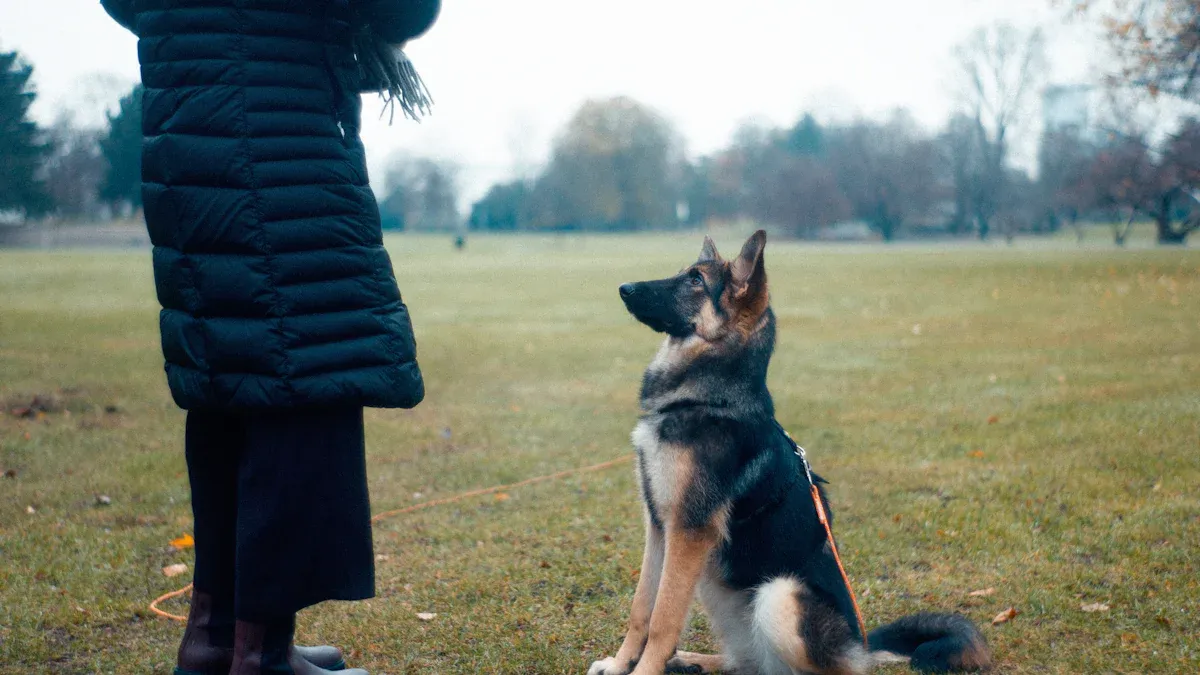
You want your puppy with harness to feel calm and safe from the start. Begin by letting your puppy sniff and explore the harness before you try to put it on. Lay the harness on the floor and place a few treats nearby. This step helps your puppy see the harness as something positive. When your puppy touches or sniffs the harness, reward with a gentle voice and a treat. Do not rush. If your puppy freezes or backs away, pause and try again later.
Once your puppy feels comfortable, gently slip the harness on for a few seconds. Use a dog training harness that fits well and does not pinch or rub. Remove the harness after a short time and reward your puppy again. Repeat this process several times a day. Each time, keep the session short and end on a calm note. This approach builds trust and helps your puppy accept the harness as part of daily life.
Safety tip: Correct sizing supports comfort and handling but cannot guarantee behavior. Stop use if your puppy shows pain, limping, skin irritation, or refuses to move. Puppies grow quickly, so re-check fit often.
Loose-leash basics and rewards
Loose-leash walking means your puppy with harness walks beside you without pulling. Start in a quiet area with few distractions. Hold the leash so there is a gentle curve, not a tight line. If your puppy moves ahead and starts pulling, stop walking. Wait for your puppy to return to your side or look back at you. When your puppy does this, reward right away.
Use the right rewards to keep your puppy engaged. In calm places, dry kibble works well. In busy or distracting spots, switch to high-value treats like freeze-dried liver, small pieces of cheese, or boiled chicken. Give pea-sized treats to avoid overfeeding and keep your puppy focused. Change up the rewards to keep your puppy interested and motivated.
Dry kibble for low-distraction areas
High-value treats for busy places
Pea-sized amounts for quick rewards
Always reward calm walking and check-ins. If your puppy starts pulling, stop and wait. Do not yank the leash or use harsh corrections. A no-pull harness or dog training harness can help manage pulling, but you must teach your puppy what you want. Consistent rewards and calm handling build good habits.
Note: A secure fit and the right rewards support training effectiveness, but do not promise perfect behavior. Re-check fit as your puppy grows.
Troubleshooting puppy reactions
Sometimes, your puppy with harness may react in ways you do not expect. If your puppy slips out of the harness, check the fit right away. Make sure the harness sits snug and secure, especially around the chest and neck opening. If your puppy resists or chews the harness, pause the session. Remove the harness and let your puppy relax. Try again later with shorter sessions and more rewards.
If your puppy freezes, moves stiffly, or scratches at the harness, these signs mean the fit may not be secure or comfortable. Adjust the straps and check for rubbing or pinching. If your puppy keeps pulling or tries to escape, consider switching to a no-pull harness or another dog training harness style. Always use gentle handling and avoid sudden movements.
Safety reminder: Puppies grow fast. A secure fit supports comfort and escape prevention but cannot guarantee behavior. Stop use if you see pain, limping, or skin problems. Consult a veterinarian for health issues and a trainer for fear or escape behavior.
Worked Scenarios
Scenario A: Puppy slips out of the harness
Check the adjustment range and make sure the harness sits snug.
Test escape prevention by applying gentle backward pressure.
If the harness still feels loose, try a different style or size.
Use a secure dog training harness for better control.
Scenario B: Puppy resists or chews the harness
Remove the harness and let your puppy calm down.
Offer treats and praise when your puppy interacts with the harness calmly.
Try shorter sessions and reward every calm moment.
If chewing continues, check for hotspots or pinching and adjust the fit.
Training plan table
A clear guide helps you build calm walking habits step by step. Use this training plan table to track your progress and adjust as needed.
Phase | Duration | Focus | Goal | Session Setup | What Success Looks Like | What to Do if It Fails |
|---|---|---|---|---|---|---|
1 | Days 1-7 | Foundation & Threshold Awareness | Your puppy glances back at you after 2-3 steps without prompting. | Quiet area, short leash, secure fit, treats | Puppy checks in, walks calmly for a few steps | Shorten session, increase rewards, re-check harness fit |
2 | Days 8-21 | Distraction Literacy | Puppy offers a soft blink or head turn away from distractions after reward delivery. | Add mild distractions, use high-value treats | Puppy ignores mild distractions, stays near you | Move to quieter area, use better treats, check fit |
3 | Weeks 4-8 | Route Co-Creation | Puppy checks in voluntarily every 30-60 seconds during movement. | Longer walks, varied routes, secure dog training harness | Puppy checks in often, leash stays loose | Shorten walk, increase check-ins, adjust harness |
4 | Weeks 9-12+ | Dynamic Flow Integration | Puppy adjusts pace and focus seamlessly-no visible tension in neck or shoulders, tail relaxed and low-mid carriage. | Real-world walks, more distractions, secure fit | Puppy moves with you, no pulling, relaxed body language | Return to easier phase, re-check fit, consult trainer |
Tip: Training effectiveness improves with short, positive sessions and a secure fit. Always end on a calm note.
Step 5: Train short positive sessions and re-check fit as the puppy grows
Keep each training session short-just a few minutes at first. Focus on calm behavior and reward every small success. Use a secure dog training harness and check the fit before and after each session. Puppies grow quickly, so adjust the harness often. If you notice pulling, chewing, or escape attempts, pause and review your guide. A secure fit and gentle handling support training effectiveness and help your puppy with harness become a calm walker.
Safety note: Correct sizing and a secure fit support comfort and handling but cannot guarantee behavior. Stop use if your puppy shows pain, limping, skin irritation, or refuses to move. Consult a veterinarian for health concerns and a trainer for behavior issues.
Retail and support notes for puppy harness
Listing copy and style tolerance
When you shop for a puppy harness, you will notice that many designs focus on both style and function. Pet owners today want harnesses that look good in photos and match other accessories. You can find bright colors, patterns, and even matching leashes. Many brands use materials like PVC coated webbing. This material feels smooth, lasts a long time, and is easy to clean. Customization is popular, so you may see options for name tags or special colors. Always check if your puppy accepts the entry style. Some puppies prefer step-in, while others do better with overhead types. Watch for signs of freezing, flailing, or chewing when you try a new harness.
Safety reminder: The right size and fit support comfort and handling but cannot guarantee behavior. Stop use if your puppy shows pain, limping, or skin problems.
Spec checklist for harness fit
Use this checklist to compare harness options and make sure you pick the best fit for your puppy.
Key Specification | Description |
|---|---|
Chest range | Fits measured chest girth plus allowance for growth |
Neck opening range | Sits at base of neck, not collar spot |
Strap travel | Straps adjust enough for weight and coat changes |
Padding zones | Padding in contact areas to prevent chafing |
Buckle placement | Buckles away from spine and armpits for comfort |
Material quality | Breathable, moisture-wicking, easy to clean |
Reflective elements | For visibility in low-light conditions |
Leash attachment points | Front, back, or both, based on training needs |
Handle presence | Useful for stairs or helping your puppy into the car |
Always check fit after each walk. Puppies grow quickly, so re-check harness fit often.
Support script for owners
You can follow these steps for a smooth harness experience:
Measure your puppy’s chest girth and neck opening.
Choose a harness style that matches your puppy’s comfort and your training goals.
Fit the harness using the two-finger check and adjust all straps.
Take a short walk and re-check for rubbing, twisting, or escape risk.
Set a schedule to re-measure and adjust the harness as your puppy grows.
If you see pain, limping, or skin irritation, stop using the harness and ask a veterinarian or trainer for help.
OEM and ODM explained
You may see the terms OEM and ODM when you shop for pet gear. OEM means Original Equipment Manufacturer. This company makes products for other brands to sell under their own names. ODM stands for Original Design Manufacturer. This company creates and produces new designs that brands can sell as their own. Both options help bring new harness styles and features to the market.
Measure your puppy for a harness in inches and centimeters.
Check the harness fit often and adjust it as your puppy grows.
Use short training times to help your puppy get used to the harness.
Celebrate every calm walk and each bit of progress.
Safety reminder: The right size helps your puppy feel good and safe, but it does not promise perfect behavior. Stop using the harness if you see pain or skin problems.
If you are patient and practice often, your puppy will learn to walk calmly with the right harness.
FAQ
How often should you check your puppy’s harness fit?
You should check the harness fit every week. Puppies grow fast. Straps may need adjusting often. Always check after growth spurts. If you see red marks or your puppy seems uncomfortable, adjust the harness right away.
Safety tip: Stop use if you see pain, limping, or skin problems.
What if your puppy tries to escape the harness?
If your puppy backs out or slips free, check the adjustment range. Make sure the harness sits snug and secure. Try a different style if needed. Test escape prevention with gentle backward pressure before each walk.
How do you choose the right harness style for your puppy?
Watch how your puppy reacts to different entry styles. Some puppies prefer step-in harnesses. Others accept overhead types. Choose a style your puppy tolerates well. Look for adjustable straps and soft padding for comfort.
What are the most common mistakes with puppy harnesses?
Here is a table of common mistakes and solutions:
Mistake | What It Leads To | What to Do Next |
|---|---|---|
Too loose or tight fit | Escape or chafing | Adjust straps, use two-finger check |
Wrong size harness | Discomfort, poor control | Measure chest and neck, re-check size |
Ignoring growth changes | Harness becomes unsafe | Re-measure and adjust weekly |
Skipping fit checks | Missed hotspots or rubbing | Check after every walk |
Note: Correct sizing supports comfort and handling but cannot guarantee behavior. Always re-check fit as your puppy grows.
Can you leave a harness on your puppy all day?
You should not leave a harness on all day. Remove it during rest, play, and sleep. This prevents rubbing and skin problems. Only use the harness for walks or training sessions.
Consult a veterinarian for skin or mobility concerns. Ask a trainer for help with fear or escape behavior.






