You may notice leash walking brings its own set of challenges. Many dog owners struggle with pulling, tangling, or sore hands. Surveys show over 80 percent experience pulling on walks. These problems often link to the wrong leash for dogs. Choosing the best leash means thinking about your dog size, activity level, and the places you walk. Material and length matter for comfort and safety. You can find the right leash by matching features to your routine and your dog’s needs.
Key Takeaways
Pick a leash length that fits your dog’s size and where you walk. A 4-6 foot leash works well for daily walks. Longer leashes are good for training or big open areas.
Choose a leash material that matches what you need. Nylon is strong and easy to wash. Leather feels nice and lasts a long time. Think about how your dog acts before picking.
Find leashes with padded handles and strong clips. These parts make walks safer and more comfortable. They help a lot if your dog pulls hard or if it is crowded.
Use good leash training habits every time. Give treats to reward calm walking. Do not use retractable leashes because they can cause pulling and tangling.
Check your leash often for damage or wear. Look at the clips, stitching, and handles to keep walks safe. This helps stop the leash from breaking suddenly.
What the right leash for dogs solves
Control vs freedom with leash length
Choosing the right leash for dogs helps you balance control and freedom during walks. A short leash gives you quick control in busy places. A longer leash lets your dog explore and sniff, which supports mental health. You can see the benefits in the table below:
Leash Length | Suitable For | Benefits |
|---|---|---|
4-6 feet (1.2-1.8 m) | Small and toy breeds | Closer supervision, safety in crowded areas |
6-8 feet (1.8-2.4 m) | Large and working breeds | More exploration, still good control |
10-30 feet (3.0-9.1 m) | Advanced training, open spaces | Simulates off-leash, more freedom |
A study found that dogs on a 16-foot leash sniffed almost three times more than those on a 5-foot leash. Sniffing helps your dog relax and learn about the world. You should match leash length to your walking environment and your dog’s needs.
Safety tip: Some leash styles, like retractable leashes, can increase risk in crowded areas or if you do not have training skills. If your dog is reactive or you feel unsafe, consult a qualified trainer.
Handler comfort and safety
The right leash also improves handler comfort and safety. You want a leash that feels good in your hand and does not cause strain. Features like padded handles and smooth hardware make walks easier. Lightweight leashes help you avoid sore hands. A sturdy clip and strong material keep you and your dog safe. Many handlers prefer leashes that are easy to attach and adjust.
Training needs beyond the leash
The right dog leash supports basic walking and training. It helps you teach commands and manage your dog’s behavior. However, leash choice alone does not guarantee perfect training results. You still need patience and practice. Some common problems solved by the right leash for dogs include:
Dogs pulling or moving too fast.
Walking too slowly, which can confuse your dog.
Thinking your dog must always walk in a perfect heel.
Using a leash that encourages pulling.
Stopping treats too soon during training.
You can solve many walking problems by picking the right leash and using it with good training habits.
Types of dog leashes and their uses
Picking the right leash helps keep walks safe and fun. There are many kinds of dog leashes. Each type has a special use. Knowing the differences helps you choose the best leash for your dog and your routine.
Standard fixed leash for daily walks
Standard flat leashes are used most often. They are usually 4 to 6 feet long. These leashes give you control and let your dog explore. They work well in parks, streets, or neighborhoods. Some leashes can be made longer or shorter when needed.
Hands-free and hiking leashes
Hands-free leashes go around your waist or body. They let you move easily. These are good for jogging, hiking, or pushing a stroller. Many have strong clips and shiny parts for safety. You can compare hands-free and hand-held leashes to see what works for you. Some hands-free leashes use tough materials for rough trails.
Long line for recall training
Long lines are used for teaching recall and distance. They can be 10 to 50 feet long. Your dog can roam but you still have control. Long lines help teach your dog to come when called. Extra-long adjustable leashes can also help with recall practice.
Retractable leash risks and alternatives
Retractable leashes can stretch up to 30 feet. They let dogs explore more. But these leashes can tangle or trip people. They might make pulling worse. The handle can slip and scare your dog. Trainers often say standard flat leashes or long lines are safer.
Comparison table: leash type, pros, cons, best use
Option | Pros | Cons | Best For |
|---|---|---|---|
Standard flat leashes | Easy to use, good control | Not much range | Daily walks, busy places |
Hands-free leashes | Move freely, good for jogging | Not great for strong pullers | Running, hiking, multitasking |
Long line | Good for recall, more freedom | Can tangle, needs lots of space | Training, open fields |
Retractable leashes | Can be long, lets dogs explore | Tangles, may cause pulling | Open spaces, calm dogs |
Adjustable leashes | Can change length, very useful | More parts to handle | Training, changing places |
Tip: Pick the leash that fits your dog’s needs and where you walk.
Key specs for matching the leash to the dog
Choosing the right leash starts with understanding your dog’s needs and your walking environment. You want a leash that gives you control, feels comfortable, and keeps your dog safe. Here is how you can match the specs to your situation.
Leash length and control
Leash length affects how much control you have and how much freedom your dog gets. Shorter leashes work best in busy places or when you need your dog close. Longer leashes give more room for sniffing and training in open spaces.
4-foot leash: Great for city walks and crowded areas. You keep your dog close and safe.
6-foot leash: Good for parks and quiet streets. Your dog can explore but you still have control.
8-10 foot leash: Best for open fields or training. Your dog gets more freedom.
Leash Length | Best For |
|---|---|
4 feet (1.2 m) | Urban settings, high traffic, distractions |
6 feet (1.8 m) | Parks, neighborhoods, relaxed walks |
8-10 feet (2.4-3.0 m) | Open spaces, training, more freedom |
Shorter leashes help you manage sudden pulls or surprises. Longer leashes let your dog sniff and learn. You should pick the length based on where you walk most often.
Leash width and comfort
Leash width changes how the leash feels in your hand and how strong it is. Thicker leashes give more strength for big or strong dogs. Thinner leashes feel lighter and work well for small dogs or puppies.
Dog Size/Weight Category | Recommended Leash Width | Recommended Leash Length |
|---|---|---|
Show Dogs | 1/8 in (0.3 cm) | 1-8 ft (0.3-2.4 m) |
Dogs under 50 lbs | 3/8 in (1.0 cm) | 3-6 ft (0.9-1.8 m) |
Dogs over 50 lbs | 1/2 in (1.3 cm) | 3-6 ft (0.9-1.8 m) |
Choose a wider leash for strong pullers or large breeds.
Pick a lighter, thinner leash for puppies or small breeds.
Make sure the handle feels comfortable and does not rub your hand.
Reliable hardware and clips
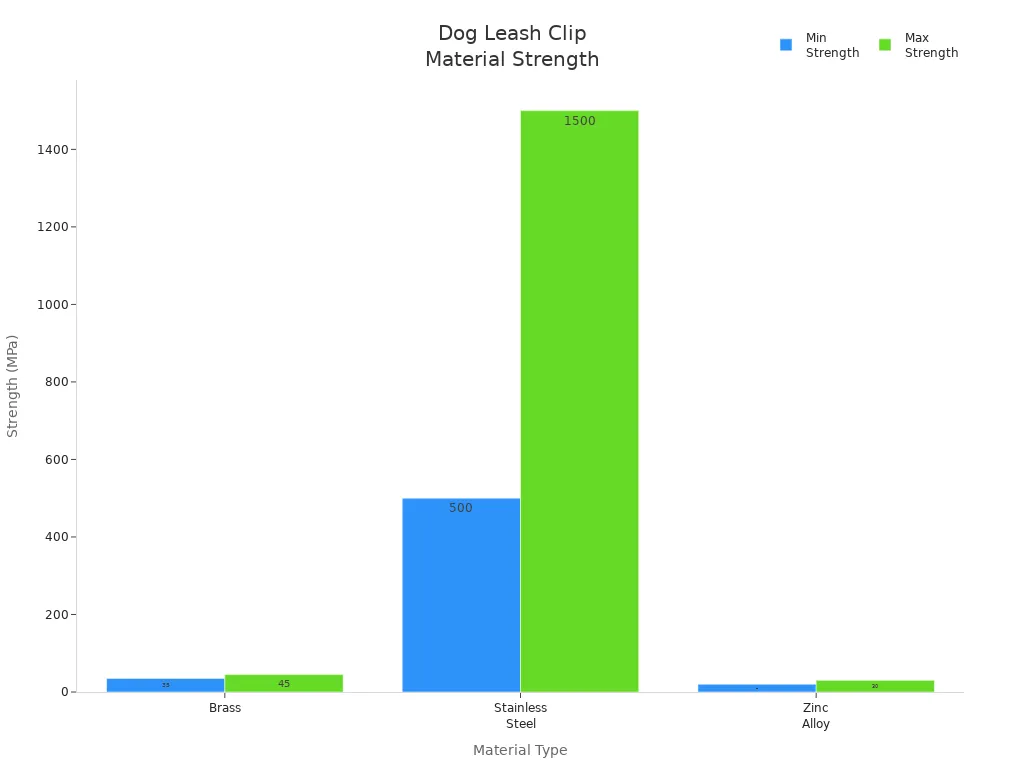
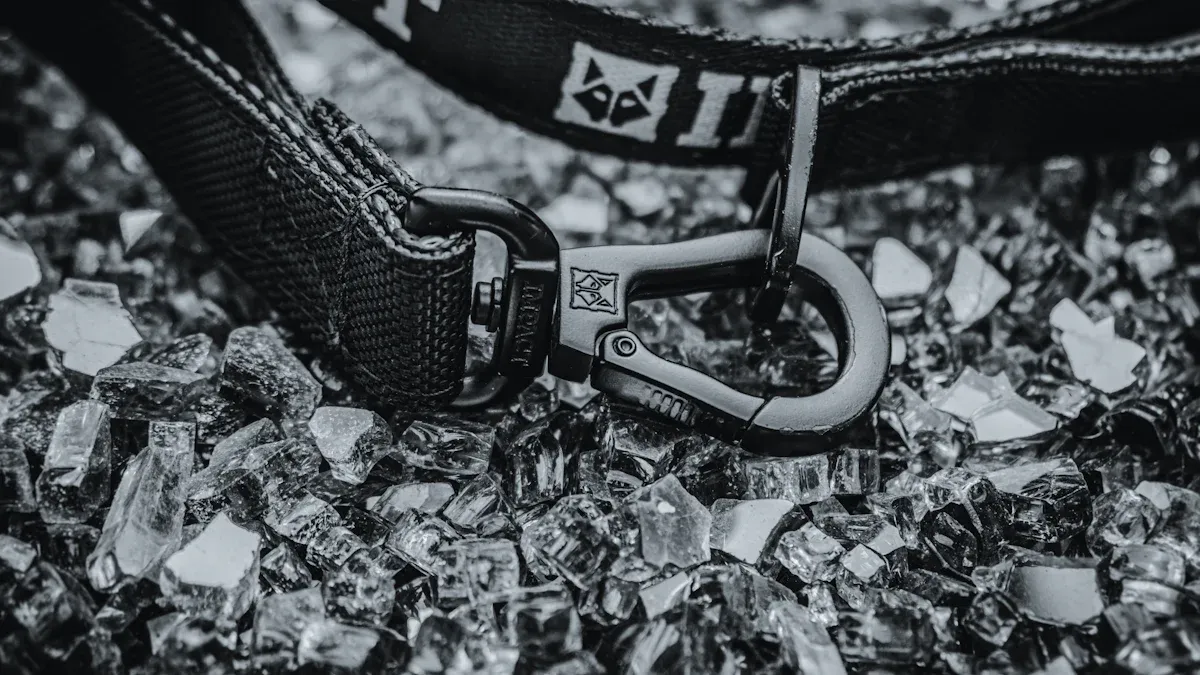
The clip is a key part of any leash for dogs. Most leash failures happen at the clip. You want a strong, reliable clip that matches your dog’s size and strength.
Material | Strength (MPa) | Best For | Quick Pros | Quick Cons |
|---|---|---|---|---|
Brass | 35-45 | Style, sensitive skin | Elegant, hypoallergenic | Tarnishes over time |
Stainless Steel | 500-1500 | Durability, active dogs | Strong, rust-proof | Higher cost |
Zinc Alloy | 20-30 | Budget-friendly options | Affordable, versatile | Less durable |

Stainless steel clips work well for strong or active dogs.
Brass clips look nice and are gentle on sensitive skin.
Avoid cheap clips that may break under pressure.
Tip: Always check the clip before each walk. Make sure it opens and closes smoothly and does not have sharp edges.
Common problems and solutions table
Many leash problems have simple fixes. Use this table to solve common issues:
Common Cause | What It Leads To | What To Do Next |
|---|---|---|
Using a leash that is too long | Less control, tangling | Switch to a shorter leash in busy areas |
Cheap or weak clip | Leash breaks, dog escapes | Choose a sturdy stainless steel or brass clip |
Leash too thin for dog size | Hand pain, leash snapping | Use a wider leash for large or strong dogs |
Dog pulls on leash | Sore hands, unsafe walks | Practice loose-leash walking, reward calm steps |
Dog afraid of leash | Refuses to walk, stress | Use treats, go slow, build positive feelings |
Not checking for wear | Sudden leash failure | Inspect and replace worn parts regularly |
Step-by-step blocks for leash selection
Choose your use case: Think about where you walk and your dog’s behavior.
Pick length and width: Use the tables above to match your dog’s size and your handling skill.
Select material and hardware: Consider your environment and your dog’s strength.
Set a simple routine: Practice safe handling and reward good walking.
Inspect and clean: Check for wear, rinse off dirt, and store your leash safely.
You can solve most leash problems by following these steps and choosing the right leash for your dog and routine.
Materials and build of the right dog leash

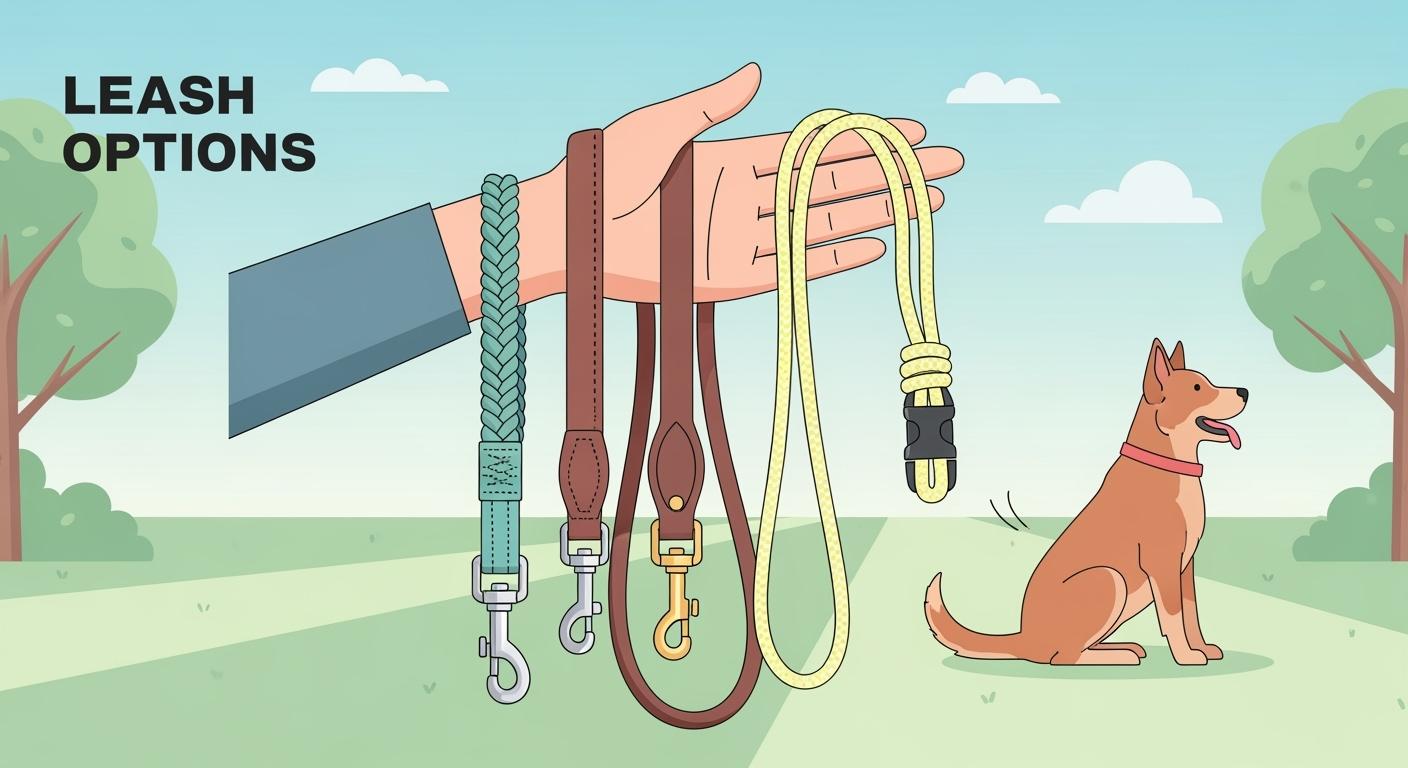
Nylon, leather, rope, coated options
There are many materials for dog leashes. Each one has good and bad sides. Nylon leashes cost less and last a long time. They can hurt your hands and do not block water. Leather leashes feel nice and last years. They need cleaning and cost more money. Biothane leashes keep water out and are easy to clean. They are strong and work like leather. Cotton rope leashes feel soft to hold. They wear out fast and do not do well when wet.
Feature | Leather Leash | Nylon Leash | Biothane Leash | Cotton Rope Leash |
|---|---|---|---|---|
Durability | High | Medium | High | Low |
Maintenance | Required | Minimal | Minimal | Minimal |
Comfort | High | Medium | Medium | High |
Waterproof | No | No | Yes | No |
Tip: For hiking, pick nylon or biothane. These are tough and work well on rough trails.
Stitching and wear points
Look at the stitching before you buy a leash. Good stitching makes the leash stronger. Double or extra stitching helps stop breaks. Extra layers or special patterns keep the leash from tearing. These things help the leash last longer. Weak stitching can snap if pulled hard. Always check the seams and joints for problems.
Double stitching makes the leash stronger.
Extra layers help stop tears.
Good stitching keeps your leash safe every day.
Reflective and visibility features
It is important to see and be seen at night. Reflective parts on a leash help cars and bikes spot you and your dog. Studies show reflective gear lowers accident risk by 38 percent. Drivers see dogs with reflective leashes 75 percent faster. Most accidents happen at night because people cannot see well.
Study/Source | Finding |
|---|---|
NHTSA | 72 percent of pedestrian fatalities occur at night |
Journal of Safety Research | Reflective gear reduces accident risk by 38 percent |
Pet Safety Organization | Dogs with reflective gear noticed by drivers 75 percent faster |
Note: Pick a leash with reflective stitching or panels for early morning or evening walks. This easy choice helps keep you and your dog safe.
Feature checklist to prevent leash failures
A reliable leash keeps you and your dog safe on every walk. You can prevent most leash problems by checking for key features before you buy. Use this checklist to guide your choice.
Handle comfort and grip
You want a handle that feels good in your hand. Look for padded or ergonomic handles. These reduce hand strain, especially if your dog pulls. A firm grip helps you stay in control, even if your hands get sweaty or wet. Some leashes use soft materials or extra padding for comfort.
Second handle for control
A second handle near the clip gives you quick control in busy places. This feature helps you keep your dog close when you cross streets or pass other dogs. Many handlers find a traffic handle useful for training and safety. You can grab the second handle fast if you need to react.
Tangle reduction and storage
Leashes with a smooth swivel clip twist less and tangle less. This makes walks easier and safer. Fixed-length leashes are more reliable than retractable ones. You can store a leash with a simple loop or hook. Some leashes have a storage strap or clip to keep them neat.
Tip: Double-stitched seams and strong hardware lower the risk of leash failure. Always check for sturdy metal clips and reinforced stitching.
Parameter and value table
Use this table to compare important leash features:
Parameter | Target range or option | Why it matters |
|---|---|---|
Primary length | 4-6 ft (1.2-1.8 m) | Everyday control and safer handling |
Short control | about 4 ft (1.2 m) or traffic handle | Quick control in busy moments |
Long line | 10-50 ft (3.0-15.2 m) | Recall and distance skills with control |
Width | 0.4-1.0 in (1.0-2.5 cm) | Grip comfort and strength feel |
Material | nylon, leather, rope, coated | Cleaning and handling tradeoffs |
Handle | padded or comfort grip | Reduces hand strain |
Second handle | yes or no | Extra control near the dog |
Clip type | sturdy metal clip, swivel | Attachment reliability and less twisting |
Visibility | reflective details optional | Better visibility in low light |
Care | rinse grit, air dry, inspect stitching | Longer usable life and fewer failures |
You can also check for these features:
Nylon webbing lasts longer than cotton or polyester.
Double-stitched seams resist breaking.
Zinc bolt snaps balance strength and weight.
Simple bolt snaps attach quickly and safely.
Two-point attachment systems spread out stress.
Choosing a leash with these features helps you avoid common problems and enjoy safer, more comfortable walks.
Matching the leash to the dog and routine
Choosing the right leash for your dog means thinking about your dog’s age, size, and daily routine. You want to match the leash to your dog’s needs and your own walking habits. This section helps you find the best leash for every stage and situation.
Puppy and beginner leash skills
Puppies learn about the world with every walk. You want to start with a short, lightweight leash, usually 4 to 6 feet (1.2-1.8 m) long. A flat nylon leash works well for most puppies. This style gives you gentle control and helps your puppy feel safe. Avoid retractable leashes at this stage. These can teach your puppy to pull and make leash training harder.
Practice putting the leash on in a calm way. Use treats and praise to make the leash a positive experience. Start in a quiet place with few distractions. Teach your puppy to walk beside you and reward calm steps. This builds good habits for life.
Tip: Keep sessions short and fun. Puppies learn best with patience and gentle guidance.
Strong pullers and busy areas
Some dogs pull hard or get excited in crowded places. You need a leash that gives you control and protects your hands. Choose a sturdy leash with a padded handle. A width of 0.8 to 1.0 inches (2.0-2.5 cm) works well for strong pullers. A second handle near the clip helps you keep your dog close when you need fast control.
For young adult dogs or strong breeds, you can use a no-pull harness or a head halter. These tools help you guide your dog without hurting their neck. Practice loose-leash walking and reward your dog for staying by your side. This improves your dog’s training level and makes walks safer.
Scenario A: New owner with pulling and late rewards
You just brought home a young dog who pulls on walks. You use a fixed-length leash, but your timing with rewards is slow. Your dog learns to pull because the reward comes too late. To solve this, switch to a padded, 6-foot (1.8 m) leash with a second handle. Practice rewarding your dog as soon as they walk calmly. Hold the leash with both hands for better control. This routine helps you improve your dog’s training level and your own handling skills.
Outdoor and recall practice
Dogs love to explore open spaces. If you want to practice recall, use a long line leash, usually 10 to 50 feet (3.0-15.2 m) long. This leash lets your dog move farther away while you stay in control. Start recall training in a quiet area. Call your dog with a clear cue like “come” or “here.” Reward your dog right away when they return. Make recall practice fun with games and treats.
Note: Always check your surroundings before using a long line. Avoid busy streets or crowded parks.
Scenario B: Dog needs distance practice for recall
Your dog loves to run in open fields but does not always come back when called. You set up a 20-foot (6.1 m) long line and bring high-value treats. You start in a quiet spot and call your dog. When your dog returns, you reward them right away. You repeat this until your dog comes back every time. This setup helps you build a strong recall and keeps your dog safe.
Decision table: dog, context, best leash, what to avoid
Use this table to match the leash to your dog’s needs and your walking routine:
Dog or Context | Best Leash Features | What to Avoid |
|---|---|---|
Puppy | 4-6 ft (1.2-1.8 m) nylon, flat collar or harness | Retractable leashes, heavy hardware |
Strong puller, busy area | 4-6 ft (1.2-1.8 m), padded handle, second handle | Thin leashes, no-pull harness without training |
Outdoor recall practice | 10-50 ft (3.0-15.2 m) long line, strong clip | Retractable leashes, weak clips |
Senior or slow walker | Adjustable leash, soft grip, harness | Stiff or rough materials |
Training new skills | Standard leash, easy-to-hold handle | Complicated or multi-part leashes |
When matching the leash to the dog, think about your dog’s breed, age, and the purpose of each walk. Puppies need gentle control and positive experiences. Strong pullers need sturdy leashes and quick control. Dogs practicing recall need long lines and safe spaces. Always check the leash for comfort, strength, and the right features for your routine.
Remember: The right leash supports your dog’s safety and your peace of mind. Choose features that match your dog’s needs and your walking style.
Retail and buying notes for dog leashes
Planning assortment by use case
You should pick leashes that fit real needs. Think about your dog’s size and strength. Also, think about what you do each day. Most city walks need a leash that is 4 to 6 feet long. Small dogs or busy places need a shorter leash. Big dogs or open areas need a longer leash. Thicker leashes are better for strong or big dogs. Thin leashes are lighter for small dogs.
When you choose leashes, look for these features:
Soft leashes that feel nice to hold
Reflective or LED parts for safe walks at night
Waterproof or easy-to-clean leashes for dogs who like water
Martingale-style leashes for dogs who pull a lot
Waist leashes for hands-free walking
Think about how tall you are and how tall your dog is. The right leash length helps you both walk easily. Always pick a leash that fits your dog’s personality and your daily walks.
Product copy to reduce returns
Clear product info helps you pick the right leash. This also means fewer returns. You want to know about the leash’s material, length, width, and special features. Good product info tells you how each part helps you and your dog.
Feature Tier | Description | Benefits |
|---|---|---|
Good | Basic nylon, simple hardware, clear sizing | Less confusion, fewer returns |
Better | Padded handles, reflective stitching, easy clips | More comfort and safety, happier customers |
Best | Premium materials, special colors, gift-ready packaging | More value, more people buy |
Check for care tips and warnings on the package. Ask sellers if they check the stitching and hardware before shipping. This helps you avoid problems and keeps your dog safe.
Spec standardization for buyers
Standard specs make shopping safer and easier. Ask sellers about the leash’s material strength, hardware, and stitching. Ask for outside tests for safety and how long it lasts. Make sure the leash meets safety and quality rules. Ask for proof that the leash is free from bad chemicals. Good sellers will show test results and explain their checks.
Tip: Always look at new leashes for strong stitching, smooth hardware, and clear labels before using them with your dog.
When you choose the right leash for dogs, you make daily walks safer and more comfortable. For most dogs, a 4-6 foot leash works best. Use a width of 3/8 inch for dogs under 50 pounds and 1/2 inch for larger dogs. Nylon is easy to clean, while leather lasts longer. Check the table below to match leash types to your dog’s needs:
Dog Type | Best Leash Type |
|---|---|
Small/Medium | top picks for mid-length dog leashes |
Large | top picks for short dog leashes |
Recall/Training | top picks for long dog leashes |
Before buying, test the snap, comfort, and durability. Focus on features that fit your routine, not just trends.
FAQ
What leash length works best for daily walks?
You should choose a leash between 4 and 6 feet (1.2-1.8 m) for most daily walks. This length gives you control and lets your dog explore safely.
How do I pick the right leash width for my dog?
Pick a width based on your dog’s size and strength. Use 0.4-0.6 in (1.0-1.5 cm) for small dogs. Choose 0.8-1.0 in (2.0-2.5 cm) for large or strong dogs.
Which material is easiest to clean?
Nylon and coated leashes clean up quickly. You can rinse off dirt and let them air dry. Leather needs more care and should stay dry.
Are retractable leashes safe for all dogs?
Retractable leashes can tangle or break if your dog pulls hard. Use a fixed-length leash for better control, especially in busy places or with strong dogs.
How often should I check my leash for wear?
Check your leash before every walk. Look for frayed spots, weak stitching, or damaged clips. Replace the leash if you see any problems.