

Unclear claims about comfort, stability, and easy cleaning make pet owners unhappy. They might return car seats for dogs, ask for help, or write bad reviews. You should answer important questions about each car seat for dogs. Explain how it helps pets feel comfortable, how the harness attaches, how it fits, and how to clean it. Always say car seats for dogs are for comfort and keeping pets in place during travel. Do not say they protect pets in a crash. Use messages that match what vets say about safety. Use simple words so pet owners know what comfort, stability, and easy-clean mean. Clear up common mistakes to lower returns and make customers happier.
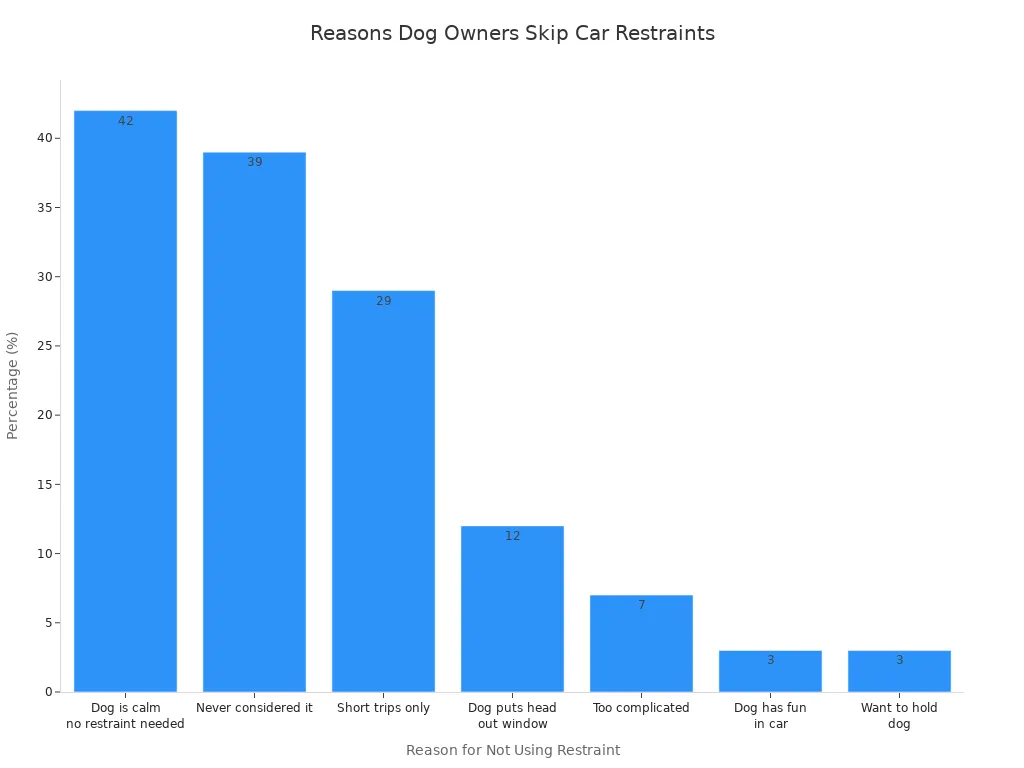
Percentage | Reason for Not Using Restraint |
|---|---|
42% | My dog is calm and do not think he/she needs a restraint |
39% | Never considered it |
29% | Just take dog on short trips |
12% | Want dog to be able to put head out window |
7% | Too complicated/too much trouble |
3% | Want dog to have fun in the car |
3% | Want to be able to hold dog |
Key Takeaways
Explain how car seats for dogs give comfort and keep dogs steady. Use easy words so pet owners can see these good things.
Tell the truth about cleaning features. Point out liners you can take out and surfaces that are simple to clean. This helps stop returns.
Always tell people to use a harness, not a collar. This keeps the dog safe and holds them in place when traveling.
Teach customers what dog car seats cannot do. Say they help keep pets still but do not promise crash safety.
Use clear words that match what vets say. This helps build trust and lets pet owners choose wisely.
Retail Problems and Messaging
Comfort Claims and Complaints
You want every pet owner to feel confident that a car seat for dogs will help their dog travel in comfort. Many shoppers expect a soft, padded seat that supports their dog and keeps them relaxed. You should explain how the seat shape, padding, and entry height help the dog settle in. Some customers complain when their dog does not want to sit or lie down in the seat. Others expect the car seat to protect their dog in a crash. You must set clear expectations. Car seats for dogs help with comfort and containment, not crash protection. The table below shows how different travel products perform for comfort and containment:
Product Type | Performance | Notes |
|---|---|---|
Carriers | None passed for dogs over 45 lbs | No carriers kept dogs secure in a 30 MPH crash simulation. |
Harnesses | Only one passed | Most harnesses did not provide enough support for large dogs. |
Crates | Top performer | Crates withstood strong forces and kept the dog in place. |
Travel Seats | Prevent distraction | Travel seats help keep the dog in one spot but do not prevent injury. |
Stability Misunderstandings
Many shoppers believe a car seat for dogs will lock into the vehicle like a child seat. You need to explain that most car seats for dogs use a harness attachment and seat belt loops to keep the dog in place. Some customers think the seat will never move. In reality, the seat may shift if the dog moves or if the seat is not installed correctly. Here are common misunderstandings about stability:
Shoppers think current safety standards measure the real forces on a dog during a crash, but they do not.
Most tests only check how far a dog dummy moves, not the injury risk.
Even small accidents can move an unrestrained dog with great force.
You should always recommend using a harness, not a collar, to attach the dog to the seat. This helps keep the dog secure and reduces risk.
Easy-Clean Expectations
Pet owners want a car seat for dogs that is easy to clean. You should highlight features like removable liners, machine-washable covers, and wipeable surfaces. Some shoppers expect the seat to be waterproof or stain-proof. You need to set realistic expectations about cleaning. The table below shows popular cleaning features:
Product Name | Cleaning Features |
|---|---|
Companion Car Seat® | Cover unzips for washing. Foam and inserts are not washable. Spot clean only. |
Happy Ride® Dog Safety Seat | Removable, machine-washable fleece liner and cushion. |
Happy Ride® Quilted Booster Seat | Stain-resistant shell and machine-washable liner. |
You should always provide clear cleaning instructions. This helps reduce returns and keeps pet owners happy.
Car Seat for Dogs Glossary
Retail Definition of Car Seat for Dogs
It is important to know what a car seat for dogs means. A car seat for dogs is made to keep your pet comfortable and in one spot when you travel. The seat has padding, special shapes, and a low entry so your dog can sit or lie down. You use a harness to attach your dog to the seat. The seat stays in place with belt loops or straps. You can clean it with wipeable parts, liners you can take out, or covers you can wash. The main reason for this seat is to help your pet stay calm and keep your car cleaner.
Tip: Always tell people to use a harness, not a collar, to hold their dog. This keeps your dog safe and lowers risk.
Comfort Pillar:
Padding gives your dog a soft spot to rest.
Special shapes help your pet feel relaxed.
Low entry makes it easy for your dog to get in and out.
Stability Pillar:
Anchors stop the seat from sliding around.
Harness points help keep the seat from moving.
Easy-Clean Pillar:
Liners and covers that come off make cleaning easy.
Wipeable parts help get rid of pet hair.
What Car Seat for Dogs Is Not
You need to make sure shoppers know what a car seat for dogs cannot do. A car seat for dogs is not a crash-tested pet restraint device. It does not promise safety if there is an accident. Do not say it locks in like a child seat or stops injury in a crash. The seat helps keep your dog from moving around and helps the driver pay attention.
Here is a table that shows how a dog car seat is different from a crash-tested pet restraint device:
Feature | Dog Car Seat | Crash-Tested Pet Restraint Device |
|---|---|---|
Testing Standards | Often does not have strong testing | Must pass special crash test rules |
Focus of Testing | Stops dog from flying forward | Checks forces on the dog in a crash |
Safety Metrics | Only checks how far the dog moves | Looks at head injury and whiplash too |
Freedom of Movement | Keeps dog from moving too much | Lets dog move a little but keeps them safe |
Risk Assessment | May not cover all accidents | Made to handle common crash problems |
Crash-tested restraints check how much force hits dogs.
They look at head injury and whiplash.
Regular dog car seats may not have enough safety checks.
Note: Use safe words. Say the seat “helps keep your pet in place” or “is made to work with a harness when used right.” Do not promise crash protection.
Sell-In Messaging Framework
Comfort Pillar Messaging
Retail buyers need to know how a dog car seat helps pets feel safe and calm. Comfort is important for all dogs, especially on long trips. You should talk about features like padding, seat shape, and entry height. Dogs like a soft spot to rest. Good design can help dogs feel less nervous and stay relaxed. You can show that different sizes give dogs room to stretch. A hard-bottom design helps keep a dog’s back straight. This is good for older dogs or dogs with sore joints.
Tip: Always tell buyers to use a harness to attach the dog. This keeps the pet in place and makes travel more comfortable.
Here is a table with comfort messaging ideas:
Strategy | Description |
|---|---|
Safety | Dog car seats help keep dogs safe and calm during travel. This makes the ride better for pets and owners. |
Space | Different sizes give dogs a comfy spot to relax. This helps lower stress and makes the trip more fun. |
Design | Hard-bottom seats help keep a dog’s back straight. This is important for older dogs or those with joint pain. It makes long trips easier. |
Stability Pillar Messaging
You need to explain how a dog car seat stays in place in the car. Stability stops the seat from sliding when the dog moves. You should talk about seat belt loops, anchor straps, and harness points. These parts work together to keep the seat steady. If you install the seat right, it will not move much. You must tell buyers what to expect. The seat does not lock in like a child seat. It helps stop movement but might shift if the dog is very active or if not installed right.
Note: Always tell buyers to use a harness, not a collar. This makes the seat safer and more stable.
Key stability points:
Seat belt loops hold the seat in the car.
Harness points help keep the dog safe.
Non-slip bases stop the seat from sliding.
Clear instructions help buyers put the seat in right.
Easy-Clean Pillar Messaging
Retail buyers want seats that are easy to clean and keep the car nice. You should talk about wipeable surfaces, liners you can take out, and covers you can wash. These things help pet owners clean up hair, dirt, and spills fast. You can mention materials like 600D Oxford cloth with PVC coating. These are easy to clean and last a long time. A one-year warranty shows the seat is made to be cleaned often. New styles also make buyers happy because they look good and work well.
Here is a table with easy-clean features:
Key Attribute | Description |
|---|---|
Material | 600D Oxford cloth + PVC Coating |
Feature | Easy Cleaned |
Warranty | 1 Year |
Style | New and fashionable |
Tip: Always give clear cleaning steps and care rules. This helps buyers know what to tell pet owners.
Proof and Claim Guardrails
You must use safe words when talking about dog car seats. Always say “helps,” “designed to,” or “when installed right.” Never say the seat will protect pets in a crash. You should tell buyers to use a harness for safety. Give clear steps for installing the seat and label what cars it fits. Pick strong materials and tough stitching so the seat lasts and keeps pets safe.
Important claim rules:
Always buckle dogs in car seats to stop distractions and lower injury risk if the car stops fast or crashes.
Put dog car seats in the back seat to keep pets away from airbags.
Give clear steps and labels so people install seats right and make them safer.
Alert: Do not say a dog car seat is crash-proof or always safe. Use words like “helps keep your pet in place” or “designed to work with a harness when installed right.”
Messaging Framework Table
Buyer Goal | Plain-English Benefit Line | What to Show as Proof | Safe Caveat |
|---|---|---|---|
Keep dog comfortable | “Helps your dog relax with soft padding and support.” | Padding thickness, seat shape, entry height | “Results depend on dog size and behavior.” |
Prevent seat movement | “Designed to stay in place with anchor straps and harness points.” | Seat belt loops, anchor straps, non-slip base | “When installed correctly, stability improves.” |
Make cleaning easy | “Easy-clean surfaces and removable liners save time.” | Material specs, cleaning instructions, warranty | “Care limits apply; see instructions for details.” |
Reduce driver distraction | “Helps keep your pet in one spot during travel.” | Harness attachment, restraint guidance | “Use a harness, not a collar, for best results.” |
You can use this framework to teach retail teams and write catalog copy. Always match your words to what safety experts and vets say. This helps set clear rules and lowers returns.
Copy Blocks for Retail and Ecommerce
Shelf Tag Copy
You want shelf tags that help shoppers understand the value of each dog car seat. Use clear, direct lines that highlight comfort, stability, and easy-clean features. Here are five shelf-tag lines:
“Helps your dog travel in comfort and style.”
“Designed for easy harness attachment and secure fit.”
“Quick-clean surfaces for busy pet owners.”
“Keeps your dog in one spot for safer rides.”
“Pairs well with dog collar and leash sets for complete travel solutions.”
PDP Copy
Product detail pages need strong, focused paragraphs. You can use these three options:
Comfort:
Your dog deserves comfort on every trip. Soft padding and supportive shapes help your dog relax. Entry height makes it easy for your dog to get in and out.Stability:
Anchor straps and harness points help keep the seat steady. You attach your dog using a harness, not a collar. This setup helps reduce movement and keeps your dog secure.Easy-Clean:
Removable liners and wipeable surfaces make cleaning simple. You save time and keep your car fresh. Use dog collar and leash sets to keep your dog organized during travel.
Feature Summary Bullets
Soft padding supports dog comfort.
Harness points help secure your dog.
Seat belt loops add stability.
Removable liners make cleaning easy.
Non-slip base helps keep the seat in place.
Designed for use with dog collar and leash sets.
Entry height suits dogs of all sizes.
Quick-dry materials help with easy-clean.
Anchor straps improve seat stability.
Works with bundled dog collar and leash sets for travel.
Expectation Disclaimer
Note:
This product helps keep your dog in place and supports comfort.
Always use a harness, not a collar, for safety.
Results depend on dog size and behavior.
Cleaning instructions may vary by material.
Not a crash-tested device.
Use with dog collar and leash sets for best results.
Copy Block Selector Table
Use Case | Shelf Tag Line | PDP Paragraph Focus | Staff One-Liner |
|---|---|---|---|
Comfort | Helps your dog travel in comfort and style. | Comfort | “Soft padding keeps your dog relaxed.” |
Stability | Designed for easy harness attachment. | Stability | “Harness points help secure your dog.” |
Easy-Clean | Quick-clean surfaces for busy pet owners. | Easy-Clean | “Removable liners make cleaning easy.” |
Safety | Keeps your dog in one spot for safer rides. | Stability | “Always use a harness for safety.” |
Bundled Sets | Pairs well with dog collar and leash sets. | Easy-Clean | “Use with dog collar and leash sets.” |
Staff One-Liners
“Soft padding keeps your dog relaxed.”
“Harness points help secure your dog.”
“Seat belt loops add stability.”
“Removable liners make cleaning easy.”
“Non-slip base helps keep the seat in place.”
“Entry height suits dogs of all sizes.”
“Quick-dry materials help with easy-clean.”
“Anchor straps improve seat stability.”
“Always use a harness for safety.”
“Use with dog collar and leash sets for best results.”
Short Disclaimers
“Not crash-tested. Use with harness.”
“Results depend on dog size and behavior.”
“Cleaning instructions may vary.”
“Use with dog collar and leash sets.”
“Supports comfort, not crash protection.”
“Always attach harness, not collar.”
Merchandising and Packaging Language
Packaging Claims
You want every dog owner to know what to expect. Use easy words that talk about comfort, keeping dogs in place, and cleaning. Do not use words that say the seat will protect your dog in a crash or is always safe. Always say the seat works best when you use the harness the right way. Use phrases like “helps keep your dog in place” or “designed for use with a harness.” These words help shoppers see the real benefits and stop confusion at the store.
Tip: Put a note on the package that says, “Always use a harness, not a collar, for best results.”
When you work with factories, you might see words like OEM and ODM. OEM means the factory uses your design to make the product. ODM means the factory makes and designs the product for you. Private label means you put your brand name on the product. This changes the words on the package, instructions, and labels. You need to keep the names the same so shoppers do not get mixed up.
Here is a table to help you use safe words:
Risky Claim | Why it Causes Issues | Safer Replacement Wording |
|---|---|---|
“Crash-proof” | Implies guaranteed protection | “Helps keep your dog in place” |
“Guaranteed safe” | Overpromises safety | “Designed for use with a harness” |
“Locks in like child seat” | Creates false expectations | “Secures with seat belt and anchor straps” |
“Waterproof and stain-proof” | May not meet all cleaning needs | “Easy-clean surfaces and removable liners” |
Compatibility Labeling
You need clear labels so shoppers pick the right dog seat for their car and pet. Use packaging that shows the right pet size range. List the seat size and explain how to measure the dog. This helps stop sizing problems that cause bad reviews. Show which car seats work with the product. Some dog seats do not fit bucket seats or some SUVs. Add a note about harness points so buyers know how to keep their dog safe.
Use these tips for good labels:
Show pet size range and weight limits.
List seat size and how to measure the dog.
Say which car seats work with the dog seat.
Point out harness spots for proper use.
Add a note for any safety certifications.
Clear labels help shoppers make smart choices. You get fewer returns and happier customers when you set the right rules.
Return and Ticket Prevention
Top Return Reasons
You want to reduce returns and support your team. Many returns happen because shoppers misunderstand how a dog car seat works. Some expect the seat to lock in like a child seat. Others believe it will protect their dog in every situation. Cleaning issues also lead to returns. Shoppers may think the seat is waterproof or that all parts are machine washable. Sizing mistakes cause problems when the seat does not fit the dog or the car. You can prevent these issues by setting clear expectations and using plain language.
Common reasons for returns:
Shoppers thought the seat would not move at all.
The seat did not fit their dog or car.
Cleaning was harder than expected.
Shoppers used a collar instead of a harness.
Shoppers believed the seat offered crash protection.
Tip: Always remind shoppers to use a harness for proper restraint. This improves safety and reduces risk.
Staff Scripts for Shopper Questions
You need strong scripts for your staff. These scripts help answer questions and handle objections. You can train your team to check for proper installation, harness use, and fit. Staff should guide shoppers to the right product and explain features in simple terms.
Objection Handling Table
Shopper Objection | Retail-Safe Response | What to Check | When to Recommend a Different Solution |
|---|---|---|---|
“Will this protect my dog in a crash?” | “This seat helps keep your dog in place. Use a harness for best results.” | Confirm harness attachment | If shopper wants crash-tested restraint |
“Does it lock in like a child seat?” | “It secures with seat belt and anchor straps. Use a harness for safety.” | Check seat belt routing | If car seat shape is not compatible |
“Is it waterproof and stain-proof?” | “It has easy-clean surfaces and removable liners. Follow cleaning instructions.” | Review cleaning instructions | If shopper needs full waterproof protection |
“Will it fit my dog?” | “Check the size chart and measure your dog. Use a harness for proper fit.” | Confirm dog size and seat size | If dog is outside recommended range |
“Can I use a collar instead of a harness?” | “Always use a harness for restraint. This keeps your dog secure.” | Confirm harness use | If shopper refuses to use a harness |
Note: Staff should always check harness attachment and seat fit before making recommendations.
Buyer Checklist and Supplier Evaluation
Supplier Requests for Stability and Cleaning
You want every car seat for dogs to be comfortable, stable, and easy to clean. When you talk to suppliers, ask them to explain how the seat stays in place in the car. Ask how the harness connects to the seat. Make sure the seat uses waterproof and scratch-resistant materials. Ask if the seat has a hammock-style design or a hard bottom. These features help keep dogs safe and comfy when they travel.
Feature | Description |
|---|---|
Seat Anchors & Adjustable Straps | These hold the cover tight so it does not bunch up or move. They let you fit the seat to many cars. |
Seatbelt Openings for Harness Security | These let you attach a dog harness safely. They help lower the chance of injury if the car stops fast. |
Waterproof & Scratch-Resistant Material | These materials stop spills and pet messes from soaking in. They keep the car seat dry and smelling good. |
Hammock-Style Design | This design stops dogs from falling into the foot space. It also covers the back seat to protect it. |
Hard-bottom Support | A hard bottom gives a strong and comfy place for the dog. It keeps the seat from sagging on long trips. |
Tip: Always ask your supplier for cleaning steps and care rules. This helps you tell your customers what to expect.
Receiving Verification
When you get a shipment, check each car seat for dogs. Make sure it meets your store’s rules for quality and safety. Look for papers that show the supplier checks quality and tests products. Check the seat for strong stitching, metal parts, and good harness spots. Make sure the seat is comfy and stays in place.
Compliance Check | Description |
|---|---|
Quality Management System (QMS) | A certificate like ISO 9001 shows the supplier has good ways to check quality. |
Product Quality Control Processes | These steps make sure the seats are made right before they ship. |
Pet Product Testing and Verification | Tests check if the seat is safe and matches what the seller says. |
Note: Always check that the harness spots work with your favorite car safety dog harness.
Dog Harness Recommendations
You should always tell buyers to use a car safety dog harness with every car seat for dogs. Pick harnesses that have crash test proof, spread out pressure, and strong stitching. Look for harnesses with metal parts and places to adjust the fit. Make sure the harness fits your dog’s size and weight. A front-clip or dual-clip harness gives you more control. If your customers like outdoor fun, suggest a hiking dog harness for extra strength.
Verification Step | Description |
|---|---|
Crash Testing Certification | Make sure the harness has passed crash tests for safety. |
Pressure Distribution Design | Pick harnesses that spread force on the chest and back. This helps stop neck injuries. |
Material and Construction Quality | Choose harnesses with metal parts and strong stitching. This makes them last and keeps dogs safe. |
Adjustability and Comfort Features | Make sure the harness can be adjusted in many ways. This helps it fit well and feel good on trips. |
Vehicle Compatibility | Check that the harness works with your car’s seatbelt. This helps protect the dog. |
Size-Specific Considerations | Pick a harness that fits your dog’s size and weight. This keeps your dog safe if there is an emergency. |
Always add dog harness tips in your guides and staff lessons. This helps your team give the best advice to pet owners.
RFQ Template and Supplier Scorecard
RFQ Checklist
You need a good RFQ checklist when you talk to suppliers about dog car seats. This checklist helps you get clear answers and proof for every claim. First, ask for a list that shows which cars and seats fit the dog seat. Make sure the supplier gives test results for how the seat works with a harness. Ask for labels and packaging that show pet owners how to use the seat and harness. Always include steps for checking quality and samples. Lead time and tracking help you plan your store’s stock. Ask for all papers, like cleaning instructions and harness guides. Links to supplier resources make it easy to check updates.
List of car and dog fit
Test results for harness and seat stability
Labels and packaging with clear steps
Quality checks and samples
Lead time and tracking for stock planning
Papers for cleaning and harness use
Links to supplier resources
Tip: Always ask for pictures that show how the harness connects to the dog seat. This helps your team show shoppers how it works.
Supplier Scorecard Criteria
You need a scorecard to compare suppliers and pick the best one for your store. Focus on how steady the seat is, how clear the papers are, and how well the supplier talks to you. Check if the base sits flat and does not move when you put in the dog seat. Look at the instructions and parts list to make sure pet owners can use the harness easily. Good talking means the supplier answers fast and gives updates about safety and changes.
Criteria | Pass/Fail | Notes (Evidence/Comments) |
|---|---|---|
Seat stays steady | Base sits flat, does not move | |
Clear papers | Easy instructions, full parts list | |
Good talking | Answers quickly and clearly |
Use this scorecard to watch how suppliers do. You can find problems early and keep your dog car seat program working well. Always check that harness points match your store’s safety rules.
You can help stores sell more dog car seats by answering important questions. This also helps stop returns. Use clear messages that talk about comfort and keeping dogs in place. Show how each seat helps dogs stay put and makes cleaning simple. Make sure you talk to each dog owner in a way that fits them. Check what shoppers say and look at return numbers often. Hold meetings to hear what people think and teach staff to be kind. Use every review to make your dog car seat program better.
Make messages fit each dog owner.
Share helpful info and reward loyal customers.
Pay attention to feedback and change fast.
FAQ
What is the main purpose of a car seat for dogs?
You use a car seat for dogs to help keep pets comfortable and contained during travel. The seat helps prevent distraction for drivers and supports a cleaner car interior.
Can a car seat for dogs protect pets in a crash?
A car seat for dogs helps keep your pet in place. It does not guarantee crash protection. Always use a harness for restraint. For crash-tested safety, look for products with independent test results.
How do I clean a dog car seat?
You can remove liners or covers and wash them as directed. Wipe down surfaces with a damp cloth. Always check the care instructions on the label for best results.
Will the car seat fit all vehicles and dogs?
You should check the size chart and weight limits before buying. Measure your dog and compare it to the product details. Some seats fit better in certain cars or with specific seat shapes.
Should I use a collar or a harness with the car seat?
Always use a harness to attach your dog to the car seat. A harness helps keep your pet secure and reduces risk during sudden stops.






