
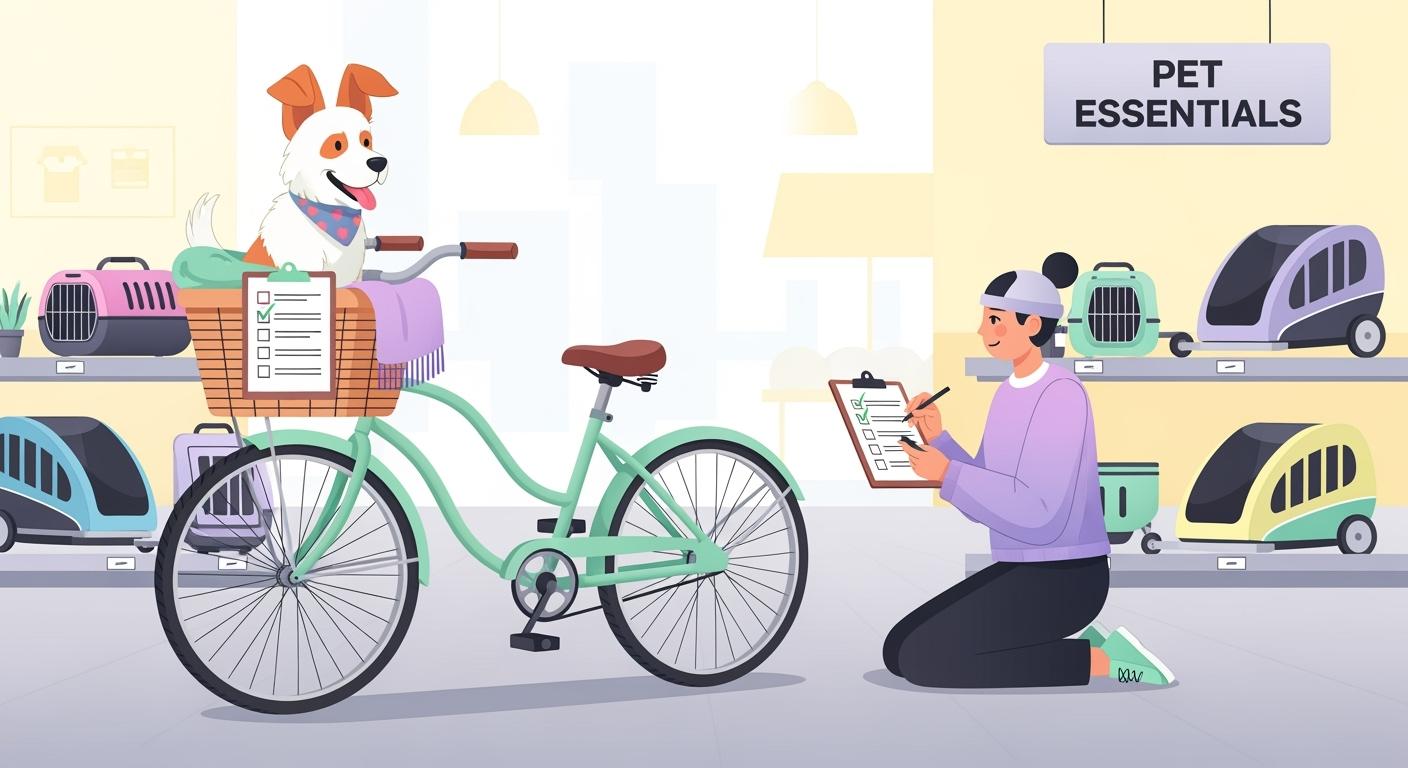
Ask specific questions about dog size, temperament, riding habits, and bike fit to lower returns. Many carry dog bike problems happen because you pick the wrong choice or do not explain how to set up and use it. You can stop returns by using a staff checklist that looks at comfort and safety for each dog. When you help a customer, you make sure the dog fits the bike, stays calm while riding, and wears a harness for safety.
Tip: Always check if the dog’s weight matches the product’s load rating. For example, a 20 lb (9 kg) dog needs a basket or trailer rated for at least 22 lb (10 kg).
You make dog travel better when you ask about riding distance, dog behavior, and mounting hardware.
You pick the right carrying dog by matching the bike, the dog, and the riding plan.
You make riding safer for every dog, from short trips to finding the best e-bikes for carrying dogs.
You answer questions like “how long can I bike with my dog” by checking the dog’s comfort and readiness for riding.
Key Takeaways
Ask clear questions about your dog’s size and mood. Think about how your dog acts when riding. This helps you pick the best bike carrier.
Always look at the weight limit for the basket or trailer. Make sure it can hold your dog safely.
Use a harness to keep your dog safe in the carrier. Do not use a collar for restraints because it is not safe.
Think about how steady the carrier is. Trailers are the most steady for big or nervous dogs.
Measure your dog the right way before you buy a carrier. This helps your dog stay comfy and stops returns.
Why Carry Dog Bike Questions Lead to Returns
Common Misunderstandings at Checkout
You often see returns when customers do not get the right fit for their dog or bike. Many people guess the size of their dog or pick a basket, carrier, or trailer without checking the measurements. You need to measure your dog while it sits naturally. Use a tape measure to check the length and width in inches and centimeters. If you choose a carrier that is too small, your dog feels cramped and uncomfortable. If you pick one that is too large, your dog may slide around, which can cause instability. Always check the weight of your dog and compare it to the load rating on the basket, carrier, or trailer. If your dog weighs more than the rating, the product may fail during a ride.
A basket or carrier that does not match your dog’s size can lead to discomfort or safety risks.
You must check the weight capacity before you buy. If your dog is too heavy, you risk damage.
You need to ask about your dog’s temperament. A calm dog fits better in a basket, but a nervous dog may need a trailer for extra stability.
You should always use a harness to secure your dog. Never attach restraints to a collar.
Stability and Product Damage Concerns
You want your dog to stay safe and comfortable during every ride. You must think about how the basket, carrier, or trailer affects your bike’s balance. Front-mounted baskets let you see your dog, but they can make steering harder and feel top-heavy. Rear-mounted baskets hold more weight, but they raise the center of gravity and may make your bike less stable. Trailers offer the best stability for most dogs, especially if your dog moves around or weighs more than 20 lbs (9 kg). You need to check the mounting points and make sure the trailer attaches securely. Always inspect the wheels and coupling before each ride.
Type of Basket | Pros | Cons |
|---|---|---|
Front-mounted baskets | Allows visibility of the dog and enhances comfort. | Affects steering, can feel top-heavy, limited to small breeds (15-20 lbs weight limit). |
Rear-mounted baskets | Less impact on bike’s steering, can support more weight (up to 25 lbs). | Dog is out of sight, raises center of gravity, compromises stability, offers little protection. |
You should choose a trailer if your dog is medium or large, or if you want the most stable ride. Trailers keep your dog lower to the ground and reduce tip risk. You need to store the trailer when not in use, so check your space before you buy. Always follow the assembly instructions and check for missing parts. If you use a harness and secure the trailer properly, you help your dog enjoy safe and happy bike trips.
Carrying Dog on Bicycle: Glossary and Terms
Basket, Carrier, Trailer Defined
When you start carrying dog on bicycle trips, you need to know the main types of dog carrier cycling options. Each option fits different needs and dog sizes.
Dog trailers are designed to handle rougher terrain, with sturdy wheels and suspension systems that absorb shocks, making them ideal for longer rides and outdoor adventures.
You see three main choices:
Front-mounted baskets let you watch your dog while you ride. These baskets can affect steering and work best for small dogs.
Rear-mounted baskets offer more stability and can hold a bit more weight. Both basket types suit dogs between 15 and 25 lbs (7–11 kg).
Dog bike trailers work for medium to large dogs. They provide a stable ride and keep your dog lower to the ground.
Dog bike baskets are made for small dogs, usually under 20 lbs (9 kg). You mount them at the front or rear of your bike. They are light and easy to install, but they do not handle rough terrain well. Dog bike trailers suit larger dogs and give a safer, more stable ride. Trailers often include harness clips and mesh windows for comfort and safety.
Feature | Dog Bike Basket | Dog Bike Trailer |
|---|---|---|
Weight Limit | 10–20 lbs (4.5–9 kg) | Up to 100+ lbs (45+ kg) |
Stability | Low | High |
Fall Protection | Minimal | Full enclosure |
Ideal For | Small dogs | Medium to large dogs |
Mounting, Load Rating, Stability
When you choose a method for carrying dog on bicycle, you must check mounting, load rating, and stability. These factors keep your dog safe and comfortable.
Dog bike baskets work for small dogs up to 20 lbs (9 kg), but they can feel unstable, especially at higher speeds. Dog trailers hold larger dogs, sometimes up to 100 lbs (45 kg), and offer better stability. You need to check your bike for strong mounting points. Never force a basket or carrier onto a bike that does not have the right hardware.
Dog Baskets:
Weight limit: 15–20 lbs (7–9 kg)
Less stable on rough terrain
Higher risk of tipping over
Dog Trailers:
Weight capacity: Up to 100+ lbs (45+ kg)
More stability due to lower center of gravity
Enclosed design for safety
Safety Feature | Rear Basket | Dog Trailer |
|---|---|---|
Stability | Low | High |
Fall Protection | Minimal | Full enclosure with mesh |
Weight Capacity | 15–20 lbs (7–9 kg) | Up to 100+ lbs (45+ kg) |
You must always use a harness to secure your dog. Do not attach restraints to a collar. Before every ride, check the mounting hardware and make sure the basket, carrier, or trailer fits your dog’s weight and size. Carrying dog on bicycle trips becomes safer when you match the right product to your dog’s needs and your bike’s setup.
Carrying dog on bicycle is easier when you know the limits and features of each option. You help customers choose the safest way to travel with their pets when you explain the differences and check the fit. Carrying dog on bicycle should always focus on stability, comfort, and proper restraint.
Staff Decision Path for Comfort and Safety
Choosing the right dog bike basket, dog carrier, or trailer starts with a clear decision path. You help customers by asking the right questions, checking the bike setup, and matching the best option for comfort and safety. Use this guide to reduce returns and make every ride safe for dogs.
Dog Profile and Behavior
You begin by learning about the dog. Ask about dog size and weight, temperament, and health. Calm dogs enjoy dog bike baskets for short trips. Anxious or hyperactive dogs need enclosed trailers for stability. Older dogs with arthritis feel better in trailers with good suspension. Dogs must feel comfortable around bikes. Some dogs chase or bite at wheels, which makes baskets or carriers risky. Obedient dogs stay calm and do not stop to sniff during rides. Dogs in excellent physical condition enjoy cycling more.
Dogs comfortable near bikes stay safer during rides.
Calm dogs suit baskets; anxious dogs need trailers.
Hyperactive dogs can unbalance a bike, so trailers work best.
Dogs with health issues need extra comfort and suspension.
Bike Setup and Mounting
Next, you check the bike. Look at mounting points, rack compatibility, and stability. Not all dog carriers fit every bike. Rear frame baskets need strong racks. Front handlebar baskets attach to handlebars and affect bike handling. Trailers connect to the rear axle and offer more stability. Make sure the carrier fits the bike and holds the dog’s weight. Check for proper ventilation to prevent overheating. Padding inside the carrier adds comfort. Always use a harness to secure the dog. Never attach restraints to a collar.
Key factors for safety and comfort:
Type of carrier and proper sizing
Bike compatibility and mounting hardware
Ventilation and padding for comfort
Secure attachment to prevent slipping
Matching Basket, Carrier, or Trailer
You match the dog and bike to the right option. Use the decision path table below to guide your choice. Assess dog size and weight, comfort, and riding plans. Choose a dog bike basket for small, calm dogs and short rides. Pick a dog carrier for medium dogs and rear mounting. Select a trailer for large, anxious, or older dogs, or for long trips.
Decision Path Table
Step | Question | Best Option |
|---|---|---|
1 | Is the dog under 20 lbs (9 kg), calm, and healthy? | Dog bike basket (front or rear) |
2 | Is the dog medium-sized (20–40 lbs/9–18 kg) and calm? | Rear frame baskets or dog carrier |
3 | Is the dog large, anxious, or has health issues? | Trailer |
4 | Does the bike have strong mounting points? | Basket or carrier if yes; trailer if no |
5 | Is the ride long or on rough terrain? | Trailer |
Basket vs Carrier vs Trailer Comparison Table
Feature | Dog Bike Basket | Dog Carrier | Trailer |
|---|---|---|---|
Best for | Small, calm dogs | Medium dogs, rear mounting | Large, anxious, or older dogs |
Mounting | Front handlebar baskets, rear frame baskets | Rear frame baskets | Rear axle |
Stability | Low to medium | Medium | High |
Comfort | Basic padding | Soft lining | Suspension, full enclosure |
Safety | Harness restraint | Harness restraint | Harness restraint, enclosed |
Weight Limit | Up to 20 lbs (9 kg) | Up to 40 lbs (18 kg) | Up to 100+ lbs (45+ kg) |
Ticket Triage Table
Return Reason | Staff Response | Switch Option |
|---|---|---|
Does not fit bike | Check mounting points and rack compatibility | Recommend trailer if no fit |
Feels unstable | Assess dog behavior and bike setup | Suggest trailer for stability |
Dog will not stay in | Review restraint method (harness only) | Recommend enclosed trailer |
Too hard to assemble | Offer setup help and checklist | Switch to easier option if needed |
Staff Macro Block
10-Question Checklist
What is the dog’s weight in lbs and kg?
How tall and long is the dog (inches/cm)?
Is the dog calm, anxious, or hyperactive?
Does the dog have health issues?
Is the dog comfortable near bikes?
What type of bike does the customer have?
Does the bike have mounting points or racks?
What is the planned riding distance and terrain?
Is ventilation and padding needed for comfort?
Will the dog wear a harness for restraint?
10-Line Phrasing Set
“Can you tell me your dog’s weight and size?”
“Is your dog calm or does it get anxious during rides?”
“Does your bike have a rear rack or mounting points?”
“How long do you plan to ride with your dog?”
“Would you prefer a basket, carrier, or trailer?”
“Does your dog have any health concerns?”
“Will you use a harness to secure your dog?”
“Do you need extra padding or ventilation?”
“Is your dog used to being around bikes?”
“Would you like help with assembly or setup?”
Safety-First Disclaimer
Always use a harness to secure your dog in any dog bike basket, dog carrier, or trailer. Never attach restraints to a collar. Check all mounting hardware before each ride. Make sure the carrier fits your dog’s size and weight. Follow all setup instructions for comfort and safety. No product guarantees crash protection or universal fit.
Industry Terminology Table
Type of Carrier | Description |
|---|---|
Dog bike basket | Lightweight and ideal for small dogs, offering close interaction with the owner. |
Dog carrier | Rear-mounted, structured, suitable for medium dogs, provides more stability. |
Trailer | Enclosed design for safety, suitable for larger dogs, providing comfort and stability. |
Front handlebar baskets | Attach to handlebars, allowing visibility of the pet but can affect bike handling. |
Rear frame baskets | Secured over the back wheel, better for balance but less visibility of the pet. |
You help customers choose the best dog carriers and baskets by following this decision path. You ask about dog size and weight, temperament, and health. You check the bike for mounting points and stability. You match the right dog bike basket, dog carrier, or trailer for comfort and safety. You use harness-only restraint and check all hardware before each ride. You set clear expectations and offer help with setup. You prevent returns by switching options when needed.
Basket Option: Fit and Risks
Best Use Cases
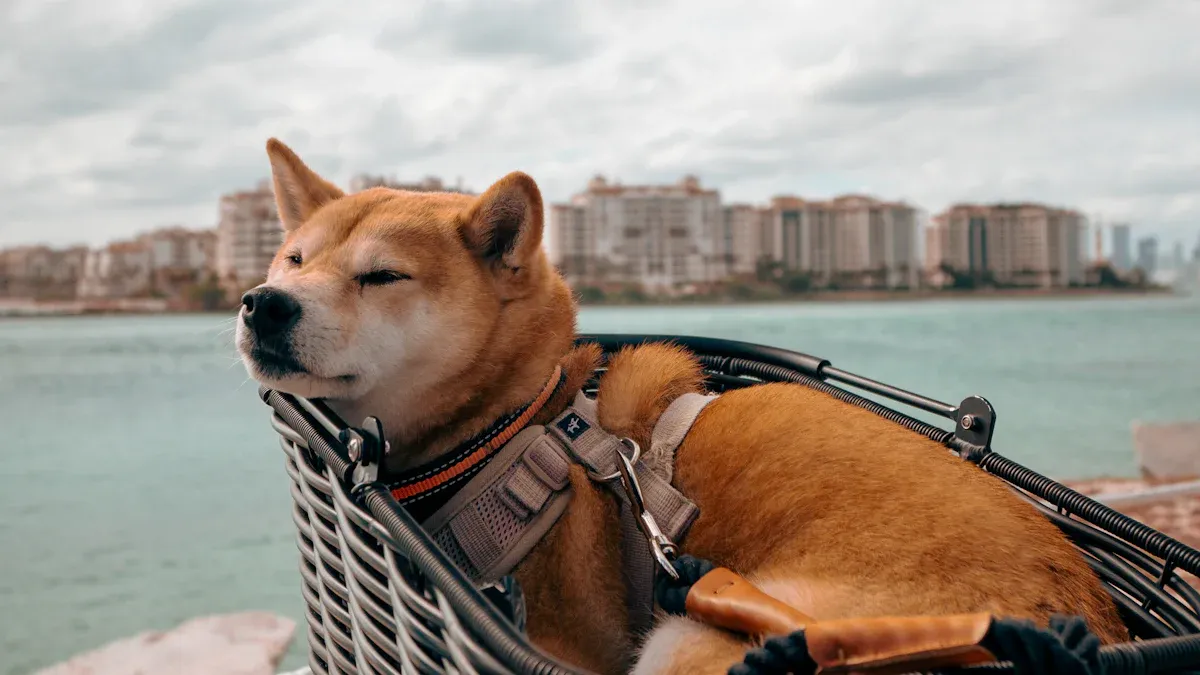
You want to choose the right basket for your dog and bike. The best use cases for dog bike baskets depend on your dog’s size, breed, and temperament. Dogs under 20 lbs (9 kg) fit most baskets. Tiny breeds under 10 lbs (4.5 kg) do well in small front-mounted baskets with harnesses. Small to medium breeds can use front or rear-mounted baskets, but you must check the weight limit. Larger small breeds over 20 lbs (9 kg) need reinforced baskets or a trailer for safety and comfort.
Dog Size Category | Recommended Basket Type |
|---|---|
Tiny breeds (under 10 lbs / 4.5 kg) | Small front-mounted baskets with harnesses |
Small to medium breeds (up to 20 lbs / 9 kg) | Front or rear-mounted baskets, check weight |
Larger small breeds (20+ lbs / 9 kg) | Reinforced baskets or dog trailers |
Dogs with calm temperaments enjoy riding in baskets. Nervous or anxious dogs may struggle and could try to jump out. You must always use a harness to keep your dog secure. You should ask if it is safe to put a dog in a bike basket. The answer depends on the dog’s size, temperament, and the basket’s design. You must check the fit and make sure your dog feels comfort and security during the ride.
Dogs under 20 lbs (9 kg) are generally supported by most bike baskets.
Larger dogs can enjoy biking, but their temperament is crucial.
Dogs with anxiety or nervousness may need a trailer for better comfort.
Failure Modes and Instability
You need to know the risks when you use a dog bike basket. Improper weight distribution can make your bike unstable and hard to control. Dog bike baskets are less stable on rough terrain. They are not ideal for medium or large dogs because of size limits. If your dog shifts suddenly, the basket may tip over. Open basket designs may expose your dog to wind, rain, or cold.
Less stable on rough terrain.
Not ideal for medium or large dogs.
Higher risk of tipping over if the dog moves quickly.
Open designs may expose dogs to weather.
You should compare basket vs trailer options for stability and comfort. Trailers offer more stability for larger or active dogs. You must ask if it is safe to put a dog in a bike basket. You need to check the mounting hardware and use a harness for restraint. You should always focus on comfort and safety for your dog. If you notice instability or your dog feels anxious, switch to a trailer for better comfort and control.
Tip: Always check the basket’s weight rating and use a harness for restraint. Never attach the restraint to a collar.
Basket vs trailer decisions help you match the right option to your dog’s needs and your bike’s setup. You improve comfort and safety when you choose the best fit.
Dog Carrier for Bike Travel: Stability Factors
Rear Mounting and Position
Think about stability when you pick a dog carrier for your bike. Putting the carrier behind the seat changes how your bike feels. You notice extra weight when you turn or stop. A balanced setup helps your bike stay upright. It lowers the chance of tipping over. Keep the weight over the back wheel. This spot works best for medium dogs. Do not put heavy dogs on the handlebars. That makes steering harder.
Evidence | Explanation |
|---|---|
Rear-mounted carrier adds weight behind the seat | You feel changes in handling, especially during turns or stops. |
A well-balanced setup ensures the bike doesn’t tip | Spreading the weight evenly keeps the bike stable. |
Check that the carrier is attached tightly to the bike. A strong mount stops slipping and keeps your dog safe. Tough materials help the carrier hold its shape. They support your dog’s weight. Using a rear crate or soft carrier for medium dogs helps with stability.
Tight mounting keeps the carrier steady.
Strong build supports your dog.
Rear spot helps balance the bike.
Ventilation and Restraint
Your dog needs to be safe and comfortable on every ride. Good airflow stops your dog from getting too hot. Look for mesh panels or windows on two sides. These let air move and help your dog stay cool. Mesh panels also help your dog control body heat.
Use a harness to keep your dog inside the carrier. An inside leash or harness clip stops your dog from jumping out. Never use a collar for restraint. Soft padding and a firm base make the ride smoother. Removable padding adds comfort and is easy to clean.
Mesh panels let air flow.
Harness-only restraint keeps your dog safe.
Padding and support make rides better.
Tip: Always check the carrier for tight mounting, strong materials, and good airflow before each ride. Use a harness to keep your dog safe and comfy.
You make every bike trip safer and more fun when you focus on stability, airflow, and restraint. Your dog stays safe, cool, and happy the whole time.
Dog Bike Trailers: Stability and Safety
Two-Wheel Stability
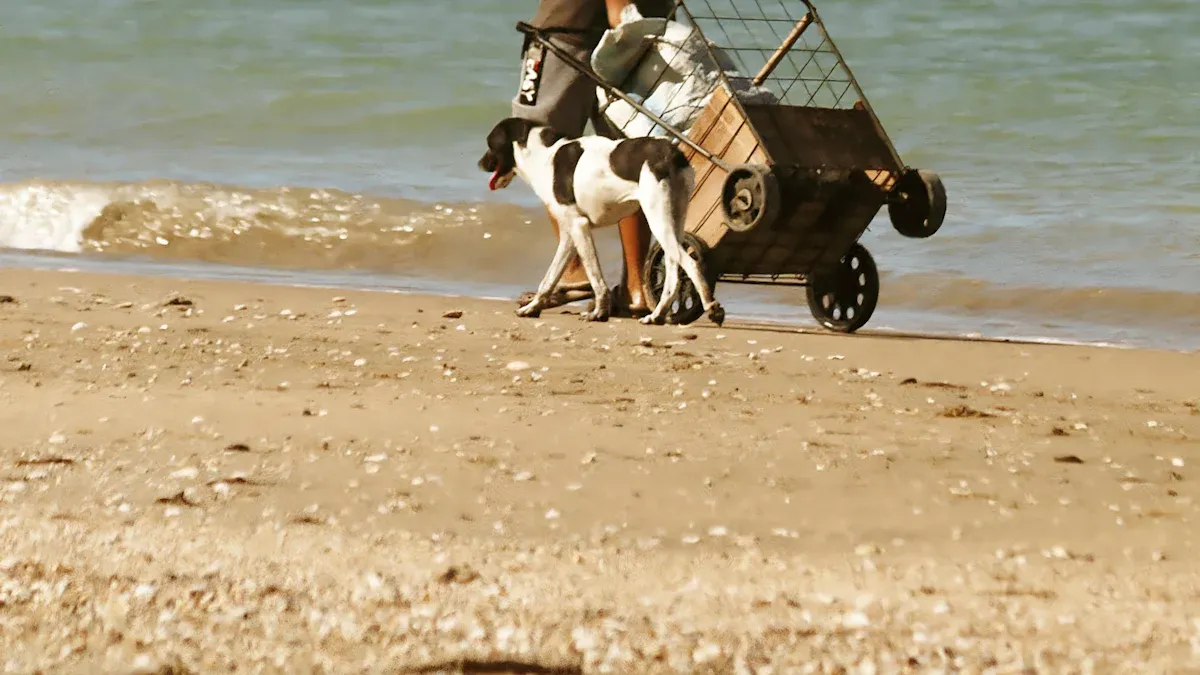
You want your dog to ride safely and comfortably. Dog bike trailers use two wheels to keep your pet steady during every trip. Two-wheel trailers offer better stability than single-wheel options, especially on rough terrain or longer rides. You notice less wobble and tipping risk when you use a pet bike trailer with a wide wheelbase and low center of gravity. These features help the trailer stay upright, even when your dog moves or the bike turns sharply.
Dog bike trailers provide more space and safety for your dog than baskets.
Two-wheel trailers handle bumps and uneven surfaces better, making them the best dog trailers for medium to large dogs.
Single-wheel trailers turn quickly but may tip more easily at higher speeds.
Pet bike trailers with robust frames and 360° safety frames protect your dog from tipping.
Feature | Description |
|---|---|
Wide Wheelbase | Keeps the trailer stable during turns and stops. |
Low Centre of Gravity | Reduces tip risk, especially on uneven ground. |
Heavy-Duty Floor | Supports your dog’s weight and adds stiffness. |
AirPad Suspension | Smooths out the ride for your dog, lowering tip risk. |
You should always check that the trailer meets safety standards for tip resistance. ASTM tests make sure pet bike trailers do not tip over easily during normal use. You keep your dog safer by choosing a trailer with a strong frame and secure mounting.
Storage and Maneuvering
You need a pet bike trailer that fits your space and lifestyle. Most dog trailers fold down for easy storage. You can put the folded trailer in a closet or car trunk. Removable wheels make it even easier to store. When you set up the trailer, make sure it locks into place and supports your dog’s size and weight.
Fold the trailer when not in use to save space.
Store the pet bike trailer in small areas like closets or trunks.
Choose a trailer with weatherproof covers for year-round use.
Look for ample headroom and suspension for your dog’s comfort.
You move the bike trailer easily when you pick a model with a sturdy frame and smooth wheels. Pet bike trailers work for camping, bike tours, and daily rides. Always use a harness to secure your dog inside the trailer. Never attach restraints to a collar. You help your dog enjoy every ride by checking the trailer’s stability, storage features, and safety before each trip.
Tip: Make sure the pet bike trailer fits your dog’s measurements. Measure your dog in inches and centimeters to match the trailer size.
Dog bike trailers give you the best mix of stability, safety, and comfort for medium to large dogs. You keep your dog happy and secure by choosing the right trailer and following safety steps every time.
Preventing Returns: Scripts and Objections
Bike Fit Questions
You want every dog to ride safely on your bike. Before you recommend a basket, carrier, or trailer, ask the right questions. You check if the weight capacity matches the dog’s size. You look at the mounting system and see if it fits the bike model. You ask if the bike is an e-bike or has a special axle. These steps help you avoid returns from poor fit.
Is the carrier strong enough for your dog’s weight?
Does the mounting system fit your bike?
Are there any special features on your bike, like an electric motor or unique axles?
Tip: Always measure your dog in both inches and centimeters. Check the bike for racks or mounting points before you choose a product.
Nervous Dog Solutions
You help nervous dogs feel safe on every bike ride. You suggest a bike trailer or pet basket for anxious dogs. You introduce the dog to the carrier with treats and praise. You recommend slow, gentle rides at first. You pick a secure carrier that gives comfort and keeps the dog from falling out. You make sure the carrier is big enough for the dog to move but small enough to prevent escape. You choose high-quality carriers for a smooth ride.
Use a bike trailer or enclosed basket for anxious dogs.
Help the dog get used to the carrier with positive reinforcement.
Start with short, slow rides.
Pick a secure, well-designed carrier.
Avoid cheap options that may not protect the dog.
Note: Always use a harness to secure the dog. Never attach restraints to a collar.
Small Option Requests
You answer requests for small dog bike baskets, carriers, or trailers. You recommend front-mounted baskets for small dogs. You suggest enclosed styles for anxious dogs. You offer bike trailers for dogs who like to lie down. You mention backpack carriers for hands-free travel. You match the option to the dog’s size and the bike’s setup.
Dog bike baskets work best for small dogs.
Enclosed baskets help anxious dogs feel safe.
Bike trailers suit dogs who want more space.
Backpack carriers give you a hands-free way to carry your dog.
Request Type | Best Option |
|---|---|
Small, calm dog | Front-mounted bike basket |
Anxious small dog | Enclosed bike basket |
Dog prefers lying down | Bike trailer |
Hands-free travel | Backpack carrier |
Callout: Always check the dog’s weight and size before you choose a bike basket, carrier, or trailer.
You prevent returns by asking clear questions, matching the right product, and setting safety expectations. You help every dog enjoy a safe and comfortable bike ride.
Receiving and Setup SOP
Assembly Checks
When you receive a new dog bike basket, carrier, or trailer, you need to check every part before you set it up. Start by looking at the mounting system. Make sure it matches your bike’s handlebars or rear rack. If you use a trailer, check that the hitch fits your bike’s rear axle. Some bikes, like e-bikes or those with thru-axles, need special attention. Always use padding inside the basket or carrier for your dog’s comfort and safety. For smaller dogs, a padded basket mounted to a standard front or rear rack works best. You should also check that the leash clips to a carabiner on the seatpack. This step helps prevent the leash from tangling in the bike wheels.
Inspect the mounting system for a secure fit on your bike.
Confirm the trailer hitch matches your bike’s axle.
Add padding for your dog’s comfort.
Attach the leash to a carabiner, not directly to the bike frame.
Allow your dog to enter and exit the trailer easily, especially for larger or older dogs.
Tip: Use a harness to secure your dog. Never attach restraints to a collar.
Missing Parts Detection
You want to avoid problems during setup by checking for missing or broken parts right away. Use a quality control plan when you receive dog bike carriers or trailers. Inspect samples from each batch for defects. Look for the correct load-rating and mount-check labels on every unit. Test the straps and edges to make sure they are strong and smooth. Count all parts and compare them with the packing list. This step helps you spot missing bolts, clips, or padding before you start assembly.
Check the packing list against the parts in the box.
Inspect for load-rating and mount-check labels.
Test straps and edges for strength and safety.
Review samples for any defects.
If you find any missing or broken parts, set the dog bike product aside and report the issue. This process keeps your setup safe and helps every dog enjoy a comfortable ride.
Supplier RFQ for Dog Carrier and Trailer
When you get ready to ask suppliers for dog bike trailers and carrier products, you need clear instructions and a good scorecard. These tools help you pick safe and easy-to-use dog bike products for your store.
Mounting Documentation
You ask suppliers for simple mounting steps for every dog bike trailer and carrier. Good instructions help your team and customers avoid mistakes and returns. Suppliers should include:
Put the holder on the bike. Loosen screws and place the holder. Pick the right adaptor for your bike stem size.
Adjust the seat and make sure it clicks. Push the seat bars into the holder holes. Press the release button while doing this.
Place and strap the dog. Adjust the harness straps. Check that the seat safety straps are tight.
For trailer mounting, you need details for each axle type:
Quick-release axle: Make sure the skewer is long enough for the hitch.
Bolt-on axle: Use the right tools to attach the hitch tightly.
Thru axle: Check the thread and axle size to make sure it fits.
You want suppliers to give guides that show how to measure the dog in inches and centimeters. You also want guides to check the bike for mounting spots. Clear instructions help everyone understand and keep dogs safe during rides.
Always use a harness to keep the dog safe in any bike carrier or trailer. Never attach restraints to a collar.
Supplier Scorecard
You use a scorecard to compare dog bike trailer and carrier suppliers. This scorecard helps you pick products that meet safety, comfort, and fit standards.
Criteria | Description |
|---|---|
Safety | Strong mounting systems, leash or harness clips, tough build, and good visibility. |
Comfort | Good airflow, soft padding, and support for the dog during rides. |
Compatibility | Carrier fits many bike types and setups, including e-bikes. |
You also check for:
Strong mounting system for every bike.
Leash or harness clip inside to stop the dog from jumping or falling out.
Tough build and materials for long use.
Mesh windows or panels for airflow.
Enough padding and support for the dog.
OEM means the supplier makes products using your design. ODM means the supplier designs and makes the product. Private label covers hardware choice, manuals, labels, and packaging words. You want these things to match your store’s rules for clear and steady quality.
You make rides safer and cut down on returns when you use clear instructions and a good scorecard for every dog bike trailer and carrier.
You help every customer choose the best way to carry a dog by following the checklist and decision path. You ask about the dog’s size, temperament, and riding habits. You check the bike for mounting points and make sure the dog fits safely. You use harness-only restraint for every dog. You focus on comfort and safety to lower returns. You use scripts, tables, and checklists to guide your team. You make sure each dog enjoys the ride. You measure the dog in inches and centimeters. You check the dog’s behavior before every trip. You remind staff that every dog needs a secure fit. You keep the dog safe by checking all hardware. You help the dog travel with confidence.
Tip: Use the checklist and decision path every time you help a customer choose a dog bike basket, carrier, or trailer.
FAQ
How do I measure a dog for a bike basket or trailer?
You measure your dog from nose to tail and shoulder to floor. Use a tape measure. Record the length and height in inches and centimeters. Check the weight with a scale. Match these numbers to the product’s size and load rating.
Can I use a collar to secure my dog in a bike carrier?
You should never use a collar for restraint. Always attach the safety tether to a harness. This keeps your dog secure and reduces escape risk. Harness-only attachment protects your dog’s neck and body during the ride.
What type of bike works best with dog carriers or trailers?
You need a bike with strong mounting points or a rear axle for trailers. Most standard bikes and e-bikes fit baskets, carriers, or trailers. Always check the bike’s rack, axle type, and frame strength before you choose a product.
How do I help a nervous dog enjoy bike rides?
You introduce the carrier or trailer slowly. Use treats and praise. Start with short, gentle rides. Choose an enclosed trailer or basket for extra comfort. Make sure your dog wears a harness and feels safe inside the carrier.
What should I check before every ride?
You inspect all mounting hardware. Confirm the harness is secure. Check the basket, carrier, or trailer for damage. Make sure the product matches your dog’s weight and size. Review the restraint and ventilation features for comfort and safety.






