
Small dogs often need more careful collar choices than people expect. The wrong collar can feel bulky, rotate too much, rub the neck, or sit so loosely that it slips over the head. The best choice usually comes down to four things working together: neck size, collar width, hardware weight, and a fit that stays comfortable when your dog actually moves.
That is also why a collar decision makes more sense when you think of it as part of your normal walking gear, not just as a cute accessory on its own. A small dog usually notices extra weight and stiff hardware much faster than a larger dog does.
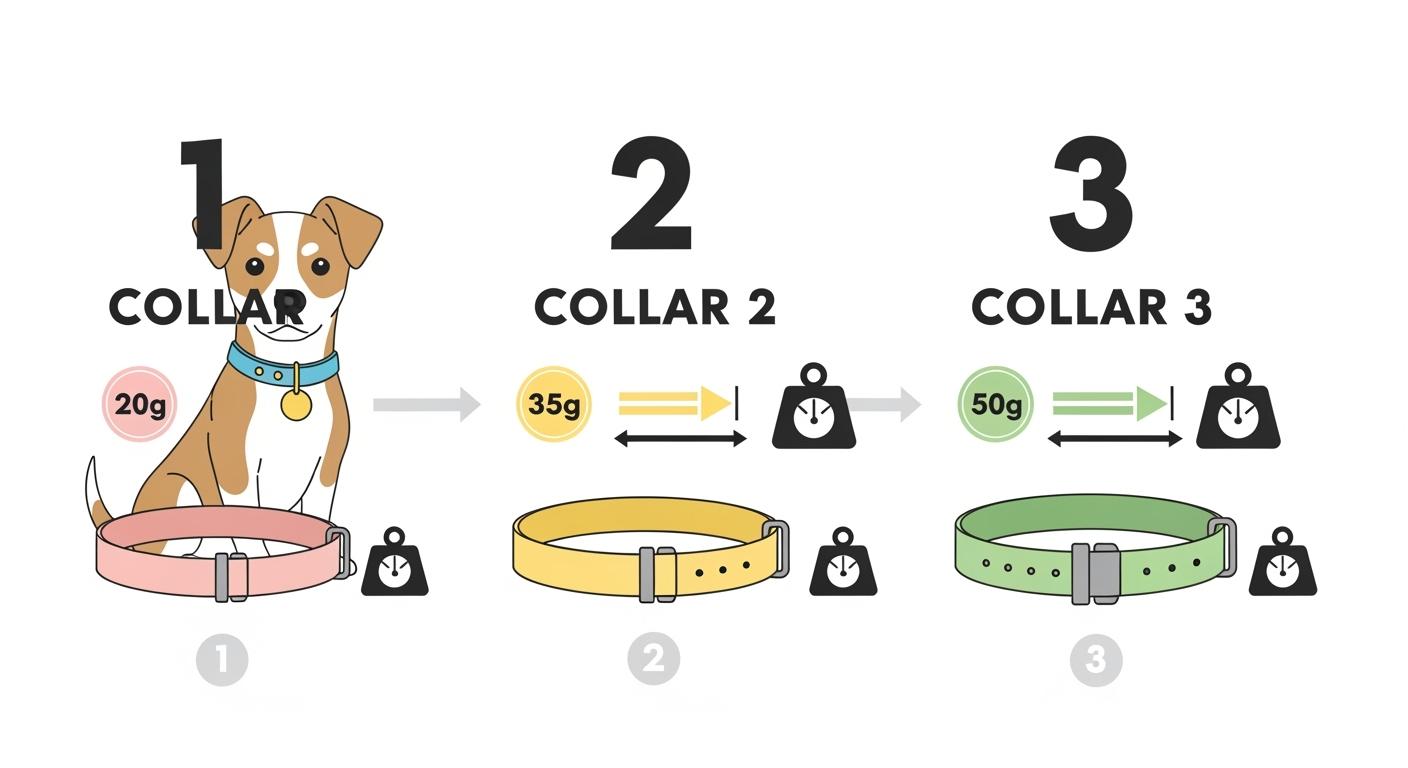
Start with neck size before width or weight labels
The most common mistake is choosing a collar by breed name, age, or package weight range before checking the dog’s actual neck size. Small dogs can vary a lot even when they weigh the same. That is why neck measurement should come first, and everything else should follow.
How to measure correctly
- Use a soft tape measure around the middle of the neck where the collar will sit.
- Write the number down instead of guessing from memory.
- Compare that measurement to the collar’s adjustable range.
- After putting the collar on, use a two-finger check and then watch your dog walk a few steps.
What a good fit should look like
- The collar lies flat instead of twisting constantly.
- Your dog can move, lower the head, and turn normally.
- The collar does not slide over the head when it should not.
- The neck line does not show rubbing, coughing, or obvious pressure.
| What to check | Why it matters | What usually goes wrong |
|---|---|---|
| Neck measurement | Gives you the real starting point | People guess by breed or weight alone |
| Adjustment range | Shows whether the collar can be set securely | Size labels look right but the usable range is poor |
| Two-finger fit check | Helps confirm comfort without looseness | The collar feels snug when standing still but shifts in motion |
Quick rule: neck size is the main selector. Width and weight are there to refine comfort, not to replace measuring.
Choose width and hardware by comfort, not by appearance
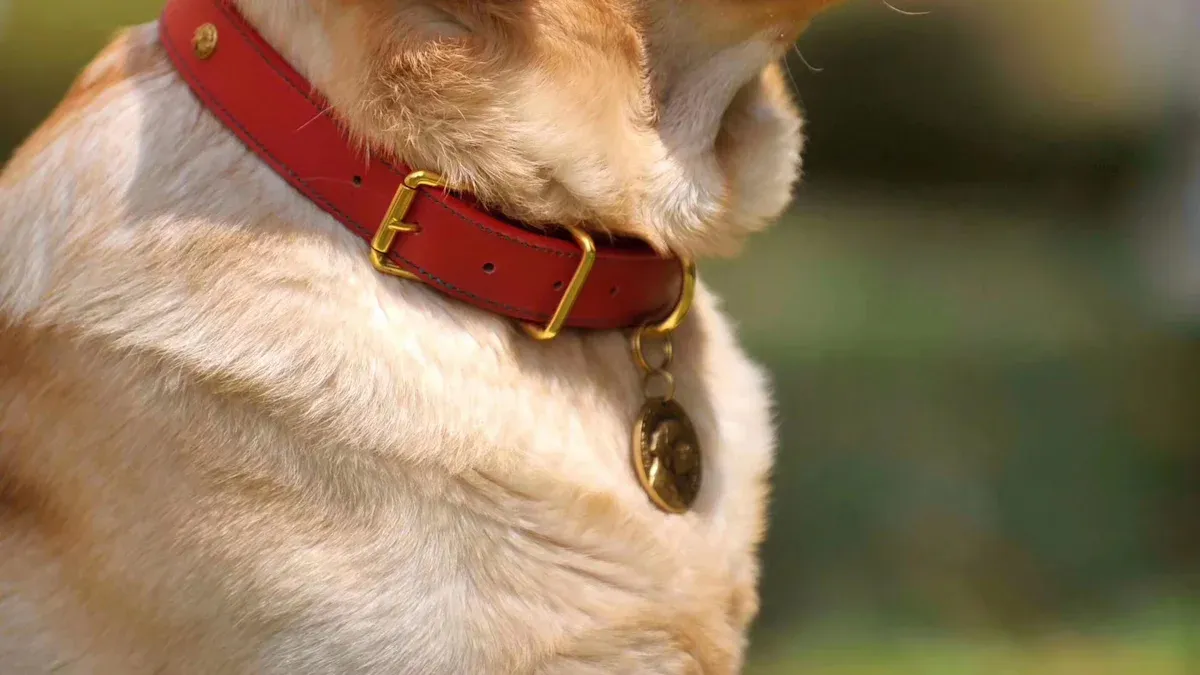
On little dogs, width changes how the collar feels very quickly. A narrow collar can feel lighter and less bulky, while a wider collar can spread pressure more evenly. Neither is automatically better. The right answer depends on your dog’s neck size, coat, and tolerance for hardware.
When a narrower collar usually works better
- Your dog has a very thin neck.
- Your dog dislikes bulky hardware.
- The current collar feels stiff, heavy, or awkward.
- You want a simple everyday ID collar rather than a heavier-looking style.
When a slightly wider collar may help
- Your dog has a broader neck for its size.
- You want the collar to feel a bit more stable and less string-like.
- The current narrow collar seems to dig in or roll too much.
Do not ignore hardware weight
Small dogs often react more to buckles, rings, and tags than to the strap itself. A collar can be the “right size” and still feel wrong if the metal parts swing, knock against the neck, or make the whole setup feel front-heavy. If your dog scratches at the collar, shakes more than usual, or seems reluctant to wear it, a lighter setup is often worth trying. If you want a broader framework for comparing width wording and size logic, a guide to width rules for little dog collars helps make those choices easier to interpret.
Use weight labels as a double-check, not the main answer
Weight labels can be helpful, but they are only a rough filter. Two little dogs with the same body weight can still need very different collar sizes because neck shape and coat thickness vary so much. Weight is most useful after you already know the neck measurement and want to sense-check the option you picked.
How to handle in-between sizes
- Start with the neck measurement, not the weight label.
- If your dog sits between two sizes, the larger option is often easier to adjust comfortably.
- After fitting, check whether the collar stays secure without looking bulky.
- Watch for slipping, coughing, rotation, or discomfort during a short walk.
Common mistakes that cause poor fit
- Choosing a collar because the package says “small breed.”
- Using body weight as the only fit guide.
- Picking the widest collar because it looks sturdier.
- Keeping a collar that fits on paper but feels heavy in real use.
For many little dogs, collar comfort is tied closely to the rest of the daily walking setup. A collar that is fine for tags and calm movement may still be the wrong tool for a dog that pulls, coughs, slips backward, or struggles to stay settled on the leash.
Know when the collar is wrong and what to change first
The easiest way to avoid ongoing discomfort is to pay attention early. Little dogs usually show you quickly when a collar feels wrong. The problem might be width, hardware, total weight, or the simple fact that the collar is being asked to do a job better handled by a different setup.
Warning signs to watch for
- Frequent scratching at the neck or collar.
- Repeated shaking after the collar goes on.
- Redness, rubbing, or flattened coat under the strap.
- Coughing or obvious throat pressure.
- Easy slipping or backing out.
What to change first
| Problem | Likely cause | First change to try |
|---|---|---|
| Collar feels bulky | Too much hardware or too much width | Use a lighter buckle or a narrower strap |
| Collar rotates constantly | Loose fit or uneven weight balance | Recheck adjustment and reduce tag load |
| Coughing or neck pressure | Wrong fit or wrong use | Stop relying on the collar for leash pressure |
| Dog seems bothered by wear | Comfort mismatch | Try a lighter, simpler collar and reassess |
A collar is often best for identification and calm everyday wear. If your little dog pulls hard, slips backward easily, or reacts badly to neck pressure, the answer may not be “tighten the collar more.” It may be time to rethink the whole setup instead of forcing one collar to do everything.
FAQ
How tight should a collar be on a little dog?
It should feel secure without pinching. A two-finger check is a useful starting point, but you should also watch how the collar sits while your dog walks and turns.
Should I choose by neck size or by weight?
Choose by neck size first. Weight is only a secondary check because dogs with the same weight can still have very different neck measurements and collar needs.
Is a wider collar always better for small dogs?
No. A wider collar can feel more stable on some dogs, but it can also feel bulky on very small necks. Comfort depends on the balance between strap width, hardware weight, and the dog’s shape.
What if my dog is between two collar sizes?
The larger option is often the better starting point, then adjust for a secure fit. After that, confirm comfort by watching for rotation, slipping, and any sign the collar feels too heavy.
How do I know the collar is too heavy?
Signs include scratching, repeated shaking, awkward movement, or a dog that seems bothered as soon as the collar goes on. On little dogs, heavy hardware often creates this problem before the strap does.






