

You see returns and confusion when product copy is not clear. Customers might not know how the bungee section works. They may think the runners leash for dog fits every collar. Some listings say it works well but do not show proof. This can make customers feel let down. Using clear words and the same terms helps you explain features. You can talk about the waist belt (7 cm/2.75 in wide) and tugline (1.5 m–2.5 m/4.9 ft–8.2 ft) in a simple way. Safety-first words help people trust you. They also stop you from making risky promises.
Key Takeaways
Use simple and clear words in product descriptions. This helps customers understand and makes returns less likely.
Always say the runners leash is a full system. It has a waist belt, tugline, and hardware. This helps people know what they get.
Do not make bold promises about safety. Use careful words to give honest ideas about what the leash can do.
Make sure the leash attaches to a harness, not a collar. This keeps your dog’s neck safe and gives you better control when running.
Add important facts like belt width and tugline length in product titles. This helps customers pick the right product for them.
Why Runners Leash Copy Fails in Retail
Hands-Free Control Misunderstandings
You want your customers to understand what a hands-free dog leash system is. Many product listings confuse buyers by calling a single belt or line “hands-free.” This creates problems when customers expect a full system but receive only one part. You should always describe the hands-free dog leash as a system. It includes a waist belt, a tugline, and attachment hardware. This helps your team explain the product for road running, trail running, urban commutes, and race events. Clear copy reduces returns and builds trust.
Bungee Behavior and Attachment Points
You may see confusion about the bungee section. Some customers think the bungee will stop all pulling or prevent injuries. You should explain that the bungee absorbs shock during sudden lunges or changes in pace. It does not make the leash “injury-proof.” Always mention the correct attachment points. The leash should connect to a harness, not a collar, for running activities. This keeps the dog comfortable and helps you avoid risky claims. When you describe the tugline, use the baseline length of 1.5 m to 2.5 m (4.9 ft to 8.2 ft). This matches sport rules and helps buyers choose the right product.
Safety and Training Claim Risks
You need to avoid risky promises in your product copy. Do not say the leash will stop pulling or guarantee control. Use phrases like “helps keep hands free” or “helps reduce hand strain.” These phrases set honest expectations. If you mention features like reflective accents, do not promise visibility in all conditions. For hardware strength or durability, only use test method names if you have reports. This approach protects your store and helps your staff answer questions with confidence.
Runners Leash for Dog: Product Definition
Waist Belt, Tugline, and Hardware
You need to know what makes up a true runners leash for dog. The system has three main parts: the waist belt, the tugline, and the attachment hardware. Each part plays a key role in keeping you and your dog safe and comfortable during a run.
Component | Description | Variations Available |
|---|---|---|
Waist Belt | Worn around your waist, connects to the dog harness with a tether. | Different widths, padding, and adjustability for body types. |
Tugline | The line that links your belt to your dog’s harness, allowing movement. | Adjustable length (1.5 m–2.5 m / 4.9 ft–8.2 ft), various materials. |
Hardware | Clips and attachments that secure the leash to the belt and harness. | Quick release, swivel, and different strengths. |
The waist belt should be at least 7 cm (2.75 in) wide over your spine. This helps spread out the force and keeps the belt from digging in. The tugline usually stretches from 1.5 meters to 2.5 meters (4.9 feet to 8.2 feet). This gives your dog enough room to move but keeps you in control. The hardware includes clips and swivels. Some designs let you disconnect quickly if you need to separate from your dog fast.
Waist belts come in many styles to fit different people.
Tuglines can be adjusted for your running style or your dog’s size.
Hardware may include quick-release features for safety.
Tip: Always connect the leash to a harness, not a collar, for running. This keeps your dog comfortable and reduces risk.
Hands-Free System Explained
A runners leash for dog is not just a single belt or line. You get a complete hands-free system. This means you wear a belt around your waist, attach the tugline to your dog’s harness, and use secure hardware to connect everything. The system lets you run without holding a leash in your hand. You can swing your arms naturally and keep your balance.
Many hands-free leashes use a bungee section. This elastic part absorbs shock if your dog changes speed or lunges. It helps reduce strain on your hands and arms. You can run longer and enjoy your time outside more. Some systems add reflective accents for better visibility in low light. Others use padded belts for extra comfort.
The hands-free system keeps your hands open for water bottles, phones, or other gear.
The leash spreads tension across your torso, not just your hands.
You get better balance and control during your run.
OEM vs ODM: What Sports Retailers Can Customize
If you buy runners leash for dog products for your store, you may see OEM and ODM options. OEM (Original Equipment Manufacturer) means you can put your own brand on a standard product. You can often choose colors, packaging, and sometimes materials. ODM (Original Design Manufacturer) lets you work with the factory to create a new design or add special features. You can change the belt width, tugline length, or hardware style. Some parts, like safety-tested hardware or webbing, may stay standard for quality reasons. Private label programs help you offer a unique product while keeping important safety features.
A true dog running system always includes the waist belt, tugline, and hardware. When you write product copy or train your staff, use these terms. This helps your customers understand what they are buying and reduces confusion.
Best Dog Leashes for Runners: Feature Essentials
Belt Fit and Stability
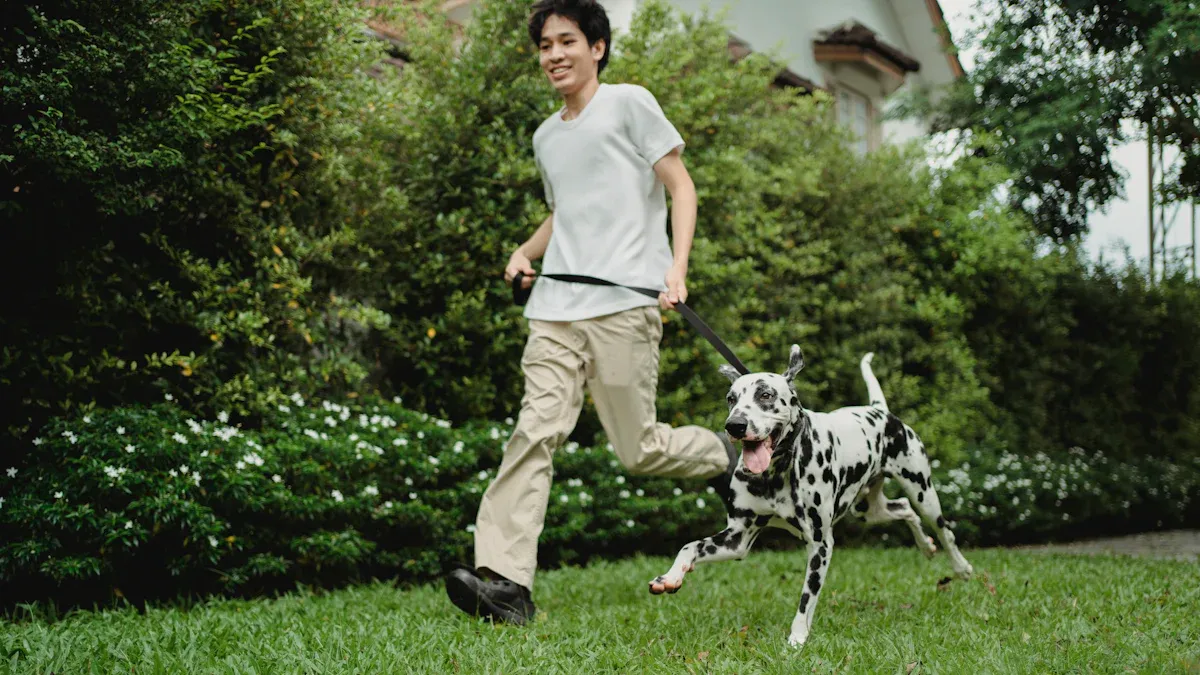
You want a belt that fits well and stays stable during your run. The best dog leashes for runners use a waist belt that measures at least 7 cm (2.75 in) wide over your spine. This width helps spread out force and keeps the belt from digging into your back. A stable belt reduces bouncing and twisting, so you stay comfortable and in control. Many belts offer padding and adjustable straps to fit different body types. When you choose the best dog leash, look for a belt that feels secure and does not shift as you move.
Tip: Always use a harness, not a collar, for running. This protects your dog’s neck and back.
Bungee Dog Leash Shock Absorption
A bungee dog leash uses an elastic section to absorb shock. This feature cushions sudden movements from you or your dog. The bungee smooths out lunges and pace changes, making runs safer and more comfortable. You feel less strain on your hands and arms, and your dog enjoys a gentler experience. The best dog leashes for runners often include a tugline that stretches from 1.5 m to 2.5 m (4.9 ft to 8.2 ft), matching sport safety guidelines. If you run with big dogs, a strong bungee section is best for big dogs because it helps manage their power without causing discomfort.
Control Handle and Quick Release
Handles and quick release features add safety and control. A control handle gives you a strong grip when you need to guide your dog through crowds or crosswalks. You can make quick corrections and keep your dog close. Handles help prevent rope burn if your dog moves suddenly. Quick release hardware lets you detach the leash fast in busy areas or emergencies. This feature is best for big dogs and active runners who need flexibility. The best dog leash for runners uses durable hardware and adjustable features, so you can use it for many activities.
Look for a leash with a comfortable grip and sturdy handle.
Choose quick release hardware for fast attachment and detachment.
Select materials like leather, high-quality nylon, or dry-treated climbing rope for durability.
Note: The best dog leashes for runners combine fit, shock absorption, and control features to keep you and your dog safe and comfortable.
Dog Leash for Running: Safe Attachment
Harness-First Positioning
You keep your dog safer when you use a harness for running. A harness spreads the pulling force across your dog’s chest and shoulders. This helps stop neck injuries and gives you more control. One study found about 11,200 dog leash injuries were treated in U.S. emergency rooms from 2001 to 2017. Using a harness-first method can lower these risks. Experts say harnesses are best for dogs that pull because they help prevent injury and make running more comfortable. Flat collars can hurt dogs, especially those with short noses. Always clip the leash to a harness when you run with your dog.
Harnesses give you better control over active dogs.
Using a harness helps stop neck and back injuries.
You protect your dog’s airway and spine if you stop fast.
Collar Attachment Warnings
Attaching the leash to a collar can cause big problems during runs. Vets warn that collars may lead to cuts, scrapes, and sprains if your dog pulls or jumps. Collars can also put pressure on the eyes, which can hurt the optic nerve and cause glaucoma. Studies show collars might cause the windpipe to collapse and other health problems. The table below shows common dangers from using a collar:
Risk Description | Details |
|---|---|
Sudden Darting | Dogs can run into traffic or other dangers. |
Entanglement | Strangling or hurting a leg can happen. |
Neck Injury | Stopping fast may hurt the neck. |
Getting Lost | If the leash breaks, your dog could run away. |
You can avoid these dangers by picking a harness for your dog leash for running. Harnesses keep your dog safe and comfy, especially when you run fast.
Staff Script for Customer Questions
Staff Tip: Use this script to answer common questions about leash attachment for running.
Q: Can I attach the leash to my dog’s collar for running?
A: For running, always attach the leash to a harness, not a collar. Harnesses spread out the force and protect your dog’s neck and back.
Q: Why is harness-first positioning safer?
A: Harnesses give you more control and lower the chance of injury. Collars can strain the neck and cause health problems, especially if your dog pulls or jumps.
Q: What size should the tugline be for running?
A: The best tugline length is 1.5 meters to 2.5 meters (4.9 feet to 8.2 feet). This lets your dog move but keeps you in control.
Q: Are there risks with collar attachment?
A: Yes. Collars can cause neck injuries, scrapes, and your dog could escape if the leash breaks. Always use a harness to keep your dog safe.
You help customers make safer choices when you give clear, honest answers. Harness-first positioning shows your store cares about safety and making customers happy.
Defensible Copy and Claims
Conditional Wording for Features
You want your product copy to be easy to understand and safe. Conditional wording uses words like “if,” “may,” or “can help.” This way, you set honest expectations and keep your store safe from risky promises. For example, you could say, “If your dog pulls, the bungee section can help absorb shock.” This is safer than saying, “The leash stops pulling.” Conditional wording is good for features that depend on how people use the product.
Here is a table that shows the difference between conditional wording and strong claims:
Aspect | Conditional Wording | Definitive Claims |
|---|---|---|
Legal Acceptance | Okay in apparatus claims | Best in method claims |
Clarity | Might be unclear | Gives better protection |
Example | If the leash is pulled, it will retract | The leash retracts |
Litigation Risk | More chance of confusion | Less risk, easier to understand |
You should use conditional wording for things like shock absorption, reflective accents, and quick release. This helps you avoid risky claims and keeps your copy honest.
Test Reports vs. Design Intent
You need to know when to use test method names in your product copy. If you talk about features like breaking strength, corrosion resistance, or wash durability, you must have a test report. Use test method names like ASTM D6775 for webbing strength or ISO 9227 for corrosion tests. If you do not have a report, talk about the design instead. For example, say, “Made with high-strength nylon webbing,” instead of giving numbers.
Here is a claims guardrail table to help you pick safer words:
Risky Phrase | Why it is risky | Safer Replacement Phrase |
|---|---|---|
Injury-proof | Sounds like a medical promise | Helps reduce hand strain |
Escape-proof | Means total safety | Designed for secure attachment |
Guaranteed control | Promises it works every time | Helps improve control |
Will stop pulling | Says it changes behavior | May help manage pulling |
Visible in all conditions | Says it works everywhere | Includes reflective accents |
Tip: Always use safety-first words. You protect your business and help customers make smart choices.
When you talk about the best leash for dogs that pull, focus on features like shock absorption and secure harness attachment. Do not promise that the leash will stop pulling. Use conditional wording and only mention test methods if you have reports.
Ecommerce Listing Field Kit
Title and Bullet Structure
Your product title should be simple and easy to find. Use keywords like runners leash for dog, your brand, and main features. Add the belt width (7 cm/2.75 in) and tugline length (1.5 m–2.5 m/4.9 ft–8.2 ft). This helps buyers pick the right leash. Bullets should show how the leash helps, not just what it is. Tell how the waist belt stops bouncing. Explain how the bungee section makes lunges softer. Say how the control handle lets you hold your dog close.
Tip:
Use clear, high-quality pictures with alt text. The alt text should say what the product is and its main features. This helps your listing show up in search results.
Sample Bullets:
Hands-free running system: waist belt, tugline, and secure hardware
Stable belt (7 cm/2.75 in wide) helps reduce bouncing and twisting
Bungee section smooths sudden lunges and pace changes
Quick release hardware for fast separation
Reflective accents for improved nighttime visibility
Attribute Fields to Collect
You need to collect the right details for each listing. This helps buyers find your product and keeps your catalog neat. Add the product title, brand, belt width, tugline length, hardware type, color, material, price, if it is in stock, shipping info, and customer reviews.
Listing Field Table:
Field Name | What to Enter | Common Mistake to Avoid |
|---|---|---|
Product Title | Clear name with keywords and dimensions | Leaving out size or main feature |
Brand | Your store or brand name | Using generic terms |
Belt Width | 7 cm (2.75 in) | Not listing both units |
Tugline Length | 1.5 m–2.5 m (4.9 ft–8.2 ft) | Using only one measurement |
Hardware Type | Quick release, swivel, etc. | Not specifying hardware |
Material | Nylon, leather, climbing rope | Omitting material type |
Color | Main color options | Not matching images |
Price | Retail price | Forgetting to update |
Availability | In stock or backorder | Not updating status |
Shipping Details | Delivery time, cost | Missing shipping info |
Customer Reviews | Verified buyer feedback | Not moderating for accuracy |
Copy/Paste Templates:
PDP Short Description:
Hands-free running leash system with a stable waist belt (7 cm/2.75 in), adjustable tugline (1.5 m–2.5 m/4.9 ft–8.2 ft), and quick release hardware. Made for harness-first safety and comfort.
Bullets:
Stable fit helps reduce bouncing
Bungee section smooths sudden lunges
Quick release for fast separation
Reflective accents for nighttime visibility
Staff Script:
“For running, always clip the leash to a harness. The waist belt and bungee section help you stay comfortable and in control.”
Disclaimer:
This product is made for use with a harness. Always watch your dog during activity. Reflective accents do not promise visibility in every situation.
Retail Q&A Pack
Fit, Comfort, and Control
You want your customers to feel confident when choosing a runners leash for dog. Fit matters most. The waist belt should measure at least 7 cm (2.75 in) wide. This width helps spread force across your back. You get less bouncing and twisting. Padding and adjustable straps help you find a comfortable fit for any body type.
Control is important for safety. The tugline should stretch from 1.5 m to 2.5 m (4.9 ft to 8.2 ft). This length gives your dog room to move but keeps you in control. A bungee section smooths sudden lunges. You feel less strain on your hands and arms. Handles and quick release hardware help you guide your dog in busy areas.
Tip: Always attach the leash to a harness. This helps protect your dog’s neck and back.
Common Questions and Answers:
Q: How do I know if the belt fits well?
A: The belt should sit snugly around your waist. It should not slide or dig in. Look for padding and adjustable straps.Q: What length tugline is best for running?
A: Choose a tugline between 1.5 m and 2.5 m (4.9 ft to 8.2 ft). This matches sport safety guidelines.Q: Does the bungee section stop pulling?
A: The bungee section helps absorb shock. It does not stop pulling.
When to Recommend Alternatives
You may need to suggest other products for some customers. If a dog has medical needs or shows strong pulling behavior, recommend a consult with a trainer or vet. For small dogs or those who do not pull, a standard leash may work better. If a customer wants a leash for walking, not running, suggest a non-bungee leash.
Situation | Recommended Product |
|---|---|
Strong pulling dogs | Harness with shock-absorbing leash |
Small or senior dogs | Lightweight standard leash |
Walking, not running | Non-bungee leash |
Medical or behavioral concerns | Consult with trainer or vet |
Note: You help customers make safe choices when you match products to their needs. Always use safety-first language and avoid medical promises.
Copy and Packaging Checklist
Hangtag and Instructions
You help customers feel sure about their choice when you add clear info to every runners leash package. Hangtags and instruction sheets should list the main features and safety tips. You want each buyer to know what they get and how to use it safely.
Put these things on packaging and instructions:
Hands-free leash system (main webbing)
Adjustable waist belt (at least 7 cm / 2.75 in wide)
Tugline length (1.5 m–2.5 m / 4.9 ft–8.2 ft)
Hardware details (clips, buckles, D-rings)
Product label with a special lot code
User manual with safety steps
Clear warnings about losing control, injury, choking, tripping, and who can use it
Legal disclaimer on both the label and manual
Claim evidence checklist for returns or problems
Packaging type (bag or box with label)
Digital templates for RFQs and contracts
Tip: Make sure the label and manual use the same warning names and words. Update all safety tips every year.
Table: Key Packaging Elements
Element | Purpose |
|---|---|
Lot code | Tracks product batches |
Safety warnings | Alerts users to risks |
Legal disclaimer | Protects your business |
User manual | Guides safe use |
Claim checklist | Eases returns and incident handling |
Receiving QC Notes
You keep your store safe and customers happy when you check every shipment for quality. Staff should use a simple checklist to make sure every runners leash is up to standard.
Best ways to check quality:
Check shipments often to find problems and follow rules
Collect info on product tests and checks
Use machines to cut down on mistakes and make checks better
Make sure labels and manuals match and use the same warnings
Check that each product has its own lot code
Keep all records linked to lot codes for at least 10 years
Note: Regular checks help you find problems early and keep your products reliable.
When you follow these steps, you build trust with customers and protect your business. Good packaging and strong checks make your runners leash stand out in sports stores.
You can make runners leash product copy better by using clear words and the same terms. Show how each feature helps people in real life. Share strong facts and happy customer stories to prove value. Add stories of success to help buyers feel connected. Give new ideas, like training classes or group events, to build trust. Use safe words and only make claims you can back up. Templates and checklists help your team keep listings correct and the same. These steps help make running with your dog safer and more fun for all.
FAQ
What makes a runners leash for dog different from a regular leash?
You get a hands-free system with a waist belt, tugline, and secure hardware. The belt measures at least 7 cm (2.75 in) wide. The tugline stretches 1.5 m to 2.5 m (4.9 ft to 8.2 ft). This setup helps you run safely and comfortably.
Can I use the leash with any dog harness?
You can use most harnesses designed for running or walking. Always check the hardware for compatibility. Avoid attaching the leash to a collar. Harness-first positioning helps protect your dog’s neck and back during activity.
Is this leash best for trail runs or city runs?
You find this leash best for trail runs because the hands-free system lets you move freely over uneven ground. The bungee section absorbs shock from sudden lunges. Reflective accents help with visibility in low light.
How do I clean and care for the leash?
You should hand wash the leash with mild soap and water. Air dry it away from direct sunlight. Check the hardware and webbing for wear before each use. Proper care helps extend the life of your leash.
What safety tips should I follow when using the leash?
You should always attach the leash to a harness. Watch your dog during activity. Use the control handle in busy areas. Check the belt and tugline for damage. Follow all instructions on the packaging and manual for safe use.






