
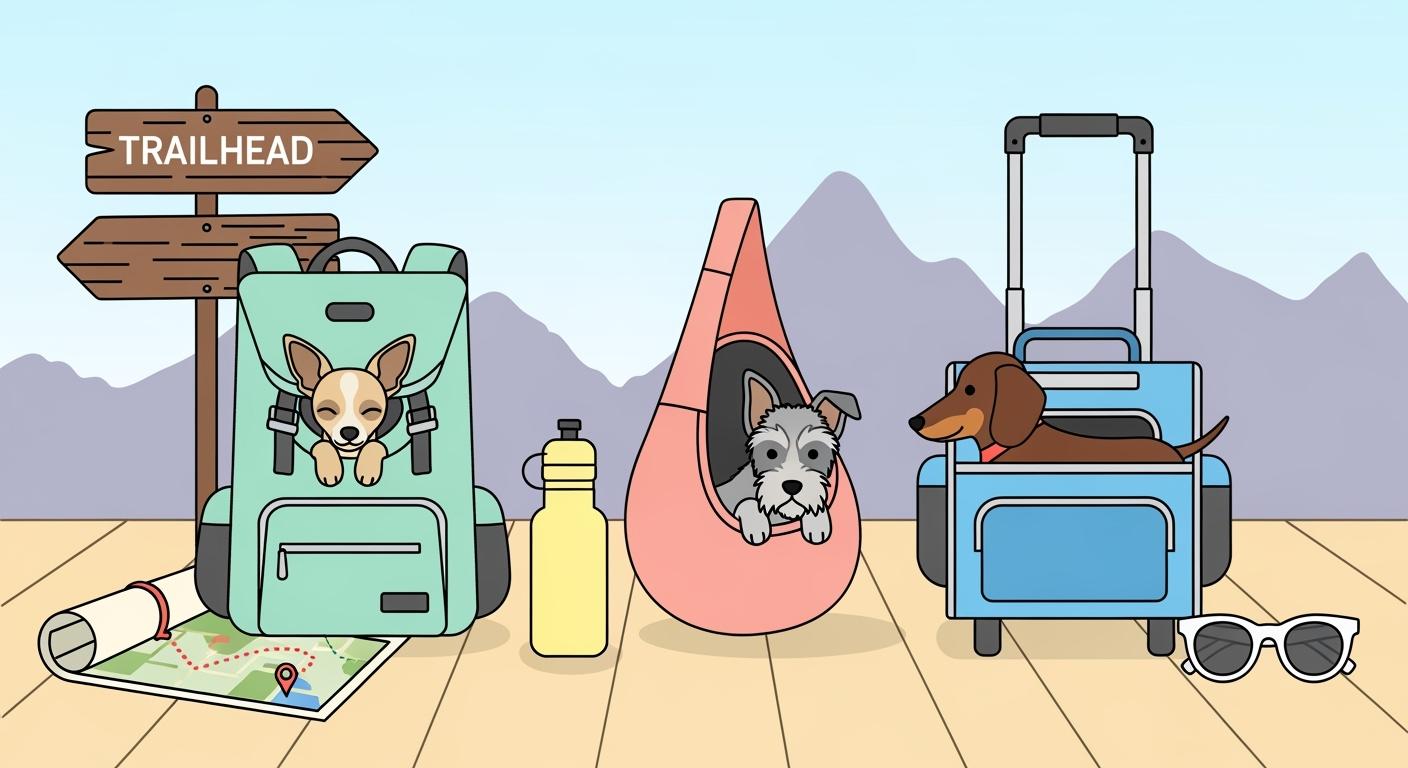
Choosing between a dog rucksack backpack, sling carrier and trolley bag is not just about the carrier name. The real question is which format fails first on the route you actually use. A rucksack can work better for longer hands-free carrying, but base sagging, heat buildup and shoulder load still matter. A sling may feel easier for short errands, but the dog can shift or press unevenly against the body. A trolley bag can reduce carrying weight on smooth routes, but wheels may vibrate, jam or lose stability on uneven ground. This comparison looks at where each carrier style breaks down outdoors, from dog shifting and handler balance to smooth pavement versus rougher paths.
Start with the route before choosing the carrier style
Carrier format should begin with where the customer will use it. A rucksack backpack usually performs better on longer walks, light outdoor routes, and hands-free travel where weight distribution matters. A sling carrier usually fits short errands, quick access, and smaller dogs that settle close to the body. A trolley bag works best when the route rewards rolling, such as airports, stations, malls, and smooth city pavement.
The wrong route makes a good-looking carrier fail quickly. Trolley wheels can feel convenient indoors but become noisy and unstable on curbs, gravel, rough pavement, or narrow trails. A sling can feel simple for five minutes but become tiring when the dog is too heavy or the outing is too long. A backpack can feel more stable for the handler but still fail if the dog compartment is too hot, too loose, or too restrictive.
For assortment planning, ask one question first: will the customer mostly carry, mostly roll, or keep switching between the two? That answer narrows the category faster than appearance or feature count. A broader format comparison can sit beside this canine backpack carrier vs dog carrier vs rucksack backpack guide when buyers need to separate similar product names before choosing a format.
Quick route match
- Dog rucksack backpack: longer walks, light trails, hands-free carrying, uneven ground, and better load distribution.
- Sling carrier: short errands, close contact, quick in-and-out access, and smaller dogs that relax against the body.
- Trolley bag: airports, stations, malls, smooth pavement, indoor-heavy routes, and lower lift demand.
Fit and support matter more than the product name
No carrier format works if the dog cannot sit, rest, or settle naturally inside it. In a backpack, the base needs enough support to stop sagging without forcing the dog into a cramped curl. In a sling, the opening should feel secure without pressing into the neck or letting the chest collapse too low. In a trolley bag, the interior should reduce bounce when wheels pass over seams, thresholds, or small bumps.
For B2B selection, weight limit alone is not enough. Buyers should check usable inner length, seated height, base stiffness, opening position, ventilation placement, and how the dog is expected to enter and exit. A high listed weight limit does not prevent complaints if the base flexes, the dog slides sideways, or the carrier forces an awkward posture.
Watch for early signs of a poor match: repeated shifting, bracing with the front legs, pushing against the opening, trying to climb out, heavy panting, or a handler constantly readjusting the load. These signals often appear before a customer describes the issue as a defect. Before longer trips, a consistent dog travel essentials kit also helps keep small items organized so pockets are not randomly overloaded and changing the carrier balance.
When a dog rucksack backpack is the stronger choice
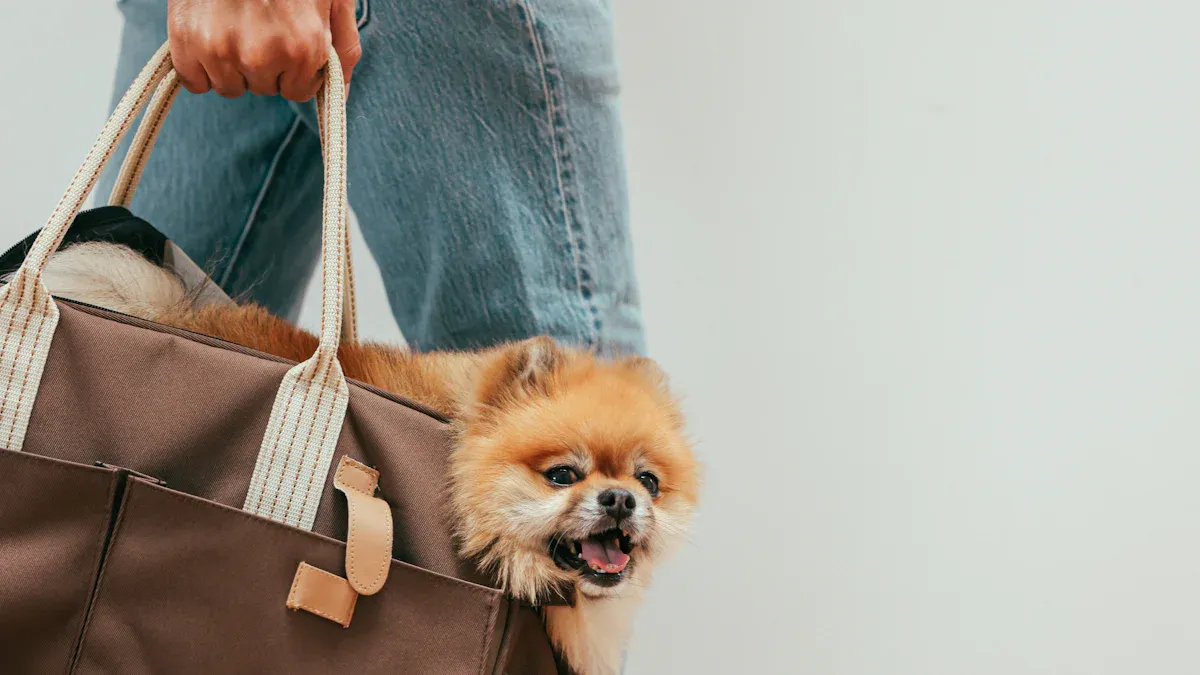
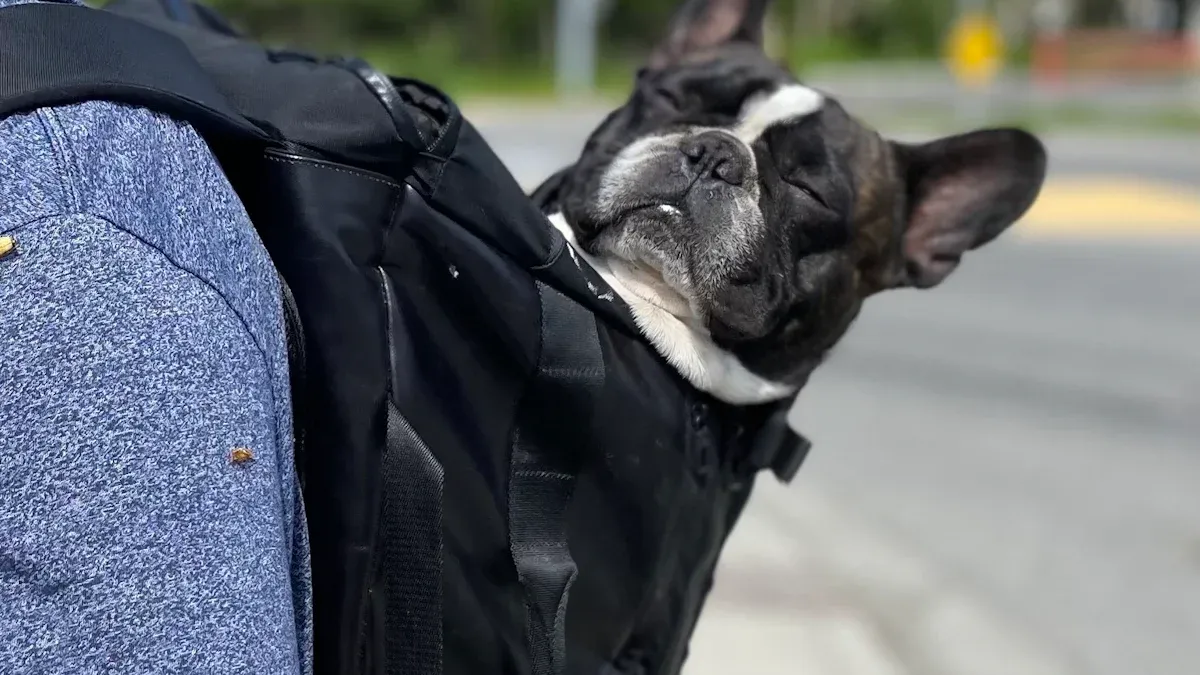
A dog rucksack backpack is usually the stronger choice when the customer needs both hands free and the route is longer than a quick block. Wider shoulder straps, a more stable carry position, and better weight distribution can reduce swing and pulling compared with simpler body-carry options. This matters most when the user is walking farther, carrying water or supplies, or moving through light outdoor routes.
The main B2B risk is assuming that more structure always means better use. A backpack must support two bodies at the same time: the dog inside the compartment and the person carrying the load. The dog needs airflow, body support, and enough room to avoid pressure points. The handler needs a shape that does not drag backward, ride too low, or force a forward lean. If the load hangs from the shoulders instead of sitting in a stable position, the backpack may be too large, poorly adjusted, or wrong for the dog weight range.
A backpack is not the best choice when the dog dislikes enclosed space, heats up quickly, panics once zipped in, or cannot stay balanced in an upright position. In those cases, a short-route sling or a trolley bag for smooth surfaces may create fewer complaints. For a product line, this means the backpack should be positioned clearly: outdoor utility, hands-free travel, and controlled carry duration, not unlimited use for every small dog.
When sling carriers or trolley bags make more sense
Sling carriers make sense when the trip is short and the dog benefits from close body contact. They are especially useful for smaller dogs that relax against the body instead of settling behind or below the handler. A good sling keeps the dog high enough to feel supported and low enough that the opening does not press into the throat. The failure point is usually not the fabric alone. It is one-shoulder load, poor depth, weak edge support, or a pocket that lets the dog sink too low.
Trolley bags make sense when the route is smooth and predictable. They reduce lifting demand and can work well for airports, stations, indoor routes, and paved city travel. The risk appears when the same bag is expected to handle stairs, curbs, rough pavement, gravel, or frequent vehicle transfers. Wheel noise, vibration, and base bounce can turn a convenient-looking product into a stressful one.
For buyers, the choice should be framed by use case. Choose a sling when close contact and quick access matter most. Choose a trolley when rolling reduces fatigue on smooth routes. Choose a rucksack backpack when hands-free carrying and better load distribution are more important. Each option becomes a poor fit when the dog overheats, braces, slides, or cannot settle after a short test period.
Common failure points buyers should check before sourcing
Most carrier complaints are easier to predict before sourcing than after launch. If a backpack lets the dog lean hard to one side, check whether the floor support is too soft, the interior is too roomy, or the straps sit unevenly on the handler. If a sling feels comfortable while standing still but painful while walking, the issue is usually weight concentration on one shoulder rather than surface softness. If a trolley bag feels smooth indoors but clumsy outside, wheel noise, curb handling, and vibration response should be tested before positioning it for outdoor use.
Heat is another common reason a promising carrier gets rejected. Backpacks and slings can trap warmth quickly when padding, body contact, and limited airflow combine. Trolley bags can overheat too if ventilation panels are weak or covers stay closed too long. Mesh placement, opening design, and clear usage limits matter more than simply saying the carrier is breathable.
The simplest product check is a short real-world carry test. Include normal turns, stops, stairs or curbs where relevant, and a brief rest period afterward. Look for restlessness, damp fur from heat buildup, rubbing at openings, shoulder or waist strain for the handler, and a carry position that needs constant readjustment. These signals help buyers separate a carrier that photographs well from one that can survive daily use.
FAQ
Is a dog rucksack backpack better than a sling carrier?
Not automatically. A dog rucksack backpack is usually better for longer walks, hands-free carrying, and steadier weight distribution. A sling carrier is often better for short errands and smaller dogs that settle close to the body. The better product depends on route length, dog size range, carry duration, and heat tolerance.
When is a trolley bag the best option?
A trolley bag is strongest on smooth surfaces such as airports, stations, malls, and paved city routes. It becomes less practical when stairs, rough paths, curbs, gravel, or frequent lifting are part of the trip.
How do I know a carrier is the wrong fit even if the size looks right?
Watch behavior and posture, not only the size label. Sliding, bracing, repeated repositioning, trying to climb out, heavy panting, pressure at the opening, or handler strain usually means the carry style or fit range is wrong.
Which carrier format is easiest for short outdoor errands?
For many small dogs, a sling is the easiest format for short outdoor errands because access is quick and the dog stays close. That changes when the dog is too heavy for one-shoulder carry, the weather is warm, or the outing lasts long enough for fatigue and heat buildup to become problems.






