

Clear identification of service dogs helps your business follow rules. It also helps your staff make fast and smart choices. Service dog vests give this clear sign, even if the law does not say you need them. Many businesses pick from different types. Some are lightweight training vests. Others are heavy-duty vests. Some vests help with visibility or control temperature. ADA-friendly vests are made for comfort and strength. They have useful features like adjustable straps. Good staff training helps too. Talking openly with customers also helps service dog access go smoothly.
This article translates those legal requirements into practical checklists and talking points for pet businesses. It is intended for owners, managers, and trainers who need to turn federal and state service-animal rules into everyday operating procedures for staff.
Key Takeaways
Service dog vests make it easy to see which dogs are working. Staff and customers can spot service dogs quickly.
Businesses must let service animals go everywhere people can go. This is true even if they have ‘no pets’ signs.
Staff can ask only two questions about what a service dog does. They cannot ask for proof of a person’s disability.
Service dog vests help stop confusion. They also help businesses avoid legal trouble.
ADA-friendly vests keep service dogs safe and comfortable. This helps service dogs do their jobs better.
Staff should learn to spot service dog vests. They should also know the rules about service dog access. This makes everyone feel welcome.
Writing down what happens with service dogs helps businesses train staff better. It also helps them follow the rules.
Service dog vests help build trust and make people feel included. All customers feel respected and welcome.
Public Access Rules Overview
In the United States, public access rules for service animals come mainly from federal disability law. Titles II and III of the Americans with Disabilities Act (ADA) require state and local government services and most businesses that serve the public to admit service dogs in all areas where customers are normally allowed to go, with only narrow exceptions for safety or sanitation. Many states add extra protections or remedies in their own civil rights laws, so pet businesses need policies that line up with both federal rules and the laws where they operate.
What Are Public Access Rules
Public access rules show how to welcome people with disabilities and their service animals. These rules come from national laws that protect people’s rights. You must let service animals go anywhere customers can go. Service animals are dogs or sometimes miniature horses. These animals help their owners by doing tasks for a disability. Emotional support animals are not service animals under these rules.
You cannot treat someone with a service animal differently than other customers. You must not ask for proof of disability or special papers for the animal. You also cannot charge extra money for letting a service animal in. If you know the animal’s job, you should not ask questions. If you are not sure, you can ask if the animal is needed for a disability and what tasks it does.
Note: Always follow local health and safety laws. Ask a lawyer if you have questions about the rules.
Here is a quick overview of the main parts:
Key Component | Description |
|---|---|
Type of Animal | Only dogs and miniature horses count as service animals. |
Allowed Questions | You can ask if the animal is needed for a disability and what tasks it does. |
Documentation | You cannot ask for papers or proof of training. |
Access Areas | Service animals must be allowed in all public places. |
No Pets Policy | ‘No pets’ rules do not apply to service animals. |
Legal Requirements for Businesses
You must follow some legal rules to stay compliant with public access rules. These rules make sure all customers are treated the same and protect your business.
Businesses that are open to the public are usually treated as “public accommodations” under federal disability law. They must make reasonable modifications to “no pets” rules so that people with disabilities can enter with their service dogs, except in limited cases where an animal is out of control, not housebroken, or would fundamentally change the nature of a service. Staff may ask only two questions when it is not obvious that a dog is a service animal: whether the dog is required because of a disability and what work or task it has been trained to perform. They may not request medical records, special identification cards, or extra deposits, and they cannot isolate or delay customers because they use a service dog.
Enforcement can be serious. Federal civil-rights regulators may bring investigations or lawsuits, and civil penalties for violating public-access rules can reach tens of thousands of dollars per violation, with higher maximums for repeat offenders. On top of that, state civil-rights laws in some jurisdictions allow private lawsuits that can seek statutory damages of several thousand dollars per visit, plus attorney’s fees and costs. Even when cases settle out of court, businesses often spend significant time and money on legal fees, remediation work, and staff retraining, so building compliant practices up front is usually much cheaper than fixing problems after a complaint.
Common Misconceptions
Many business owners believe things about service animals that are not true. These mistakes can cause problems and legal trouble.
Misconception | Clarification |
|---|---|
Service dogs must wear vests | Service dogs do not have to wear any special identification. |
Service animals need certification | The law does not ask for certification or registration. |
Businesses cannot ask questions about animals | You can ask two questions about the animal’s job. |
Emotional support animals are service animals | Only dogs and some miniature horses trained for tasks count. |
You might think service dog vests are needed, but the law does not require them. These vests help staff and customers know which animals are service animals. This can stop confusion and help you follow public access rules.
Challenges in Dog Identification
It can be hard to know if a dog is a real service dog in your business. The law does not say service dogs must wear vests, tags, or any special signs. This rule helps protect people’s privacy. But it also makes things harder for you and your staff. Many workers feel confused when a dog comes in without a vest or clear sign.
Some common problems are:
There are more fake service dog papers and vests now. These fakes make it tough to tell which dogs are trained to help people.
Many people do not know the law. Some staff think service dogs must wear vests or have papers. This is not true under the ADA.
Fake service dogs can cause safety problems. They can bother your business and start fights with customers.
If there is no vest or tag, it is hard to know if a dog is a real service dog, especially when the store is busy.
Tip: Using something like a service dog vest can help stop confusion. It shows the dog is real and helps your staff make good choices fast.
If a dog does not have a vest, you can only ask two questions. These questions are allowed by national rules. You cannot ask for papers or proof of training. Here is a quick table for your staff:
Question | Purpose |
|---|---|
Is the dog a service animal required because of a disability? | To check if the dog is a service animal. |
What tasks or work has the dog been trained to perform? | To learn what help the dog gives. |
You should teach your staff to ask these questions nicely. Do not ask about the person’s disability or ask for papers. This way, you follow the rules and show respect.
Sometimes, other customers or staff may ask why a service dog is there. Clear rules and training can help your team answer with confidence. Service dog vests are not needed, but they can make things easier for everyone.
Legal Disclaimer: This is just general advice. Always talk to a lawyer for help with national and local laws.
It is still hard for many businesses to spot service dogs without vests. If you know the rules and use good steps, you can help your staff and your customers.
Service Dog Vests and Compliance
Identification Role
Visual Markers
You need easy ways to spot service dogs at work. Service dog vests are strong visual markers. When a dog wears a vest, staff can see it is working. This helps everyone know the dog is not just a pet. The vest often has bright colors or patches. It may say “Service Dog” or “Do Not Pet.” These signs help staff and customers know the dog’s job. This is helpful in busy or crowded places.
Here is a table that shows how service dog vests help your team spot real service dogs:
Benefit | Description |
|---|---|
Reduces confrontation and questions | Helps staff and the public recognize legitimate service dogs. |
Signals legitimacy in crowded situations | Clear markings indicate the dog is working, reducing doubt. |
Discourages unwanted petting or distractions | Vests marked ‘Do Not Pet’ help keep the dog focused. |
Improves safety in emergencies or travel | Quick identification can assist in urgent situations. |
Increases handler confidence and peace of mind | Vests provide reassurance to handlers about their dog’s status. |
Using service dog vests helps your staff make quick and right choices. It also helps handlers feel safe and welcome in your business.
Reducing Disputes
Service dog vests lower the chance of confusion or fights. When a dog wears a vest, it sends a clear message. Staff do not have to guess if the dog is a service dog. This lowers the risk of mistakes or awkward questions.
Service dog vests help staff know the animal is a service dog. This stops mix-ups in public places.
The markings on the vest show the dog is working. This can stop arguments.
Many handlers use vests to avoid unwanted attention. This helps people see the dog is working.
Wearing a vest helps others know not to bother the dog. This keeps the handler and dog from being disturbed.
The vest shows the dog is on duty. This can stop people from asking too many questions.
You can teach your staff to look for these vests and act with respect. This helps your business avoid legal problems and keeps your place friendly for all.
ADA-Friendly Features
You want service dog vests that are safe and comfy. Many vests now have ADA-friendly features. These features help the dog work safely and help handlers move around your business.
Feature | Description |
|---|---|
Adjustability | Multiple adjustment points ensure a snug fit, reducing rubbing and allowing full freedom of motion. |
Comfort | Padded chest plates and breathable materials prevent chafing and distribute pressure evenly. |
Durability | Heavy-duty fabrics and reinforced stitching ensure the vest withstands daily service work. |
Visibility | Reflective strips and bright colors enhance visibility; patches communicate the dog’s role. |
Practicality | Storage pockets and ID windows provide space for essential items, enhancing functionality. |
Choosing ADA-friendly service dog vests helps the dog do its job well. These features also help staff spot service dogs fast and keep your business following the rules.
Differentiating Service Dogs
You need to tell service dogs apart from pets and emotional support animals. Service dog vests make this easier. The vest is a sign that the dog is working. It helps stop people from bothering the dog and lets staff know the dog is doing a job.
Purpose of Vest | Benefit |
|---|---|
Visual indication of a working dog | Helps differentiate from ESAs and pets |
Alerts the public | Prevents distractions for the service dog |
Signifies the dog is performing a service | Ensures the dog can focus on its tasks |
Service dog vests are helpful for staff and customers. They help everyone know the dog’s job and lower the chance of mistakes. Using these vests in your business makes things safer and more respectful for all.
Legal Disclaimer: This information is for general guidance only. Always talk to a lawyer for advice on national and local laws.
Staff Training Support
You want your staff to feel sure when they see a service dog. Service dog vests help make this easier for everyone. When your team knows what to look for, they can act fast and follow the rules. Training your staff to spot service dog vests helps stop mistakes and keeps your business following the law.
A good training plan should cover these things:
Recognizing service dog vests: Teach your staff to look for clear signs. These can be vests with “Service Dog” or “Do Not Pet” patches. Bright colors and shiny strips help too.
Understanding the limits: Remind your team that not all service dogs wear vests. Staff should know the two allowed questions if a dog has no vest.
Responding with respect: Show your staff how to talk nicely with handlers. This builds trust and stops problems.
Handling disputes: Get your team ready for times when someone questions a service dog. Clear steps help everyone stay calm and act right.
Tip: Use real-life examples in your training. Practice helps your staff remember what to do when a service dog comes in.
Here is a simple table for your staff handbook:
Training Topic | Key Points to Cover |
|---|---|
Spotting Service Dog Vests | Look for clear labels, patches, and bright colors. |
Asking the Right Questions | Only ask about the dog’s role and tasks if no vest. |
Respectful Communication | Speak politely and avoid asking about disabilities. |
Handling Uncertainty | Follow company policy and seek help if unsure. |
Service dog vests also help with staff learning over time. You can update your training as new vest styles or ADA-friendly features show up. This keeps your team ready for changes in national rules or best ways to do things.
Legal Disclaimer: This is just general advice. Always ask a lawyer for help with national and local laws.
When you train your staff and use service dog vests as visual tools, your business runs better. Your staff will feel ready, and your customers will see you care about access and respect.
Business Benefits

Legal Risk Reduction
If your staff do not follow public-access rules, your business may receive complaints, face investigations, or be named in a lawsuit. Reviews of enforcement actions and complaint summaries from federal and state disability-rights agencies show the same patterns again and again: businesses deny entry, ask for paperwork, charge pet fees, or treat service dog teams differently from other customers. These mistakes are usually preventable with clear policies, training, and tools that help staff recognise working dogs quickly.
| Common mistake | Why it creates legal risk |
|---|---|
| Asking for medical papers, ID cards, or certification for a service dog | Federal service-animal rules do not require special documents. Insisting on them can delay access and lead to complaints. |
| Charging pet fees, cleaning deposits, or “pet rent” for service dogs | Service animals are not pets. You may charge for actual damage if you do the same for all customers, but not for the dog’s mere presence. |
| Denying access because the dog does not wear a vest or tag | Service dogs do not have to use any specific gear under federal rules. Vests are helpful tools but cannot be required as a condition of entry. |
| Refusing entry based on breed, size, or assumptions about behaviour | Decisions must be based on actual behaviour, such as being out of control or not housebroken, not on stereotypes about certain breeds. |
| Failing to train staff on the two ADA service-animal questions | Untrained staff are more likely to ask illegal questions or refuse access in error, increasing the chance of complaints or enforcement. |
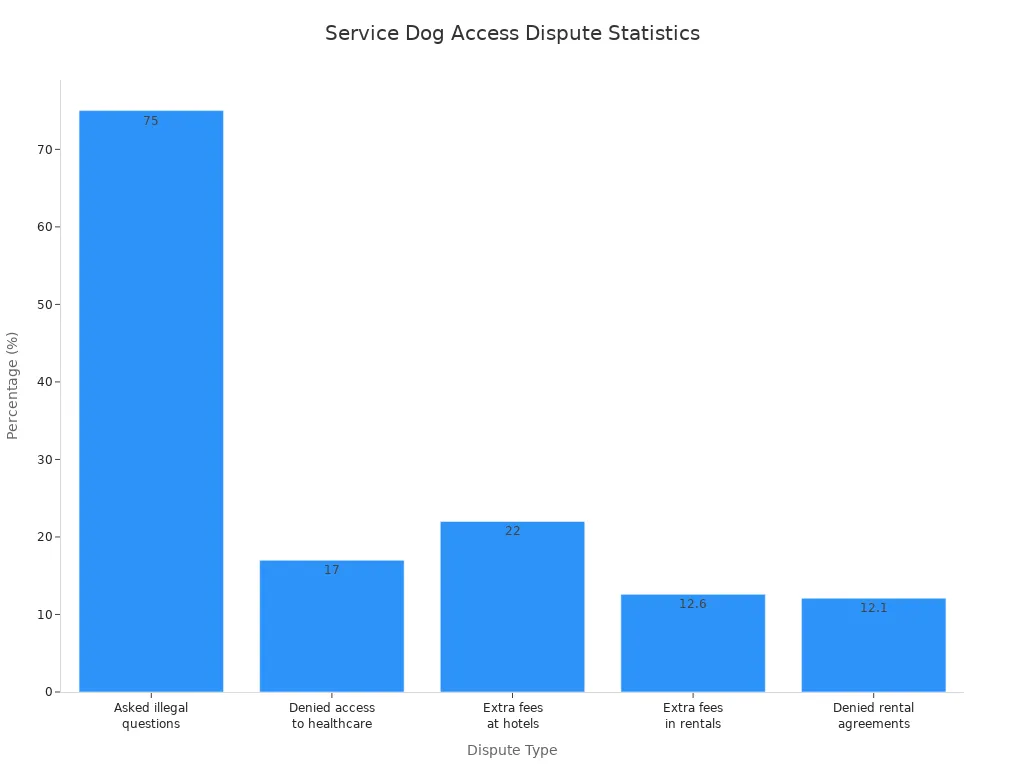
When you use clear signs like service dog vests, staff make fewer mistakes. They can spot working dogs fast and follow the rules. This helps stop wrong questions or saying no to service dog handlers. It also shows your business cares about following the law. Always talk to a lawyer if you need help with your own situation.
Legal Disclaimer: This is just general information. For legal help, talk to a lawyer.
Customer Experience
You want all customers to feel welcome and respected. Service dog vests help make your business a friendly place. When you use these vests, both service dog handlers and other customers feel good.
Service dog vests help people know about service dogs. This can make customers happier.
Vests help build trust between service dog owners and others. This makes your business a nicer place.
The vest helps the dog focus on its job. This is good for the owner and other customers.
When people see a dog in a vest, they know it is working. This stops confusion and helps your staff do a better job. Service dog handlers also feel sure your business supports them.
Safety and Order
You need your business to be safe and calm. Service dog vests help by showing which dogs can be in public places.
Service dog vests show the dog has a right to be there. This stops problems with owners and customers.
The vest is a sign of trust. People know the dog helps its owner, even in emergencies.
The vest tells people not to bother the dog. This helps the dog do its job.
When you use service dog vests, you stop problems before they start. Staff and customers can do their work, knowing the dog is there for a reason. This keeps your business calm and professional.
Trust and Inclusion
You want your business to welcome everyone. Service dog vests help you build trust with customers and staff. When you use clear signs like ADA-friendly service dog vests, you show respect for people with disabilities. This helps everyone feel included.
Service dog vests make it simple for staff to spot working dogs. This helps staff treat handlers fairly and with respect. When your team knows what to look for, they feel sure of themselves. You avoid awkward moments and show that you value all customers.
Inclusion means everyone gets the same chance to use your services. Service dog vests help by making access clear and easy. You do not have to guess if a dog is allowed. The vest gives a clear sign. This helps you avoid mistakes that could leave someone out.
Trust grows when customers see you follow national rules and best practices. Service dog vests show you care about doing things right. Your staff can answer questions from other customers with confidence. This builds a good image for your business.
Here are some ways service dog vests support trust and inclusion:
Staff can spot service dogs fast and treat handlers with respect.
Customers with disabilities feel safe and welcome in your business.
Other customers see that you follow fair and clear rules.
Your business avoids confusion and complaints.
Tip: Train your staff often on service dog vests and access rules. This keeps your business trusted and open to all.
Inclusion Benefit | How Service Dog Vests Help |
|---|---|
Fair treatment for all customers | Vests make it easy to spot service dogs |
Positive business reputation | Shows you follow access rules and respect |
Fewer disputes and complaints | Clear signals reduce confusion |
Safer, more welcoming environment | Everyone knows the rules and feels included |
You can use service dog vests to help reach your inclusion goals. When you make access clear and simple, you help everyone feel like they belong.
Legal Disclaimer: This information is for general guidance. Always check with a legal professional for advice on national and local laws.
Best Practices for Service Dog Vests
Staff Training
Recognizing Vests
Your staff should spot service dogs fast and correctly. Training helps your team know what signs to look for. Service dog vests often use bright colors and clear labels. Some vests have shiny strips that reflect light. Teach your staff to notice these signs. Not all vests look the same. Some vests have patches that say “Service Dog” or “Do Not Pet.” Other vests might have special embroidery or ID tags.
Here are some good ways to train staff:
Teach workers about ADA rules and public access laws.
Put up signs at doors that welcome service animals.
Handle questions and concerns quietly and kindly.
Tip: Use real-life stories in training. Practice helps staff remember what to do when they see a service dog.
Handling No-Vest Cases
Sometimes, a service dog does not wear a vest. The law does not say vests are needed. Your staff should know how to act. Teach your team to stay calm and be polite. If a dog has no vest, staff can ask two questions. Is the dog needed because of a disability? What tasks does the dog do? Remind staff not to ask for proof or papers.
If a customer gets upset or confused, call a manager. Always treat the handler with respect. Make sure staff know service dogs can look different and may not wear a vest.
Vest Features to Look For
When you pick service dog vests for your business, look for features that help with comfort, safety, and following rules. The right vest helps staff and customers spot working dogs.
Feature | Description |
|---|---|
Proper Fit | Makes the dog comfortable and stops rubbing. |
Materials | Strong and weather-proof materials last longer. |
Visibility | Bright colors and shiny strips help keep dogs safe. |
Legal Considerations | Vests make access easier and lower fights, even if not needed by law. |
Functionality | Vests should match the jobs the service dog does. |
ID Tags and Patches
Pick vests with clear ID tags and patches. These help staff and customers know the dog is working. Patches can say “Service Dog,” “Working Dog,” or “Do Not Pet.” ID tags give extra proof. Choose vests with safe spots for these tags.
Custom Embroidery
Custom embroidery can make vests even clearer. You can add your business name or special notes. This helps staff and customers know the dog’s job. Embroidery also makes the vest harder to copy.
Policy Communication
Clear rules help everyone understand. Make sure staff and customers know your service dog policy. Use simple words and put up signs at doors. Train staff on what they can and cannot ask.
DOs | DONTs |
|---|---|
Staff may ask ONLY if the animal is needed for a disability and what tasks it does. | Staff cannot ask for proof of a disability or papers for the service animal. |
Staff can ask the customer to keep the animal on the floor if it is on a chair or table. | Staff cannot say no to a customer because they have a service animal. |
Staff should call a manager if a customer causes trouble. | Staff cannot ask to pet the animal because it may distract the animal while working. |
Note: Always follow national and local laws. For legal help, talk to a professional.
Incident Documentation
You need a simple way to write down what happens with service dogs. Good notes help you fix problems and train your staff better. They also show you follow public access rules. When you write down each event, you protect your business and help your team.
Teach your staff to write down every time a service dog causes worry or when someone questions access. Use an easy form or a computer log. Write the date, time, place, who was there, and a short story of what happened. Write what your staff did and what happened after. If you asked the handler the two allowed questions, write their answers too.
Here is a checklist to help you keep good records:
Write the date, time, and place.
List everyone there, like staff and customers.
Tell what happened in simple words.
Write any questions and answers.
Write what your staff did and what happened next.
Save photos or videos if you have them.
Tip: Keep all records safe and private. Only share them with managers or lawyers if you need to.
Good notes help you see if the same problems happen a lot. You can use these notes to teach your staff or make your service dog rules better. If you have legal trouble, your notes show you were fair and followed the law.
Handler Collaboration
Working well with service dog handlers helps your business run better. It also helps you follow the rules. You build trust and stop problems when you treat handlers with respect and use clear rules.
Many staff do not know all the laws about service dogs. This can cause mistakes or unfair treatment. You can fix this with training and talking openly. Staff should know what service dog handlers can do and how to help them.
Here is a table that shows ways to work better together:
Key Findings | Description |
|---|---|
Lack of Knowledge | Staff often do not understand service dog laws, which can cause problems. |
Importance of Training | Training helps staff support handlers and avoid mistakes. |
Public Awareness | Teaching everyone about service dog rules makes interactions smoother. |
You have some jobs under national rules:
Business Responsibilities | Description |
|---|---|
Allow Access | You must let service dogs into all public areas of your business. |
Staff Training | Train your team on the rights of service dog handlers. |
Handling Disruptions | If a service dog is disruptive, you may ask for its removal, but you must still offer service to the handler. |
A strong training plan gives you many good things:
Training Program Benefits | Description |
|---|---|
Reduces Violations | Helps you avoid breaking the law and facing penalties. |
Supports Customers | Makes it easier to help customers with service dogs. |
Ensures Compliance | Keeps your business in line with national service animal rules. |
Note: Always follow national and local laws. For legal advice, talk to a lawyer.
When you work with handlers and teach your staff, you make your business a friendly and rule-following place. This helps everyone feel safe and respected in your business.
Service dog vests help your business follow public access rules. They also make things safer and help both staff and customers. Teaching your team about ADA rules and using clear vests makes your business more welcoming. When you train staff and have clear rules, you lower mistakes and build trust. Checking your service dog rules often keeps your business current.
Keep a folder of information for staff and managers. This helps everyone act with respect and feel sure of what to do.
Check your service dog rules often.
Pick vests with clear patches and a good fit.
Teach staff about ADA rules and how to talk with respect.
Data & Methodology
This guide is written for pet businesses that operate in the United States and focuses on service-dog access in public-facing spaces. It is based on current federal service-animal regulations and technical guidance under the Americans with Disabilities Act (ADA), together with fact sheets and training materials from national disability-information centers and state civil-rights agencies. It also draws on publicly available enforcement actions and settlements that describe common patterns of non-compliance.
- Service-animal definitions, access rights, and staff question limits follow the ADA Titles II and III regulations and related federal guidance on service animals.
- Descriptions of fines and damages reflect civil penalty ranges published by federal regulators for ADA violations and statutory-damages ranges in state civil-rights laws where people can sue businesses directly.
- Operational examples are informed by real-world practices from pet businesses that use service dog vests, written policies, and staff training to reduce legal and customer-service risks.
Because laws and penalty amounts can change, you should treat all figures in this article as general ranges rather than exact promises. Always verify the latest requirements and penalties that apply in your state or locality before updating your own policies.
FAQ
FAQ
Do you need to require service dog vests in your business?
You do not have to make service dog vests a rule. The law does not say you must use them. But, service dog vests help staff and customers spot working dogs fast. This makes things run smoother and stops confusion.
What should staff do if a service dog does not wear a vest?
Staff should ask two polite questions. Is the dog a service animal for a disability? What work or task does the dog do? Never ask for papers or proof.
How do ADA-friendly service dog vests help with compliance?
ADA-friendly service dog vests give a clear sign and keep the dog comfy. These vests help staff know which dogs are service animals. This helps your business follow public access rules and gives customers a better visit.
Can you deny entry to a service dog without a vest?
You cannot say no to a service dog just because it has no vest. National rules let service animals in, even without a vest. Always ask the allowed questions and treat handlers kindly.
What features should you look for in a service dog vest for businesses?
Pick vests with clear labels, shiny strips, and strong materials. Adjustable straps and ID windows make the vest safer and more comfy. These things help staff spot service dogs and keep your business safe and running well.
How do service dog vests reduce legal risks for your business?
Service dog vests help staff know which dogs are real service animals. This lowers mistakes like saying no or asking wrong questions. Fewer mistakes mean less risk of fines or legal trouble.
Are emotional support animals covered by the same rules as service dogs?
Emotional support animals do not get the same rights as service dogs. Only dogs or sometimes miniature horses trained for tasks count as service animals under national rules.
Should you document incidents involving service dogs?
Yes, you should write down any problems with service dogs. Good notes help you check what staff did, train better, and show you followed the rules. This protects your business if someone asks questions or complains.
Legal Disclaimer: This FAQ gives general facts. Always ask a lawyer for advice about national and local laws.






