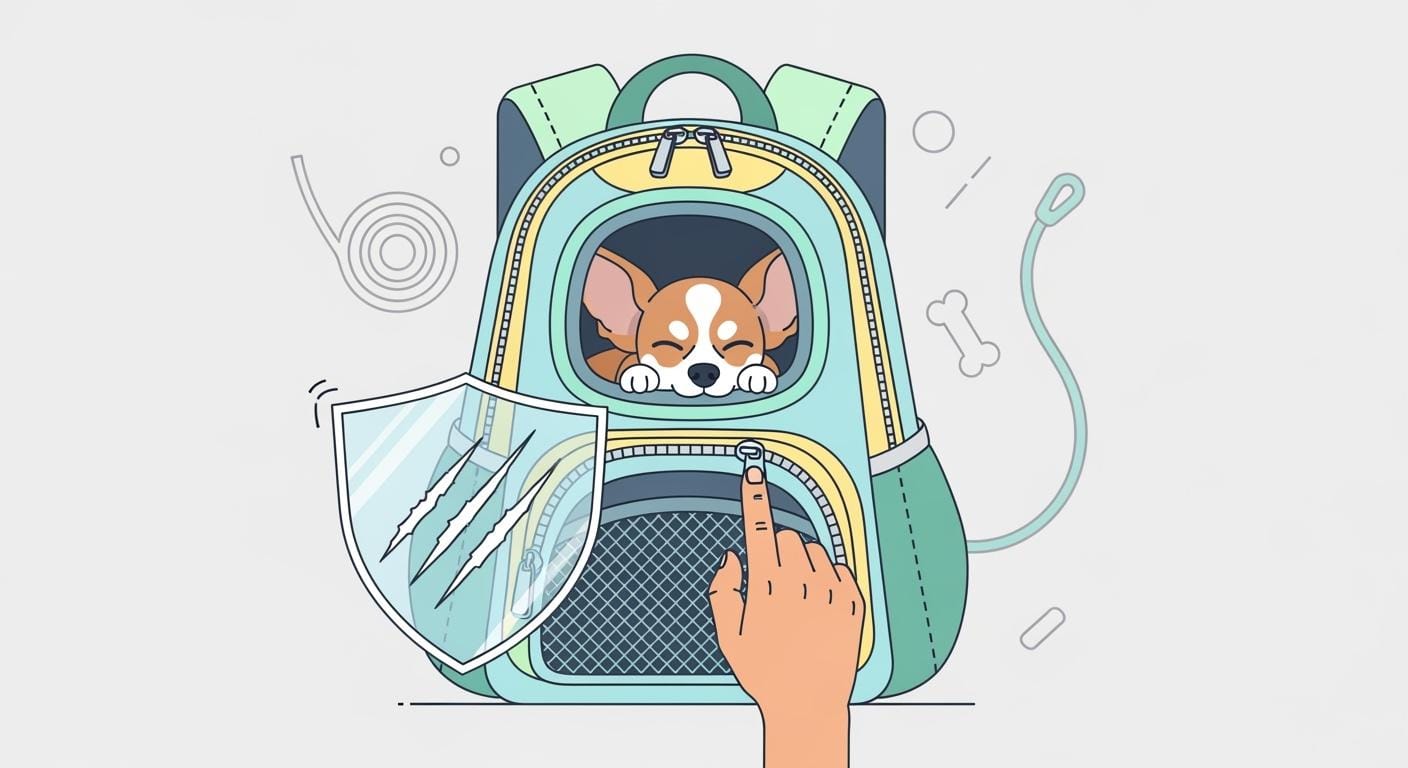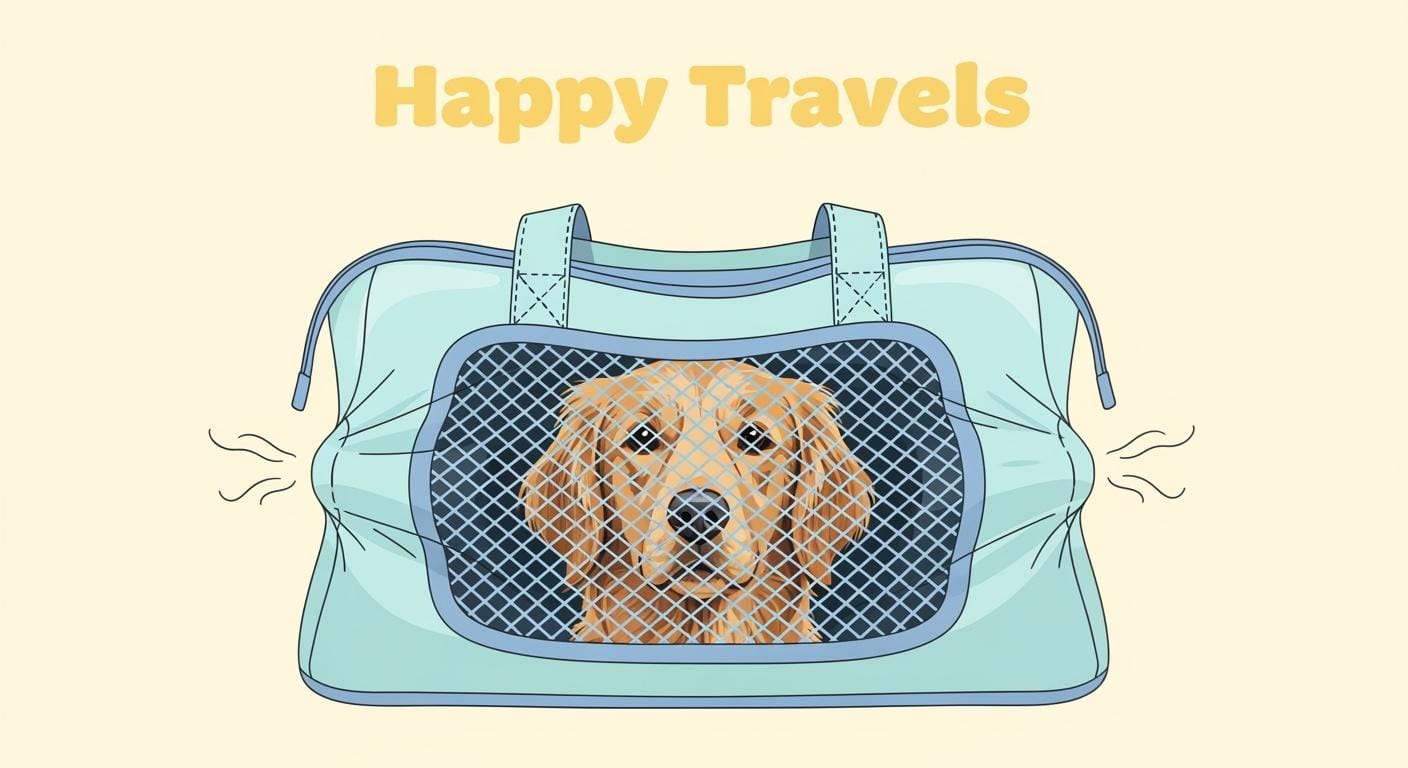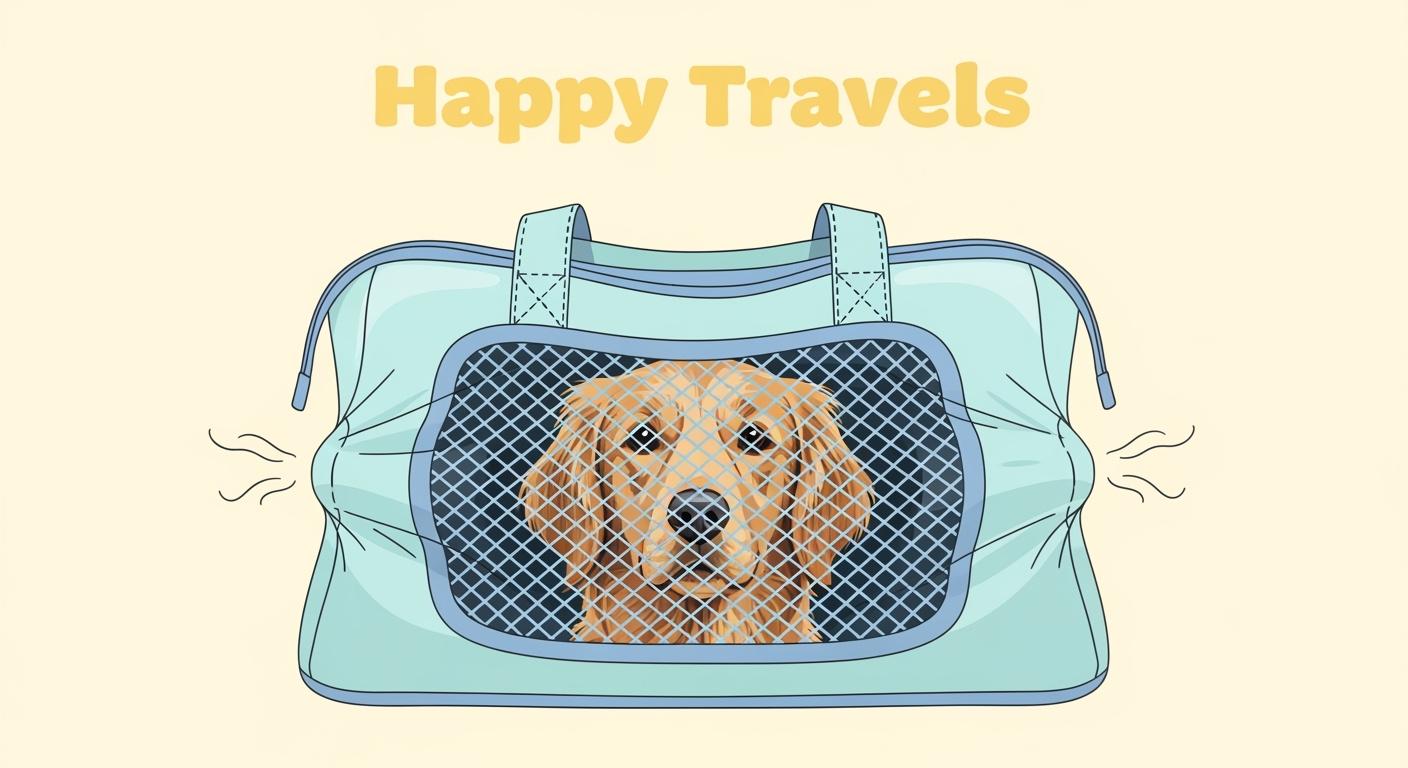
A dog tote carrier with mesh ventilation can look perfectly breathable in product photos. But the question that matters is whether the mesh stays open when your dog leans, shifts, or when you lift the carrier by its handles. Many carriers use large mesh panels that collapse the moment the frame flexes. The ventilation area shrinks. Airflow drops. The dog presses against fabric instead of looking out through an open window.
The real design problem is not the mesh itself. It is whether the structure around the mesh holds its geometry under load. A carrier built around that idea keeps ventilation working through movement, car transfers, and a restless dog — not just when it sits empty on a flat surface.
Why Mesh Ventilation Collapses in a Dog Tote Carrier
Most mesh ventilation failures trace back to the same root cause: the carrier frame loses its shape, and the mesh — having no compressive strength — follows. The mesh is a passive material. It can only stay open if the structure holding it resists the forces acting on it.
Here is the causal chain. When you lift a loaded carrier by its handles, the weight of the dog pushes down on the bottom panel. If that panel flexes, the downward force translates into an inward pull on the side walls through the seam connections at the base. The side walls bow inward. The mesh, stitched to those walls, moves with them and presses against the dog. This same chain fires when a dog leans against a soft side panel: the wall bends, the mesh follows, and the ventilation window closes.
The failure is cascading. One weak point — a bending bottom board, an unsupported side panel — propagates through every connected surface and kills ventilation at every mesh opening simultaneously. A carrier with three mesh panels and a flexing floor has zero working ventilation within seconds of being lifted.
In practice: Set the loaded carrier on a table, lift it by one handle, and watch the far side wall. If the mesh wrinkles or the wall tilts inward within three seconds, the bottom board is not rigid enough to resist torsional flex.
Dog Leaning Against Side Walls
When a dog leans against a carrier’s side, body weight concentrates on a small area of the panel. Soft-side carriers lack the bending resistance to oppose that force. The panel deforms inward. The mesh opening, stitched into that same panel, collapses along with it. This is why a carrier can have mesh on three sides and still feel stuffy inside — the openings close exactly when the dog needs them most.
The failure is visible if you know what to look for. After a 10-minute carry, set the carrier down and check whether the mesh panels are still flat and taut. Puckered mesh or fabric touching the interior space means the side panel buckled under load. The ventilation area was not supported — it was just fabric waiting to fold.
Tip: Reinforced mesh edges bonded to semi-rigid side walls resist this inward collapse because the force from the dog’s lean is distributed along the edge binding rather than concentrated at the stitch line.
Turning or Sitting Near the Edge
Dogs that turn in tight carriers or sit against the edge apply concentrated pressure at the panel perimeter. If the mesh is sewn directly to thin fabric edging, that edge becomes a failure point. Scratching, shifting, or repeated pressure can cause the mesh to peel away from the frame or tear at the stitch line.
Mesh panels positioned along the lower third of a side wall are especially vulnerable. When a dog lies down, the torso presses directly against that zone. The mesh compresses between dog and carrier wall, blocking airflow and exposing the weave to abrasion from the dog’s coat and collar hardware. The same mesh panel placed higher on the wall would stay clear of the dog’s body in a resting position — a simple positioning difference that changes whether ventilation actually works during a trip.
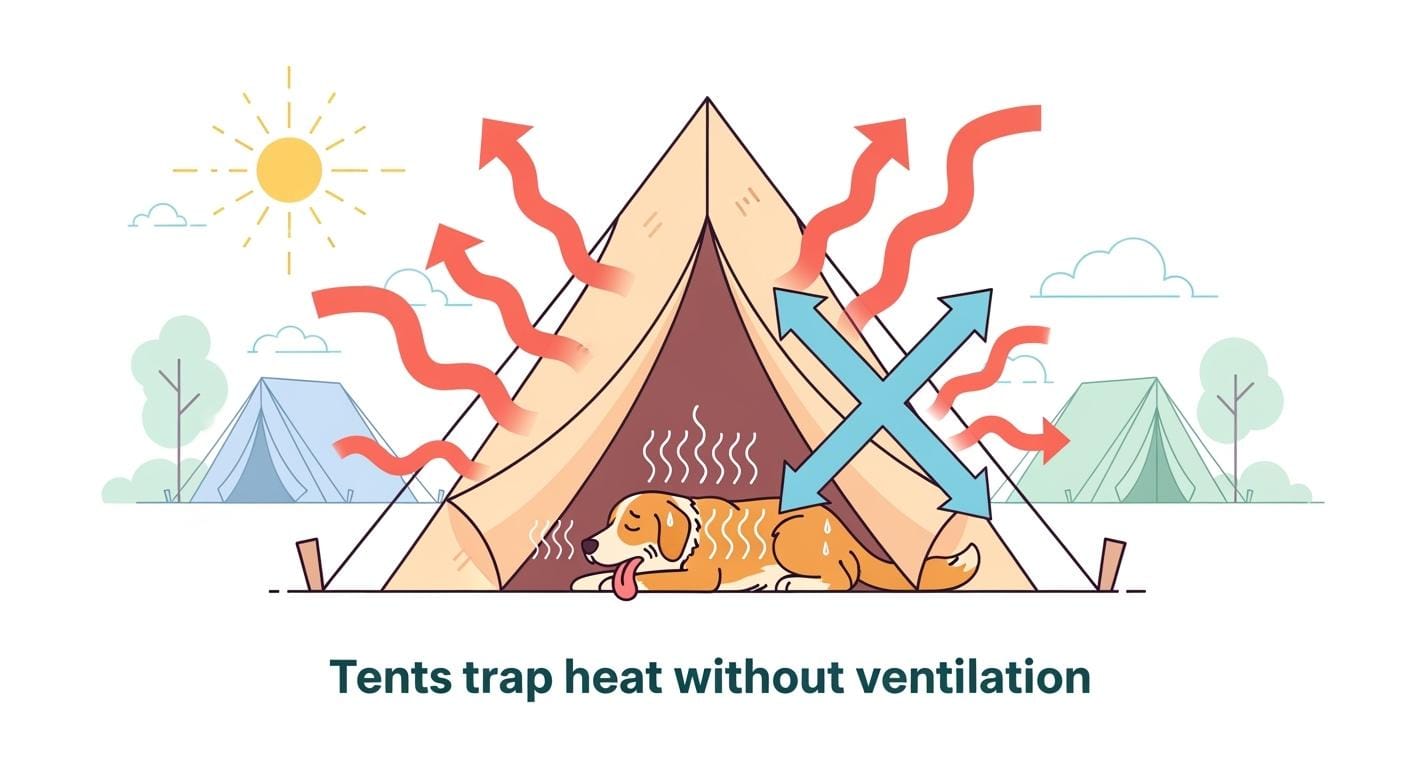
- Vertically aligned mesh panels trap rising warm air with no exit path.
- Mesh openings on opposing walls create cross-ventilation — warm air exits as cooler air enters.
Lifting the Carrier and Handle Stress
Handle placement determines how forces flow through the carrier frame. Handles attached only at the top rim pull upward on the rim while the dog’s weight pulls the base downward. This creates a shear force across the side panels. If the panels lack rigidity, they buckle. The mesh — attached to those buckling panels — folds inward.
Balanced handle placement changes the force path. When handles attach to reinforced points that distribute load into a rigid base, the upward pull does not distort the side walls. The carrier lifts as a unit. The mesh stays flat. This is particularly relevant for urban carrying scenarios — subway stairs, narrow doorways, lifting the carrier into a car — where single-handle grabs and angled lifts are unavoidable.
| Failure Point | Description |
|---|---|
| Mesh Panel and Frame Integration | Weak edge binding allows mesh to peel from the frame, creating gaps that compromise containment and airflow. |
| Zipper Misalignment | When mesh is not tensioned evenly into the frame, zippers sit at uneven angles and jam or separate under load. |
| Structural Gaps | Unsecured mesh edges create openings at the seam line — large enough for a paw to wedge through but hard to spot in a quick visual check. |
A larger mesh area does not automatically mean better ventilation. If the frame cannot hold that area open during movement, the extra mesh is just more fabric to collapse. The design question is not “how much mesh” but “does the structure keep the mesh where it belongs when forces hit it.”
Bending or Flexing Bottom Boards
The bottom board is the single most influential component for mesh ventilation. A flexible base allows the carrier floor to bow under the dog’s weight. That bowing pulls the lower edges of the side walls inward, which tilts the panels, which collapses the mesh. Every mesh window on the carrier can fail because of one weak panel at the bottom.
A rigid bottom board resists this. It keeps the base flat, the side walls vertical, and the mesh openings aligned with the frame. When you lift the carrier at an angle — as happens every time you carry it to the car or up stairs — the rigid base prevents the shape from distorting. The mesh stays where it was designed to be.
This is also why checking carrier fit and structure before daily use matters: a bottom board that passes a static inspection can still flex under dynamic load. The test is simple — load the carrier to your dog’s weight, lift it, and watch the side walls.
Note: A stable bottom board also keeps the dog visible through the mesh. Visibility helps dogs stay calmer during travel — they can see their surroundings rather than staring at collapsed fabric.
| Failure Signal | Likely Cause | Better Design Direction |
|---|---|---|
| Mesh presses against dog | Bending bottom board | Rigid, flat base panel |
| Side panels collapse inward | Weak bottom structure | Semi-rigid side walls |
| Mesh opening folds when lifted | Poor frame integration | Reinforced mesh edge binding |
| Reduced airflow and visibility | Flexible carrier materials | Stable, shape-holding construction |
What Keeps Mesh Ventilation Open When the Carrier Moves

Three structural features work together to keep mesh ventilation effective in a dog tote carrier. None of them works in isolation — a rigid bottom board with soft side walls still collapses, and reinforced edges on a carrier with a flexing base still fold.
Reinforced Mesh Edges
The edge binding is where mesh meets frame. On a basic carrier, the mesh is sewn directly to fabric with a single stitch line. Under side pressure — a dog leaning, the carrier resting against a car seat — that stitch line becomes a pivot point. The mesh folds along the stitch and the panel collapses.
Reinforced edges change the failure mode. A wider binding, often with an internal stiffener strip, distributes the load along the edge rather than concentrating it at the stitch line. The mesh resists folding because the binding itself has bending resistance. Tear-resistant mesh materials add a second layer of protection: if the dog scratches at the panel, the weave resists hole propagation rather than running a tear from a single broken strand. Carriers built this way keep the ventilation area open and secure — relevant both for daily errands and for the structural demands described in tote bag support and one-hand access scenarios.
Tip: Reinforced edge binding and tear-resistant mesh material address two different failure modes — folding under pressure and tearing under abrasion. A carrier needs both, not one or the other.
| Design Feature | Why It Matters |
|---|---|
| Tear-Resistant Mesh | Rubberized or ripstop weave prevents a single broken strand from propagating into a full tear — particularly important for dogs that paw at enclosure panels. |
| Multi-Side Ventilation | Mesh panels on three or more sides create cross-ventilation paths; warm air exits through one opening as cooler air enters through another. |
| Locking Zippers | Zipper sliders that lock in position prevent the dog from nosing the zipper open from inside — a known escape vector on tote carriers. |
Semi-Rigid Side Walls
Side wall rigidity determines whether mesh panels stay flat or fold inward. A fully soft panel offers zero bending resistance — the mesh collapses the moment any lateral force hits it. A fully rigid panel would keep the mesh perfectly flat but adds weight and bulk, making the carrier harder to store and carry.
Semi-rigid construction splits the difference. A thin stiffener layer — typically a dense foam or flexible plastic sheet — is sandwiched inside the fabric panel. It provides enough bending resistance to keep the wall vertical under a leaning dog but remains flexible enough that the carrier can be stored flat. From a manufacturing standpoint, this approach is more consistent in production than relying on fabric tension alone: the stiffener’s bending resistance is a material property, not a sewing tolerance. Two carriers built with the same semi-rigid panel spec will perform more alike than two carriers that depend on stitch tension to hold wall shape. When choosing a handheld carrier — whether a single-shoulder tote or a two-handle design — the side wall construction is what determines whether the mesh openings function during actual use.
| Feature | Description |
|---|---|
| Ventilation Design | Mesh panels, perforated side inserts, or adjustable vent flaps positioned to create cross-ventilation rather than single-side airflow — single-side mesh can trap heat even when technically open. |
| Structural Integrity | Materials and hardware chosen to maintain panel geometry under dynamic load — stiff enough to resist collapse, flexible enough for storage and carry comfort. |
Stable Bottom Board
A rigid bottom board is the foundation of the entire ventilation system. When it flexes, the side walls pull inward. The mesh folds. Airflow stops. This single component can defeat every other design feature on the carrier.
The bottom board should be a removable, rigid panel — typically plywood, dense plastic, or a composite board — that runs edge-to-edge. A board that stops short of the side walls leaves a flex zone at the perimeter where the fabric can buckle. Double-stitched stress points where the board pocket attaches to the side walls prevent the seam from pulling apart under the dog’s weight. These details matter more at the high end of the carrier’s weight range: a board that holds shape under a 10-pound dog can still buckle under a 20-pound dog if the material was spec’d too close to the lower limit.
- Edge-to-edge rigid panel prevents perimeter buckling.
- Double-stitched attachment points resist seam failure under load.
- Removable board allows machine washing without compromising structure.
Together, reinforced edges, semi-rigid walls, and a stable bottom board form a connected system. Break one link and the mesh ventilation fails — not because the mesh is inadequate, but because the frame stopped doing its job. Sizing plays a role here too, since a carrier that is too snug forces the dog against the walls constantly, amplifying every force the structure must resist. The principles overlap with those covered in sling carrier sizing and material checks — excess compression from undersizing accelerates every failure mode described above.
Supported Opening Shape
A mesh window that collapses along its top edge loses most of its ventilation area even if the lower portion stays open. The opening shape must be supported on all four sides — top, bottom, and both vertical edges — to resist deformation from multiple directions.
Carriers that use a continuous frame or structured binding around the entire mesh perimeter keep the opening rectangular under load. Those that leave the top edge unsupported, relying only on fabric tension, sag open at the top within the first few lifts. The dog’s field of view shrinks. Warm air pools at the top of the carrier with no exit path.
Mesh Panels Positioned Away from Pressure Points
Where mesh sits on the carrier body is as important as how it is built. Mesh placed low on a side wall lines up with the dog’s torso when lying down — the highest-pressure zone in the carrier. The dog’s weight compresses the mesh, closing the weave and blocking airflow. Mesh placed higher on the wall or on the upper portion of the end panels stays clear of the body in a resting position.
This positioning logic matters most for carriers used by small dogs that lean out or shift position frequently. A dog that moves from sitting to lying down changes the pressure map inside the carrier. Mesh that was clear during one position can become compressed in the next. The design response is to place mesh where body contact is least likely across the full range of positions the dog takes during a trip — not just the one shown in the product photo.
- Upper-wall mesh stays clear of the dog’s torso in a lying position.
- End-panel mesh avoids compression from the dog’s shoulders and hips.
- Opposing panels create cross-flow rather than single-side ventilation.
When Mesh Panel Design Matters Most — and When It Does Not
The design features described above are not equally important in every situation. Their value scales with trip duration, dog activity level, and ambient temperature.
For a five-minute walk from the car to the vet, a carrier with soft walls and a flexing base may function adequately — the dog is in and out before heat builds up or the structure fatigues. But the same carrier used for a 45-minute errand run on a warm day is a different proposition. Heat accumulates. The dog shifts positions repeatedly. Each movement tests the frame. If the side walls have already started to soften from the dog’s body heat — some foam stiffeners lose rigidity when warm — the mesh collapses further with every shift.
Carriers with mesh on multiple sides and a rigid structure maintain ventilation across longer trips because the heat escape path does not depend on a single panel staying open. Cross-ventilation works even if the dog leans against one wall. The opposite wall continues to pass air.
For brachycephalic breeds — French bulldogs, pugs, Boston terriers — the margin is narrower. These dogs generate more heat per breath and cool less efficiently through panting. Mesh ventilation that would be adequate for a longer-snouted breed under the same conditions can fall short. The carrier that works for a 15-minute trip with a Labrador may not work for a 15-minute trip with a bulldog. This is not a material failure. It is a mismatch between the design’s ventilation capacity and the dog’s cooling needs.
Disclaimer: The ventilation checks described here — watching for mesh collapse, checking panel tautness after a carry — assume a smooth-coated dog where fabric contact is visible and airflow restriction is easy to spot through panting behavior. Double-coated breeds may show subtler signs of heat stress that need hand-checking (feeling inside the carrier for temperature buildup) rather than visual mesh inspection alone. If your dog has a respiratory condition or belongs to a brachycephalic breed, run these checks in a cool environment first before relying on mesh ventilation in warm conditions.
FAQ
How do you keep mesh ventilation open in a dog tote carrier?
The mesh stays open when the carrier frame resists deformation. A rigid bottom board prevents the floor from bowing under the dog’s weight, which would pull the side walls inward and collapse the mesh. Semi-rigid side walls resist bending when the dog leans. Reinforced edge binding distributes force along the mesh perimeter rather than concentrating it at the stitch line.
Why does the mesh collapse when I lift the carrier?
Lifting creates a force path from the handles through the side panels to the base. If the bottom board flexes under the dog’s weight during the lift, the side walls bow inward and the mesh folds. A rigid base and handles attached to reinforced frame points prevent this distortion by keeping the carrier rectangular during movement.
What makes mesh ventilation effective for longer trips?
Cross-ventilation — mesh panels on opposing walls — allows air to enter through one side and exit through the other. Single-side mesh traps warm air inside even when technically open. Semi-rigid panels keep these ventilation paths clear regardless of the dog’s position. A removable, machine-washable bottom board also helps since carriers accumulate odor and moisture on longer outings.
Does more mesh area mean better ventilation?
Not necessarily. A carrier with mesh on three sides can have zero working ventilation if the bottom board flexes and all three panels collapse simultaneously. The limiting factor is structural integrity, not mesh surface area. Test the carrier loaded: lift it, set it down, check whether the mesh panels are still flat.
How do you clean a dog carrier with mesh panels?
Remove the bottom board and any stiffener inserts before washing. Machine-wash the fabric shell on a gentle cycle with cold water. Air-dry rather than machine-dry — heat can delaminate edge binding and warp semi-rigid panels. Spot-clean mesh panels between washes with a damp cloth to prevent dirt from abrading the weave.