

A dog sling carrier looks like a simple solution for short errands, but heat buildup can turn it into a risk within minutes. The core problem is that three factors work together: body heat transfers directly from the wearer to the dog, the pouch fabric wraps around the dog and traps warmth, and deep pouch walls block airflow. A dog that starts panting, shifting, or pushing against the opening after only a few minutes is signaling that the carrier has already become too warm.
What makes the difference between a carrier that stays tolerable and one that forces a stop is not brand reputation or price. It is how the pouch is shaped, what the lining is made of, and whether ventilation openings are positioned where they actually move air across the dog’s chest and belly. The failure signals are observable and consistent across most designs, and they appear in the same order every time.
| Failure Sign | Likely Design Cause | Better Product Detail |
|---|---|---|
| Panting, shifting within minutes | Deep pouch with thick or plush fabric | Shallow pouch with mesh panels on sides and bottom |
| Refuses to settle, pushes at opening | Narrow opening and poor cross-ventilation | Wide opening, ventilated sides for airflow through the carrier |
| Feels warm to the touch after a short carry | Fleece, plush, or non-breathable lining | Lightweight cotton, linen, or mesh lining |
| Slumps or curls into a ball | Weak or unstructured bottom panel | Stable, flat lower panel that supports posture |
Where Heat Builds Up First
Body Contact and Fabric Trapping
The fastest source of heat in a dog carrier sling is the wearer’s own body. When a dog is carried against the chest or hip, body warmth transfers directly through the pouch fabric. Soft fabric naturally folds around the dog on both sides, and if the lining is thick or plush, that warmth has nowhere to go. The dog’s chest and belly press against the inner wall, and without air moving through, the interior temperature rises quickly. This is not a slow, gradual process. On warm days or inside heated spaces, the transition from comfortable to too hot can happen in under ten minutes.
Short carries through urban environments add another layer of heat load because the wearer is often moving through sun-exposed streets, standing near warm pavement, or walking through spaces with limited shade. Warmer outdoor conditions compound what is already a thermally tight enclosure, leaving the dog with no path to shed excess heat. This is one reason why a sling that feels manageable indoors can become uncomfortably warm once outside.
Pouch Depth and Airflow Restriction
Deep pouch designs limit ventilation regardless of what the fabric is made of. When the sides rise high around the dog, air cannot move freely across the chest and belly, which are the two largest heat-exchange surfaces. A narrow opening compounds the problem by restricting the only path for warm air to escape. Even a carrier labeled as breathable may trap heat if the pouch depth buries the dog in fabric and the opening does not allow cross-ventilation.
For short-errand use where stopping to remove the dog is inconvenient, a shallow pouch with mesh panels becomes more important than extra cushioning or decorative fabric coverage. The goal is not minimal material but material placed where it does not block the dog’s primary cooling surfaces.
Why the Bottom Panel Affects Temperature
A weak or unstructured bottom panel lets the dog slump or curl, which reduces the air space inside the carrier and increases skin-to-fabric contact. Less air space means less convective cooling, and more contact area means more conductive heat transfer from the wearer. A stable, flat lower panel keeps the dog in a neutral posture, maintains internal air volume, and helps the dog tolerate longer carries. Bottom support is usually discussed in terms of spine health, but its effect on thermal comfort is equally real.
What Design Details Make Cooling Worse or Better
Materials That Hold Heat vs. Materials That Release It
Fabric choice is the most direct lever for controlling heat buildup. Fleece and plush linings trap warmth close to the dog’s body and release it slowly. They may feel soft at first touch, but in a close-carry situation, softness turns into a thermal liability quickly. Mesh, lightweight cotton, and linen allow air to move through the fabric itself, not just around the edges. In warm conditions, even a partial-mesh design outperforms a fully padded carrier made from dense woven fabric. A carrier that uses mesh on the sides and a lightweight lining for the contact surfaces balances breathability with comfort without creating a heat-trapping shell around the dog.
- Materials that trap heat: Fleece, plush, thick quilted polyester, dense non-woven linings
- Materials that release heat: Mesh, lightweight cotton, linen, thin woven nylon with ventilation perforations
Opening Width and Cross-Ventilation
A wide opening does more than make it easier to place the dog inside. It creates an exit path for warm air and allows the dog to adjust its head position to regulate its own temperature. Narrow openings force the dog’s head into a fixed position and block the chimney effect that would otherwise draw cooler air in from below and release warmer air from above. In many designs, the opening is the only meaningful ventilation path, which means its size and shape directly set the thermal ceiling of the carrier. The ideal configuration is a wide top opening combined with mesh side panels that enable airflow regardless of the dog’s position inside the pouch.
Strap Adjustability and Compression
Adjustable straps let the wearer keep the dog close without compressing the chest. Compression reduces internal air volume, increases body-to-fabric pressure, and limits the dog’s ability to shift into a cooler position. A strap system that allows small adjustments without loosening the entire carrier helps maintain stability while preserving enough internal space for air to circulate. When combined with a breathable lining and mesh panels, a well-adjusted strap system extends the safe carry window in warmer conditions.
When a Sling Carrier Is the Wrong Tool
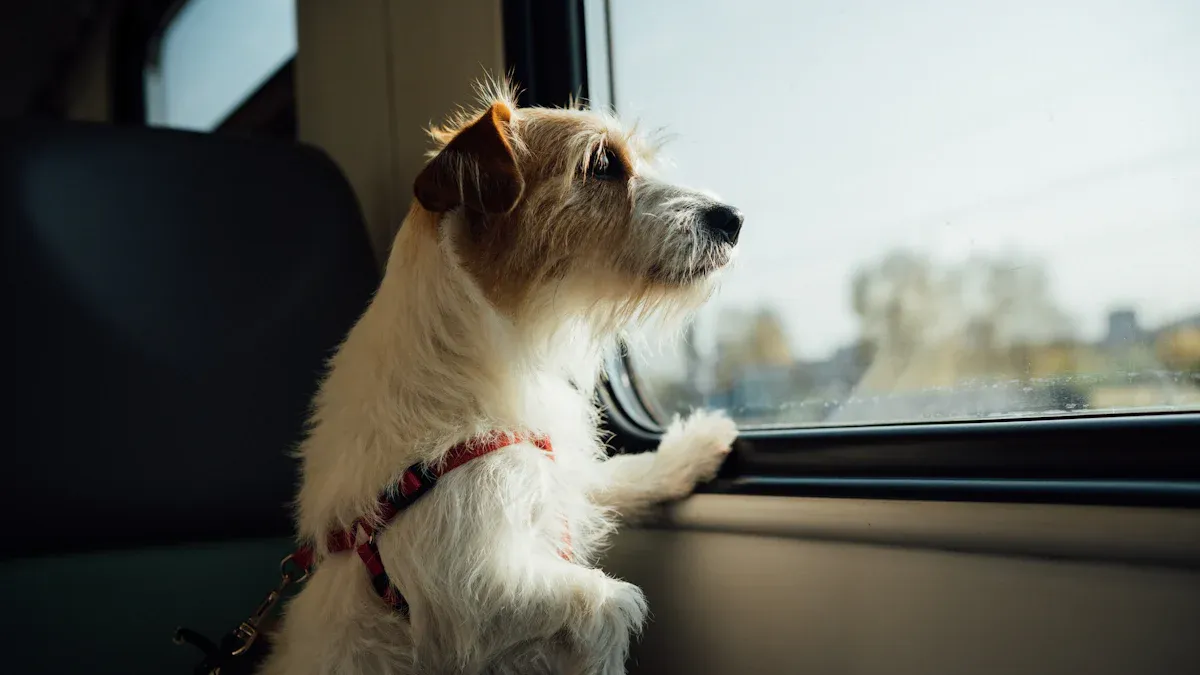
A dog sling carrier is designed for close-body, hands-free carrying over short distances and brief periods. It is not a general-purpose carrier, and pushing it beyond its thermal limits leads to predictable failure. Flat-faced breeds, older dogs, and dogs with existing respiratory or cardiac conditions carry elevated risk because their ability to regulate body temperature through panting is already compromised. For these dogs, even a well-ventilated sling may become unsafe faster than expected.
Very hot weather overrides most design improvements. When ambient temperature is high, no amount of mesh can overcome the combined heat load from the environment and the wearer’s body. In those conditions, a sling carrier is usually the wrong choice regardless of how well it is designed. Switching to a carrier that does not rely on close body contact can reduce risk. For longer outdoor walks or hiking, a backpack-style carrier may provide better ventilation and weight distribution, though its real-world comfort still depends on fit, stability, and how well the load is managed during movement.
Decision rule: If the dog cannot be removed immediately when panting or shifting starts, the carrier design is insufficient for the conditions. Do not rely on cooling accessories to compensate for a carrier that traps heat at the design level.
Cooling Accessories and Hydration: What Helps and What Does Not
Cooling accessories can extend the usable window of a sling carrier, but they do not fix a thermally flawed design. Their effectiveness depends on matching the accessory type to the situation and understanding the limits of each method.
| Cooling Accessory | Best Use | Main Limitation |
|---|---|---|
| Cooling Vests | Active use: walks, outdoor events | Evaporative cooling weakens in high humidity; vest adds bulk inside the carrier |
| Cooling Mats | Resting: home, car, campsite | Not practical inside a sling; useful between carries, not during them |
| Combined Use | Hot days with breaks between carries | Requires planning; accessories alone cannot offset a poorly ventilated carrier |
Evaporation-based cooling vests can lower surface temperature by a measurable amount in dry, breezy conditions. In humid conditions, the evaporation rate drops and the vest may act as an insulator, so checking the dog frequently remains essential. Offering water before and after using the carrier helps with thermoregulation, but it does not reduce the temperature inside the pouch during the carry itself. Shade breaks between carries are more effective at resetting the dog’s thermal state than offering water mid-carry.
Product review point: A carrier with built-in ventilation reduces reliance on external cooling accessories. The more the carrier design handles airflow on its own, the less the user needs to manage temperature through extra products and careful timing.
Product Details to Check Before Choosing a Sling Carrier for Warm-Weather Use
Going into a purchase decision, there are four design areas that determine whether a dog sling carrier will stay tolerable in warm conditions or become a heat trap. These are not features to glance at in a product photo. They are structural decisions that affect how the carrier performs in real use.
Ventilation placement. Mesh panels positioned only on the outer-facing side provide limited benefit because the dog’s heat-exchange surfaces are the chest and belly, which face inward toward the wearer. Dual-side mesh or mesh that wraps from the outer panel to the inner contact panel creates cross-ventilation. Bottom-panel mesh helps when the dog stands or shifts, but it contributes less when the dog is fully settled.
Lining material and thickness. The lining is in constant contact with the dog. A thick, plush lining may look comfortable in product images but creates a thermal barrier that holds heat against the dog’s skin. Lightweight, low-pile materials release heat faster and dry more quickly if the dog drools or pants heavily.
Pouch depth relative to dog size. A pouch that rises above the dog’s shoulder level restricts head movement and blocks heat from escaping upward. A shallower pouch that ends near the dog’s mid-chest preserves head mobility and leaves the opening unobstructed for warm air to exit.
Bottom panel stability. A rigid or reinforced bottom panel keeps the dog’s spine aligned and maintains internal air volume. A soft, unstructured floor lets the dog curl and reduces the air gap, which accelerates heat transfer from the wearer. Bottom panel design directly affects how long a dog tolerates the carrier before showing distress.
A dog sling carrier can work for short warm-weather carries when the design prioritizes ventilation, a shallow pouch profile, breathable lining, and stable bottom support. Dogs that start panting, shifting, or refusing to settle within the first few minutes are signaling that the carrier is thermally failing, and the correct response is to remove the dog and recheck the fit and conditions before continuing. Walk during cooler hours, carry water for breaks, and do not ignore the first signs of overheating.
FAQ
How long is safe to carry a dog in a sling during warm weather?
Start with 10 to 15 minutes and check the dog at the halfway point. If the ambient temperature is above roughly 75°F (24°C), cut that window in half. A dog that pants, shifts, or feels warm to the touch before the planned interval ends should be removed immediately regardless of the timer. There is no universal safe duration because thermal load depends on ambient temperature, humidity, the dog’s size and coat, and the specific carrier design.
What is the difference between a dog refusing the carrier and a dog overheating in it?
A dog that refuses the carrier consistently from the start is reacting to confinement, pressure, or a previous bad experience. A dog that accepts the carrier initially and then starts panting, shifting, pushing at the opening, or slumping after several minutes is reacting to heat buildup. Time of onset is the key signal: refusal at entry is a fit or comfort problem; distress that builds during the carry is a thermal problem.
Can mesh panels alone keep a sling carrier cool enough?
Mesh panels help, but they are not sufficient by themselves if the pouch is deep, the opening is narrow, or the lining is thick. Mesh solves the airflow problem. It does not solve the body-contact heat transfer problem or the compression problem. A carrier needs mesh plus a shallow profile, a wide opening, and a thin lining to stay tolerable in warm conditions.
Is a backpack carrier always cooler than a sling carrier?
A backpack carrier usually positions the dog farther from the wearer’s body core, which can reduce direct heat transfer. However, some backpack carriers use thick padding, small ventilation windows, and enclosed designs that create similar thermal problems. Fit and stability during active use also shift the comfort equation. The decision between the two styles should be based on use context rather than assuming one is always cooler.
When should a sling carrier be avoided entirely?
Avoid the sling in direct sun during hot weather, for any carry expected to last longer than 20 minutes without a break, and for dogs with known respiratory issues or poor heat tolerance. If the dog has previously shown signs of overheating in a carrier, switching to a more ventilated design may help, but if the same signs appear across two different carriers, the dog may simply not tolerate close-body carrying in warm conditions at all.






