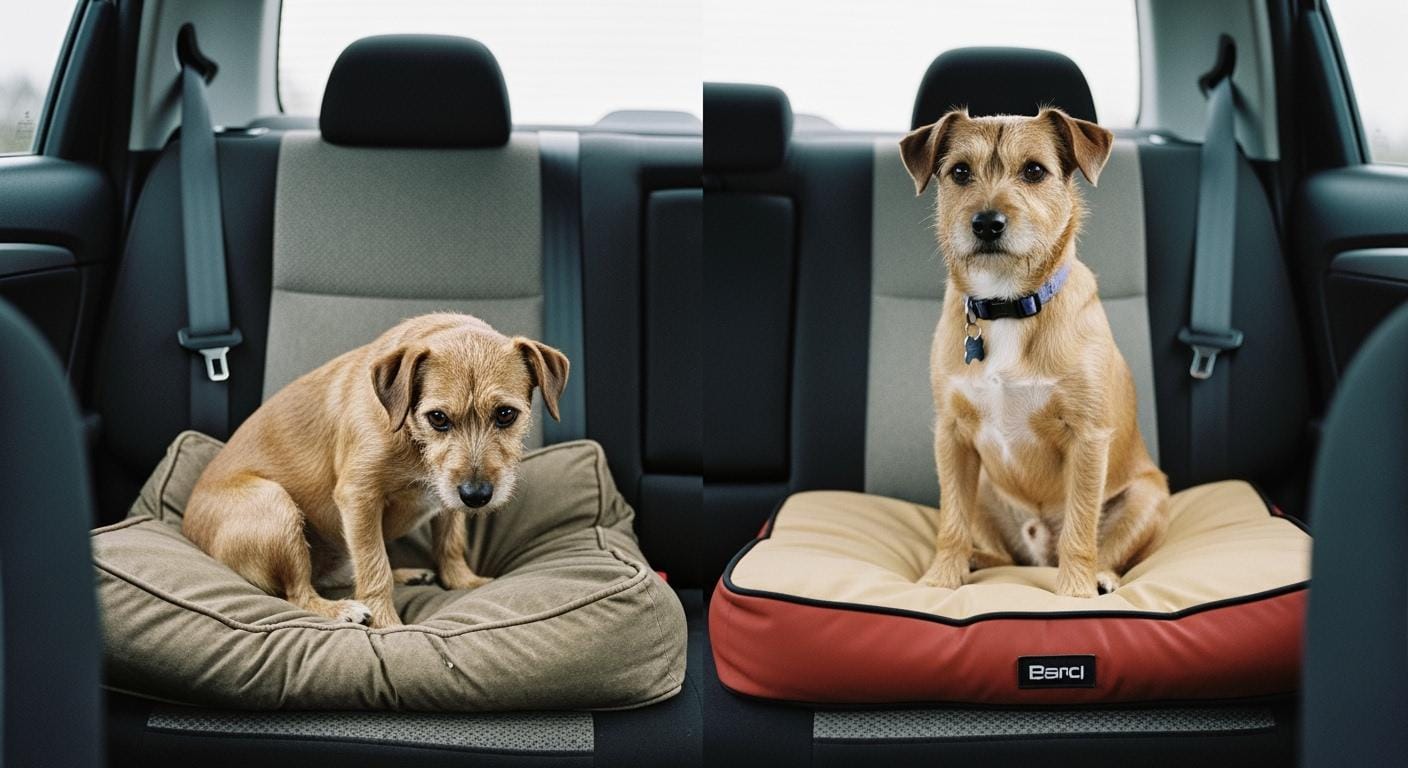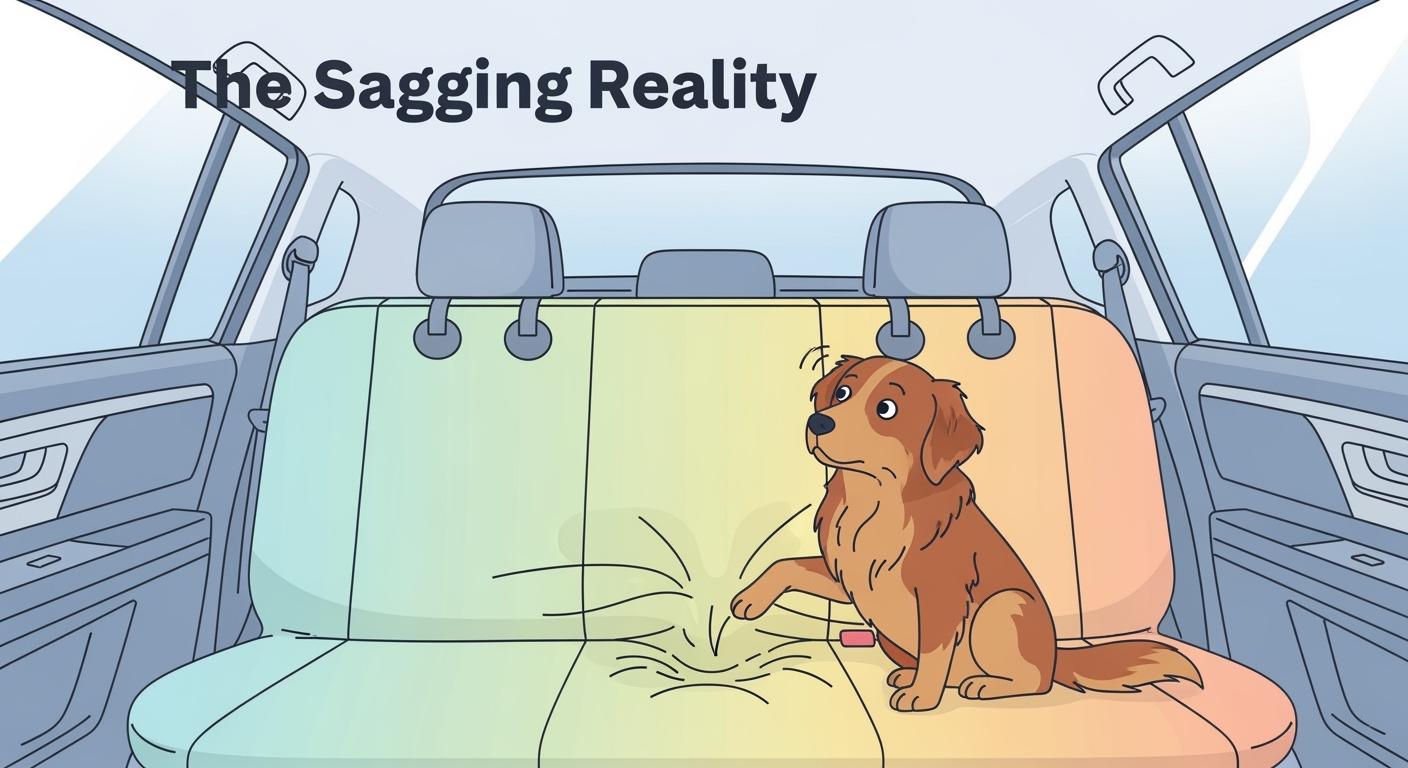
A dog back seat cover with a hard bottom panel can look flat and sturdy when it is first placed across the rear bench. The problem appears once a dog steps onto it. Fold seams — the lines where rigid panels connect for storage and shipping — often dip or flex under paw pressure. The board itself may stay intact, but the hinge points between panels can create an unsteady surface that makes dogs reposition, brace, or refuse to settle. The failure is not the hard bottom. The failure is what happens at the seams that join the panels together.
This matters because a cover that shifts at the seams does two things at once: it reduces the stable surface area a dog can use, and it concentrates stress onto narrow fold lines where stitching and board material are already at their weakest. A cover selected without checking panel joint construction may hold up for light, short trips but degrade quickly under a heavier dog or daily use.
Where a Hard-Bottom Seat Cover Usually Fails
The Illusion of Flatness When the Cover Is Empty
A hard-bottom cover placed across a back seat looks even and supportive before a dog enters the vehicle. The multi-panel board lies flush, and the fabric surface appears taut. This static flatness creates an expectation of stability that does not survive the first time a dog steps onto the platform.
Once loaded, the fold seams between panels become flex points. Smooth vehicle upholstery provides little friction to hold the cover in place, so the base can shift slightly with each movement. The hard panels themselves resist bending, but the seams connecting them do not. The result is a surface that dips at predictable lines — exactly where a dog is most likely to place a paw when turning, bracing, or repositioning.
How Paw Pressure and Movement Expose Weak Seams
Dogs do not distribute weight evenly across a seat cover. Paw pressure concentrates in small areas, often landing directly on or near a fold seam. When a dog shifts to look out a window, braces during a turn, or readjusts to lie down, the force lands on these narrow hinge zones repeatedly.
Repeated stress at the same seam locations strains stitching, loosens fabric tension, and can cause thin board edges to deform. If the cover also shifts on the seat, the fabric can bunch near the seams, creating an uneven surface. Hair, dirt, and moisture collect in these bunched areas, accelerating fabric wear and making cleaning more difficult. A cover that bunches at the seams loses both its protective function and the stable platform a dog needs.
Why Panel Joints Matter More Than the Board
The hard bottom panel receives most of the attention in product descriptions, but panel joints determine whether the cover functions as a single stable platform or as a series of connected boards that flex independently. Weak stitching at the joints allows panels to separate under load. Thin hinge material bends under concentrated pressure. Fabric that is not pulled tight across the joint creates slack that worsens with movement.
What keeps a cover usable over time is not the thickness of the board alone but the combination of reinforced panel joints, secure edge contact against the seat, and a non-slip base that prevents the entire cover from drifting. When these three elements work together, the seams stay flatter under load. When any one of them is weak, the seams become the first point of failure. For in-car protection that holds up across regular use, the construction details at the joints matter more than the panel material by itself.
Tip: After folding or cleaning the cover, check whether the seams return to a flat position or stay bent. A cover whose seams stay raised or curled after unfolding signals weak hinge construction that will worsen under repeated paw pressure.
| Pass Sign | Fail Sign |
|---|---|
| Seam stays flat after loading | Seam dips under paw pressure |
| Edge contact remains tight against seat | Edge lifts or shifts during movement |
| Top surface provides traction | Surface is slippery under paw |
| Buckle access stays clear | Fabric bunches around buckle openings |
| Seams return to flat after folding | Seams stay bent or curled |
Why Panel Joints and Seam Construction Cause the Failure
Multi-Panel Folds and Soft Hinge Zones
Most hard-bottom seat covers use multiple rigid panels connected by fabric or stitching to allow folding for packaging and storage. These fold lines function as hinges — they are designed to bend. The problem is that the same flexibility that makes shipping practical also creates a permanent weak point in the loaded cover.
When a dog steps near a hinge zone, the panels on either side can angle downward slightly while the hinge itself offers minimal resistance. The board material resists bending; the seam does not. This creates a small but noticeable dip at every fold line, and the effect compounds with a heavier dog or a longer trip where the dog moves through multiple positions.
Weak Stitching, Thin Board Material, and Loose Fabric Tension
The durability of a cover at its seams depends on three construction variables: stitch density and thread strength at the panel joints, the thickness and rigidity of the board material, and the tautness of the outer fabric across the board surface.
Low stitch density at the seams allows panel edges to pull apart under repeated load. Thin board material — common in covers built to a lower weight or price point — flexes more at the edges where panels meet. Loose fabric tension creates slack that shifts under a dog’s weight, concentrating abrasion at the seam lines. Together, these three weaknesses produce a cover that sags at the folds, traps debris along the seams, and loses water resistance at the points most exposed to moisture. A cover built with reinforced stitching, adequate board thickness, and tight fabric tension resists these failure modes longer.
Uneven Seat Contours and Real Dog Movement
Vehicle rear seats are rarely flat. Contours, bolsters, and seat-belt anchor points create an uneven base that affects how a hard-bottom cover sits. A cover that bridges a seat contour gap has less support under the center span, which increases flex at the fold lines when a dog’s weight lands there.
Real dog movement compounds this. Dogs turn in place, brace paws against the seat back during braking, shift from sitting to lying down, and may jump into the vehicle at an angle that lands force directly on a seam line. A structured base distributes weight across more of the seat surface, reducing the center dip and keeping the cover from drifting during repositioning. A cover that stays anchored during sudden stops and sharp turns reduces the repeated stress cycles that accelerate seam failure.
| Feature | Hard-Bottom Covers | Fabric-Only Covers |
|---|---|---|
| Load Distribution | Structured base carries and spreads load | Depends entirely on fabric tension |
| Strain on Seams | Reduced — board absorbs primary load | Higher — all force transfers through fabric |
| Usable Life | Longer when seams are reinforced | Shorter under equivalent load |
- A structured base helps spread a dog’s weight across the seat bench rather than concentrating it at the center span.
- This reduces center dip and limits cover drift during a dog’s repositioning.
- Sudden stops and real-world dog movement add stress cycles that a structured base handles more evenly than fabric tension alone.
Why Static Flatness Does Not Predict Durability
A hard-bottom cover that looks flat when first placed in the vehicle has passed only the easiest test. Static flatness shows that the board panels are intact and the fabric is not obviously wrinkled. It reveals nothing about how the seams will behave under load.
What determines whether a cover stays functional over months of use is not how it looks empty but how the panel joints, stitch tension, and board edges hold up under repeated paw pressure and movement. A seam that looks flat at rest can flex two or three millimeters under a medium-to-large dog pressing into a turn — enough to create the sensation of instability that makes a dog reluctant to settle.
The more useful evaluation checks panel thickness at the joint lines, the amount of overlap between connected panels, and whether the stitched sleeves that hold the panels maintain tension after repeated folding. Non-slip backing and textured top surfaces contribute to stability, but the core question is whether the seams resist bending under dynamic load, not whether the cover looks flat when the vehicle is parked.
Note: Static flatness is a starting point, not a durability indicator. The cover’s ability to stay flat while a dog moves, turns, and braces determines whether the platform remains usable over time.
- The cover should remain flat after a dog changes position — sitting to lying, facing forward to turning sideways.
- Panel joints should not dip under concentrated paw pressure near the seam.
- Edge contact against the seat should stay secure without lifting during movement.
- The top surface should provide enough texture for a dog to grip without sliding.
- Cover dimensions should match the vehicle seat and the dog’s size so the seams land on supported areas, not across gaps.
When a Hard-Bottom Cover Works — and When It Does Not
Scenarios Where a Hard-Bottom Cover Is the Better Choice
A hard-bottom cover makes the most sense when a dog needs a predictable, non-sinking surface. Larger breeds and heavier dogs benefit most, because their weight is enough to deform fabric-only covers and cause sagging across the entire platform. The structured base resists this by distributing load through rigid panels rather than relying on fabric tension alone.
Longer trips also favor a hard-bottom design. On a drive lasting more than an hour, a dog will shift through multiple positions — sitting up, lying flat, turning to look out a side window. Each position change stresses the cover differently. A structured platform maintains a more consistent surface through these shifts than a fabric-only cover that can bunch or stretch under repeated repositioning.
Senior dogs or dogs with joint sensitivity may also benefit from a hard-bottom platform that does not sink or slope under their weight. The stable surface reduces the small balance corrections that a softer cover demands with every movement.
When a Hard-Bottom Cover May Not Be the Right Fit
A hard-bottom cover is not automatically the better choice for every situation. For small dogs under roughly 15 pounds, the weight may not be enough to engage the structured base — the board adds bulk and fold lines without providing meaningful load-distribution benefit over a well-tensioned fabric cover. The extra weight of the board can also make installation and removal more cumbersome for frequent removal and reinstallation.
Vehicles with deeply contoured rear seats or pronounced center humps can also work against a hard-bottom design. If the board panels cannot sit flush against the seat surface, the unsupported gaps under the seams become flex points that worsen rather than improve stability. In these cases, a hammock-style or fabric-only cover that conforms to the seat contours may produce a more stable surface than a rigid board bridging uneven gaps.
Covers used only occasionally — once a month or less — may not justify the added weight and storage bulk of a hard-bottom panel. A fabric cover with adequate non-slip backing and edge anchoring can serve light, intermittent use without the seam-failure risks that accumulate under daily loading.
Design Details That Keep the Platform Flatter Under Load
Reinforced Panel Joints and Overlapping Fold Areas
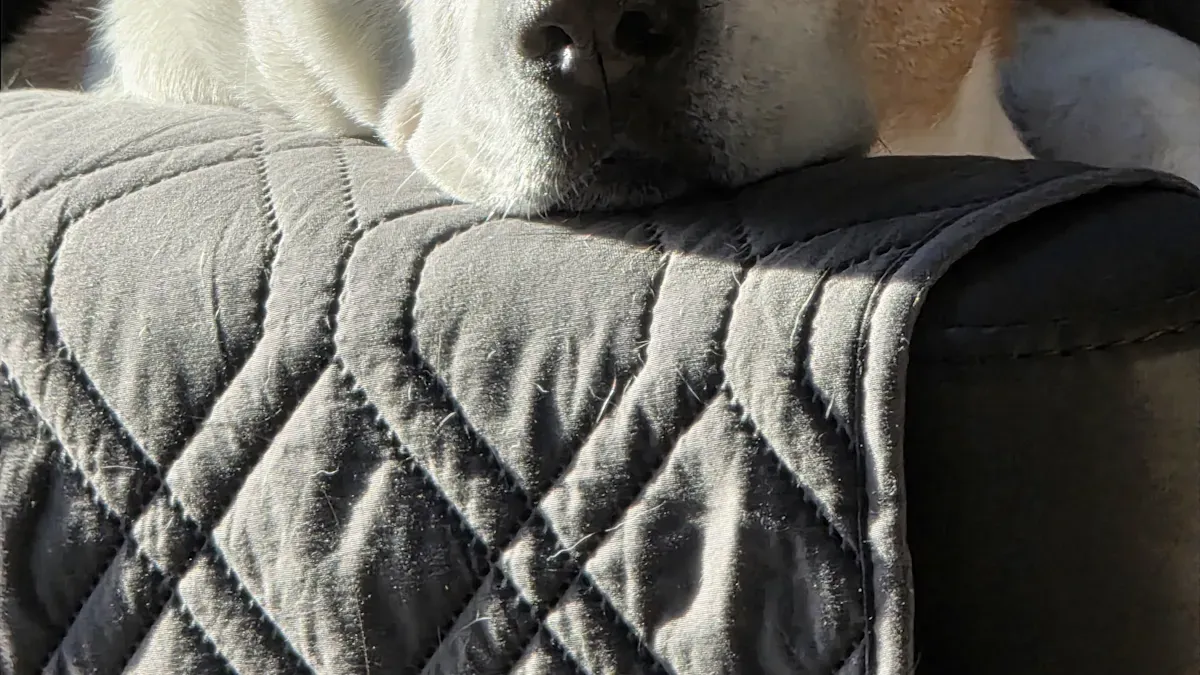
The most direct way to reduce seam flex is to reinforce the panel joints. Overlapping fold areas — where one panel edge extends beyond the connection line and sits beneath or above the adjacent panel — distribute pressure across a wider surface rather than concentrating it on a single stitch line. This overlap also prevents the gap that can form when two panel edges simply meet edge-to-edge under a fabric sleeve.
Reinforced stitching at the joints, using higher stitch density and stronger thread, resists the pulling force that develops when a dog’s weight presses down on one panel while the adjacent panel stays supported by the seat contour. The difference between a cover that stays flat and one that dips at the seams often comes down to whether the joint was designed to handle load or only to hold panels together for shipping.
- A hard-bottom cover with reinforced joints supports larger dogs and longer trips without seam degradation.
- Structured base panels with overlapping edges maintain a flatter surface through repeated position changes.
- Joint stability directly affects whether a dog can settle without constant readjustment.
Strong Edge Contact and Non-Slip Backing
Seam flex is not just about the joints themselves — it is also about whether the entire cover stays in place. When a cover slides on the seat, the fabric pulls at the seams from the edges inward, creating diagonal stress that single stitch lines were never designed to handle. Strong edge contact — where the cover perimeter sits flush and tight against the seat surface — prevents this lateral pulling.
Non-slip backing material on the underside of the cover increases friction against the vehicle seat, reducing the micro-movements that accumulate into full cover shifts. A backing with a textured or rubberized surface holds position better than smooth fabric against smooth upholstery. When the base stays put, the seams experience only vertical load, not the combination of vertical load and lateral shear that causes the fastest seam degradation.
Tip: After a drive with the dog, check whether the cover edges have moved from their original position. Edge drift of more than an inch indicates that the non-slip backing or edge contact is insufficient, and the seams are absorbing lateral stress they were not built to handle.
Textured Top Surface and Restraint Access
A textured top surface gives a dog traction for standing, turning, and repositioning without claws slipping against slick fabric. When a dog can plant a paw and pivot without sliding, less lateral force transfers into the cover, which means less diagonal stress pulls at the seams.
Clean access to seat-belt buckles and harness attachment points matters for function, not just convenience. If the cover bunches around buckle openings or blocks the anchor points where a dog restraint clips in, the restraint may not engage properly. A cover that keeps buckle and anchor access clear allows a harness or seat-belt tether to be used without forcing the cover out of position — which would create new fold lines and stress points.
- A textured surface reduces paw slip, which lowers the lateral force that pulls at panel seams.
- Unobstructed buckle access lets a restraint system function without displacing the cover.
- The cover should block debris from reaching the seat surface while leaving safety anchor points clear.
Fit Boundaries for Vehicle and Dog Size
Fit affects seam stability more directly than most product descriptions acknowledge. A cover that is too narrow leaves panel edges unsupported near the seat bolsters, creating overhang that flexes more under load. A cover that is too wide bunches against the door panels or center console, pushing the seams out of alignment and creating raised ridges that concentrate pressure.
Vehicle seat width, seat depth, and the presence of a center hump or fold-down armrest all change how a hard-bottom cover sits. A cover that matches the bench dimensions sits flatter because the panel edges land on supported areas rather than bridging gaps. The table below shows typical dimension ranges for different cover types:
| Dog Size | Cover Type | Typical Width | Typical Length |
|---|---|---|---|
| Small (under 15 lb) | Front Seat Covers | 20–25 in | — |
| Medium (15–40 lb) | Standard Bench Covers | 54–60 in | — |
| Large (40–80 lb) | Hammock-Style Covers | 54–60 in | 60–64 in |
| All Sizes | Cargo Area Covers | 46–56 in | 60–84 in |
Measuring the vehicle seat width and depth against the listed cover dimensions helps avoid the two most common fit failures: a cover that leaves unsupported panel overhang at the edges, and a cover that bunches because it is too large for the seat. Both conditions place extra stress on the fold seams.
Material and Construction Details That Extend Useful Life
Beyond the panel joints and base grip, the outer material determines how well the cover holds up to scratching, moisture, and repeated cleaning. Durable outer fabrics — heavyweight polyester, Oxford weave, or ripstop-reinforced materials — resist claw penetration and surface abrasion better than lighter woven fabrics. Waterproof or water-resistant coatings keep moisture from reaching the board panels, which can warp or delaminate if they absorb water through unsealed seam lines.
Tight, even stitching along all load-bearing seams — not just the panel joints but also the edge binding and anchor-point reinforcements — prevents the progressive loosening that turns a small seam gap into a large fabric tear over months of use. A cover that can be removed, cleaned, and reinstalled without the seams curling or the board edges deforming is built to a higher construction standard than one that loses its shape after the first wash cycle.
The key material and construction variables are: outer fabric weight and weave density, stitch count at load-bearing seams, board panel thickness and edge finishing, backing grip material and coverage area, and whether the seam construction uses single-stitch or reinforced double-stitch lines. Each of these can be inspected on the product itself or verified through detailed product specifications before choosing a cover for a specific dog and vehicle combination.
FAQ
What causes fold seams to sag on a hard-bottom dog seat cover?
Fold seams sag when paw pressure concentrates on the narrow hinge line between two rigid panels. The board material resists bending, but the fabric and stitching at the seam do not. Weak stitching, thin board edges, or loose fabric tension at the joint make the sag worse. The effect is most noticeable when a dog turns or braces, placing uneven force directly on the seam.
How can panel joint strength be evaluated before buying?
Panel joint strength is visible in the product construction details. Overlapping panel edges rather than edge-to-edge seams, double-stitch lines at the joints, and fabric that stays taut across the panel surface without slack are positive indicators. If product images or specifications show the cover folded, note whether the seams lie flat when unfolded or stay raised — a seam that stays curled after unfolding is likely to dip under load.
Does a hard-bottom cover fit all vehicles?
Hard-bottom covers fit most standard rear bench seats, but vehicle-specific contours affect how the panels sit. Measuring seat width and depth before choosing a cover helps avoid the most common mismatch: a cover whose panels bridge a seat gap or overhang the bolsters. A poor fit concentrates flex at the unsupported seams and reduces the benefit of the structured base.
Does a hard-bottom cover replace a dog restraint?
No. A hard-bottom cover provides a stable surface and protects the seat, but it does not restrain a dog during sudden stops or collisions. A harness, crash-tested carrier, or seat-belt tether is still needed for travel safety. The cover should allow clean access to buckle points and anchor locations so the restraint can be used without displacing the cover.
How can cover shifting and slipping be reduced?
Non-slip backing material on the underside of the cover reduces shifting by increasing friction against the vehicle seat. The cover should also match the seat dimensions closely — excess width creates bunching that pushes the cover out of position. Edge anchors or seat-anchor straps add stability by securing the cover perimeter, which prevents the lateral drift that pulls seams out of alignment.