
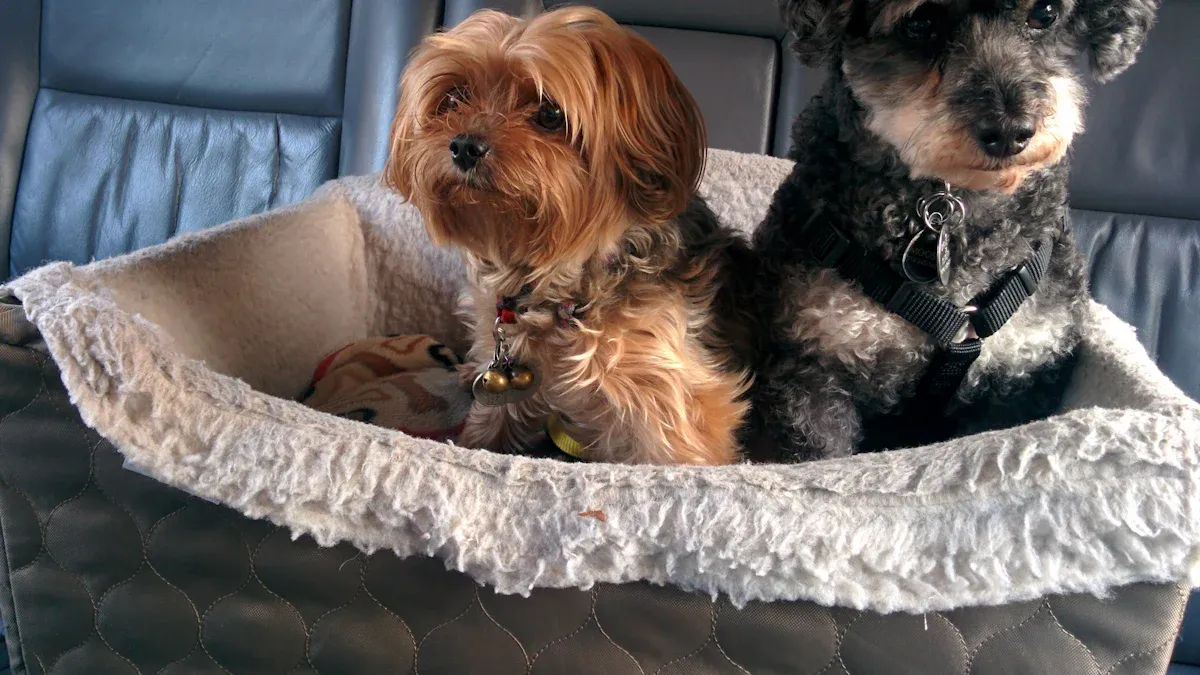
Choosing a large dog bed for car back seat is really a layout decision. Do you give your dog the full bench, or do you keep one seat open for people? The better answer depends on what happens on your actual trips: whether your dog sprawls out or curls up, whether passengers often ride in back, and whether you can still keep restraint access clear without fighting the bed every time.
Key Takeaways
- Choose a full-bench setup when your large dog needs more room to stretch, turn, and settle, and when you rarely need the back seat for passengers.
- Choose a one-seat-open layout when family use, buckle access, or shared rides matter as much as dog comfort.
- Always check bed stability, restraint access, and seat-edge fit. A large bed that bunches, blocks buckles, or overhangs the bench is harder to use well.
Large Dog Bed for Car Back Seat: Full Bench vs One Seat Open
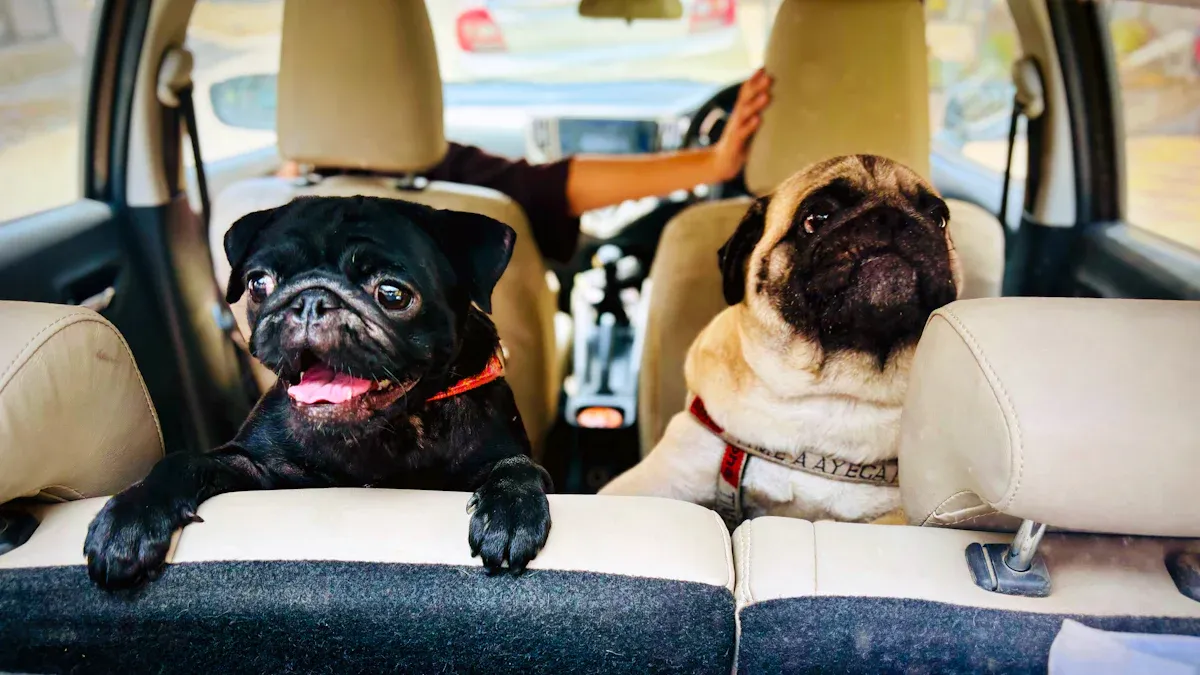
When a full bench works best
You usually want full-bench coverage when the dog is the main back-seat passenger and you do not often need that row for people. A full-width bed gives a large dog more room to settle, change position, and rest without falling into the seat gap or fighting for space at every turn.
A full-bench layout makes more sense when:
- You travel mostly with one large dog and no back-seat passengers.
- Your dog sprawls, turns often, or shifts position during longer drives.
- You want broader seat protection across the whole bench.
- You do not need to expose one buckle position for daily passenger use.
The tradeoff is flexibility. A full-bench bed can take longer to install, remove, or reposition, and it can become frustrating if you regularly switch between dog-only rides and mixed passenger trips.
When to keep one seat open
Sometimes passenger space matters just as much as dog comfort. A one-seat-open layout usually works better when you need to keep part of the back row usable for a child seat, an adult passenger, or quick everyday family use. It also makes more sense when your dog can settle well in a smaller defined zone instead of needing the full bench.
This setup usually works better when:
- You often drive with both dog and passengers.
- You need easier access to one or more buckle points.
- Your dog curls up rather than sprawls across the whole seat.
- You want faster install and easier daily reset.
The drawback is obvious: a very large dog may end up half-on, half-off the padded area, or keep drifting toward the open seat zone during turns if the bed is too narrow or the base is not stable enough.
Comparison Table: Bed Styles and Use Cases
| Bed Style | Best For | Main Benefit | Main Watchout | Who Should Skip It |
|---|---|---|---|---|
| Full Bench | One large dog, dog-only back seat, longer rides | More sprawl room and broader surface coverage | Less passenger flexibility and slower reset | Families who need frequent back-seat sharing |
| One Seat Open | Mixed dog-and-passenger travel | Keeps part of the back seat usable | Less room for large dogs to settle or stretch | Dogs that need the whole bench to rest comfortably |
| Seat-Cover-Plus-Pad | Short trips, changing layouts, easier daily cleanup | More adjustable and easier to remove | Usually gives less integrated support than a dedicated bed | Dogs that need a more stable, defined resting area |
Tip: The better layout is the one that still leaves clear restraint access and still gives the dog enough stable room to lie down naturally.
Real-World Use: Comfort, Safety, and Setup
Sprawl room and dog comfort
You want your large dog to feel stable in the car, not just padded. That means checking whether the dog can lie down without half the body hanging over the seat edge, pushing into a buckle zone, or constantly re-adjusting after every turn. Full-bench beds usually do better here, but only if the bed actually fits the bench depth and width.
Buckle access and restraint path
A car bed is not the same thing as a restraint. The bed should not block the buckle or make it awkward to use your dog’s travel restraint setup. If the bed covers the buckle point, twists the tether path, or forces you to route the restraint under the padding, the layout is already becoming harder to use safely.
Check these points before every regular-use setup:
- Can you still reach the buckle without lifting half the bed?
- Does the restraint path stay clear instead of being pinched or buried?
- Does the bed stay flat once the restraint is attached?
Passenger flexibility and shared rides
Shared rides are where many oversized bed setups start failing. A bed that looks comfortable in a photo may become frustrating when a passenger needs real seat space, legroom, or access to the buckle. If you often carry both dog and people, one-seat-open layouts usually age better in everyday use than full-bench beds that must be partially folded or awkwardly compressed every trip.
Daily setup and cleanup effort
Daily practicality matters. If the bed is too bulky to shake out, too awkward to remove, or too wide to reinstall neatly, you may stop using it correctly. A good setup should be easy enough to reset that it actually stays clean, flat, and ready for the next trip.
Pass/Fail Checklist Table for a Large Dog Back-Seat Bed
| Check Item | Pass Signal | Fail Signal | Fix |
|---|---|---|---|
| Bench fit | Bed sits flat with no obvious overhang | Edge droop, bunching, or seat-gap sag | Resize or change layout |
| Buckle access | Buckles stay visible and usable | Bed blocks or buries buckle points | Reposition or switch to a split layout |
| Dog stability | Dog can lie down and stay centered | Dog keeps sliding, perching, or drifting off the pad | Use a wider or more stable bed |
| Passenger usability | Open seat stays genuinely usable | Passenger seat area feels cramped or half-blocked | Reduce bed footprint |
| Reset effort | Easy to remove, shake out, and reinstall | Too slow or awkward for normal daily use | Choose a simpler setup |
Troubleshooting Table: Common Issues and Fixes
| Issue | Likely Cause | Fast Check | Fix |
|---|---|---|---|
| Bed shifts during travel | Poor base grip or bad bench fit | Push the bed side to side before driving | Re-seat it or use a more stable base |
| Buckle access blocked | Bed footprint too wide or openings badly placed | Try to clip in without lifting the whole bed | Change layout or open one seat |
| Dog sleeps half-on, half-off | Bed too narrow or poorly centered | Watch where the dog settles after a few minutes | Use a wider bed or full-bench layout |
| Passenger side unusable | Bed spills too far into shared-seat space | Check actual legroom and buckle access | Switch to one-seat-open or split setup |
| Cleanup becomes a chore | Setup too bulky for real daily use | Time how long reset actually takes | Simplify the setup |
Note: If your dog shows pain, motion sickness, anxiety, or trouble moving in and out of the vehicle, ask your veterinarian for guidance. This article does not replace medical advice.
Warning Signs: Bed Fit, Buckle Block, and Dog Restlessness
Bed overhang and unsafe fit
You want the bed to fit the back seat without hanging over the edge or collapsing into the seat gap. If the platform is too wide, too long, or too soft for the bench shape, your dog loses the stable sleeping surface you were trying to create in the first place.
Blocked buckle or restraint points
If you cannot reach the buckle or route the restraint cleanly, the layout is not working well enough. A large dog bed should not force you to choose between comfort and usable restraint access. If it does, the bed is too big, too poorly shaped, or simply wrong for that car.
Restless or half-on sleeping
Dogs often show a poor fit before owners do. If your dog keeps re-positioning, perches awkwardly, sleeps half on the pad and half on the seat, or refuses to settle until the car stops, the bed may not be giving enough stable room or the right shape for that dog’s body.
Common mistakes and consequences
Many owners make the same mistakes with back-seat dog beds:
- Choosing the biggest bed possible without checking actual buckle access.
- Assuming more padding always means a better ride.
- Leaving too much slack in the setup so the bed drifts.
- Using a full-bench bed in a car that regularly needs passenger space.
These mistakes create real problems: blocked restraint access, awkward shared seating, unstable sleeping surfaces, and daily setups that people stop reinstalling correctly.
Tip: Always check your setup before every trip. A good large dog bed for car back seat should feel stable, leave the restraint path usable, and still match how your car is actually used.
You want comfort and practicality, not just a larger pad. Choose full bench when your dog truly needs the whole back row and passengers are not part of the usual plan. Choose one seat open when shared rides, buckle access, and daily flexibility matter more. The better setup is the one that fits the bench, keeps restraint access clear, and still lets your dog settle naturally.
FAQ
How do you know if a full-bench bed is too large for your car?
Check for edge overhang, blocked buckles, seat-gap sag, or difficulty closing and resetting the layout. If the bed looks oversized once installed, it probably is.
Can you use a large dog back-seat bed with passengers?
Sometimes, but only if one seating position remains genuinely usable. If the passenger side loses legroom, buckle access, or stable seat space, the setup is not really working as a shared layout.
What is the biggest sign that the bed layout is wrong for your dog?
If your dog keeps sleeping half-on and half-off the bed, keeps repositioning, or never seems to settle, the layout is probably too narrow, too unstable, or poorly matched to your dog’s size.






