
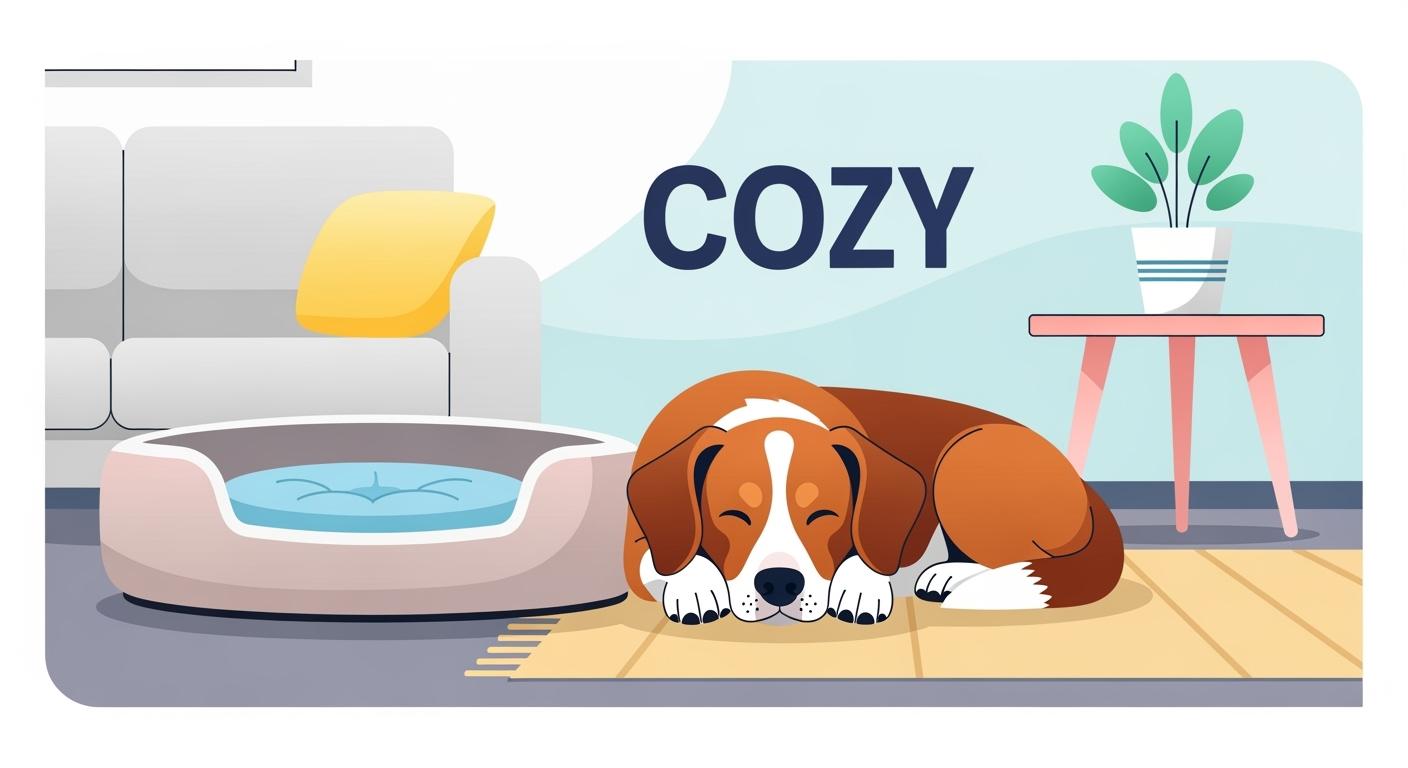
Do dogs need a dog bed? Not always in the absolute sense, but many dogs do benefit from having one. A bed gives your dog a more consistent resting surface, a defined place to settle, and often more comfort than a bare floor. The floor is not automatically wrong, especially for healthy dogs that seek cooler surfaces, but it is not always the best long-term answer either.
Watch how your dog acts every day. The better sleep setup is the one your dog actually uses, settles on easily, and gets up from comfortably. If your dog sleeps soundly, rises easily, and does not avoid the rest spot, your setup is probably working. If not, the floor may be too hard, the bed may be too warm, or the support may simply be wrong for that dog.
Key Takeaways
- Many dogs benefit from a bed, especially older dogs, large dogs, and dogs that show stiffness, pressure-point irritation, or trouble settling on hard floors.
- Some healthy dogs still choose the floor, often because it feels cooler. That does not always mean they do not need a bed. It may mean the current bed is too warm, too soft, or in the wrong place.
- Think about your dog’s age, body condition, and habits when choosing a rest surface. The right answer depends more on use and comfort than on the label “dog bed.”
Do Dogs Need a Dog Bed or Is the Floor Enough
Health and Comfort Factors
When you ask, “do dogs need a dog bed,” what you are really asking is whether your dog needs a more forgiving place to rest than the floor. That depends on pressure, temperature, and how easily your dog can settle and get back up. Hard floors are easy to clean and often feel cool, but they do not provide much padding. For dogs with aging joints, bony pressure points, or reduced mobility, that can matter much more than it does for a young healthy dog.
A bed can help by giving your dog a more cushioned, stable place to lie down. The better bed is not always the thickest or softest one. It is the one that supports your dog without making them sink too deep, overheat, or struggle to stand. For dogs that already show stiffness, elbow callusing, or pressure-point irritation, a supportive bed usually makes more sense than a bare floor. That is also consistent with the MSD Veterinary Manual, which advises soft bedding and padding over pressure points for dogs dealing with hygroma-related trauma risk.
Tip: If your dog seems stiff, slow to rise, or reluctant to settle, test a more supportive bed before assuming the behavior is just age or habit.
When the Floor Is Acceptable
Not every dog avoids the floor, and that does not automatically mean something is wrong. Some dogs prefer the floor because it feels cooler, especially in warm rooms or during warmer weather. Some healthy dogs also like switching sleep spots during the night. The floor may be part of that pattern.
The floor is more acceptable when:
- Your dog is healthy, mobile, and not showing signs of stiffness or discomfort.
- Your dog chooses the floor mainly for coolness, not because they avoid all beds.
- The floor area is clean, dry, and not slippery or harsh.
- Your dog can get up and down easily with no obvious strain.
However, puppies, seniors, very large dogs, and dogs with joint or mobility concerns usually need more support than a hard bare surface provides. If your dog is healthy and clearly prefers the floor, you do not have to force bed use. But it is still worth asking whether the bed itself is the problem, rather than assuming your dog simply does not need one.
Note: If your dog has arthritis, joint pain, pressure-point swelling, or trouble getting up, do not treat floor preference as the final answer. In those cases, ask your veterinarian what kind of support makes sense.
Comparison Table: Floor vs Dog Bed Options
Below is a simpler way to compare the main options for your dog’s rest spot.
| Option | Use Case | Main Benefit | Main Watchout | Who Should Skip It |
|---|---|---|---|---|
| Hard Floor Only | Dogs that seek coolness and show no clear discomfort | Cool surface, easy cleanup | Very little padding or pressure relief | Seniors, large dogs with pressure-point issues, dogs with mobility concerns |
| Simple Dog Bed | Young, healthy dogs, lighter daily use | Basic cushioning and a defined sleep space | May not give enough support for dogs with special needs | Dogs already showing stiffness or discomfort on hard surfaces |
| Supportive Bed | Seniors, large dogs, dogs with joint or pressure-point concerns | Better pressure distribution and easier resting surface | Can feel too warm or too soft for some dogs | Dogs that consistently choose cooler surfaces unless temperature is addressed |
When you think about purchasing a bed for your dog, consider age, body condition, room temperature, and sleeping habits. The types of dog beds you choose should match what your dog actually needs, not just what looks cozy at first glance.
Which Dogs Benefit Most from a Bed
Seniors, Puppies, and Sensitive Dogs
Senior dogs, puppies, and sensitive dogs usually benefit most from a supportive bed. Older dogs often need more help getting down and back up comfortably. Puppies are still developing and usually do better with a clean, defined resting surface instead of always flopping onto bare hard flooring. Sensitive dogs, including dogs that get cold easily or dogs that react to pressure on elbows and hips, may also do better with more padding.
The 2023 AAHA Senior Care Guidelines also recommend adequately padded bedding for senior pets and better traction in the home, which is why bedding choice matters more once a dog starts aging or moving less easily. This does not mean every one of these dogs needs the same kind of bed. Some need more support. Some need cooler surfaces. Some need a lower-profile bed that is easier to step onto. The right bed is the one that fits the dog’s actual rest behavior, not just the dog’s age label.
Pass/Fail Checklist: Is Your Dog’s Rest Spot Working?
You can check if your dog’s sleep spot is working by looking for simple, repeatable signs.
| Check Item | Pass Signal | Fail Signal | Fix |
|---|---|---|---|
| Settles quickly at bedtime | Lies down calmly and stays put | Paces, circles, or keeps changing spots | Try a more comfortable surface or quieter location |
| Sleeps through the night | Few interruptions | Frequent getting up or obvious restlessness | Check support, room temperature, and bed location |
| Gets up easily in the morning | Rises smoothly | Stiffness, hesitation, or slow standing | Add more support or recheck with your vet |
| No visible pressure-point irritation | Skin and coat look normal | Calluses, redness, or swelling over bony areas | Use a more padded surface and monitor closely |
| Enjoys the rest spot during the day | Chooses it willingly for naps | Avoids it and always relocates | Change bed style, warmth level, or placement |
Tip: Check your dog’s rest spot every few weeks. A setup that worked in winter may feel too warm in summer, and a bed that worked at age two may feel wrong at age ten.
Troubleshooting Table: Sleep Issues and Fixes
If your dog has trouble sleeping comfortably, look at the pattern before blaming the dog.
| Symptom | Likely Cause | Fast Check | Fix |
|---|---|---|---|
| Restlessness during the night | Discomfort, poor support, or poor bed location | Watch for pacing or frequent repositioning | Try a better surface or a quieter place |
| Frequent position changes | Pressure buildup or too much warmth | Look for constant shifting | Try a more supportive or cooler bed style |
| Morning stiffness | Hard sleeping surface or inadequate support | Notice how your dog rises after rest | Add more support and consider veterinary advice |
| Overheating or panting at night | Bed too warm or room too warm | Feel the bed surface after sleep | Use a cooler location or lower-heat bed style |
| Avoids the bed, prefers floor | Bed is uncomfortable, too warm, too soft, or badly placed | Watch where your dog chooses to lie down | Change bed style, support level, or room placement |
Note: If your dog has pain, anxiety, or ongoing sleep trouble that does not improve after you change the rest surface, talk to your veterinarian. This article does not replace medical care.
Signs Your Dog Isn’t Comfortable

Behavioral Clues to Watch
You can often tell that your dog is not comfortable long before there is an obvious health problem. Look for simple patterns:
- Your dog paces or circles for a long time before settling.
- Your dog keeps leaving the bed for another surface.
- Your dog changes position often instead of sleeping deeply.
- Your dog rises stiffly after rest.
- Your dog avoids the bed but still seems to want a place near you.
These clues usually point to one of three problems: the surface is too hard, too warm, or simply not a good fit for how your dog likes to rest.
Common Mistakes and Real Consequences
Many owners make simple mistakes that affect their dogs’ sleep quality. Putting the bed in a noisy or drafty place can make even a good bed fail. Choosing a bed that is too soft, too warm, or too small can make the dog avoid it. Assuming every floor-sleeping dog is “fine” can also hide a problem, especially if the dog is large, older, or already showing stiffness.
Note: If your dog shows signs of pain, anxiety, swelling over pressure points, or ongoing sleep problems, always talk to your veterinarian. This advice does not replace medical care.
Tips to Encourage Bed Use
You can help your dog use a bed more willingly with a few simple steps:
- Place the bed where your dog already likes to rest.
- Use familiar scents, such as a favorite blanket.
- Reward calm bed use with praise or treats.
- Do not force the dog onto the bed.
- If the dog keeps choosing the floor, test whether the room is too warm or the bed is too soft.
With time and the right setup, many dogs learn to use a bed willingly. If your dog still prefers the floor after several adjustments, the floor may simply feel better to that dog in that room.
Many dogs benefit from a bed, but not every dog needs the same one and not every floor-sleeping dog is in trouble. The right answer comes from watching how your dog sleeps, settles, and gets up. If your dog rests well and moves easily, your setup is probably working. If not, change the surface before you assume the floor is good enough.
- Try different support levels if your dog avoids the current bed.
- Pay more attention to stiffness, pressure-point irritation, and heat preference than to the word “orthopedic” on the label.
- Choose the setup your dog actually uses comfortably and consistently.
FAQ
How can you tell if your dog prefers the floor or a bed?
Watch where your dog settles most often and how they act afterward. If your dog chooses the floor but gets up comfortably and sleeps soundly, that may simply be a temperature preference. If the dog avoids the bed but seems restless, the bed itself may be wrong.
Should you use a special bed for a dog with arthritis?
A dog with arthritis or mobility trouble usually benefits from a more supportive resting surface than a hard floor. Ask your veterinarian what kind of support makes the most sense for your dog’s condition.
Note: Always ask your vet for medical advice.
What is the best spot for your dog’s bed at home?
Place the bed in a quiet, draft-free area where your dog already likes to rest. If your dog avoids the bed, try changing the location before assuming the bed itself is the only problem.






