
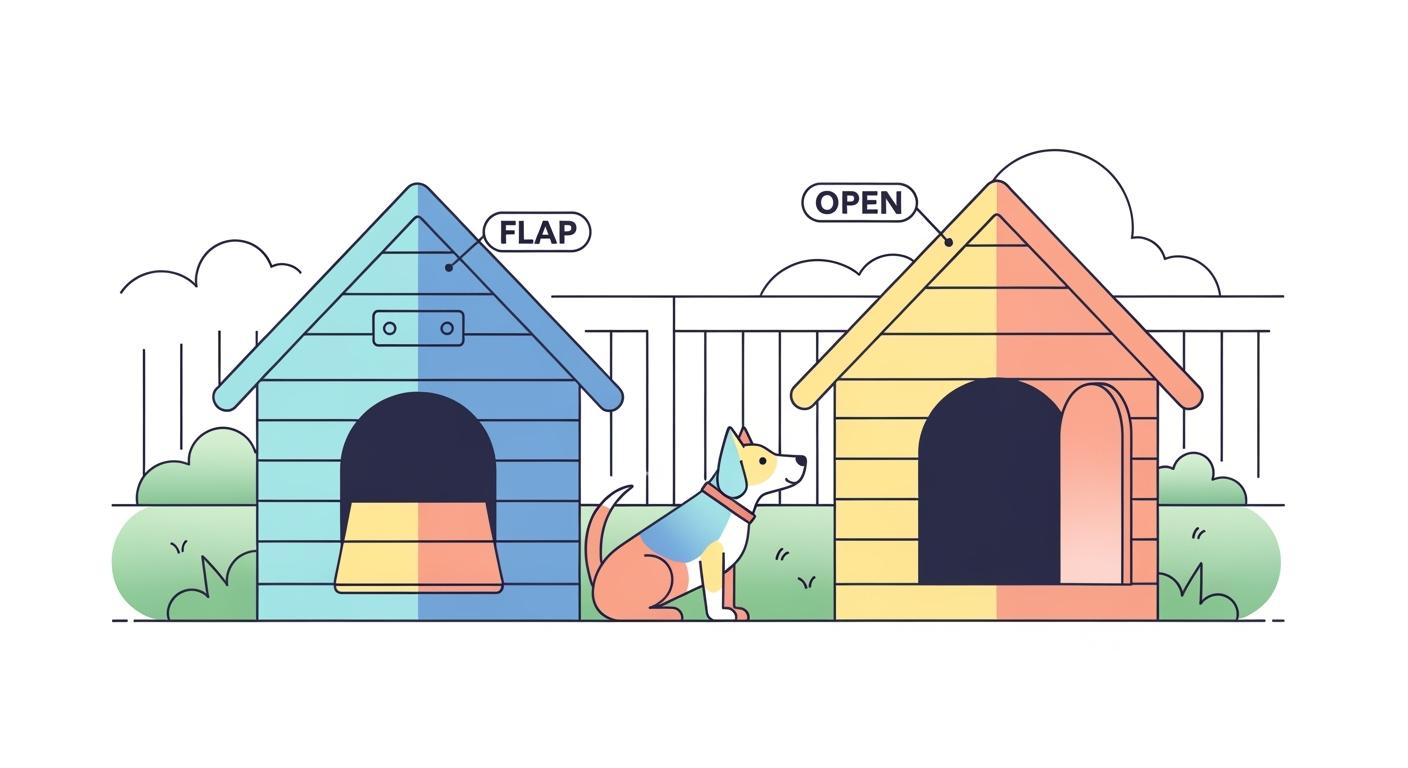
Choosing the best outside dog house entry matters for your dog’s comfort and safety. The better entry is not the one that sounds most weatherproof on paper. It is the one your dog will actually use, in the climate you actually have, without turning the house into a damp, drafty, or stuffy space. A door flap can reduce wind and rain blowing straight in, but an open entry may still be the better daily choice for a dog that hesitates, startles easily, or needs the easiest possible access.
Think of the entry as one part of the whole shelter setup. It works with house placement, floor height, bedding dryness, airflow, shade, and your dog’s own habits. A better door cannot fix poor placement or a house that sits wet, overheats, or never gets cleaned.
Key Takeaways
- Pick the entry type based on your dog and your weather, not just on the strongest-looking feature list. Open entries are easier to use. Flaps and insulated doors help more when wind and rain block matter.
- Watch how your dog actually uses the entry. If your dog hesitates, turns away, or only half-enters, the “better” door may be the wrong daily choice.
- Check the door and the house together. Dry bedding, raised floor support, airflow, and shade matter just as much as the entry panel itself.
Best Outside Dog House Entry: Open vs Flexible Dog Door Flap
Comparison Table: Open Entry, Flap, and Insulated Door
Picking the best outside dog house entry means you need to know how each one works in real outdoor use. The table below compares open entry, flexible dog door flap, and insulated door by daily function rather than just marketing claims.
| Entry Type | Best Use Case | Main Benefit | Main Watchout | Who Should Skip It |
|---|---|---|---|---|
| Open Entry | Mild weather, easy-access dogs, frequent in-and-out use | Easiest access and best airflow | Least protection from wind-driven rain and drafts | Dogs in cold, windy, or wet setups |
| Flexible Dog Door Flap | Moderate weather, dogs that tolerate flap contact well | Better weather block without fully closing access | Some dogs dislike the feel or sound; flaps also wear over time | Dogs that avoid pushing through moving material |
| Insulated Door | Colder, windier setups where weather block matters most | Strongest entry barrier when fitted and used correctly | Harder for shy, small, or slower-moving dogs to use | Dogs needing very easy, frequent access |
Tip: Watch your dog try each entry type. The better choice is usually obvious within a few attempts: your dog either moves through naturally, or the door keeps interrupting use.
Who benefits most from each access type
You want your dog to feel safe and willing to use the shelter, not just physically able to fit through it.
- Open Entry:
Your dog may do best with open entry if the weather is mild, the dog is hesitant about moving panels, or easy access matters more than maximum weather block. Puppies, older dogs, and unsure dogs often do better when the path in is simple and obvious. - Flexible Dog Door Flap:
Pick a flexible dog door flap if you want better wind block and rain resistance without making the house feel closed off. This usually works best for dogs that are comfortable exploring new textures and do not mind pushing through a flap. - Insulated Door:
An insulated door makes more sense when cold wind, repeated rain exposure, or draft control matter more than easy entry speed. It is usually a better fit for confident dogs that already accept a more resistant entry.
Main drawbacks and who should avoid each option
Every entry type solves one problem while creating another. You need to pick the tradeoff your dog can actually live with.
- Open Entry:
Open entry gives the least resistance, but it also gives weather the easiest path inside. If the house faces prevailing wind or sits where rain blows in, your dog may end up with damp bedding and a colder resting space than expected. - Flexible Dog Door Flap:
Flexible flaps block weather better than open entry, but they are not automatically better for every dog. Some dogs dislike the contact on their face or shoulders, and a worn flap may start curling, cracking, or hanging badly. This is not the best outside dog house entry for owners who want the strongest barrier or for dogs that never fully get used to flap movement. - Insulated Door:
Insulated doors usually block weather best, but they can also slow entry down. Small, shy, older, or mobility-limited dogs may hesitate or avoid the house if the door feels heavy, tight, or unfamiliar.
Note: Always check entry size and entry height. Your dog should pass through comfortably without crouching excessively, scraping the shoulders, or catching the back on the opening.
Step-by-Step: How to Compare Entry Types for Your Dog
- Watch your dog approach the entry. Do they move through smoothly or stop and stare?
- Check your local weather. Do you need more wind block, more ventilation, or both at different times of year?
- Feel inside the dog house after bad weather. Is the bedding still dry or does the entry let moisture in?
- Test the flap or door. Can your dog open it without confusion or forceful pushing?
- Look for wear, edge curling, or hard panels that no longer move smoothly.
- Think about your dog’s habits. Does the dog enter often for short rests, or stay inside for longer periods?
- Recheck the whole setup after a windy or rainy day. Daily use matters more than a one-time test.
If you follow these steps, you can judge the best outside dog house entry by real use rather than by packaging claims.
Dog Access, Weather, and Ease of Use
Weather protection and wind block
You want your dog to stay dry and warm. The entry changes how much wind, rain, and cold air get inside, but placement matters too. An open entry gives the strongest airflow, which can help in milder weather. A flap usually reduces direct wind and rain entry. An insulated door can block drafts better, but only if the door still seals well and the house is not placed where water pools or wind hits the opening directly.
| Feature | Benefit for Weather Protection |
|---|---|
| Flexible Flap | Helps reduce direct wind and rain blowing through the opening. |
| Offset or Recessed Entry | Reduces straight-line wind exposure at the opening. |
| Raised Floor | Helps keep ground moisture from moving up into the shelter. |
| Dry Bedding | Matters as much as the door for keeping the inside usable in bad weather. |
Do not let the door decision hide the bigger outdoor rule: the house still needs shade, dry bedding, and placement that does not trap heat or collect water. A more weather-blocking door does not turn a poorly placed shelter into a good one.
Ease of access for all dogs
Easy access matters most for puppies, older dogs, nervous dogs, and dogs that use the house often but only for short periods. Open entry is the simplest because the dog never has to learn anything new. Flexible flaps often need a short learning phase. Hold the flap open, reward the dog for moving through, and keep early sessions low-pressure. Insulated doors are the least forgiving if your dog already moves cautiously.
Always check door width, bottom clearance, and entry height. A dog that fits on paper can still dislike the opening if the shoulders brush the frame or the dog has to duck more than expected.
Cleanliness, security, and comfort
Clean and safe shelter spaces help dogs use them consistently. Open entry lets in more leaves, grit, and blown rain. Flaps and insulated doors usually keep bedding cleaner and drier, but only if the door still closes properly and the bedding gets checked often. Security also depends on size. An oversized opening can let in more weather, debris, and unwanted animals than necessary.
Check the inside regularly for damp bedding, trapped dirt, and edge wear around the opening. A good daily shelter feels dry, accessible, and easy to maintain. If the door improves weather block but makes the dog avoid the house, it is not the right comfort choice.
Signs of Entry Problems and Troubleshooting
Pass/Fail Checklist for Entry Use
You can find entry problems quickly with this checklist. Go through each item and watch for clear, repeatable signs.
| Check Item | Pass Signal | Fail Signal | Fix |
|---|---|---|---|
| Dog uses door easily | Walks in and out without stopping | Hesitates, backs away, or only half-enters | Lighten resistance or switch entry style |
| Bedding stays dry | No damp spots after normal weather | Wet or cold bedding | Improve weather block or change placement |
| Air feels usable | No trapped heat or stale damp feel | Stuffy, hot, or muggy interior | Increase airflow or reduce entry sealing |
| Door moves smoothly | Flap or door resets cleanly | Sticks, jams, curls, or hangs unevenly | Repair or replace the worn entry part |
| Right size | Dog fits comfortably with no scraping or squeezing | Dog crouches too much or bumps the frame | Resize or change the entry style |
Troubleshooting Table: Common Symptoms and Fixes
This table helps you fix entry problems fast.
| Symptom | Likely Cause | Fast Check | Fix |
|---|---|---|---|
| Dog avoids door | Door too heavy, flap too stiff, or opening feels unsafe | Watch the first second of entry behavior | Use a lighter flap or return to open entry |
| Damp bedding | Poor weather block or bad house placement | Check the bedding after wind or rain | Improve entry cover or reposition the house |
| Trapped heat | Too little airflow for the weather | Feel inside air during the warm part of the day | Increase ventilation or use a more open entry |
| Door wears out fast | Low durability or repeated hard pushing | Inspect edges, bends, and hang angle | Replace with a tougher flap or simpler opening |
| House feels drafty | Entry too exposed or door not sealing well | Check wind feel at the bedding level | Reposition the house or improve the entry barrier |
Note: If your dog seems too hot, too cold, scared, or physically uncomfortable using the entry, talk to your vet. This guide is not medical advice.
Common mistakes and real consequences
You might not notice entry problems if you do not check often. The wrong door can make your dog avoid the shelter, lose weather protection, or use the house less than you expect. A door that is too small can make the dog squeeze or hesitate. A door that blocks weather well but traps heat can create a different problem in warm weather. An open entry that feels easy may still be the wrong choice if bedding keeps getting wet and cold.
Always judge the entry by what actually happens after bad weather and repeated daily use, not just by how the house looks when it is new.
You want the best outside dog house for your pet, but the better entry is the one that balances weather block with easy, confident use. A flap often makes sense when wind and rain exposure matter. Open entry makes more sense when the dog needs the simplest possible access. Insulated doors can help in harsher setups, but only if the dog still uses them comfortably. Keep the house dry, shaded, raised, and checked often, and let your dog’s actual behavior make the final call.
- The best outside dog house depends on your dog’s habits and your climate.
- A better entry works with placement, shade, bedding dryness, and airflow.
- Always measure your dog for the right door size and watch how the dog actually uses it.
FAQ
How do I know if my dog prefers an open entry or a flap?
Watch the first few seconds of entry behavior. If your dog moves through without stopping, the entry is probably acceptable. If the dog hesitates, bumps the door, or avoids the house, the entry may feel wrong even if the house itself is fine.
Can a flexible flap keep out rain and wind?
Usually more than an open entry can, yes. But the real result depends on flap size, house placement, and whether the flap still hangs properly after repeated use. A worn or curled flap blocks less than a good one.
Is an insulated door better for cold climates?
Sometimes. It can help more in colder or windier setups, but only if your dog will actually push through it comfortably and the house still has dry bedding and workable airflow. A “better” cold-weather door is not useful if the dog avoids using the shelter.






