
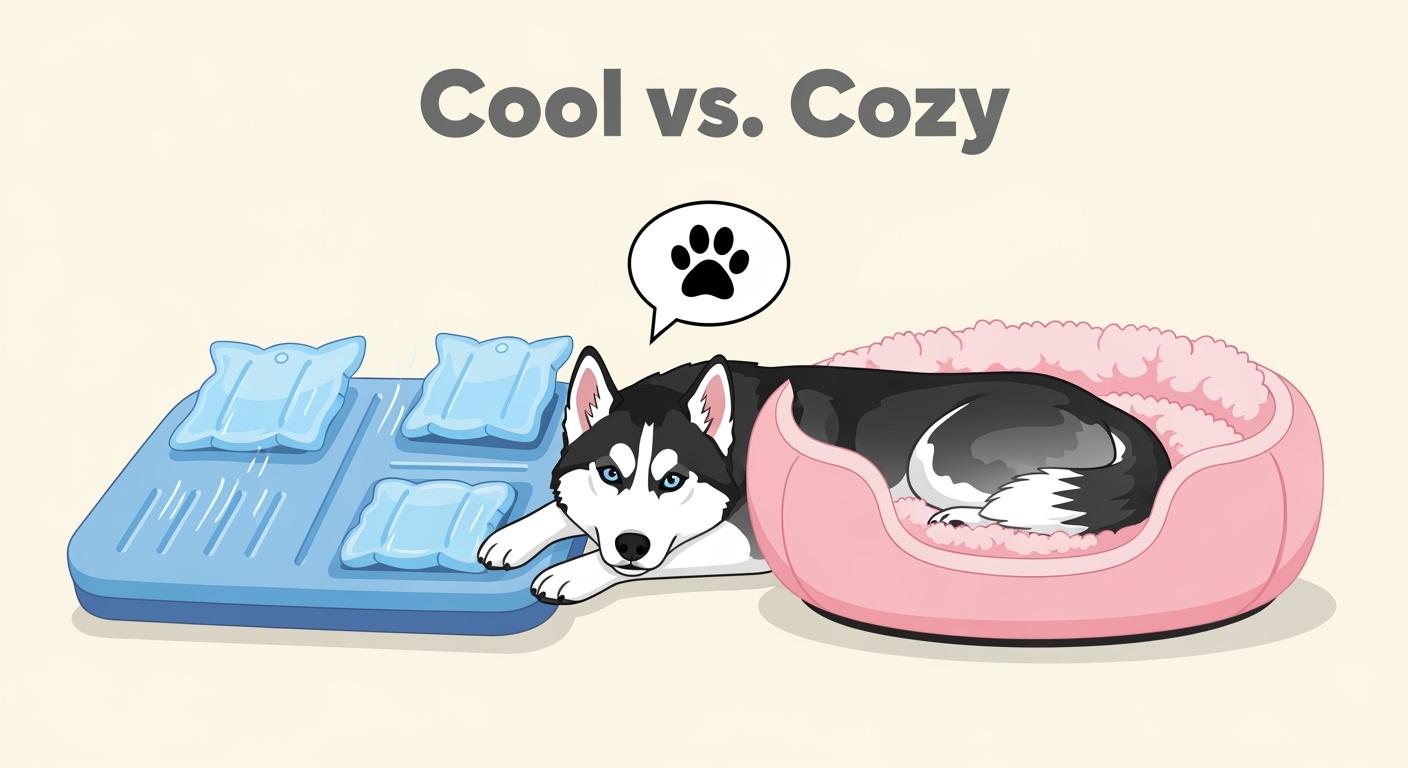
A husky does not always need the softest bed in the room. Many do better with a cooler surface when the room runs warm, while others settle faster on a softer bed once the space is cool enough and the padding does not trap too much heat. Start with how your dog actually sleeps: sprawled out on tile, curled into a corner, leaving the bed after a few minutes, or staying down and relaxing. That tells you more than the label on the product page.
Key Takeaways
- Choose a cooling bed for your husky in warm weather. It usually works better for dogs that sprawl out, seek hard floors, or seem too warm on thick padding.
- Choose a plush bed when your husky likes to curl up, the room stays cooler, and the bed still has enough structure to avoid flattening fast.
- If your husky keeps leaving the bed, pants on it, or only uses it for short naps, treat that as a setup problem rather than assuming the dog is just being picky.
Cooling Mat, Plush Bed, or Raised Cot?
When a cooler surface makes more sense
Huskies have a dense coat, so the wrong bed can feel warm fast even when it looks comfortable. A cooling mat or raised cot usually makes more sense when your dog sleeps stretched out, keeps moving to colder flooring, or gets restless on thick plush beds. These options can reduce heat buildup around the body because they do not wrap the dog in padding the way a deep nest bed does.
A raised cot is often the most practical version of a cooling setup. Air can move underneath, loose fur is easier to clear away, and the surface usually dries faster after muddy paws or damp fur. A flat cooling mat works best when you want a simple cool spot in one area of the house or inside a crate-sized rest zone. Neither one replaces shade, airflow, or water in hot conditions, but they can make day-to-day resting more workable.
The tradeoff is obvious: a cooler bed can feel too bare for a husky that likes to curl up, lean against edges, or paw at the bed before lying down. If your dog wants body contact with the bed, not just a cool surface under it, a plain mat may feel more like a temporary station than a place to settle for a long nap.
When a plush bed is the better call
A plush bed is usually the better match when your husky sleeps curled up, prefers corners, or settles only after making a little nest. The extra loft can feel calmer and more secure, especially in cooler rooms or during colder months. It can also be the easier choice for older dogs that need a more forgiving landing surface when lying down and getting back up.
That said, softer is not automatically better. If the fill compresses too quickly, the center gets warm and flat, and your dog starts drifting back to the floor. Plush beds also collect fur faster and can feel stuffy in homes that already run warm. For a husky, the real question is not whether soft beds are comfortable in theory. It is whether this particular soft bed stays usable after heat, shedding, and repeated daily use.
A side-by-side comparison that is actually useful
The better pick depends less on marketing terms and more on room temperature, sleep posture, cleanup load, and whether your dog wants open space or a nest-like shape. The table below keeps the comparison practical.
| Bed Type | Usually Works Best For | Main Advantage | Main Watchout | Usually a Weak Match For |
|---|---|---|---|---|
| Cooling Dog Beds | Warm rooms, summer use, dogs that leave thick beds | Less heat trapped around the body | Can feel too plain for curl-up sleepers | Dogs that want soft edges and nesting depth |
| Plush Bed | Cooler rooms, curled sleepers, longer naps | Softer landing and more enclosed feel | Can hold heat and flatten with use | Dogs that overheat or prefer open surfaces |
| Bolster Bed | Dogs that lean, tuck in, or like a head rest | Extra edge support | Edges can trap warmth and fur | Dogs that sprawl fully flat |
| Cooling Elevated Bed | Heavy shedders, warm homes, muddy paw cleanup | Airflow underneath and faster cleanup | Less padding for bony or older dogs | Dogs that need soft cushioning to settle |
| Cooling Mats | Spot cooling, crates, travel, short rest periods | Simple way to add a cooler surface | Limited support if used as the only bed | Dogs that need depth, structure, or supervised-free chewing situations |
Tip: Watch your husky’s rest habits before you buy by feel alone. If your dog sprawls on hard floors, a cooling elevated bed or cooling mat is often the easier win. If your dog circles, tucks in, and keeps choosing sofas or rugs, a plush bed or bolster bed may make more sense. The goal is not just softness. It is repeat use without overheating, fast flattening, or constant cleanup. You can still compare that against your preferred bed for husky dog setup without changing the core question.
Some huskies also do best with a two-bed setup instead of one year-round answer: a cooler surface for warm afternoons and a softer bed for cooler nights or winter use. That usually works better than forcing a plush bed through summer or expecting a flat mat to replace every rest spot in the house.
What Usually Decides the Better Pick
Coat, shedding, and how much cleanup you can tolerate
Huskies shed heavily, and that changes what feels practical. A bed that looks fine on day one can become a fur trap within a week if seams catch hair, covers are awkward to remove, or the surface stays damp after cleaning. Because a husky has a dense double coat, easy cleanup matters almost as much as the sleep surface itself. The existing best cooling dog beds angle only works if the bed is also realistic to keep clean between coat blows, muddy paws, and daily fur drop.
- Smooth, wipeable, or faster-drying surfaces are easier to live with during heavy shedding.
- Deep plush fills and high walls usually hold more loose coat.
- If cleanup already feels like a chore, the wrong fabric can make you stop using the bed where it is needed most.
How warm the room runs
The room matters as much as the bed. A plush bed can work well in a cool bedroom and fail badly in a sunny living room that holds heat through the afternoon. Instead of chasing an exact number, check what your husky does after ten or fifteen minutes on the bed. A dog that settles, stays down, and breathes normally is giving you a pass signal. A dog that pants, shifts often, or gets off to lie on tile is telling you the setup runs too warm.
- Warm room plus thick bed usually increases heat buildup.
- Cool room plus thin mat may feel too bare for long naps.
- Season changes can turn a good winter bed into a poor summer bed without anything else changing.
Sleep posture, age, and how the dog gets up
Sprawlers usually want surface area and cooler contact. Curled sleepers usually want some softness and edge definition. Older huskies or dogs that lower themselves carefully often need more even support than a thin pad can give. That does not mean every husky needs a thick orthopedic-style bed, but it does mean you should watch the lie-down and get-up motion, not just the sleeping pose once the dog is already settled.
If your dog hesitates before lying down, shifts weight several times, or rises slowly and steps away from the bed, that is often a stronger buying clue than the product label. In that case, a firmer supportive plush bed or a layered setup with a cooler top surface over better cushioning can work better than either extreme on its own.
Pass or fail after real use
| Check Item | Pass Signal | Fail Signal | What to Change First |
|---|---|---|---|
| Heat handling | Dog stays down and relaxes | Panting, frequent repositioning, leaves for the floor | Move to a cooler room or switch to a cooler surface |
| Support | Easy lie-down and easy rise | Hesitation, slow get-up, center collapsed flat | Use a bed with more even padding or structure |
| Cleanup | Loose fur clears off without a fight | Hair packed into seams, damp cover, lingering odor | Choose an easier-clean cover or less fur-trapping surface |
| Sleep style match | Dog returns to the bed without prompting | Uses the bed briefly, then relocates every time | Switch from nest-style to open style, or the reverse |
| Durability | Surface stays level and intact through daily use | Flat spots, torn corners, loose fill shifting | Replace lightweight construction with sturdier fabric or frame |
Common problems and the fastest way to read them
| Symptom | Likely Cause | Fast Check | Best Next Move |
|---|---|---|---|
| Dog keeps moving to tile or bare floor | Bed runs too warm for that room | Touch the center of the bed after a nap | Try a cooler surface or move the bed away from heat and sun |
| Dog circles but does not stay down | Surface is too flat, too firm, or lacks edges | Compare behavior on rugs, sofa corners, or blankets | Test a plush or bolster-style bed instead |
| Slow rise or careful lowering | Padding may be too thin or too compressed | Watch the dog get up after a longer nap | Use a bed with more stable support |
| Bed looks messy and smells stale fast | Fabric and fill trap fur, moisture, and dirt | Check seams, corners, and underside after brushing day | Move to an easier-clean cover or raised design |
| Dog chews corners or scratches heavily before lying down | Wrong texture, poor durability, or poor style match | Notice whether it happens only on one bed type | Reassess fabric, thickness, and whether the dog wants nesting depth |
Tip: The best bed for a husky is usually the one your dog uses repeatedly without overheating, flattening the center, or creating a cleanup problem you start avoiding. Daily behavior is a better filter than broad claims about what every husky should use.
Signs Your Husky’s Current Bed Is the Wrong One
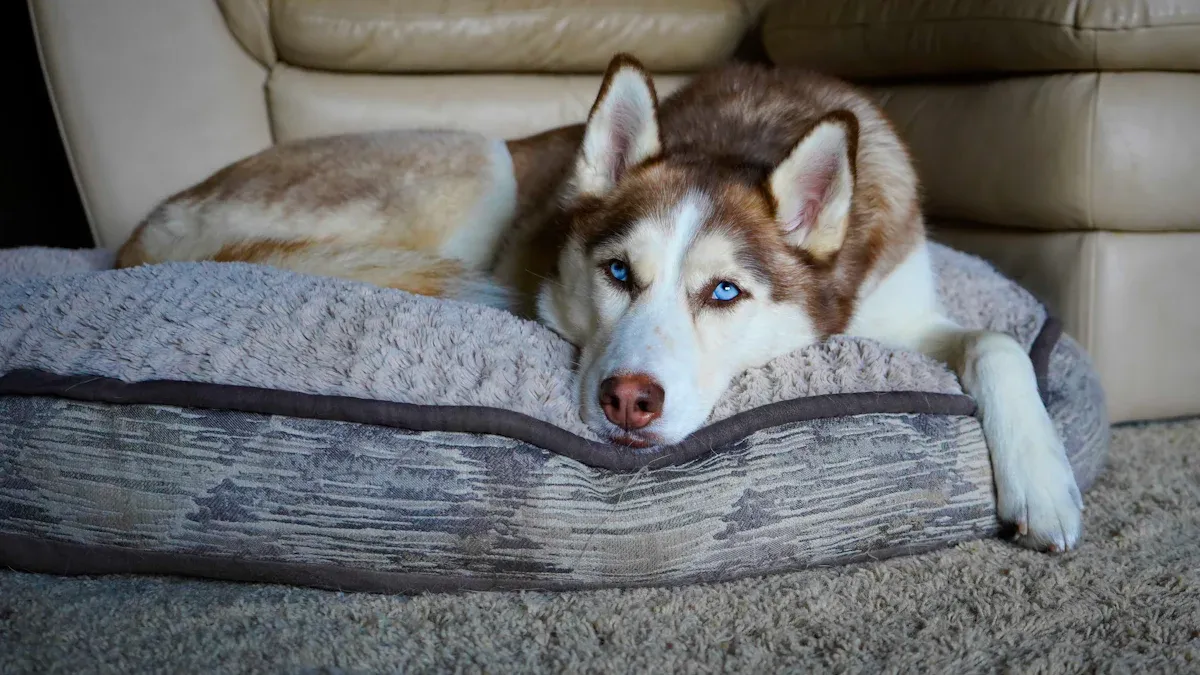
Behavior tells you sooner than the product description
If a bed is working, most huskies show it quickly. They return to it on their own, settle into one posture, and stay there long enough to actually rest. If the bed is wrong, you usually see a pattern instead: short use, repeated repositioning, moving to cooler floors, or using the bed only at certain times of day.
- Leaving the bed once the body warms it up
- Panting or restless shifting in a room that already feels warm
- Using the bed at night but avoiding it during the day
- Choosing rugs, corners, or hard flooring instead of the bed every time
The most common buying mistake
The usual mistake is buying by softness alone. That often works for photos, but not always for a heavy-shedding, double-coated dog that may want cooler contact more than deeper padding. The second common mistake is treating every cooler bed as supportive enough for every stage of life. A thin cool mat may help with heat, but it may not give enough cushion for an older husky or one that is slow getting up. This is why the better question is not “cooling or plush” in the abstract. It is “what fails first in my dog’s actual setup?”
Note: If your husky shows persistent panting, heavy restlessness, pain when lying down or rising, or a sudden change in sleep behavior, reassess the bed and room setup and speak with your veterinarian. This article is for product judgment, not medical diagnosis.
When to switch, layer, or stop forcing the current setup
Switch bed types when the same fail signals keep repeating for several days. Layer the setup when the problem is mixed, such as a dog that needs cooler contact but also better support than a thin mat provides. Stop forcing the current bed when your husky consistently chooses a completely different surface. At that point the dog has already answered the comparison for you.
For many homes, the most realistic answer is seasonal or situational rather than permanent. Use the plush bed when the room is cooler and your husky wants to curl up. Use the cooler surface when the room runs warm, your dog sprawls out, or the plush bed keeps getting abandoned halfway through a nap.
Choosing a bed for husky dog comes down to where heat builds up, how your dog sleeps, and whether the bed still works after real shedding and daily use. If your husky keeps choosing cool floors, start with a cooler surface. If your dog curls up and stays settled on softer padding in a cooler room, a plush bed is usually the better fit. Recheck the setup when seasons change, because the better bed in January may be the wrong one in July.
FAQ
Is a cooling mat enough as the main bed for a husky?
Sometimes, but not always. A cooling mat can work well for short rests, warm rooms, crates, or dogs that clearly prefer flat cool surfaces. It is a weaker main-bed choice if your husky needs more padding, likes to curl up, or rises slowly after naps.
How do I know a plush bed is too warm for my husky?
Watch what happens after your dog settles. If your husky pants, keeps changing position, or leaves the bed to lie on tile or hardwood, the bed may be trapping too much heat for that room or season.
What matters more for a husky bed: softness or easy cleaning?
Both matter, but a husky bed that is impossible to keep clean usually becomes a bad long-term choice fast. If two beds feel similar in use, the one that sheds fur more easily, dries faster, and keeps its shape longer is usually the better everyday pick.
Tip: Do not judge the bed only by the first nap. Watch how your husky uses it across warm and cool parts of the day, because that is usually where the real answer shows up.






