
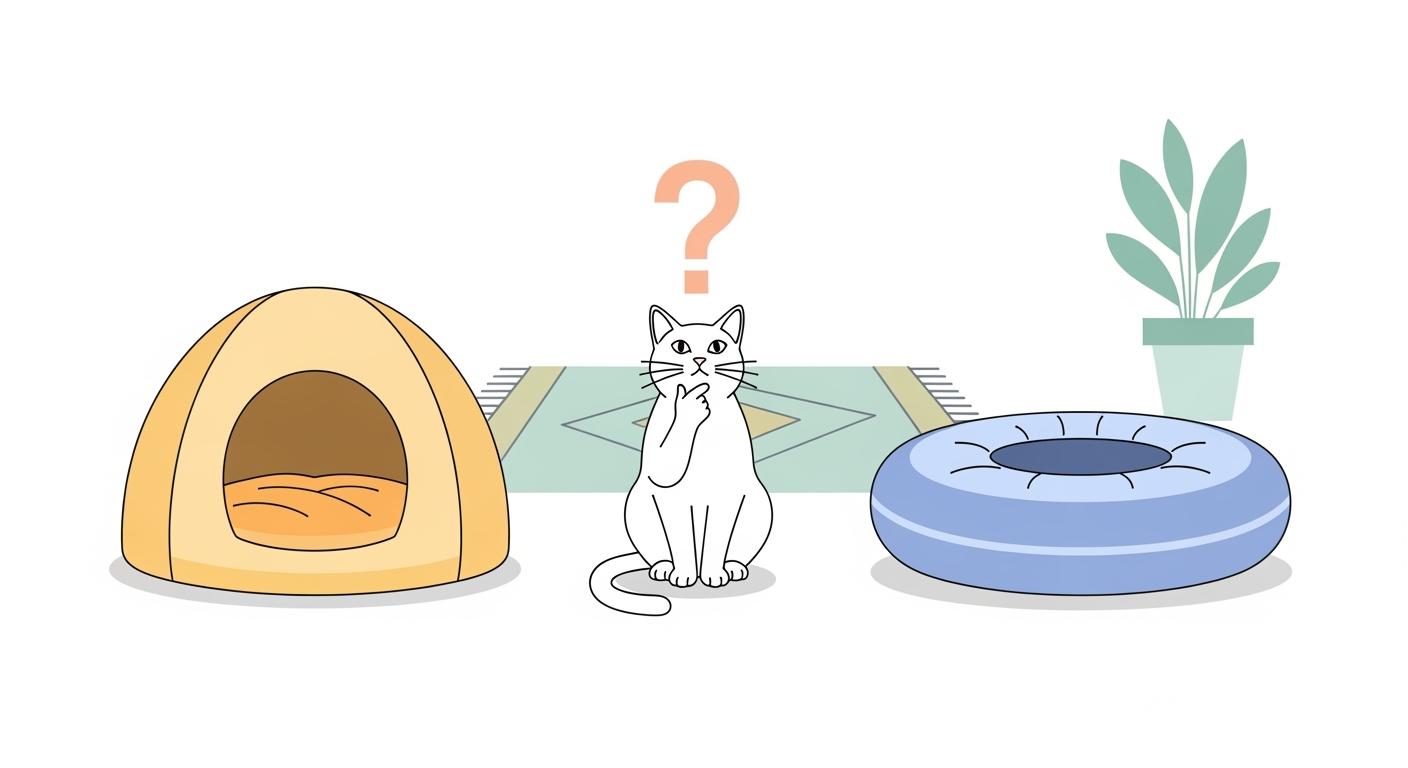
Most cats make this decision for you if you watch them long enough. Some keep tucking themselves into covered corners, boxes, or blankets. Others stretch out in open spots where they can see the room and keep track of what is happening. That difference usually tells you more than the product photo ever will.
A cat bed nest and a donut bed solve different problems. A cave-style bed gives more privacy and warmth. A donut bed keeps sight lines open and usually feels cooler and easier to enter. The better choice is usually the one that matches how your cat already sleeps.
Disclaimer: This article is about bed choice for healthy cats in normal home settings. It is not medical advice. If your cat suddenly changes sleep behavior, appetite, or mobility, speak with your veterinarian.
Key Takeaways
- Cats that hide in boxes, closets, or tucked corners usually do better with a cat bed nest.
- Cats that nap near people or in open areas usually do better with a donut bed.
- Bed avoidance often means the location, airflow, or entry feels wrong, not always that the bed style itself is wrong.
When a Cat Bed Nest Usually Works Better
A cat bed nest usually works best for cats that want more cover around the body while they rest. These cats often choose enclosed places on their own even before you buy a bed. They sleep under blankets, behind furniture, inside baskets, or in boxes where their sides and back feel protected.
Signs your cat wants more enclosure
If your cat startles easily, naps in low-traffic corners, or disappears into small spaces for part of the day, a cave-style bed often feels more natural than an open one. The enclosed shape can reduce light, movement, and noise around the cat while resting.
When a donut bed is usually the better fit
Some cats do the opposite. They nap on sofas, floor rugs, open chairs, or near people. These cats often want comfort without losing awareness of the room. A donut bed usually works better for them because it gives a soft edge to lean on without closing off visibility.
| Cat Behavior | Usually Better Fit | Why It Matters |
|---|---|---|
| Hides in boxes or under furniture | Cat bed nest | Usually prefers cover and enclosure while resting |
| Naps in open areas or near people | Donut bed | Usually wants comfort with open sight lines |
| Kneads and curls before settling | Donut bed | Raised edge gives a soft surface to lean against |
| Startles easily at movement or sound | Cat bed nest | Enclosure can make rest feel calmer |
| Stretches out fully while sleeping | Larger donut bed | Cave beds can feel too tight for sprawlers |
What Changes With Cave Beds and Donut Beds
Privacy and heat
A cave bed keeps more warmth inside and blocks more of the room around the cat. That can help shy or cold-sensitive cats settle faster. The same feature can also become the problem in a warm room. If the interior starts feeling stuffy, many cats simply stop using it or sleep on top instead of inside.
Airflow and visibility
A donut bed stays more open, so air moves around the cat more easily. That often makes it easier to use in warmer rooms or during longer naps. It also helps cats that want to rest without feeling closed in.
Entry and exit
Entry matters more than many owners expect. If the opening on a cave bed feels narrow or high, some cats hesitate before going in. Senior cats or cats with stiffness often find a lower, more open bed easier to use, even if they otherwise like the idea of a sheltered space.
Where the cat actually stays
How your cat uses the bed tells you a lot. Sleeping inside a cave bed for a full nap is a good sign. Sleeping on top of it usually means the inside feels too warm or too tight. Sleeping beside a donut bed often means the cat wants the location but not that exact surface or shape.
| Feature | Cave Bed | Donut Bed | What to Watch |
|---|---|---|---|
| Privacy | High | Low | Very social cats may ignore deep enclosure |
| Airflow | Lower | Higher | Warm rooms often make cave beds less usable |
| Entry | Depends on opening size | Usually easier | Watch for hesitation at the opening |
| Best for | Shy, cold-sensitive, easily startled cats | Social, open-space, warmer-room cats | |
| Main limit | Can feel cramped or warm | Less privacy and less cover | |
| Common clue | Sleeping on top often means too warm inside | Sleeping beside it often means the shape or feel is off |
Tip: If your cat uses a cave bed as a rooftop instead of a nest, treat that as useful feedback, not failure. It usually means the bed is too warm or too enclosed for that room.
Failure Signs That Matter Most
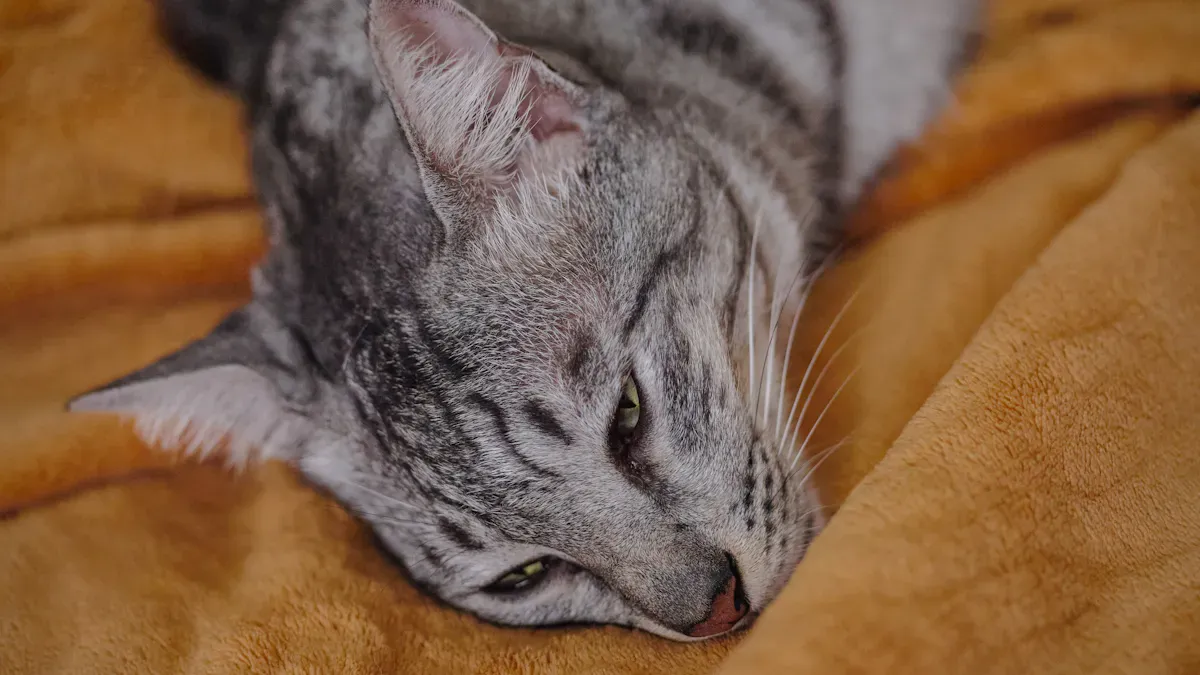
Most bed mismatch shows up in a few repeat patterns. The cat ignores the bed, leaves too quickly, sleeps on top, or stays near it without using it. Those are all signals worth reading before buying a second bed right away.
| Symptom | Likely Cause | Fast Check | Fix |
|---|---|---|---|
| Cat ignores cave bed | Wrong location, too warm, or too small | Place it where the cat already naps and check fit | Move it first, then reassess size and room temperature |
| Cat sleeps on top of cave bed | Interior feels too warm or cramped | Touch inside after a short use period | Move to a cooler room or switch to a donut bed |
| Cat avoids donut bed | Wants more cover or a different surface feel | Watch where the cat chooses to nap instead | Try a cave bed or change the placement |
| Cat pauses at the opening | Entry feels too high or too narrow | Watch the first approach closely | Choose a lower, wider front opening |
| Cat leaves quickly | Heat buildup, scent, or poor comfort | Check bed warmth and note where the cat goes next | Air out the bed, move it, or switch styles |
| Bed loses shape after washing | Structure has flattened | Press walls and edges after drying | Reshape while damp or replace if it no longer holds form |
Common mistakes that lead to bad bed choices
- Choosing by appearance instead of actual sleeping behavior.
- Putting the bed where you want the cat to sleep instead of where the cat already naps.
- Assuming the first ignored bed means the cat hates beds, when the real issue is placement or room temperature.
- Using the same cave bed year-round even when the room gets much warmer.
- Ignoring entry difficulty in older or cautious cats.
Note: The most common reason a new cat bed gets ignored is still the location. Before changing styles, move the bed to your cat’s usual sleep area and watch for a few days.
How to Test Before Switching Styles
Start with where your cat already naps
Before deciding that one style is wrong, place the bed exactly where your cat already rests most often. This removes one big variable right away. A good bed in the wrong place usually gets ignored.
Watch the full nap, not just the first sniff
A cat may inspect a bed and walk away, then come back later and use it. What matters more is whether the cat stays for a full nap, leaves quickly, or keeps choosing the old spot instead.
Track a few simple signals
Three to five days of observation usually tells you enough. Watch whether your cat sleeps inside, beside, or on top of the bed, how long they stay, and whether room warmth seems to change the result.
| Field | What to Record | Why It Helps |
|---|---|---|
| Nap location type | Open area or enclosed corner | Shows whether your cat prefers cover or visibility |
| Time in bed | Full nap or short exit | Short use often points to temperature or comfort mismatch |
| Sleep position | Inside, beside, or on top | Shows whether the style really matches the cat |
| Entry behavior | Smooth or hesitant | Helps spot opening and mobility problems |
| Room temperature context | Cool, normal, or warm | Helps explain seasonal style changes |
FAQ
How do you clean a cat bed nest?
Use mild detergent, wash according to the care label, and let the bed dry fully before returning it to use so it does not stay damp or hold odor.
Why does a cat sleep on top of a cave bed instead of inside?
That usually means the inside feels too warm or too enclosed for that cat in that room.
Are cave beds good for kittens?
Yes, as long as the opening is easy to use and the bed is placed in a quiet area where the kitten already feels comfortable.
How long does it usually take a cat to use a new bed?
Many cats start using a well-placed bed within a few days, but some need longer if the location, temperature, or scent still feels unfamiliar.
Which is better for an anxious cat, a cave bed or a donut bed?
For many anxious cats, a cave bed is the better starting point because it gives more cover and less visual exposure while resting.
A cat bed nest usually works best for cats that seek cover and curl into quiet corners. A donut bed usually works better for cats that like open napping spots, easier entry, and more airflow. If the choice still feels unclear, watch where your cat already sleeps. That pattern usually gives the answer first.






