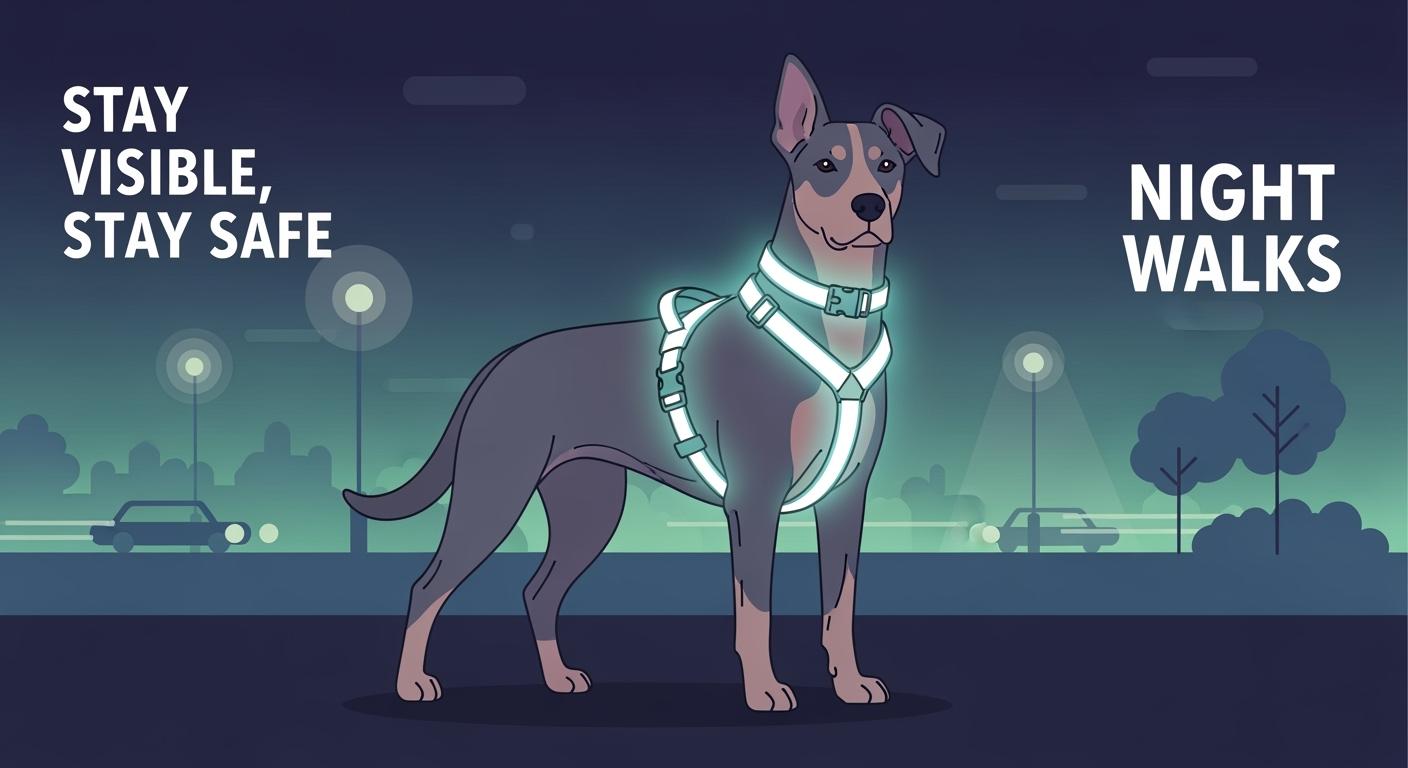
A dog reflective harness can make night walks safer when a collar is hidden by thick fur, offers only a narrow reflective strip, or gives weak leash control on dark routes. A reflective collar still works for ID and simple short walks, but a harness gives more body-level visibility and steadier control when the dog turns, pulls, or crosses traffic sight lines. The better choice depends on visible coverage, fur length, leash position, walking route, and whether active lights are needed with reflective gear.
Key Takeaways
- A reflective dog harness usually gives more visible body coverage and more leash control than a reflective collar alone, especially for dogs that pull or walk in darker areas.
- A reflective collar still matters for identification and can work well for simpler night walks, especially when paired with a clip-on light.
- Always check visibility, fit, and movement before each walk. Reflective trim that is hidden by fur, covered by gear, or worn down is not helping as much as it looks like it should.
When a dog reflective harness is better for night walks
Key scenarios for harness or collar choice
You want your dog to be safe and easy to see at night. Picking a harness or collar depends on your dog’s size, how they act, and where you walk. A reflective harness usually makes more sense when your dog needs steadier handling, when you walk near traffic, or when your dog’s coat hides most of a collar. Small and medium dogs can disappear quickly in low light. A harness places reflective material across more of the body, which usually helps the dog stand out from more angles than a narrow reflective collar.
A collar can still be enough for calmer dogs on brighter routes, short nighttime potty walks, or dogs that strongly dislike harnesses. Once you move into darker streets, uneven lighting, bike paths, or busier crossings, the combination of more body coverage and better control usually starts mattering more.
- Harnesses help more when you need both visibility and leash control.
- Small and medium dogs can be harder to spot at night, especially against dark backgrounds.
- Dogs walking near traffic or in low-light routes benefit more from visibility that shows up from the side as well as the front.
- Fluffy dogs often hide thin reflective collars better than owners expect.
Comparison table: harness vs collar vs collar plus light
This table helps you choose the better setup for real night-walk situations:
| Use Case | Main Benefit | Main Watchout | Who Should Skip It |
|---|---|---|---|
| Reflective harness | More body coverage and better leash control | Needs correct fit and enough reflective area to stay exposed | Dogs that strongly resist harnesses or move poorly in the wrong harness shape |
| Reflective collar | Simple, light, and good for ID use | Much less visible on fluffy coats and offers less control | Dogs that pull, back out, or disappear visually in darker routes |
| Reflective collar plus light | Adds active visibility in darker areas | Light placement, battery life, and attachment security all matter | Dogs that chew loose accessories or dogs whose collar area stays hidden by coat |
A harness wraps visibility around more of your dog’s body and usually helps you guide the dog more steadily. A collar is still useful, but it often works best as part of a combined setup rather than the only nighttime visibility layer.
Who should skip a harness
Some dogs do not like harnesses, and not every harness shape suits every body. If your dog freezes, fights the harness, moves stiffly, or shows obvious rubbing, the answer is not to force a reflective harness just because it looks safer in theory. The better move may be a lighter collar-based setup plus a reliable light, or a different harness cut that leaves the shoulders freer.
- Dogs that panic in harnesses may cope better in a collar-based visibility setup.
- Dogs with movement issues need harness fit checked more carefully, not assumed.
- Dogs that pull hard may still need a harness, but it has to fit well enough to avoid rubbing and restricted motion.
Common mistakes and real risks
The biggest night-walk mistake is assuming any reflective trim is enough. Reflective material only helps when light reaches it. Very dark routes, blocked angles, thick fur, worn reflective strips, and poor fit can all cut visibility more than owners realize. Another common mistake is choosing visibility gear without checking how the dog actually looks from the front, side, and rear once the leash is attached and the dog starts moving.
- Reflective gear helps, but it is not the same as full-time active lighting.
- Clip-on or active lights work best as a second layer, not as an excuse to ignore reflective coverage.
- A collar may be easy to put on, but it is often the first reflective area to disappear under fur or movement.
- Worn reflective material, poor washing habits, and old gear can quietly reduce how well your setup works.
Tip: Use both reflective gear and active light when your route is very dark or traffic-heavy. One helps with passive visibility, the other helps when there is not enough light hitting the reflective surface.
Visibility factors: reflective dog harness vs collar
Body coverage and fur impact
You want your dog to stand out during night walks. The size and placement of reflective material make a big difference. A dog reflective harness covers more of your dog’s body than a collar. That usually gives you a better chance of keeping reflective areas visible from more than one direction. With a collar, the reflective zone stays narrow and sits exactly where thick fur can hide it.
If your dog has long or dense fur, thin reflective trim around the neck may not do much once the hair fluffs over it. A reflective harness with wider panels or broader reflective sections usually stands a better chance of staying visible.
| Reflective Area Feature | Impact on Dogs with Thick Fur |
|---|---|
| Wide reflective panels | More likely to stay visible from several angles |
| Thin reflective trims | Easier to lose under coat or movement |
| Fuller body coverage on a harness | Usually gives a better chance of keeping some reflective area visible |
Movement, leash control, and being seen
Your dog’s movement affects how well others see them. When your dog walks, turns, or stops, reflective zones shift. A reflective harness often catches light from more angles because it sits across the chest, shoulders, and back instead of only around the neck. It also gives you better leash control when a dog changes direction quickly, which matters more in low light than many owners realize.
A collar can still contribute useful visibility, but it does not give the same kind of body control. If your dog pulls, zigzags, or tries to back out, a harness may be the safer choice because the problem at night is not only being seen. It is also being able to keep the dog where you expect them to be.
Tip: Test your setup at dusk with a flashlight or from a parked car. Check what stays visible from the front, side, and rear while your dog is standing and while your dog is moving.
Pass/fail checklist: visibility and safety
You can use this checklist before each night walk:
| Test Step | Pass Condition | Fail Condition |
|---|---|---|
| Check reflective area from all angles | Visible from front, side, and back | Hidden by fur, leash setup, or body position |
| Move your dog and observe reflection | Reflective areas stay visible when your dog turns or walks | Reflection disappears as soon as your dog moves |
| Assess fur coverage | Reflective sections still show through the coat | Coat hides most of the visibility feature |
| Test leash control | Dog stays guided without neck-only pressure or loose slipping | Collar slips, dog backs out, or control feels inconsistent |
| Add active lighting if needed | Light stays visible and does not block the rest of the gear | Light is hidden, loose, dead, or poorly placed |
Note: Reflective gear is one layer of safety. On darker routes, active lighting usually makes the setup more reliable, especially when there is not much outside light to hit the reflective surface.
Troubleshooting fit and safety issues
Hidden reflective areas and neck pressure
You want your dog to stay visible and comfortable during every night walk. Sometimes, a reflective harness or collar loses part of its value because the reflective zones are hidden by fur, twisted away from traffic, or blocked by how the gear sits once the leash is attached. A harness also has to fit well enough that it does not start creating its own problem through rubbing, crowding the shoulders, or restricting movement.
A good harness fit should leave the dog moving freely, not shorten the stride, not rub under the arms, and not leave enough space for an easy slip-out if the dog backs up. If the harness solves visibility but creates fit problems, the setup is not finished yet.
Note: If your dog shows heat stress, breathing trouble, or limited movement, take the harness off and reassess the setup before the next walk.
Troubleshooting table: symptoms and fixes
You can spot and fix most reflective harness and collar problems with a quick check:
| Symptom | Likely cause | Fast check | Fix |
|---|---|---|---|
| Reflective area hidden | Fur, twist, or bad placement covers the reflective section | View the dog from all sides before walking off | Adjust the gear or use wider visible coverage |
| Dog scratches or rubs | Chafing or poor fit | Check skin under the harness and behind the legs | Refit or switch to a less irritating design |
| Dog pants or slows down | Heat, poor breathability, or too much coverage for conditions | Feel the harness and watch whether the dog keeps warming up | Shorten the outing or switch to lighter gear |
| Harness restricts movement | Wrong size or wrong harness shape | Watch shoulder reach and front-leg movement | Choose a freer-cut harness and refit it properly |
| Collar slips or pulls at neck | Loose fit, poor control, or wrong choice for that dog | Tug gently and see whether the dog can back out or gets too much neck pressure | Re-fit the collar or move to a harness-based setup |
When to upgrade your gear
You should upgrade your dog’s reflective gear if you walk often at night, if the reflective sections have faded, if the harness no longer stays centered, or if the current setup is only visible from one angle. A visibility problem does not have to look dramatic before it matters. A little fading, a little fur coverage, or a little twisting can be enough to make the gear less useful than you think.
Tip: Check your dog’s harness and collar before every walk. Replace gear that no longer stays visible, fits poorly, or makes your dog move worse.
A reflective harness can be the better choice when you need broader visibility and steadier control, especially on darker routes or with dogs that do not handle well on a collar alone. A reflective collar still has value, especially for identification and simpler walks, but it is usually a smaller visibility layer. The safest setup is the one that stays visible from more than one angle, fits comfortably, and still lets you handle your dog cleanly once the walk begins.
FAQ
How do you check if your dog’s reflective harness is visible enough?
Shine a flashlight from different angles and watch your dog move. Check that the reflective areas stay visible from the front, side, and rear instead of disappearing under fur or shifting out of view.
What should you do if your dog dislikes wearing a harness?
Try a lighter harness shape first. If your dog still moves poorly or resists it, a reflective collar plus a reliable clip-on light may be the better short-term setup while you reassess fit and comfort.
Can you use both a reflective harness and collar together?
Yes. Using both can improve visibility and keep identification on the dog, especially if the harness is only worn during walks. Add an active light if your route is very dark or traffic-heavy.