
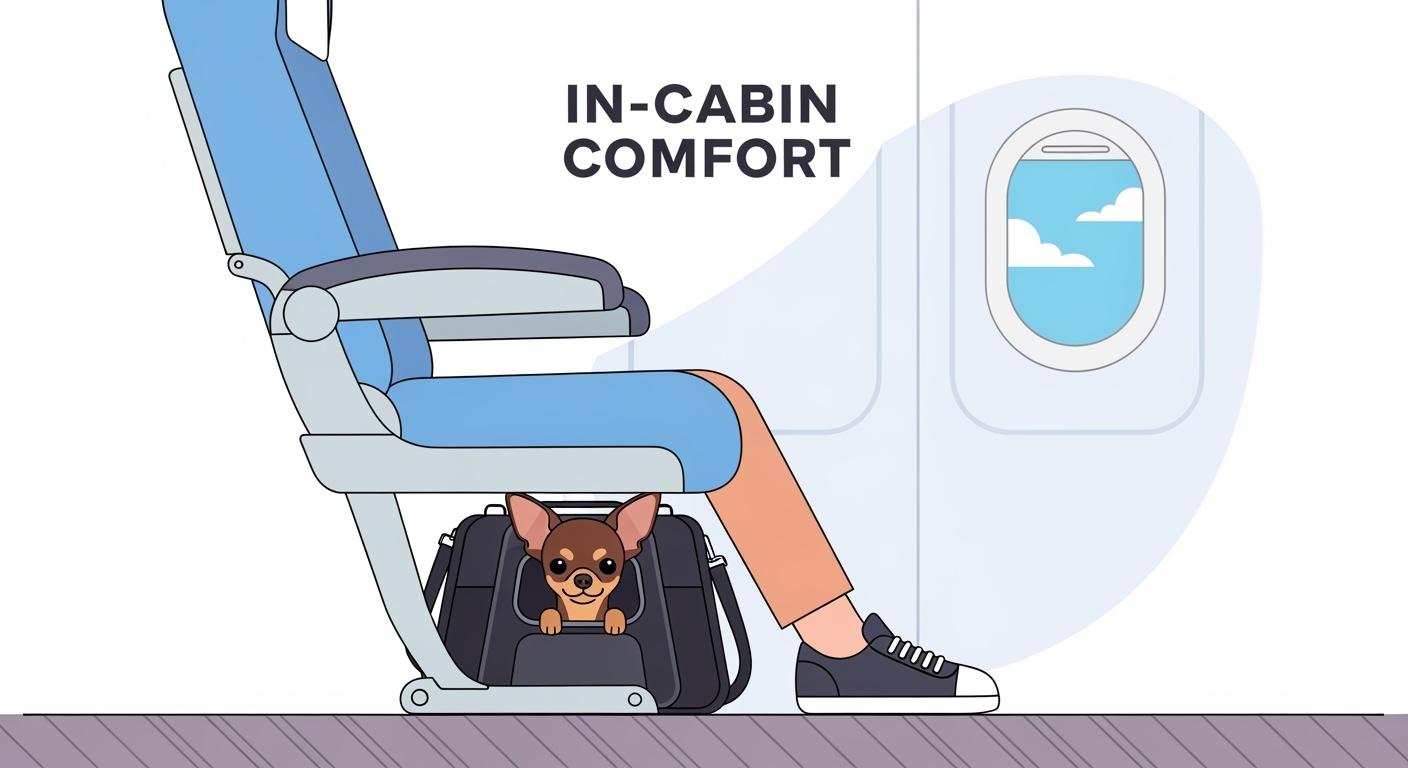
The best pet carriers for flying are not decided by a tag that says “airline approved.” They are decided by whether the carrier can slide under the seat, keep usable space once it is there, and still let your pet stay reasonably settled through check-in, waiting, boarding, and the flight itself. That is why soft-sided carriers often work better for in-cabin flying: they can flex around the edges of the space a little. But flexibility alone is not enough. If the sidewalls collapse too much, the base sags, or the opening becomes awkward once the carrier is under real travel load, the fit may look better on paper than it feels in use.
Key Takeaways
- Pick a soft-sided carrier when under-seat fit is your main concern. It usually gives you more margin than a rigid shell.
- Check the actual shape under compression, not just the listed dimensions. A carrier can measure fine and still lose too much interior room once pushed under a seat.
- Test the carrier at home with your pet inside before travel day. Usable fit matters more than label fit.
Best pet carriers for flying: what matters most
Under-seat fit is more than exterior size
You need to think about under-seat fit as a real-use problem, not just a measurement problem. The carrier has to go under the seat, but it also has to leave enough practical interior space that your pet is not immediately crowded once the sides compress. Some carriers look roomy when standing on the floor and feel much smaller once the top edge and back corners are pushed into under-seat space.
This is why the best pet carriers for flying are usually the ones that keep a flatter base and cleaner lower-body shape even when the upper part flexes. A little controlled give is helpful. Losing the whole usable shape is not.
Tip: The real question is not only “Will it fit under the seat?” It is “What shape is left after it fits under the seat?”
What a carrier can and cannot solve
A travel carrier can help you manage space, containment, and calmer handling. It can make moving through the airport more organized and give your pet a more predictable place to settle. But a carrier does not solve everything. It does not automatically make a nervous pet comfortable. It does not fix a poor match between pet size and usable interior space. It also does not turn a long, awkward travel day into an easy one just because the bag checks the right boxes.
The better carrier is the one that reduces friction during the parts of the trip you can actually control: carrying, waiting, boarding, under-seat placement, and getting your pet back out without the whole process turning clumsy.
Comparison table: soft-sided, structured, expandable
Use this table to compare the main in-cabin options by what they usually feel like in real airport use.
| Carrier Type | Use Cases | Main Benefit | Main Watchout | Who Should Skip It |
|---|---|---|---|---|
| Soft-Sided | In-cabin flying, tighter under-seat spaces, airport carry | More adaptable under-seat fit | Can lose usable shape if sidewalls collapse too easily | Pets that panic and push hard against softer walls |
| Structured | Ground travel, more rigid handling, less compression | Better shape retention | Less forgiving in under-seat space | Trips where under-seat clearance is the main challenge |
| Expandable | Layovers, waiting time, more rest space off-seat | Extra room when fully opened | Expansion helps only when you are no longer in under-seat mode | People expecting the expanded shape to help under the seat |
You should choose the type that matches the most restrictive part of the trip first. For in-cabin flights, that is usually under-seat fit and handling, not lounge comfort.
Travel carrier types: soft-sided vs structured
Why soft-sided usually works better in cabin
Soft-sided carriers usually work better in the cabin because they give you a little flexibility where rigid walls do not. That extra give can help the carrier settle into the seat space more cleanly. It is one of the main reasons soft-sided carriers keep showing up in under-seat fit guides. But the key word is controlled. The best soft-sided carrier should flex where you need it to flex while still keeping a usable floor, a readable opening, and enough side support that your pet does not feel like the carrier is folding around them.
Soft-sided also tends to feel easier during carry, boarding, and quick repositioning. That can matter more than people expect, especially once the trip becomes a series of small transitions instead of one simple flight segment.
When structured carriers help and when they do not
Structured carriers help when shape retention is your biggest concern. They usually keep the base more defined and the sidewalls more predictable. That can make them feel steadier in hand and clearer to pack. But for in-cabin flying, the main weakness is obvious: they do not forgive tight under-seat space very well. If the fit is close, there is much less room to work with.
This does not make structured carriers bad. It just means they often make more sense in ground travel or in travel situations where under-seat flexibility is not the deciding factor.
Expandable carriers: useful, but only in the right phase
Expandable carriers are often misunderstood. The expansion panels can be helpful during waiting periods, longer holds, or calmer rest moments off the seat. But they do not solve the main under-seat problem, because the carrier still has to spend takeoff, landing, and flight time in its closed form. That makes expandable carriers useful only when you treat expansion as a bonus phase, not as the core fit strategy.
- They can make rest stops feel easier.
- They do not usually help during the actual under-seat phase.
- If the closed carrier is already a poor fit, the expandable feature does not fix that.
What to look for in real airport handling
A good airline carrier should not only fit the seat. It should also feel usable during the rest of the trip. These details often matter more in real life than they do on a product page:
- the carrier should open and close without fighting you
- the zipper path should stay smooth when the bag is loaded
- the base should stay flatter than the upper body when lifted
- the carry shape should not collapse enough to block your hand from normal handling
Tip: A carrier that feels easy to handle empty may feel very different once your pet is inside and the sides are carrying real weight.
Mock under-seat fit checks before you fly

Pass/fail checklist table
Use this checklist at home before the trip. It tells you much more than a label ever will.
| Check Item | Pass Signal | Fail Signal | Fix |
|---|---|---|---|
| Mock under-seat fit | Carrier slides into a low space without crushing the usable floor | Carrier only fits by collapsing badly | Choose a softer but better-supported shape, or a smaller carrier |
| Usable interior space | Pet can settle without the sidewalls folding inward too far | Pet looks crowded once the carrier is compressed | Reassess carrier shape, not just listed size |
| Ventilation path | Mesh panels remain open in real use | Panels get blocked or pressed closed too easily | Use a carrier with better panel placement |
| Opening and zipper use | Easy to open and close while the pet is inside | Zippers stick or access becomes clumsy under load | Practice more or change to a cleaner opening design |
| Carry feel | Carrier stays balanced enough to move through the airport normally | Base tilts, sags, or becomes awkward to handle | Choose a flatter, steadier base structure |
| Pet posture | Pet can turn, settle, and lie down without looking cramped | Pet stays stiff, crowded, or unable to reposition | Use a better-shaped carrier or reduce travel expectations |
Troubleshooting table: common issues and solutions
If something still feels off, use this table to identify the real problem faster.
| Symptom | Likely Cause | Fast Check | Fix |
|---|---|---|---|
| Carrier fits low space but pet looks cramped | Upper flexibility is taking too much room from the interior | Mock the under-seat shape at home with the pet inside | Choose a shape with better lower-body structure |
| Zipper use becomes awkward | Opening path does not work well once the carrier is loaded | Repeat open-close drills with the pet inside | Use a carrier with easier access geometry |
| Carrier sags in hand | Base support is too weak for travel load | Lift the carrier several times and watch the floor line | Choose a flatter, more stable base |
| Pet resists entering | Carrier feels cramped, unstable, or overly unfamiliar | Watch entry behavior at home, not only on travel day | Build familiarity earlier or choose a more usable shape |
| Vent panels seem present but do not stay open | Compression is closing the mesh more than expected | Check the carrier in the mock under-seat position | Use a carrier with better panel placement |
How to test your carrier before flying
You should test the carrier the way the trip will actually use it, not only the way it sits on the floor.
- Place your pet inside and check whether they can turn and settle naturally.
- Mock a low under-seat space with a chair, bench, or similar clearance.
- Slide the carrier into that space and see what shape is left.
- Practice opening and closing the carrier calmly while your pet is inside.
- Walk a short indoor route and check base sag, handle balance, and zipper access.
Tip: A carrier that works only in one static position is not fully tested yet. You need to know how it behaves while being carried, compressed, and handled.
The best pet carriers for flying are the ones that keep under-seat fit, usable interior space, and real travel handling in balance. Soft-sided usually works best when cabin fit is the first priority, but the better choice is always the carrier that still feels usable after compression, not just the one that looks good on a label.
Before you travel, always check your airline’s current in-cabin pet rules for your specific route and seat type. If your pet has health, stress, or breathing concerns, talk to your veterinarian before flying.
FAQ
What type of carrier usually works best for flying in cabin?
Soft-sided carriers usually work best when under-seat fit is the main issue, because they can flex a little where a rigid shell cannot. The better choice is the one that still keeps enough usable interior space once compressed.
How do I know if a carrier really fits under the seat?
Mock the under-seat height at home and test the carrier with your pet inside. A real fit means the carrier goes under the seat without taking away too much of the space your pet still needs to settle.
Are expandable carriers better for flying?
They can be useful during waiting periods or rest stops, but expansion does not solve the core under-seat phase. Judge the carrier first by how it works when fully closed.






