
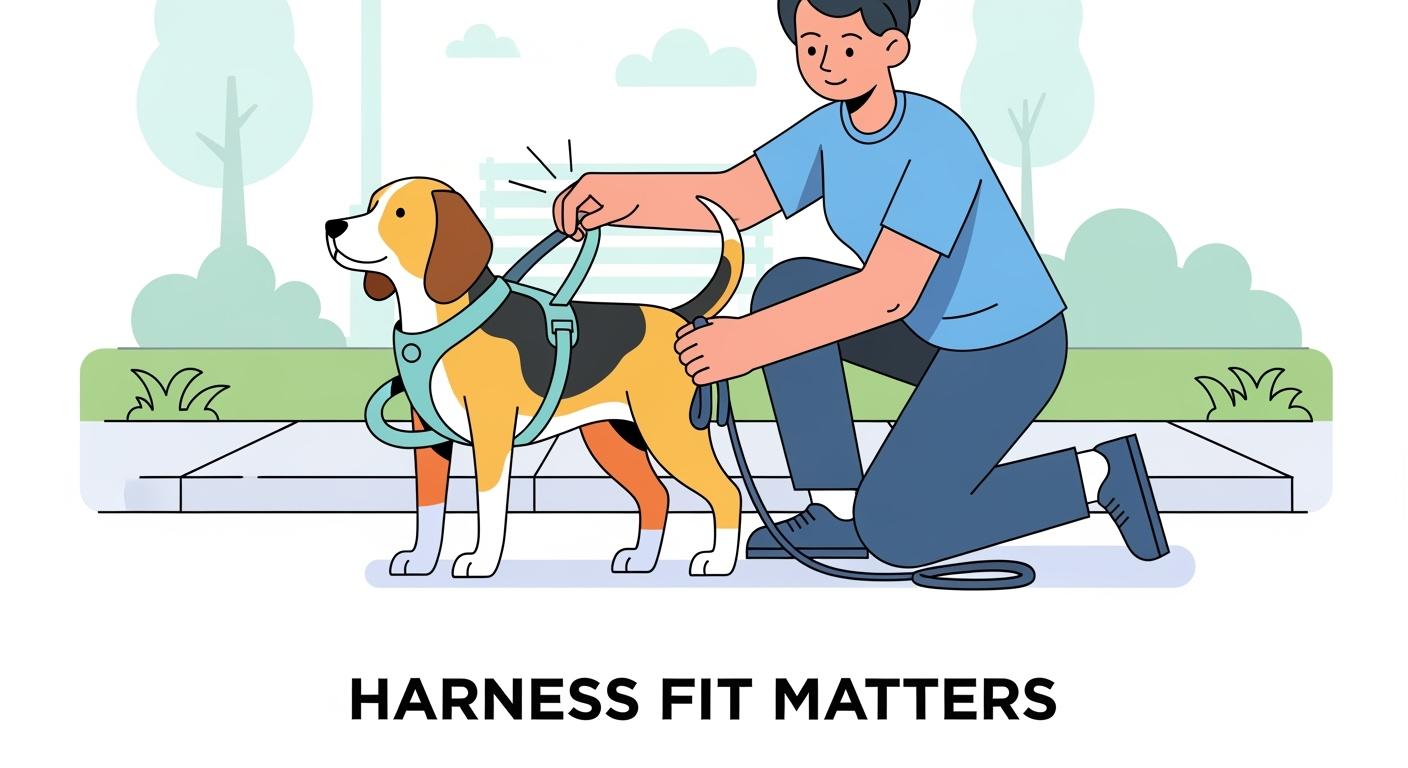
A dog harness medium dog setup can look fine when the dog is standing still and still go wrong once the walk starts. That is the part many owners miss. The back piece begins turning, one strap drifts toward the elbow, or the front section starts crowding the shoulder only after the dog turns, sniffs, pulls, or changes pace. In other words, the problem is often not basic size. It is how the harness behaves in motion. A better fit should stay centered, leave enough shoulder room, and stop feeling like it needs to be corrected every few minutes.
Tip: A harness that looks neat at the door is not automatically a good fit. The real test is what happens after a few minutes of actual walking.
Key Takeaways
- Measure your dog’s neck base and chest before buying. A medium label alone does not tell you how the harness will sit once the dog moves.
- Check the fit during a short walk, not only when the dog is standing. Most twisting and strap drift show up after the leash is attached.
- Watch for shoulder crowding, one-sided strap movement, and repeated readjustment. Those are often early signs that the harness shape is not matching your dog well.
Why medium dogs still get twisting problems
Size label and body shape are not the same thing
You might assume a medium size label means a dog harness will fit most medium dogs the same way. In real use, medium dogs vary a lot. Some carry more chest depth, some have broader shoulders, and some taper more through the waist. Those differences matter because they change where the straps sit and how the harness reacts once leash tension appears.
A harness can technically match the chest number and still twist because the shape is wrong for that dog’s front end. This is why two dogs with similar weight can have very different results in the same harness.
Standing fit hides moving fit problems
Standing fit only tells you whether the harness is roughly in the right place at one still moment. It does not show you what happens when the dog reaches forward, turns quickly, lowers the head to sniff, or leans into the leash. That is where medium-dog twist problems usually start.
- The chest section may look centered when the dog stands, then start rotating after a few turns.
- The belly strap may appear clear of the elbow until the dog lengthens the stride.
- The back piece may stay flat indoors, then start drifting sideways once the leash adds off-center pull.
A walk test tells you much more than a mirror check.
Twisting changes more than appearance
Once the harness starts twisting, the whole walk often feels worse. The leash line stops feeling clean, one side of the harness begins carrying more pressure, and the dog may shorten stride or keep moving as if one shoulder has less room. Sometimes the dog scratches at the harness or seems fine at first, then starts walking less freely after a few minutes.
That is why twisting is not just a cosmetic problem. It usually means the harness is no longer sitting where it needs to sit.
Harness strap drift and shoulder room
Why strap drift starts
Strap drift usually begins when the harness has one of four problems: the chest fit is only just acceptable, the belly strap sits too close to the elbow line, the front section is wider or fuller than the dog needs, or the leash clip changes the pull line enough to rotate the whole harness. Medium dogs often expose these issues quickly because they have enough strength to move the harness, but not always enough bulk to stabilize a poor shape.
If you see one side creeping back or the chest panel no longer sitting square, the harness is not tracking the dog’s movement cleanly.
Shoulder freedom matters more than extra coverage
More coverage does not automatically mean a better fit. A fuller chest panel can feel more secure when you first put it on, but it can also crowd the shoulder sooner if the dog has a more active stride. A lighter layout often moves more naturally, but only if it stays centered and does not drift.
| Harness Layout | Bulk Level | Clip Position | Movement Feel | Twist Risk | Typical Best Use |
|---|---|---|---|---|---|
| Lower-bulk back-clip | Low | Back | Usually cleaner shoulder movement | Low to moderate | Daily walks where the dog already moves fairly cleanly |
| Fuller chest front-clip | Medium to high | Front | Can help with control, but needs closer fit checking | Moderate | Dogs needing more steering, provided shoulder room stays open |
| Padded full-coverage build | High | Varies | Feels substantial, but can get busy on active dogs | Moderate to high | Dogs that genuinely need the extra structure, not just the look of it |
The better choice is usually the harness that gives enough control without asking the dog to move around extra material.
Clip reach and daily handling still matter
Medium-dog harness problems are not only about the dog’s side of the setup. They also show up in daily handling. If the clip is awkward to reach, if the back panel keeps folding under your hand, or if the leash connection changes angle too easily, you are more likely to live with a poor fit longer than you should.
A harness-and-leash setup should feel easy to recheck during normal use. If it keeps asking for corrections, that is usually a fit signal, not just an annoyance.
Harness setup mistakes and quick checks
Common mistakes with harness fit
Most medium-dog harness problems start with a few repeat mistakes. The harness is chosen by label instead of by shape, the straps are adjusted once and never retested in motion, or the dog is judged only while standing still.
- Choosing by “medium” instead of by neck base and chest shape
- Accepting a harness that already starts turning during normal turns or sniffing
- Ignoring elbow clearance because the chest fit seems okay
- Keeping a harness that needs constant recentering
- Trying to fix twist only by tightening, even when the layout is the real problem
Pass/fail checklist for walks
Use this quick check before and after each walk. The goal is not perfect stillness. The goal is a harness that stays usable and comfortable once the dog actually moves.
| Check Item | Pass Signal | Fail Signal | Fix |
|---|---|---|---|
| Neck opening | Sits on the chest and stays clear of the throat | Rides high or shifts upward in motion | Adjust lower or try a different front shape |
| Belly strap position | Stays behind the front legs with clear elbow room | Moves forward or rubs near the elbow | Refit or change the layout |
| Centered fit | Stays balanced through turns and normal leash tension | Rotates, twists, or drifts to one side | Re-even the straps or switch harness style |
| Shoulder freedom | Dog reaches forward normally | Stride shortens or the dog moves stiffly | Open the shoulder area or reduce chest coverage |
| Skin check | No redness or rubbing after the walk | Redness, swelling, hair flattening, or scratching | Stop use, adjust, or change the harness shape |
| Back-out risk | No large gaps when the dog backs up | Harness opens space or shoulders start slipping free | Refit more securely or use a more secure frame |
Troubleshooting harness problems
If the harness still feels wrong during walks, use this table to narrow down what is actually happening instead of just tightening everything again.
| Symptom | Likely Cause | Fast Check | Fix |
|---|---|---|---|
| Harness twists after a few minutes | Shape mismatch or uneven strap balance | Watch the chest panel through turns and sniffing | Re-even the fit or try a cleaner layout |
| One strap keeps drifting back | Off-center pull or poor shoulder clearance | Check which side starts moving first | Adjust the fit or reduce crowding near the shoulder |
| Dog shortens stride | Front section is too full or sitting too far forward | Watch reach from the side | Open the shoulder area or change styles |
| Redness behind elbow | Rubbing from drift or poor belly strap position | Check skin right after the walk | Move the contact zone or stop using that harness |
| Handle or back section feels loose | Top structure is not staying flat | Check how the back piece sits once the leash is attached | Refit or choose a more stable top layout |
Tip: Review the harness after every walk, not only when something goes obviously wrong. Medium-dog twist problems often start small and become routine before owners notice them clearly.
A dog harness medium dog setup should stay centered, leave enough shoulder room, and stop feeling like it needs constant correction. If it twists, drifts, or changes the way your dog walks, the answer is usually not “tighten everything more.” It is to recheck shape, strap position, and how the harness behaves once the walk actually begins.
FAQ
How do you know if a no-pull harness fits your medium dog?
Check the neck base, chest fit, and shoulder room, then test the harness on a short walk. A no-pull harness that looks fine standing still can still twist or crowd the shoulder once leash tension appears.
Can extra padding stop strap drift?
Padding may reduce rubbing, but it does not automatically stop drift. If the harness shape is wrong or the pull line keeps rotating the frame, extra padding can still move with it.
What should you do if the top handle or back section feels loose during walks?
Check whether the harness is staying flat once the leash is attached. If the top section lifts, folds, or shifts, re-adjust it and watch it in motion. If it still feels loose, the layout may not suit your dog well.






