
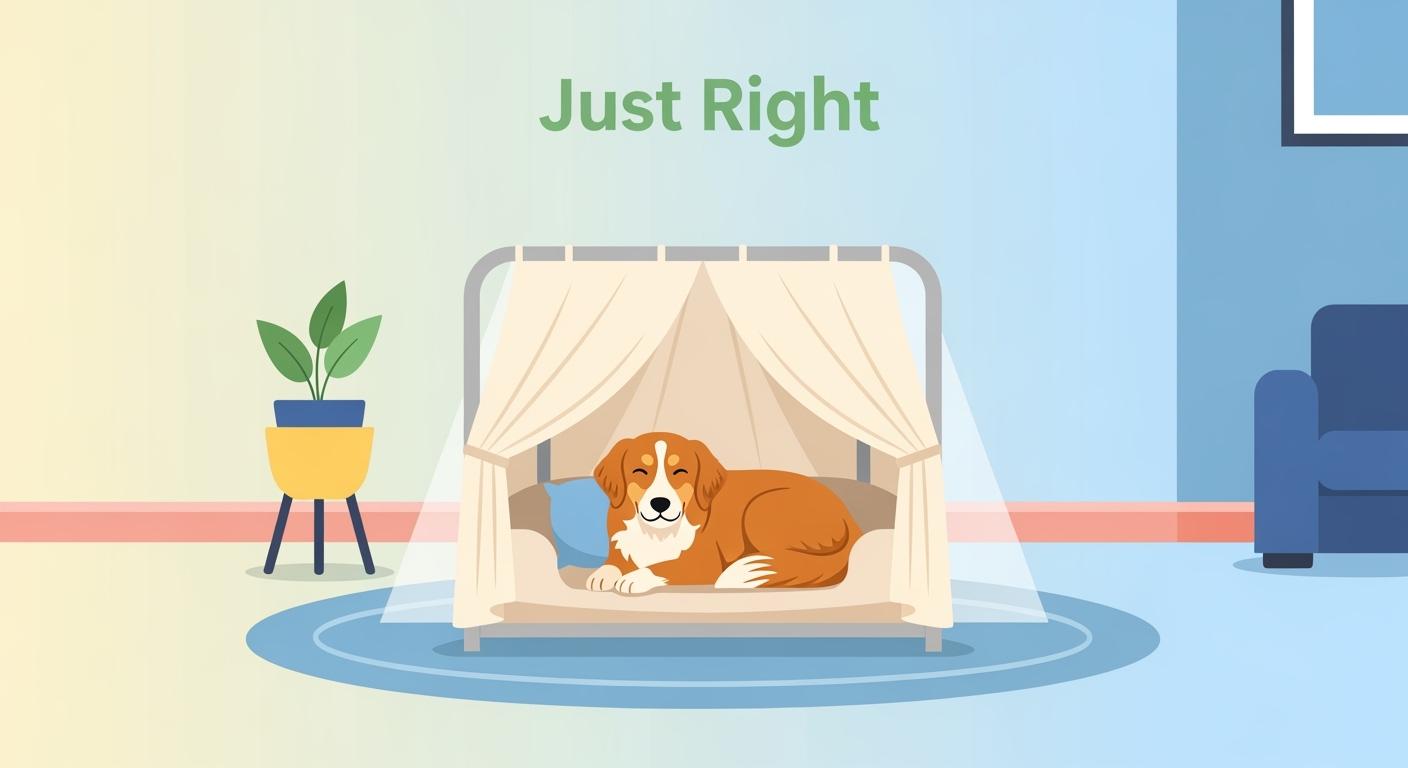
Some dogs settle faster in a bed that feels slightly sheltered. Others walk straight past it and pick the open floor, sofa, or a simple cushion instead. That is why a canopy bed for dog is not really a style question first. It is a resting-style question.
This page focuses on that decision. It helps you judge whether your dog is likely to use a canopy bed, what early reactions tell you the setup is wrong, and when an open bed is the better match. A covered top can feel cozy for one dog and unnecessary for another.
Note: This guide is not medical advice. If your dog pants heavily, seems distressed, scratches excessively, coughs, or avoids rest because of discomfort, speak with your veterinarian.
Key Takeaways
- A canopy bed gives your dog comfort and privacy. It also lets air move through.
- Not every dog wants overhead coverage. Voluntary use matters more than appearance.
- If the bed feels stuffy, awkward to enter, or ignored after a fair trial, an open bed is often the better choice.
Which dogs usually like this style
Dogs that already seek quiet, sheltered resting spots
Some dogs naturally rest under tables, beside furniture, or in corners where they feel less exposed. Those dogs are often the best candidates for a canopy bed. The top cover can make the bed feel more tucked away without turning it into a full enclosure.
You want to match your dog’s age, breed, and size to the right bed. That matters here too, but resting style matters just as much. A small dog that likes curling into tucked-in spots may enjoy the cover more than a larger dog that prefers stretching flat in open space.
Dogs that want calm, not confinement
A good canopy bed works best when your dog wants a gentler resting zone, not a tight enclosure. The dog should still be able to enter easily, turn around, and leave without hesitation. If the bed feels like a barrier instead of a resting place, the style is probably wrong.
| Dog Habit | Usually a Good Match? | What to Watch | Better Direction |
|---|---|---|---|
| Seeks quiet corners or rests under furniture | Often yes | Make sure the bed still feels airy and easy to leave | Keep the canopy light and open |
| Stretches out fully and prefers open floors | Often no | Coverage may feel unnecessary | Use an open cushion or bolster bed |
| Gets hot easily | Maybe not | Extra fabric can make the setup feel warmer | Choose very breathable coverage or skip the canopy |
| Likes nesting but dislikes tight entry points | Maybe | Some canopy styles still feel too restrictive | Use a more open covered design |
What to check before you keep it
Watch whether your dog chooses it without being pushed
The easiest test is not a product feature list. It is whether your dog actually returns to the bed by choice. A good match usually looks quiet and simple: your dog steps in easily, circles once if needed, and settles. A poor match often looks different. The dog hesitates, paws at the edge, sniffs and leaves, or only uses the bed when guided there.
Check airflow, entry, and cleanup as a real-use set
Look for a canopy bed for dog with a removable cover. That matters because washability only helps if the bed is also practical to use every day. The fabric should feel light enough to avoid stale air, the opening should be easy to enter, and the whole setup should be simple to clean without taking the resting area apart every time.

| Check Item | Pass Signal | Fail Signal | What to Do |
|---|---|---|---|
| Airflow | Bed feels cool and fresh after use | Inside feels stuffy or warmer than the room | Remove the canopy or use lighter fabric |
| Entry and exit | Dog steps in and out easily | Dog hesitates, paws, or backs away | Choose a more open design |
| Voluntary use | Dog returns to the bed on its own | Dog avoids it after trying once or twice | Do not force the style |
| Washability | Cover removes and cleans easily | Cleanup is awkward or slow | Use a simpler bed if maintenance becomes a burden |
| Placement | Quiet, cool, undisturbed location | Direct heat, sun, or constant foot traffic | Move the bed before judging the style |
Tip: A canopy bed should feel like a calm option, not a bed your dog has to be talked into using.
Common setup mistakes that make dogs ignore it
Using too much fabric for a dog that runs warm
A common mistake is assuming extra cover always feels safer. For some dogs, especially those that already run warm or dislike covered spaces, too much fabric quickly makes the bed feel less inviting. Panting, restlessness, or choosing the cool floor nearby are stronger signals than the product description.
Putting it in the wrong place and blaming the bed
A canopy bed placed in direct sun, beside a heater, or in a busy walkway often fails for reasons that have little to do with the bed itself. Dogs usually rest better where they can relax without constant disturbance. Placement affects whether the bed feels safe, airy, and worth returning to.
| Symptom | Likely Cause | Fast Check | Fix |
|---|---|---|---|
| Dog pants or leaves quickly | Bed feels too warm or enclosed | Touch the inside after the dog leaves | Use lighter coverage or remove the canopy |
| Dog sniffs but will not settle | Style or placement feels wrong | Move the bed to a quieter spot and watch again | Retest before replacing it |
| Dog scratches often after use | Dirty cover or irritation point | Inspect the cover and skin contact areas | Wash the cover and stop use if irritation continues |
| Dog only lies halfway in | Opening or canopy shape feels awkward | Watch entry and turning room | Choose a wider, more open shape |
When an open bed is the better choice
Some dogs simply rest better with no overhead cover
If your dog sprawls in open areas, moves often during sleep, or clearly prefers cooler surfaces, an open bed may be the better everyday fit. There is nothing wrong with that. A canopy bed is useful only when your dog actually benefits from the added cover.
Do not turn a bed style into a behavior solution
A covered bed is not a treatment for anxiety, sleep problems, or general unease. It can support comfort for some dogs, but it should not be treated as a fix for behavior or medical issues. If your dog remains restless, avoids rest, or seems upset no matter where the bed is placed, the better next step is not simply changing bed style again.
| Situation | Canopy Bed a Good Match? | Better Direction |
|---|---|---|
| Dog likes tucked-away resting places | Often yes | Use light, breathable coverage |
| Dog sprawls in open areas and avoids cover | Often no | Use an open bed with more sleep surface |
| Dog gets warm easily or pants in covered spots | Maybe not | Use a cooler, more open setup |
| Dog keeps rejecting the bed after fair testing | Usually no | Switch bed style instead of forcing use |
Reminder: The right bed is the one your dog uses comfortably and consistently, not the one that looks most decorative.
A canopy bed for dog works best when it matches your dog’s resting habits, stays airy enough to feel inviting, and sits in a spot where your dog can truly relax. If your dog keeps choosing it, the style fits. If your dog keeps choosing the floor or an open bed instead, that is useful information too.
FAQ
Which dogs are most likely to like a canopy bed?
Dogs that already seek calm, sheltered resting spots are usually the best candidates. If your dog likes corners, tucked-away spaces, or light cover while resting, this style may fit well.
How long should I give my dog to decide whether they like it?
Give your dog a fair trial in the right spot, but focus on voluntary use rather than a fixed timeline. If the bed is placed well and your dog keeps avoiding it, that matters more than waiting longer.
Can a canopy bed be too warm for some dogs?
Yes. Some dogs tolerate light coverage well, while others run warmer and may avoid beds that feel stuffy or trap air. Watch for panting, restlessness, and repeated preference for cooler surfaces.
Should I buy a canopy bed for a dog with anxiety?
Do not treat a bed style as anxiety treatment. A canopy bed may help some dogs feel more tucked in, but it is not a replacement for veterinary or behavior guidance when stress is the real issue.






