
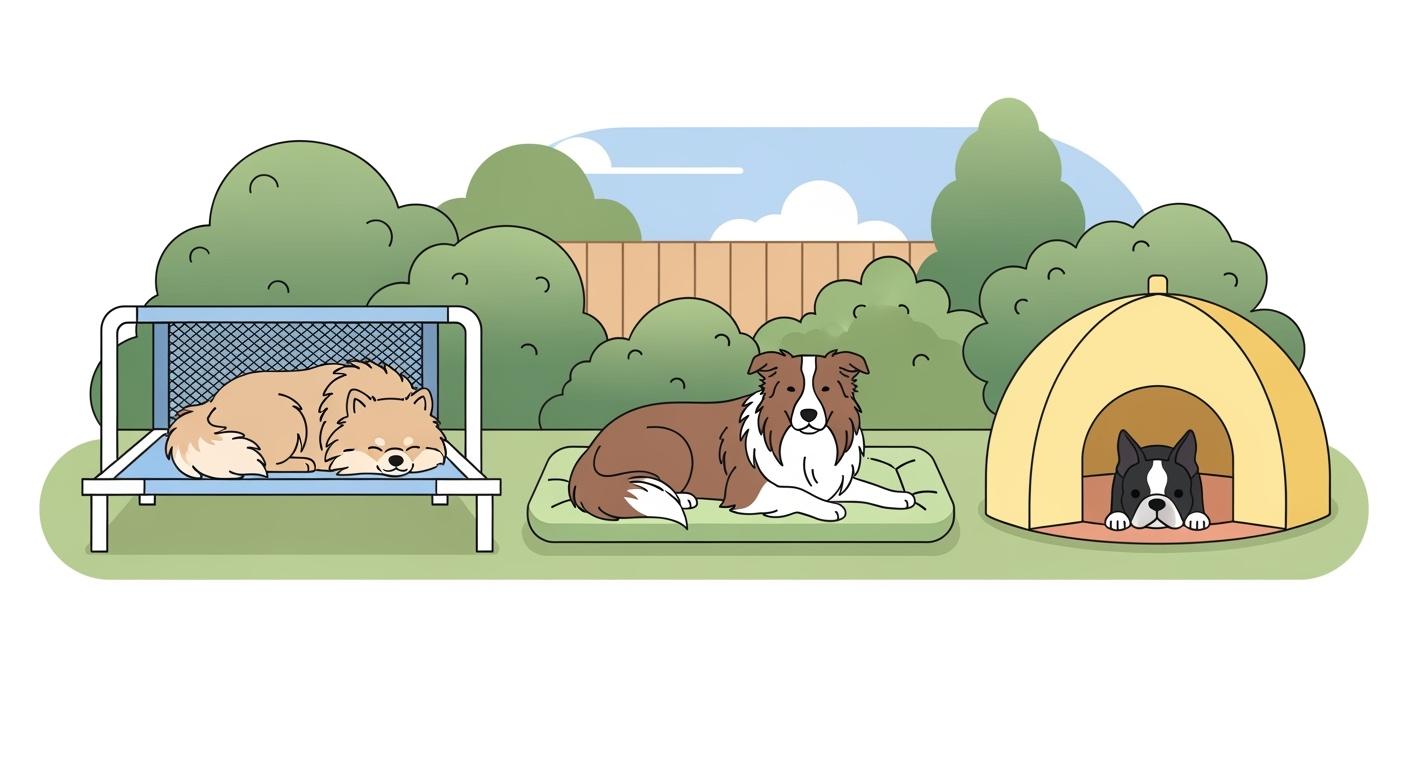
Outdoor pet beds for dogs work best when the bed matches your dog’s rest posture, the placement stays dry and stable, and the setup is easy to clean after everyday use. A good outdoor bed can make supervised rest more comfortable, but it should not be treated as a substitute for shade, fresh water, airflow, or supervision.
How this guide was prepared: this page focuses on observable checks such as usable sleep area, step-on height, wobble, surface heat, drainage, and cleanup. It avoids unsupported crash, weatherproof, or health claims. Safety wording is kept to general pet care basics: shade, water, airflow, hot-surface awareness, and supervised use.
- Pick a bed style that matches how your dog actually rests outside, not just how the bed looks in a product photo.
- Place the bed where heat, splash, wobble, and slippery surfaces are easier to control.
- Clean and dry the bed based on visible dirt, dampness, odor, and wear, not a made-up fixed schedule.
1. Choose a bed style that matches your dog and your outdoor surface
The first comfort decision is not “soft versus firm.” It is whether the bed shape works with your dog’s usual rest style and the outdoor surface below it. Some dogs curl up and want edge support. Others sprawl and need a flatter, more open surface. The best choice is the one your dog can step onto easily, settle on without sliding, and leave without catching a paw.
Raised, padded, and ground-contact beds each solve different problems
Raised beds can help airflow and keep the sleeping surface off damp grass, splash zones, or warm patio stone. They also make it easier to spot trapped dirt underneath. Padded beds can feel better for dogs that prefer more give, but only if the fill stays even and the cover does not stay damp. Ground-contact beds can work in shaded, cooler areas, but they need the cleanest and driest placement because the bed takes on more of the surface condition below it.
For older dogs, low step-on height and stable footing usually matter more than a “premium” look. For dogs that flop onto a bed after play, wider usable surface area often matters more than deep side bolsters. When comparing options, look at the sleeping surface your dog actually gets, not only the outside dimensions.
Check fabric, airflow, drainage, and cleanup before comfort claims
Waterproof materials keep moisture away and help you clean dog beds quickly. That helps, but outdoor comfort still depends on whether the cover dries reasonably fast, whether seams trap dirt, and whether water runs off or pools around the fill. A bed can sound durable in the listing but still become hard to manage if hair, mud, and moisture stay in the corners after use.
Breathability also needs a practical reading. For outdoor use, “breathable” is most useful when the bed can shed heat and moisture instead of feeling clammy after a short rest. If your dog gets up and the bed surface stays sticky, hot, or slow to dry, the setup is not working well even if the material description sounds impressive.
| Check | Good sign | Warning sign |
|---|---|---|
| Usable sleep area | Your dog can lie down, turn, and settle without paws hanging off awkwardly. | Your dog keeps shifting position because the surface feels cramped or uneven. |
| Step-on height | Your dog steps up and off without hesitation. | Your dog pauses, jumps awkwardly, or slips while getting on or off. |
| Surface feel after use | The cover still feels dry enough and the fill stays evenly spread. | The bed stays damp, bunches, or forms hot spots under the body. |
| Cleanup | Hair and dirt lift off without much work, and muddy spots do not sink deep into the bed. | Dirt collects in seams, corners, or mesh and the cover is hard to refresh between uses. |
2. Put the bed where heat, splash, and wobble are easier to control

Shade and airflow matter more than decorative placement
Warm-weather pet care guidance consistently emphasizes shade, fresh water, and avoiding hot surfaces. That means the safest-looking corner is not always the most comfortable one. An outdoor dog bed works better when you can keep it out of direct heat buildup, away from stagnant air, and far enough from splash or runoff that the surface can stay usable.
Before your dog uses the bed, press your hand against both the bed surface and the ground below it for several seconds. If either feels uncomfortably hot, damp, or slick to you, move the setup. This is not a lab test. It is a simple pre-use check that helps catch obvious problems before your dog lies down.
Note: Outdoor beds are best treated as supervised rest spots. They do not replace shade, water, or your own heat check before use.
Match placement to the surface under the bed
Grass usually stays cooler than stone or decking, but wet grass can leave the underside damp. Patios and decks can feel cleaner and more level, but some surfaces build heat quickly or become slippery after rinsing. Poolside or hose-down areas can look convenient yet keep the bed wet longer than expected. The best spot is the one that stays flatter, drier, and easier to inspect between uses.
Keep the setup away from sharp edges, standing dirty water, or places where the bed can shift toward a step or drop. If the frame rocks on one corner or the bed slides when your dog circles to settle, move it before calling the setup “secure.”
| Placement check | Pass signal | Fail signal | What to do |
|---|---|---|---|
| Shade and airflow | The bed stays in shade for the rest period and the area does not feel stuffy. | Sun reaches the bed directly or the area traps warm air. | Move to a shadier, more open spot and shorten outside rest time. |
| Ground stability | The bed stays level while your dog circles and lies down. | The bed rocks, tips, or shifts during entry. | Use a flatter surface or reposition the frame until it sits evenly. |
| Moisture exposure | The bed can dry fully between uses. | The underside stays damp or the fill starts to smell musty. | Move farther from splash zones and let the bed dry completely before the next use. |
| Walkway safety | The bed sits clear of steps, pool edges, and busy traffic paths. | Your dog has to step across clutter or settle near an edge. | Relocate the bed so entry and exit stay simple and low-risk. |
3. Keep the bed dry, clean, and stable between uses
Comfort drops fast when an outdoor bed stays damp, traps grit, or starts to sag. Clean the dog bed after muddy, wet, or high-shed use instead of following a rigid cleaning claim that may not fit your climate or your dog’s habits. The better routine is to check what happened after the last use: is the cover still clean enough, is the underside dry, and do the seams still hold their shape?
A simple maintenance routine is more useful than a fixed schedule
- Shake off loose dirt, leaves, and hair after each outdoor rest period.
- Check corners, mesh, and the underside for trapped dampness before storing or reusing the bed.
- Wipe down spots quickly after splash, drool, or muddy paws so stains do not set into the cover.
- Wash removable covers according to the care label when visible dirt, odor, or hair buildup starts to stay after a basic wipe-down.
- Replace or repair the bed if the fill bunches, the frame loosens, or the cover no longer dries well.
If your dog avoids the bed after it has been outdoors for a while, do not assume it suddenly dislikes the style. First check for hidden heat, trapped moisture, odor, wobble, or rough seams. Many “my dog stopped liking it” problems are setup and maintenance problems, not preference problems.
| Problem | Likely cause | Fast check | Practical fix |
|---|---|---|---|
| Your dog steps off quickly | Heat, wobble, or rough feel | Touch the surface and push the bed lightly at each corner. | Move the bed, cool the setup, or switch to a more stable surface. |
| The bed smells stale | Moisture stayed in the cover or fill | Check the underside and seams after the bed sits for a few hours. | Wash the cover if removable and let every layer dry fully before reuse. |
| The bed slides during entry | Slick or uneven ground | Watch the bed while your dog steps on and turns. | Move it to a flatter spot or use a base that grips the surface better. |
| The bed looks fine but feels worse over time | Fill shift, stretched cover, or loose frame | Check for low spots, bunching, or uneven tension. | Replace worn parts or retire the bed if it no longer supports a stable rest position. |
Tip: A good outdoor setup stays easy to inspect. If you cannot tell whether it is dry, level, and clean at a glance, it will be harder to keep comfortable over time.
FAQ
How do I know an outdoor dog bed is large enough?
Watch your dog lie down, turn, and settle. If paws hang off awkwardly, the body spills over raised edges, or your dog keeps readjusting, the usable sleep area is likely too small.
Are raised beds always the best option outdoors?
Not always. Raised beds can help airflow and keep the surface off damp ground, but they only work well if the frame stays stable and the entry height suits your dog. A lower padded bed can be the better choice for some dogs if the cover stays dry and the surface does not sag.
How often should I clean an outdoor dog bed?
There is no single schedule that fits every yard, climate, or dog. Clean sooner after muddy, wet, high-shed, or poolside use. Wash removable covers when visible dirt, odor, or hair buildup starts to stay after a basic wipe-down, and always let the bed dry fully before reuse.
Can an outdoor dog bed stay outside all the time?
It is better to bring the bed in or move it under cover when it will sit through repeated sun, splash, or rain. Even beds made for outdoor use can lose comfort faster if the cover, fill, or frame stays wet or exposed for long stretches.






