
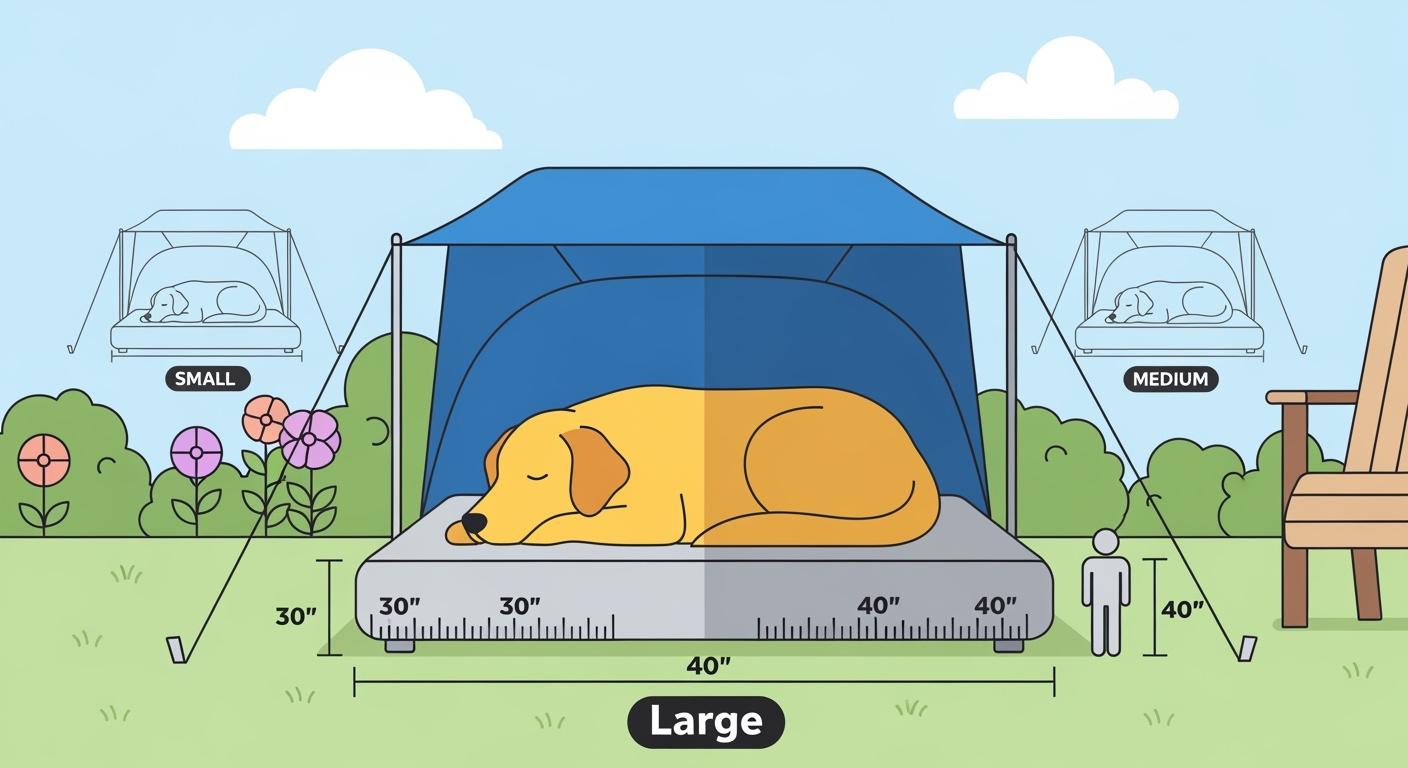
A dog bed canopy outdoor works best when the bed fits your dog, the shaded area covers the real rest zone, and the setup stays stable after the first few uses. Buying by size label alone often leads to the wrong footprint, poor shade coverage, or a bed that slides on the patio.
Before you compare styles, look at three things together: your dog’s resting position, the usable sleep surface, and the area where the bed will sit. Even when you are comparing different covered outdoor rest setups, Make sure it fits well.
This is a fit and everyday-use guide. It helps you check size, shade, stability, drainage, and cleanup. It does not replace veterinary advice, and a canopy bed is not a full shelter for severe weather.
What to measure before you compare sizes
Use the resting position, not the standing height
Start by measuring your dog’s resting length. Ask your dog to lie down the way they normally relax outside or after a walk. Measure the space from the front of the chest area to the rear resting point, then note the widest point of the body while your dog is settled. This gives you a more useful fit check than a general breed label or a seller’s small, medium, or large tag.
When you read a product page, compare your notes with the usable sleep surface, not just the outside frame. A bed can look large from edge to edge but still have a narrow center panel once the frame tubes and side seams are counted in. Your dog should be able to lie fully on the main panel without paws or hips hanging off the edge.
Check shade coverage and entry height separately
The canopy should cover the part of the bed where your dog actually settles, not just one end of the frame. If your dog prefers to curl against the back edge or stretch diagonally, make sure that position still stays mostly under shade during normal use.
Also check step-on height. A very tall bed may feel fine for a healthy adult dog but less comfortable for a small dog, a puppy, or an older dog that hesitates before stepping up. A good fit should let your dog step on, turn, and settle without scrambling or slipping.
| Check | Pass signal | Fail signal |
|---|---|---|
| Usable sleep surface | Dog can lie fully on the panel | Paws, hips, or shoulders sit off the edge |
| Canopy coverage | Main resting zone stays shaded | Sun hits the area where the dog settles most |
| Step-on height | Dog steps on and off in one easy motion | Dog hesitates, scrambles, or slips |
Setup details that matter outside
When you compare outdoor dog beds, pay attention to what happens after the bed is placed on real ground. A bed that looks neat indoors may wobble on textured concrete, collect water near the legs, or shift when a dog jumps on from the side.
Frame stability and base grip
Press down gently on each corner before first use. The frame should feel level, and the bed should not rock back and forth. Then watch what happens when your dog steps on from the front and from the side. If the legs slide, the frame twists, or one corner lifts, the bed needs a flatter surface or a different placement.
Base grip matters most on tile, sealed patios, and smooth deck boards. The bed should stay in place during normal entry and exit, not only when you test it by hand.
Drainage, airflow, and cleanup
For outdoor use, look at how water behaves on the sleep surface and around the bed after rain or washing. A practical setup lets water move away instead of pooling under the body area. If the fabric stays damp for too long, collects debris in seams, or smells musty after drying, cleanup will become a daily frustration.
Airflow also matters. A canopy should provide shade without trapping stale air around the rest zone. After placement, stand back and check whether fences, walls, or heavy planters block the open sides. Good placement usually feels breezy rather than boxed in.
| Outdoor setup check | What to look for | Why it matters |
|---|---|---|
| Corner press test | Frame stays level with no wobble | Reduces shifting during entry and exit |
| Post-rain surface check | No standing water on the sleep area | Makes cleanup easier and keeps the bed more usable |
| Under-bed check | Ground under the bed dries instead of staying swampy | Helps avoid odor, mud, and trapped moisture |
| Airflow check | Open sides still feel ventilated after placement | Improves comfort during everyday outdoor use |
First-use tests before regular outdoor use
A new bed should pass a few simple checks before it becomes part of your dog’s daily outdoor routine. These checks do not require special tools, and they are easier to repeat after rain, cleaning, or moving the bed to a new spot.
- Settle test: Let your dog step on, circle once, and lie down. Watch whether the surface stays level and whether the canopy still covers the spot your dog chooses.
- Shade shift check: Look at the bed again later in the day. If the rest zone moves into full sun, the bed may need a new position even if the size itself is correct.
- Step-off test: Watch how your dog gets down. If the dog jumps awkwardly, scrapes the frame, or slips on landing, reassess height and placement.
- Post-use cleanup check: After outdoor use, inspect the seams, corners, and underside for damp patches, leaves, or grit. A bed that looks clean from above can still stay dirty underneath.
Tip: If your dog keeps choosing the ground next to the bed instead of the bed itself, do not assume the dog “just prefers the floor.” Recheck surface size, shade coverage, airflow, and whether the bed shifts when weight is added.
| Test | Pass | Fail | Quick fix |
|---|---|---|---|
| Settle test | Dog lies naturally and stays centered | Dog perches at the edge or climbs off quickly | Recheck usable surface size |
| Shade shift check | Rest zone stays mostly shaded | Body area moves into direct sun | Move the bed or change orientation |
| Step-off test | Dog gets on and off smoothly | Dog hesitates or slips on exit | Use a flatter surface or lower setup |
| Post-use recheck | Surface and underside dry cleanly | Dampness or dirt stays trapped | Improve drainage and dry fully before reuse |
Common buying mistakes and how to avoid them
Buying by label only. One brand’s medium can feel close to another brand’s small. Compare your dog’s resting measurements to the usable panel and the shaded footprint instead of trusting the size name.
Counting the whole frame as sleeping space. The frame may add visual width without giving your dog more real room. Focus on where the body actually rests.
Assuming a canopy solves all outdoor conditions. A canopy helps with shade and everyday comfort, but it is not the same as a fully enclosed shelter. Heavy rain, unsafe heat, or cold weather still require a different plan.
Ignoring the ground surface. Even a stable bed can become annoying on slick tile or uneven pavers. Test the exact place where the bed will stay most of the time.
Overlooking cleanup. Outdoor gear that looks durable can still be frustrating if seams hold grit, the underside stays wet, or the bed takes too long to dry before the next use.
FAQ
How do I know whether the canopy is large enough?
Watch where your dog naturally settles, not just where you expect the dog to lie. The main body area should remain under shade during normal use.
Is a taller bed always better for outdoor airflow?
Not always. More height can improve separation from damp ground, but it can also make entry harder for some dogs. Choose the height your dog can use comfortably and repeatedly.
What matters more, the frame size or the sleep panel?
The sleep panel matters more for day-to-day fit. The frame affects stability, but the body should fit on the usable rest surface without hanging off the edge.
What should I check after rain?
Look at the sleep surface, seams, and the ground under the bed. Make sure water is not trapped where your dog rests and dry the bed fully before the next use.






