
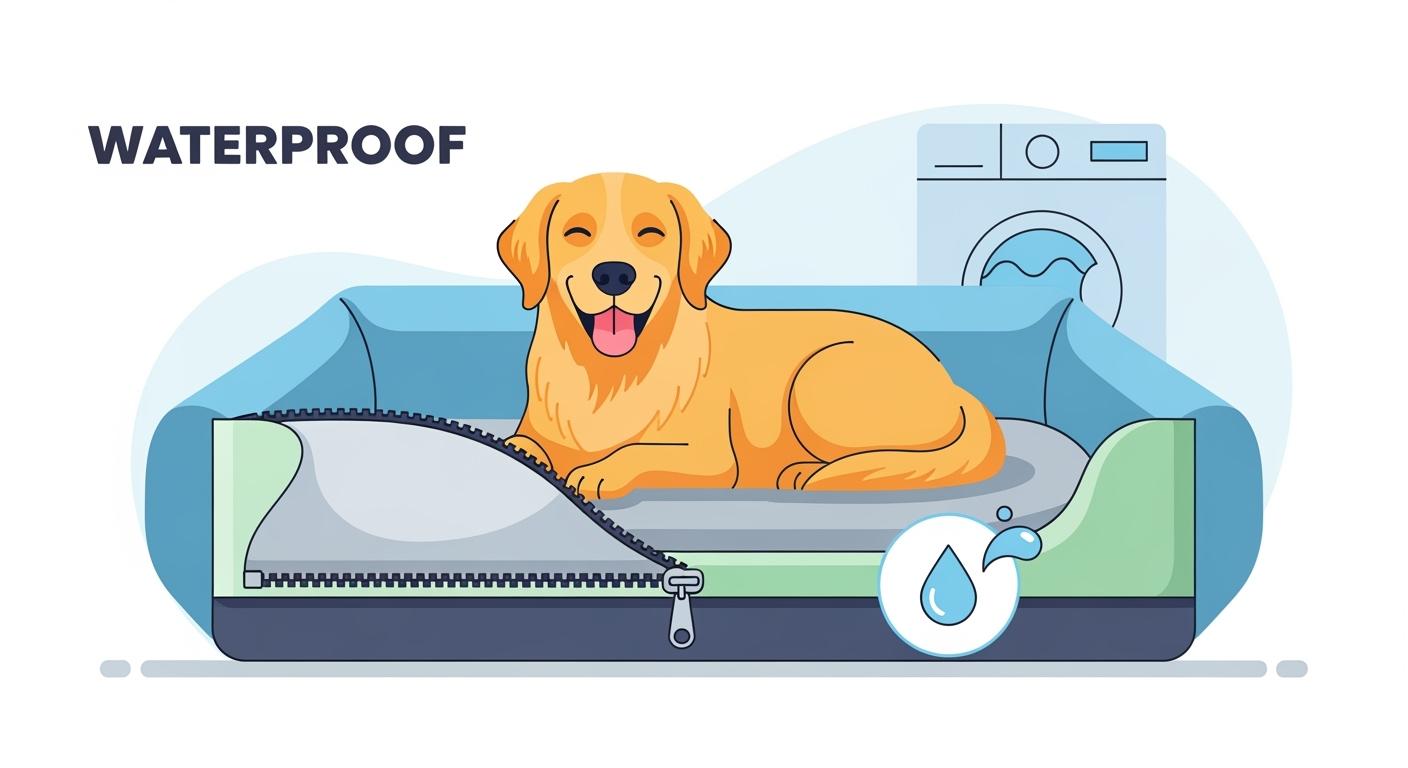
A washable dog bed waterproof should do two jobs at the same time: give your dog a comfortable place to rest and make cleanup easier when fur, damp paws, spills, or accidents happen. The problem is that many product pages lead with the waterproof label and skip the checks that matter most in daily use. If the bed is too short, too slick, too soft in the middle, or hard to wash fully, the waterproof claim will not solve the real problem.
Start with fit, usable sleep space, and easy cleaning. Then check whether the bed has a removable cover, a liner that actually protects the inner core, and a base that stays in place when your dog steps in and out. That order usually gives you a better buying decision than shopping by label alone.
This guide focuses on everyday fit, moisture management, and cleanup. It does not replace veterinary advice for pain, skin issues, or ongoing incontinence.
Key Takeaways
- Measure your dog in a relaxed sleeping position and choose the bed around usable rest space, not just the listed outside dimensions.
- Check whether the moisture barrier protects the inner core after washing, not just whether the outer fabric feels water-resistant.
- A good well-fitting bed is usually easier to live with because your dog can settle, turn, and stretch without hanging over the edge.
Start With Fit Before the Waterproof Claim
Measure Resting Length, Width, and Sleep Style
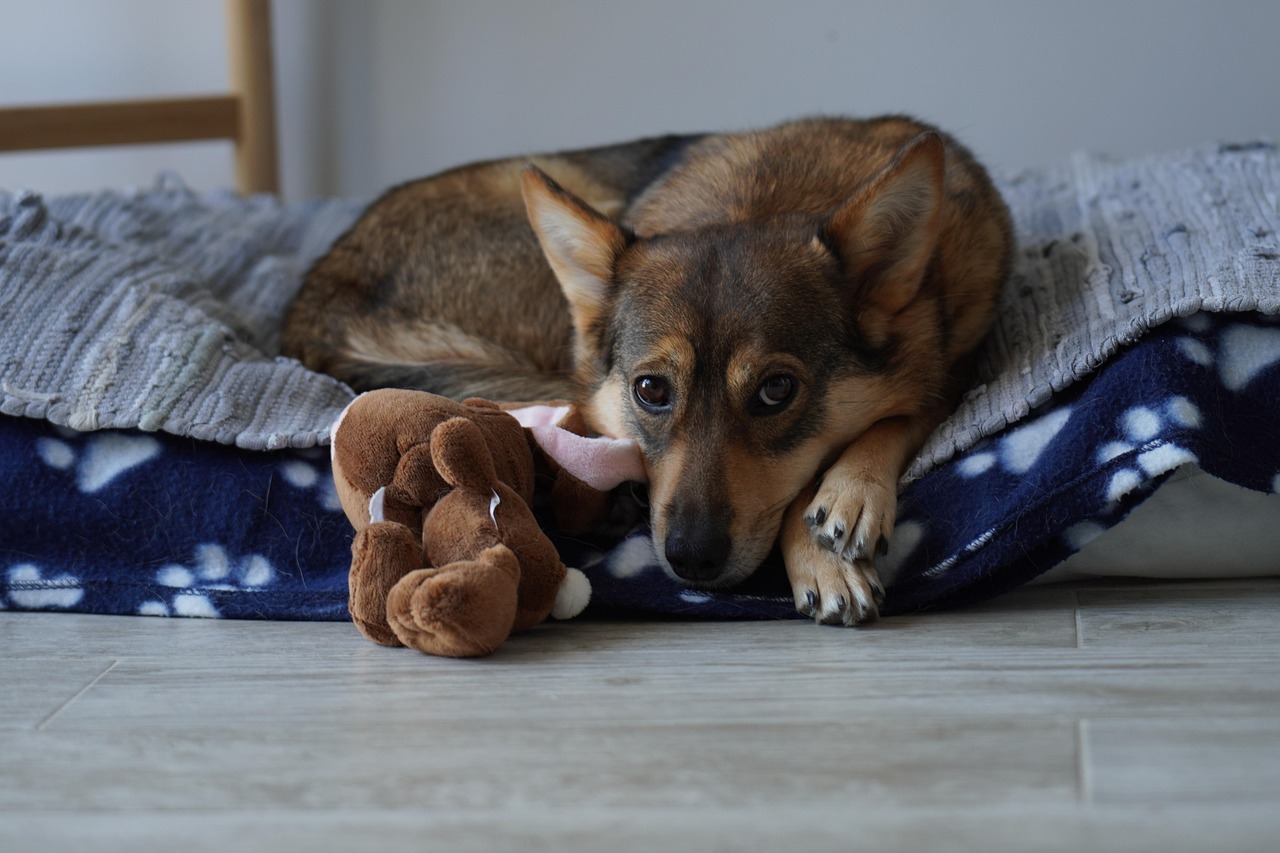
Watch your dog when they are fully relaxed. Measure from the front of the chest to the rear resting point of the body, then check the widest part across the shoulders or hips. After that, look at how your dog actually sleeps. Some curl tightly. Some sprawl on one side. Some rotate and settle with their front legs stretched forward.
The bed should match the largest relaxed shape your dog uses, not the smallest one. A dog that fits only when curled up may still end up sleeping half on and half off the bed.
Quick check: After your dog lies down, look for three things: the body stays fully on the sleep surface, turning does not push them over an edge, and getting up does not drag the bed out of place.
Check Usable Interior Space, Not Just the Label Size
Listed dimensions can be misleading when raised edges, thick bolsters, or rounded corners reduce the flat center area. For many homes, the better question is not “What size is the bed?” but “How much open space is left once the sides and seams are in place?”
If you are comparing a general washable dog bed layout across different rooms or use cases, pay attention to where your dog actually puts weight when resting. The center should stay stable instead of collapsing into a deep pocket.
Why Fit Still Matters More Than the Waterproof Badge
Waterproof construction helps with maintenance, but it does not fix a bed that feels cramped, unstable, or awkward to enter. For daily comfort, fit usually shows up in simple ways: your dog settles faster, changes position more easily, and does not keep stepping off to reset.
That is also why it helps to read the material and care details with the same attention you give sizing. A removable cover is useful, but it matters more when the overall bed still feels easy for your dog to use every day.
Check the Construction That Affects Cleanup
Cover, Liner, and Inner Core
For this type of bed, the most useful setup is usually a washable outer cover paired with an inner liner that keeps moisture away from the core. That distinction matters. A shell can feel smooth and easy to wipe, but if moisture still reaches the inside fill after a wash or an accident, odor and flattening become harder to manage.
Before regular use, unzip the cover and look at how the bed is built. Make sure the liner actually wraps the area your dog sleeps on. After washing, check again. If the cover dries quickly but the inside still feels damp, the cleanup advantage drops fast.
Surface Feel, Fill Stability, and Entry
A waterproof dog bed should still feel like a dog bed, not like a slick pad that shifts under the body. Press the center and the front edge with your hand. You want the surface to feel stable enough for stepping in, circling once or twice, and settling without a deep sag or a hard ridge at the seam.
Entry matters too. Some dogs are comfortable with a thicker edge, while others do better with a lower front opening. If your dog pauses, steps back, or keeps pawing at the bed before lying down, the shape may be working against everyday use.
Base Grip, Seams, and Easy Washing
A grippy base helps more than many buyers expect. On smooth flooring, a bed that slides during entry often gets used less, especially by dogs that like a steady landing. Seams should also feel even and well finished. Raised or twisted seam areas can create rubbing points and make the bed look older faster after repeated washes.
For washing, simpler is usually better: a removable cover, a closure that opens wide enough to remove the insert without wrestling it, and a setup that fully dries before the bed goes back into use.
Use These Quick Checks Before You Keep It
Pass or Fail Checklist
| Check Item | Pass Signal | Fail Signal |
|---|---|---|
| Resting fit | Your dog can lie down, turn, and settle without hanging off the usable sleep area. | Paws, hips, or shoulders drift off the edge during normal rest. |
| Entry and exit | Your dog steps in and out without dragging or bunching the bed. | The front edge folds, slides, or causes hesitation. |
| Moisture barrier | The inner core still feels dry after routine washing or a small cleanup. | The core feels damp, smells musty, or takes too long to dry. |
| Surface stability | The center stays even when your dog circles and settles. | The middle collapses, shifts, or forms a hard seam ridge. |
| Base grip | The bed stays mostly in place on your floor during normal use. | The bed slides every time your dog gets on or off. |
| Wash routine | You can remove, wash, and reassemble the cover without a struggle. | The insert is difficult to remove, the zipper snags, or the bed is slow to dry. |
Common Buying Mistakes
- Buying by outside dimensions only and missing how much interior space is lost to bolsters or thick edges.
- Treating water-resistant fabric and waterproof construction as the same thing.
- Checking the cover but not the liner that protects the inside core.
- Choosing a bed that looks plush but shifts too much when the dog steps in.
- Keeping a bed that still feels damp inside after washing because the outer shell dried first.
Troubleshooting After the First Week
If odor comes back quickly, unzip the bed and confirm the smell is not trapped in the insert. If the bed starts sliding, check whether the base is too smooth for the floor surface where you placed it. If the center flattens early, look at whether your dog always settles in the same spot and whether the fill springs back after a simple hand press. These checks are often more useful than reading marketing labels again.
First-week routine: Let your dog use the bed for normal naps, then recheck fit, liner dryness, center stability, and ease of washing before deciding to keep it as the main everyday bed.
FAQ
Does waterproof mean the whole bed is protected?
Not always. In many designs, the protection depends on the liner and how the cover closes. Check whether the inner core stays dry after cleaning, not just whether the outer shell repels a small splash.
Should you size up?
Size up when your dog sleeps stretched out, turns several times before settling, or looks crowded by raised sides. The better fit is the one that keeps the full body on the usable sleep area without forcing a tight curl.
How often should you wash the cover?
Wash as needed based on fur, dirt, damp paws, accidents, and odor. The practical rule is simple: if the cover no longer feels clean or dries with a lingering smell, it is time to wash and fully dry it before reuse.






