
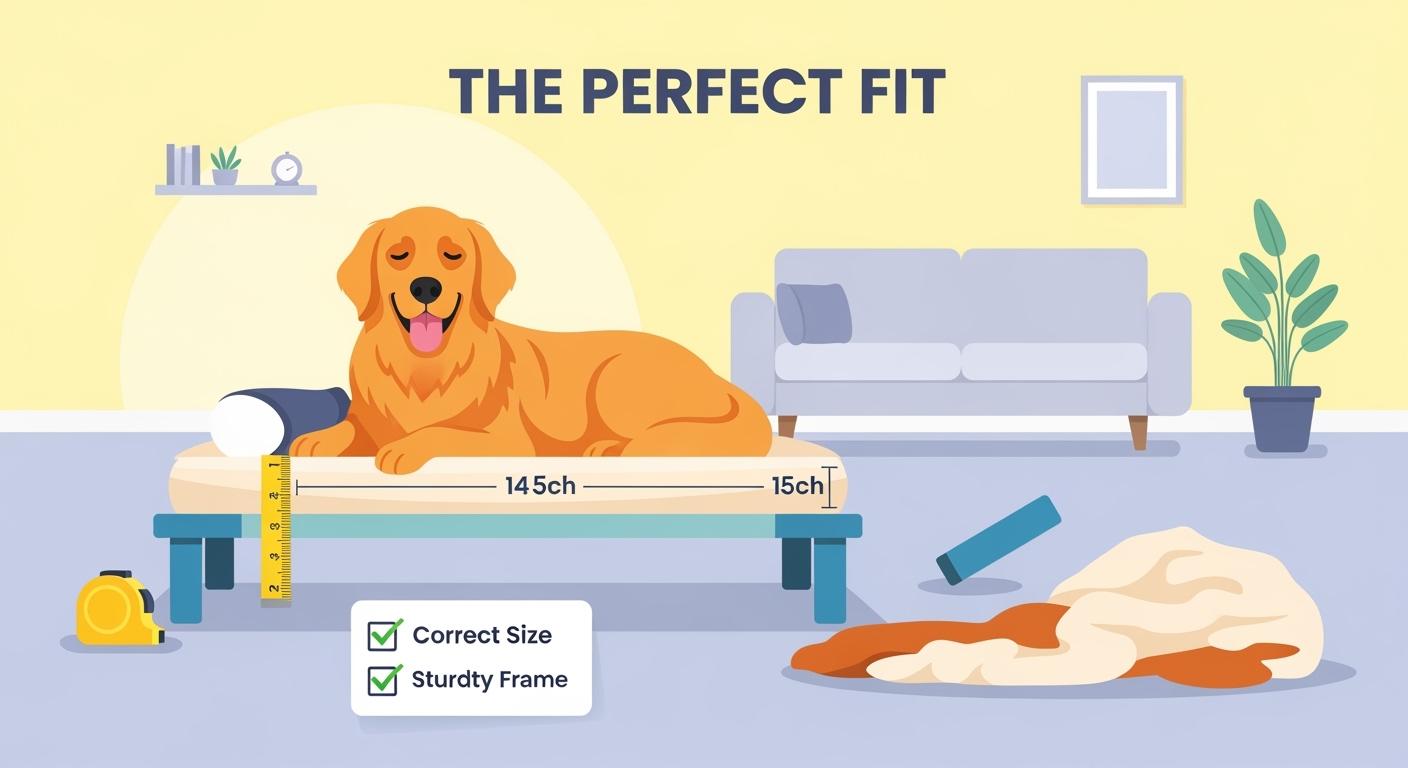
A large dog elevated bed looks simple, but the wrong fit can create real product-use problems: short sleep surfaces, unstable frames, sagging fabric, awkward entry height, and cleaning issues that reduce daily use. For B2B buyers, the question is not only whether the bed looks durable. The better question is whether the size, frame, fabric tension, and floor contact match how large dogs actually rest and move.
This guide keeps the focus on product selection risk. Use it to judge whether a large dog elevated bed is likely to work for heavier dogs, older dogs, outdoor rest areas, warm-weather use, or easy-clean home comfort programs before choosing a product direction.
Key Takeaways
- A large dog elevated bed should be judged by usable sleep area, not only by weight label or size name. Sprawling, turning, and edge crowding matter.
- Entry height, frame stability, surface tension, and floor grip decide whether the bed feels secure during daily use.
- If a dog needs lower-entry, softer support, an orthopedic dog bed may fit the use case better than a raised cot-style design.
Large Dog Elevated Bed Fit and Comfort Risks
Usable Size Matters More Than the Size Label
A large dog elevated bed should match the way large dogs actually sleep, not just a printed size tag. Some dogs stretch long, some curl tightly, and some rest with weight pushed toward one edge. If the usable sleep surface is too short or too narrow, the dog may hang off the side, crowd the corners, or keep repositioning.
For buyers comparing elevated bed options, the important check is whether the real sleeping area still works after the frame, raised edge, fabric pull, and corner tension are considered. A product can look large in outer dimensions but feel small once the dog lies on the taut center area.
Common fit mistakes include choosing by breed name alone, relying only on body weight, or assuming all large-size beds fit the same resting posture. Those shortcuts can lead to poor product match even when the listing sounds correct.
Entry Height, Stability, and Daily Use
Entry height becomes more important as dogs get larger, heavier, older, or less confident on raised surfaces. A bed that requires a jump instead of an easy step can create hesitation. A frame that rocks during entry can make a dog avoid the bed even if the sleep surface itself is large enough.
| Check | Pass signal | Fail signal |
|---|---|---|
| Entry and exit | The dog can step on and off smoothly. | The dog jumps, slips, hesitates, or braces before stepping up. |
| Frame stability | The bed stays level during turning and weight shift. | The frame rocks, tips, twists, or clicks under load. |
| Surface tension | The fabric stays evenly supportive across the middle. | The center sags or pulls the dog toward one side. |
Practical check: the bed should feel stable when a large dog steps on from one side, turns once, lies down, and stands back up. If the frame shifts or the fabric drops deeply, the product risk is higher than the size label suggests.
When an Elevated Bed Is Not the Right Match
Elevated beds can be useful for airflow, easier debris removal, and keeping dogs off damp or warm ground. But they are not the best match for every large dog. Dogs with stiffness, low confidence on raised surfaces, or a strong preference for softer support may be better matched to a lower bed style.
For B2B product decisions, this matters because a single bed design may not fit every large-dog scenario. A raised cot-style structure works best when the target use case values airflow, washable surfaces, and stable outdoor or patio rest. It becomes weaker when the customer need is low-entry comfort, thick cushioning, or joint-sensitive indoor rest.
Materials and Construction Checks for Daily Use
Frame Strength, Fabric Tension, and Airflow
The frame should resist wobble under repeated side loading, not only support a static weight. Large dogs often climb on from one side, turn before lying down, and shift weight across the corners. Weak joints, flexible tubes, or uneven floor contact can make the bed feel unstable even when the stated weight capacity looks acceptable.
Outdoor dog bed size and weather-ready checks become especially important when the bed may be used on patios, covered outdoor spaces, garages, or warm rooms. Airflow is one advantage of an elevated surface, but that advantage only helps if the fabric remains taut and the frame stays steady during movement.
| Material or feature | What it helps with | What to watch for |
|---|---|---|
| Taut woven or mesh sleep surface | Airflow, easier brushing, and faster surface cleanup. | Loose fabric can sag, stretch, or feel unstable under heavier dogs. |
| Rigid frame with solid joints | Better daily stability during entry, turning, and weight shift. | Weak joints can wobble or loosen over time. |
| Non-slip feet or grippy contact points | Better floor contact on tile, wood, patio, or smooth surfaces. | Hard smooth feet may slide and make the bed feel unsafe. |
Cleaning, Drying, and Real-World Maintenance
Easy cleaning is one of the strongest reasons to choose an elevated bed, but the design still needs to make cleaning practical. Fur, dust, drool, and light moisture should not collect deeply in corners, seams, or frame joints. A sleep surface that wipes clean but stays damp around connection points can still create maintenance problems.
For buyers, the cleaning question should include how the surface is removed or tightened, how quickly it dries, and whether the frame traps dirt after repeated use. A product that looks durable in photos but is annoying to clean may create poor repeat use and weaker customer satisfaction.

Common Mistakes and Troubleshooting Tips
Sizing and Stability Errors
The most common elevated-bed mistakes come from treating weight capacity as the full answer. Weight matters, but so do usable surface area, fabric tension, frame stiffness, entry height, and floor grip. A bed can hold a large dog but still feel too small, too high, too wobbly, or too hard to maintain.
| Check item | Pass signal | Fail signal | Fix direction |
|---|---|---|---|
| Dog fits when stretched | Full body stays on the bed. | Limbs, hips, or shoulders hang over the edge. | Choose a larger usable sleep surface. |
| Bed stays level | No rocking or tilt during movement. | Frame wobbles on entry or turning. | Improve frame stiffness, joint quality, or floor contact. |
| Surface stays supportive | No deep middle sag under load. | Dog slides into the center or fabric drops too far. | Check fabric tension, weave strength, and support layout. |
| Daily use feels easy | Dog steps on, settles, and exits without struggle. | Dog avoids the bed or gets off awkwardly. | Recheck height, stability, and whether a lower bed type fits better. |
Elevated Bed vs Orthopedic Foam Bed
The right bed type depends on the use case. Elevated beds are strongest when airflow, debris control, and outdoor-friendly cleaning matter most. Orthopedic foam beds are stronger when low entry, softer pressure support, and indoor comfort matter more.
| Option | Best for | Watch-outs | Fit note |
|---|---|---|---|
| Elevated bed | Airflow, easier brushing off debris, raised sleeping surface, patio or warm-weather rest. | Entry height, frame wobble, floor sliding, and fabric sag. | Works best when the dog accepts a taut, cooler surface. |
| Orthopedic foam bed | Lower entry, softer support, older dogs, or dogs who avoid raised surfaces. | More heat retention, thicker fill, and more involved cleaning. | Often better when low access and cushioning matter more than airflow. |
Troubleshooting Table
| Symptom | Likely cause | Fast check | Fix direction |
|---|---|---|---|
| Bed wobbles | Loose frame, weak joints, or uneven floor contact. | Press each corner and shift pressure side to side. | Improve joint strength, foot grip, or frame layout. |
| Surface sags | Fabric has stretched or lacks enough support. | Press the center and watch how quickly it rebounds. | Retension, use stronger fabric, or adjust support structure. |
| Bed slides | Low floor grip or hard smooth feet. | Push the empty bed lightly across the floor. | Add better contact points or choose grippier foot material. |
| Dog avoids the bed | Poor fit, unstable feel, unsuitable height, or wrong bed type. | Watch entry, turning, settling time, and exit movement. | Recheck use case fit before treating it as a simple comfort issue. |
Push-corner test: press each corner, then the center. A good large dog elevated bed should feel steady, not springy, twisted, or loose.
A quality large dog elevated bed should make rest, airflow, and cleanup easier. But for sourcing decisions, the safer judgment is whether the product still works after real movement, real body shape, real floor contact, and real cleaning needs are considered.
FAQ About Large Dog Elevated Beds
Sizing and Fit Questions
Q: How do you know if a large dog elevated bed fits?
Check the usable sleep surface against the dog’s stretched resting posture, not just the outer frame. The dog should be able to lie fully on the surface, turn, and exit without sliding, hanging off the edge, or crowding the corners.
Q: What are signs the bed is too small or too high?
Warning signs include limbs hanging off the edge, repeated repositioning, hesitation before stepping up, awkward exits, or the dog choosing the floor next to the bed instead.
Wobble, Sag, and Stability
Q: Why does a large dog elevated bed wobble or sag?
Wobble often comes from loose frame connections, weak joints, or uneven floor contact. Sagging usually comes from stretched fabric, poor tension, or a sleep surface that does not support heavier body weight evenly.
Q: How do you keep the bed stable for a large dog?
Use a rigid frame, stable joints, grippy floor contact, and a surface that stays taut across the middle. The bed should be tested under movement, not only while empty.
Older Dogs and Daily Comfort
Q: Is an elevated bed always best for older dogs?
No. Some older dogs benefit from airflow and a raised surface, while others need lower entry and softer support. For product selection, the key is whether the target use case values airflow and easy cleaning more than low-entry cushioning.
Outdoor and Warm-Weather Use
Q: Can you use a large dog elevated bed outdoors?
Yes, when the environment is suitable and the material can handle the intended use. Check shade, heat, wet ground, drying time, fabric tension, and frame corrosion risk before positioning it as an outdoor or patio product.
Cleaning and Maintenance
Q: What is the best way to clean a large dog elevated bed?
Brush or vacuum loose hair first, then wipe, rinse, or wash according to the material. Let the bed dry fully before reuse and check seams, corners, and frame joints where dirt and moisture can collect.






