
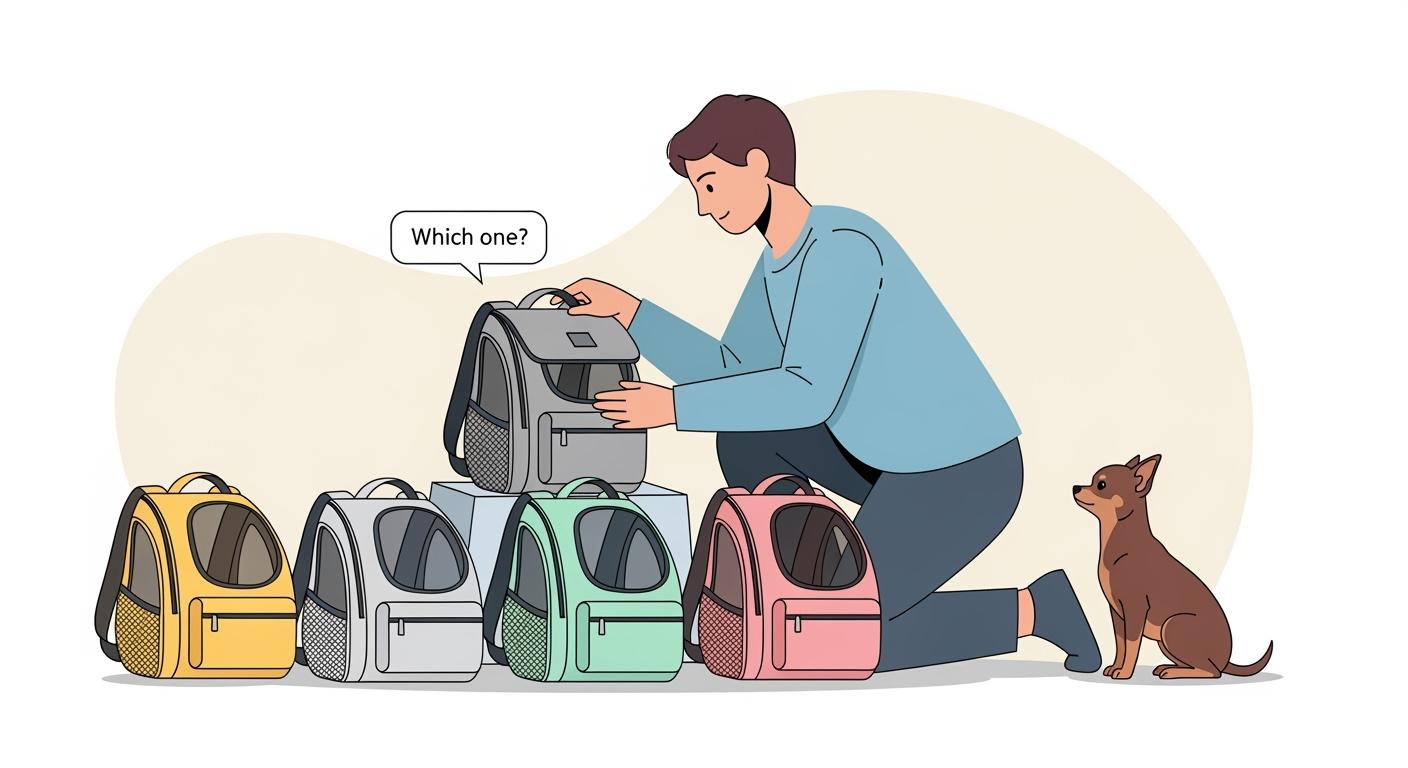
Pet backpack carriers work best when the fit is stable for both the pet and the person carrying it. Before you buy, check body support, head space, base stability, strap balance, and whether the pack stays cool enough for short, supervised outings.
| Quick check | What you want to see |
|---|---|
| Body support | Your pet stays supported underneath instead of slumping into the floor. |
| Head space | The opening stays clear of the face and does not press on the head or neck. |
| Wearer balance | The pack sits close to the body without bouncing or dragging downward. |
Key Takeaways
- Measure body length, shoulder height, and chest size before you compare models. Weight alone is not enough for a safe fit.
- Look for pet backpack carriers with real airflow, a stable base, and secure harness attachment points. Soft fabric alone does not guarantee support.
- Do a short home test before your first outing. If your pet slumps, pants, braces, or tries to climb out, stop and change the setup.
Pet backpack carriers: Fit for pet and owner
Body support and head space
To pick the right dog carrier backpack, start with measurements and a short fit test. Measure body length, shoulder height, and chest size, then compare those numbers with how your pet actually sits and rests.
- Measure from the neck base to the tail base for body length.
- Measure from the floor to the top of the shoulder for standing height.
- Measure around the chest behind the front legs.
- Use weight only as a secondary check, not the main sizing method.
A good fit lets your pet sit or rest without curling awkwardly, pressing into the roof, or sagging into the base. The opening should stay clear of the face, and the floor should support the chest and hindquarters evenly.
A padded floor and internal harness attachment point can improve stability, but only when the backpack still holds its shape under your pet’s weight. Check whether the floor stays flat and whether the side panels support the body instead of collapsing inward.
Some pets are simply poor candidates for a backpack. If your pet freezes, pants, tries to climb out, or cannot settle during a short practice run at home, a more enclosed or more structured carrier is usually the better choice.
- Backpack carriers give good support for the spine and spread out weight, so pets feel less stress.
- Sling carriers do not support the spine well and can make older dogs with joint pain feel worse.
- Small dogs carried without support, especially near the neck or spine, can get hurt.
- Structured carriers with good weight balance are best.
- Backpacks with padded floors and harness points help keep dogs safe.
Strap balance and stable carry
A backpack carrier should feel stable for both the pet and the person wearing it. Look for adjustable shoulder straps, a chest strap, and-on larger packs-a waist belt that helps keep the load close to your body.
- Two shoulder straps, a chest strap, and sometimes a waist belt help spread weight more evenly than one-shoulder designs. A balanced pack is easier to control and usually feels steadier to the pet inside.
- When the pack fits correctly, it should sit close to your back instead of bouncing or pulling away from your shoulders.
- The pet should ride in a position that stays centered rather than hanging to one side or dropping low with each step.
If the straps cannot be adjusted well or the backpack rides too high or too low, both you and your pet may feel off-balance. A backpack that shifts with every step is not ready for real use.
Do a short home walk with the pack fully adjusted. If the backpack swings, the pet leans hard against one side, or your shoulders take all the load immediately, the fit still needs work.
When you try a new backpack, adjust every strap, place your pet inside, and walk slowly around your home. Check whether the base stays level, the top opening stays clear, and the backpack remains close to your body.
Quick balance test: with your pet inside, walk fifteen slow steps and make one gentle turn. The pack should stay close to your body without swinging or dropping lower.
A backpack carrier should look boring in motion: no heavy bounce, no deep sag, no twisting, and no constant pawing or climbing from the pet.
Comfort and materials in pet backpack carriers
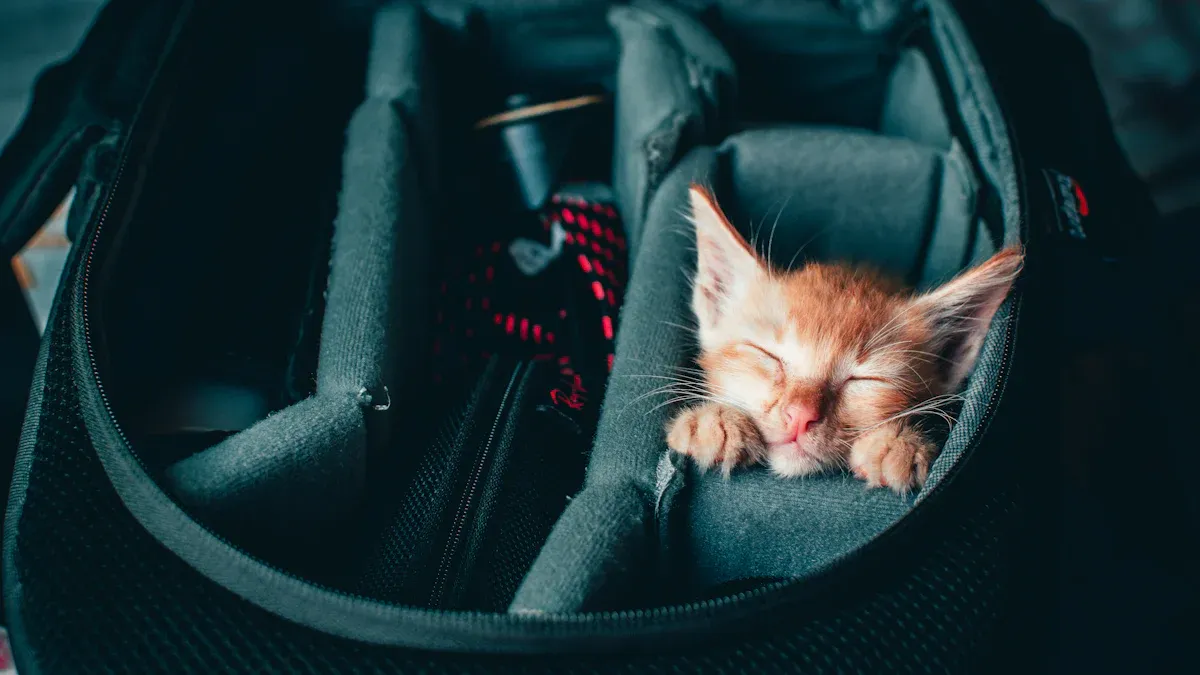
Breathable panels and soft lining
Ventilation and lining matter because your pet is sitting in a close, warm space. Good airflow helps reduce heat buildup during short outings. Choose mesh panels and soft lining that do not trap too much heat against the body.
Soft lining can improve comfort, but it should not come at the cost of structure. Thick plush that hides a sagging base or traps heat is not better just because it feels softer.
- Ventilation on three or four sides keeps air moving and stops heat from building up.
- Soft padding inside the carrier feels familiar and helps your dog relax.
- Flexible sides absorb sound and movement, which lowers stress for your dog.
Look for durable materials, smooth seam finishing, and closures that stay secure without leaving hard edges near the face, chest, or paws.
Avoid carriers with rough seams, exposed zippers near the face, or fabrics that trap heat and odor after a short outing.
Extra pockets or novelty windows matter less than support, airflow, and stable carry.
Structured base and easy cleaning
A structured base keeps the pet steadier inside the backpack. If the floor sags under body weight, the pet may slide or curl into an awkward position.
If the backpack has an internal tether, clip it to a harness, not a collar. The tether should reduce escape risk without pulling the neck if the pet shifts or tries to climb.
Cleaning matters because fur, drool, dirt, and moisture build up quickly in enclosed fabric spaces. Removable liners or wipe-clean panels make short-trip cleanup easier.
| Cleaning task | What to do |
|---|---|
| Fabric parts | Wash removable liners or pads with mild detergent and dry fully before reuse. |
| Shell and hardware | Wipe the shell, zipper area, and base with a damp cloth and pet-safe cleaner. |
Check the backpack after use for stretched seams, worn mesh, sticky zippers, or a base that no longer holds shape.
The best carrier is the one that still supports your pet well after repeated short uses, not just the one with the most features.
Use cases, mistakes, and quick checks
Everyday outings and short trips
Backpack carriers are usually best for short, supervised outings such as a quick errand, a brief walk, or getting to and from an appointment. They are a poor choice when you cannot monitor your pet closely, when the weather is hot, or when the trip is long enough that your pet needs a larger rest space.
Common mistakes to avoid
Common mistakes include sizing by weight only, ignoring base support, blocking ventilation, clipping a tether to a collar, and assuming every calm pet at home will accept a backpack outside.
Home test first: if your pet refuses to settle after a short practice run, change the fit or switch to a different carrier type before you go out.
Quick checklist for carrier selection
Use this checklist to pick a safer, more practical backpack carrier:
- Measure body length, shoulder height, and chest size.
- Check that the floor stays level under your pet’s weight.
- Make sure mesh panels stay open and airflow is not blocked.
- Use a harness attachment if the carrier includes a tether.
- Do a short home test before the first real outing.
- Stop if your pet pants heavily, twists, or tries to climb out.
Comparison and troubleshooting tables
| Design type | Best for | Main advantage | Main watch-out |
|---|---|---|---|
| Soft backpack carrier | Short city outings | Lighter to wear and easier to store | May sag if the base is weak |
| Structured backpack carrier | Pets who need more support | Better body support and shape retention | Heavier and warmer if ventilation is poor |
| Travel bag or tote | Short enclosed transport | Often more enclosed and easier for shy pets | Less balanced to carry on longer walks |
| Check Item | Pass Signal | Fail Signal | Fix |
|---|---|---|---|
| Fit | Pet sits or rests naturally | Pet slumps or twists | Adjust fit or choose a more supportive carrier |
| Base support | Floor stays level | Base sags or tips | Use a firmer base or different carrier |
| Ventilation | Mesh panels stay clear | Pet pants and feels hot | Stop, cool down, and shorten outings |
| Tether use | Harness clipped | Collar clipped | Switch to harness attachment |
| Wearer balance | Weight feels centered | Shoulder or back strain starts fast | Readjust straps or reduce load |
| Symptom | Likely Cause | Fast Check | Fix |
|---|---|---|---|
| Pet sagging or twisting | Weak base or loose fit | Check base and strap tension | Add support or refit |
| Overheating | Blocked airflow or warm conditions | Feel inside temperature and watch breathing | Stop, cool the pet, and shorten use |
| Rubbing or red spots | Tight edges or poor seam placement | Inspect contact points after a short carry | Refit or change carrier |
| Refusal to enter | Discomfort or fear | Test at home with brief sessions | Acclimate slowly or switch carrier type |
Health note: if your pet shows hard breathing, pain, limping, collapse, or severe stress, stop and contact your veterinarian.
FAQ: Pet backpack carriers and safe use
Measuring for fit and comfort
Measure body length, shoulder height, and chest size, then confirm that your pet can sit or rest naturally without pressing into the roof or sinking into the floor.
Cats vs. dogs: special needs
Cats and dogs can react very differently to backpack carriers. Some pets tolerate close, upright transport well, while others stay tense or keep trying to escape. Body language matters more than species labels alone.
Warm weather and ventilation
Warm weather raises the risk of heat buildup in any close carrier. Choose strong airflow, keep the outing short, and stop immediately if your pet starts panting, drooling, or trying to escape.
Public transit and travel tips
- Confirm that the carrier stays closed and the tether is attached to a harness.
- Check local transit or airline size rules before you travel.
- Choose the carrier by fit and ventilation, not by label alone.
- Keep the outing short enough that you can monitor your pet closely.
When not to use a backpack carrier
Stop using the backpack if your pet shows distress such as heavy panting, freezing, twisting, trying to climb out, or refusing to settle after a short test.






