Pet Carrier Sling Fit Tips and Common Mistakes

Pet Carrier Sling Fit Tips and Common Mistakes

Choosing a pet carrier sling for daily outings means checking body support, head clearance, strap balance, and easy breathing before you leave the house. A sling works best for calm, small pets during short, supervised trips where you can keep the carry close and steady.

Key Takeaways

  • Check support first: your pet should sit cradled with the body supported from underneath, not hanging or twisting inside the fabric.
  • Use a harness tether, not a collar attachment, if the sling includes a safety clip.
  • Treat sling use as a short, supervised carry method. If your pet overheats, struggles to settle, or keeps reaching for the opening, switch to a more enclosed carrier.

Pet carrier sling fit for pet and wearer

Support, clearance, and secure hold

Choosing a pet carrier sling starts with support under the body, not just a soft pouch around the pet. You want your pet resting in a cradled position with the body supported from underneath, the head clear of fabric pressure, and the opening high enough to discourage scrambling out.

Quick check: after you place your pet in the sling, walk ten slow steps. The body should stay supported underneath without sagging, twisting, or dropping lower with each step.

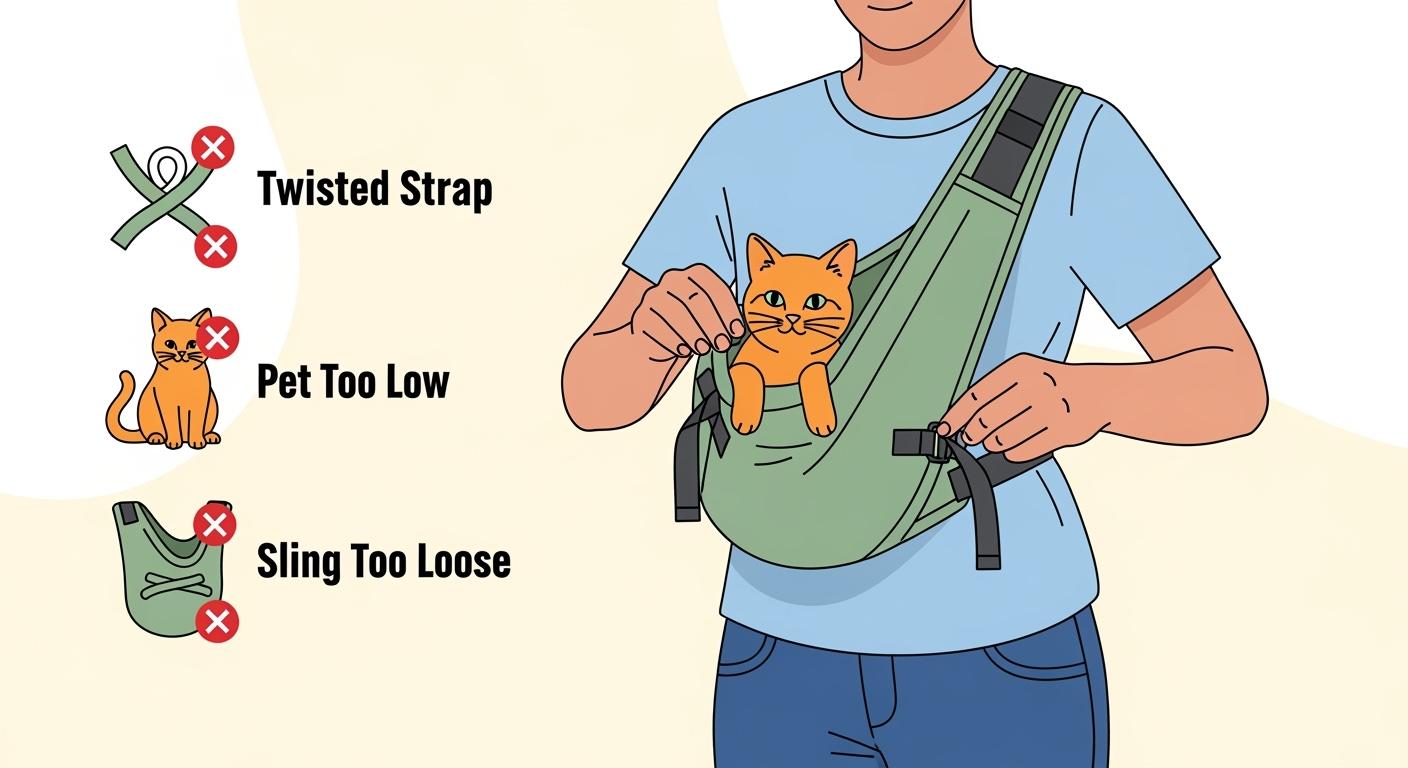
Soft slings can sag more than people expect, so watch for sliding, twisting, or a curved body position that worsens as you walk. If your pet keeps shifting downward, reaching for the opening, or bracing against the fabric, stop and refit the sling.

Here is a quick table showing recommended weight limits for different carrier types:

Fit checkPass signalFail signal
Body supportPet stays cradled under the chest and bellyPet hangs, twists, or sinks lower while you walk
Head clearanceFace stays clear and breathing stays easyFabric presses into the face, neck, or jaw
Opening heightPet stays inside without climbing upPaws keep reaching over the top edge
SituationSling works wellChoose another carrier
Short calm outingYes, if the pet stays settled and supportedNo, if the pet keeps shifting or reaching out
Warm weather errandsOnly brief use with airflow and shadeYes, if the pet pants easily or the fabric traps heat
Long transport or travel dayUsually not idealChoose a more structured carrier or travel bag

Small, calm pets usually adapt better to sling-style carriers than larger or more active pets. Once the pet is heavy enough that the sling drags lower, swings more, or concentrates too much weight on one shoulder, a more structured carrier is usually the better option.

  • Body support should come from underneath, not from the opening pressing around the neck and shoulders.
  • A soft sling can feel cozy but still be a poor match if the body keeps curving or sinking downward.
  • If your pet keeps trying to climb up, the opening, depth, or overall design may not be secure enough.

Strap comfort and balance

Strap comfort matters for both you and your pet. The strap should sit flat on your shoulder, stay close to the body, and avoid digging in after only a short carry. Wide, smoother straps are usually easier to manage than narrow ones that twist.

Heat check: if the inside feels warm and humid against your hand after a short carry, the sling is likely too warm for a longer outing.

Balance is key. The sling should stay close to your body without bouncing, rotating, or creeping down your shoulder. If the sling keeps sliding or you find yourself constantly holding it in place, the setup is not stable enough for real errands.

Common discomforts from poor strap fit include:

  • Limited airflow, which increases the risk of overheating.
  • Pressure on joints, especially hips and shoulders in older pets.
  • No harness tether, which can lead to sudden lurches or escapes.

Here is a comparison table showing how sling carriers differ from backpack carriers:

FeatureBackpack carrierSling carrier
Body supportUsually more structuredDepends heavily on fabric depth and fit
Weight distribution for wearerMore balanced across the bodyOften concentrated on one shoulder
AirflowOften easier to ventilateCan feel warmer because of close body contact
Best useLonger walks or more structured carryShort, supervised outings for calm small pets

Follow these steps to check fit:

  1. Measure your pet’s usual resting length and overall size, not weight alone.
  2. Adjust the strap so the sling sits high enough to reduce bouncing but low enough for calm entry.
  3. Place your pet inside and check body support, head clearance, and opening security.
  4. Walk a few slow steps and watch for sagging, twisting, or shoulder strain on your side.
  5. Stop if your pet pants, braces, climbs, or keeps shifting downward.

A pet carrier sling works best for calm, small pets and short outings. Check fit, comfort, and your pet’s body language before each use.

Pet carrier sling materials and design

Breathable fabric, lining, and seams

Picking the right fabric is important for your pet’s comfort. Look for breathable fabric, smoother inner surfaces, and seams that do not rub the chest, armpits, or face. Soft fabric alone is not enough if the sling traps heat or folds sharply under weight.

Here is a table showing how carrier types affect support and temperature:

FeatureDog Carrier BagSling Carrier
Back & Spine SupportHigh-firm base supports postureLow-spine may curve unnaturally
VentilationExcellent-mesh panels on all sidesFair-limited airflow
Temperature RegulationBetter-breathable materialsPoorer-close body contact
Emotional ComfortHigh-den-like enclosureVariable-depends on pet’s mood

Tip: Watch for signs your pet is too hot. If your pet pants or acts upset, stop and fix the sling.

Closures, tethers, and cleaning

Strong closures and tethers help keep your pet safe. Zippers are best for stopping escapes. Snaps and Velcro are okay but not as strong. Test all closures before you go out. Make sure your pet cannot push through any gaps. Clip the harness tether to your pet’s harness, not the collar, so your pet does not choke.

Type of ClosureEffectiveness in Preventing Escapes
ZipperUsually the most secure when the opening fits correctly
SnapUseful only if the rest of the opening stays snug
VelcroCan work for light closure, but check wear and gaps often

Cleaning matters because fur, drool, and moisture build up quickly in close-contact carriers. Fast-drying fabrics and wipeable surfaces make daily use easier than thick fabrics that stay damp.

  • Machine-washable liners make cleaning easier.
  • Wipeable surfaces let you clean spots fast.
  • Quick-drying fabrics help prevent mold and smells.
  • Odor-resistant coatings help keep the sling fresh.

Clean the sling after dirty outings and let it dry fully before the next use.

Mistakes, fit checks, and troubleshooting

Mistakes, fit checks, and troubleshooting

Common mistakes to avoid

Common mistakes include choosing by appearance alone, letting the pet ride too high or too low, clipping the tether to a collar, ignoring heat buildup, and assuming every small pet will feel secure in a sling.

Watch for heavy panting, slumping, twisting, repeated pawing at the opening, or a pet that keeps trying to climb higher. Those are fit or comfort problems, not signs to let them adjust longer.

Fit checklist table

You need to check the fit before every trip. Use this table to find problems and fix them quickly.

Check ItemPass SignalFail SignalFix
Base supportPet sits cradled, spine straightPet hangs, twists, or slumpsRefit or change to a more supportive carrier
Head clearanceHead clear, easy breathingFabric presses on face or neckReposition pet and check opening depth
Opening securityOpening snug, pet cannot climb outLoose opening, escape riskTighten or change the opening setup
Strap comfortStrap sits flat, no diggingStrap digs, slides, or bouncesAdjust strap or switch to a wider, steadier strap
Heat and ventilationPet cool, no pantingPet overheats, pants, droolsMove to a cooler place and end the carry
Tether attachmentTether clips to harnessTether clips to collarUse a harness connection only
Calm entry/exitPet enters/exits calmlyStruggles, panic, escape attemptsStop use and choose a different carrier type
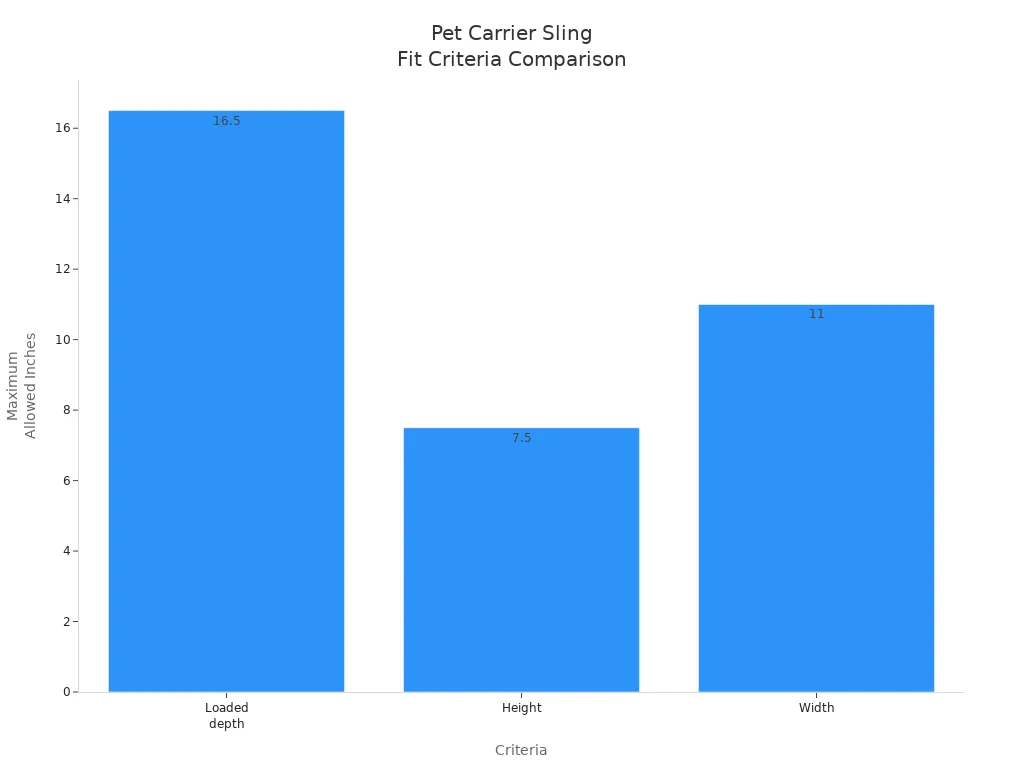
Bar chart comparing loaded depth, height, and width for pet carrier sling fit checks

Sling vs backpack vs tote table

You need to pick the right carrier for your pet and trip. Look at this table to compare choices.

OptionBest forWatch-outsFit note
SlingCalm, small pets, short tripsEscape risk, heat buildup, poor supportBody cradled, head clear, short use
BackpackMedium/large dogs, long walksWeight on pet, needs breaks, hydrationBalanced load, active pet, hours max
ToteCats, anxious pets, errandsLimited ventilation, heavy for long carryEnclosed, secure, less airflow

A sling usually works best for calm, small pets and brief outings. If your pet is anxious, escape-prone, sensitive to heat, or too heavy to stay supported without sagging, a more enclosed or more structured carrier is usually the better choice.

FactorBackpack carrierCarrier slingTote carrier
Support under bodyUsually more structuredOften softer and more fit-sensitiveDepends on base support
Weight on wearerMore balanced across the bodyOften concentrated on one shoulderCan feel heavy in one hand or arm
Heat riskVaries by ventilationHigher in warm conditions and close body contactDepends on airflow and fabric
Best useLonger or more active carryShort, close carryErrands or enclosed transport

Troubleshooting quick fixes

Problems can happen even when a sling looks fine at first. Use this table to spot the issue fast.

SymptomLikely CauseFast CheckFix
Pet slumping or twistingSling too big, poor postureCheck size, support baseStop and change the fit or carrier type
Strap swings or collidesLoose strap, heavy pocketsAdjust strap, lighten loadRetighten and remove extra items from the sling
Pet reaches for openingLoose opening, escape riskWatch pet, tighten openingRefit the opening or switch carriers
Discomfort in warm spacesThick padding, poor airflowFeel fabric, check ventilationEnd the carry and cool the pet
Rapid odor buildupDirty liner, trapped moistureSmell liner, check seamsClean thoroughly and dry fully
Fit complaintsWeight-only sizingCheck body shape, postureSize by body support and posture, not weight alone
Cleaning difficultiesTrapped dirt, slow dryingInspect seams, linerChoose easier-clean fabric and drying routine

If your pet pants heavily, slumps, twists, or keeps trying to climb out, end the carry and switch to a different carrier style. A sling is not right for every pet or every trip.

Watch your pet’s body language every time. If your pet struggles, pants, or tries to climb out, the sling is not working well enough for that outing.

Fit and sizing tips

Measure body length and overall size before choosing a sling. Then judge the fit by body support, opening security, and how the pet looks after a short test carry.

Common questions:

  • Can you use a regular handbag as a dog carrier? Usually no. Most regular bags do not provide the support, airflow, or security features needed for safe pet carrying.No. Handbags do not provide support, ventilation, or safety features.
  • Are expensive carriers always better? No. Fit, support, airflow, and secure construction matter more than price alone.Not always. Focus on quality and fit, not just price.

Preventing slipping and escapes

A snug opening and a correctly used harness tether help reduce escape risk. If the opening still feels loose once adjusted, the design may not suit your pet well enough.

Cats vs dogs: sling use

Some dogs adjust to slings more easily than cats, but species alone does not decide the outcome. Nervous pets, escape-prone pets, and pets that dislike close body contact often do better in enclosed carriers.

Warm weather and ventilation

Check airflow before warm-weather use. Breathable fabric helps, but short duration, shade, and close supervision matter just as much when temperatures rise.

Errands and daily use

  1. Use the sling for calm, short trips only.
  2. Avoid busy streets and moving vehicles.
  3. Choose the right carrier for each outing.

When to choose another carrier

Choose another carrier when your pet struggles to settle, overheats, keeps reaching for the opening, or needs more enclosure than a sling can provide.

Check fit, support, opening security, and heat build-up before every outing. The safest sling carry should look boring: the pet stays cradled, breathes easily, and does not keep trying to climb out.

FAQ

How do you check if your pet fits safely in a sling?

Place your pet inside, check that the body stays supported underneath, the head stays clear, and the opening stays snug enough to discourage climbing out. Then do a very short supervised carry and watch for sagging or twisting.

What should you do if your pet tries to climb out?

  • Stop the carry and set your pet down safely.
  • Check whether the opening is too loose or the sling sits too low.
  • Do not keep testing the sling if your pet stays distressed.
  • Switch to a more enclosed carrier if escape attempts continue.

Can you use a sling for errands in warm weather?

StepAction
1Pick breathable fabric and check heat before leaving
2Keep the outing short and stay in shade when possible
3Stop if you see panting, drooling, or agitation

Get A Free Quote Now !

Table of Contents

Blog

Dog Car Seat with Safety Buckles Sizing Guide and Feature Checklist

Find the right dog car seat with safety buckles using our sizing guide and feature checklist for secure, comfortable, and stable travel with your pet.

Dog Hands Free Leash: Materials and Comfort Checks

Dog hands free leash materials like biothane, leather, and padded nylon boost comfort, durability, and control for safer, easier walks.

How to Put Dog Harness and Check the Fit Before You Buy

How to put dog harness on your pup with step-by-step tips for a secure, comfortable fit. Avoid common mistakes and keep your dog safe on every walk.

Dog Seat Car Cover: Easy Cleanup and Comfort Checks

Dog seat car cover materials, comfort, and fit guide for easy cleanup, pet safety, and stress-free travel. Find the best cover for your car and dog.

Car Seat Dog Carrier: What to Check for Space and Stability

Check space and stability in a car seat dog carrier to ensure your pet can rest comfortably and stay secure on every car ride. See key features to review.

Durable Outdoor Dog Bed What to Look for in Size and Durability

Durable outdoor dog bed guide: Find key features, materials, and sizing tips to ensure lasting comfort and safety for your dog outdoors.
Scroll to Top

If you have any questions, please do not hesitate to contact us.

Get A Free Quote Now !

Welsh corgi wearing a dog harness on a walk outdoors