
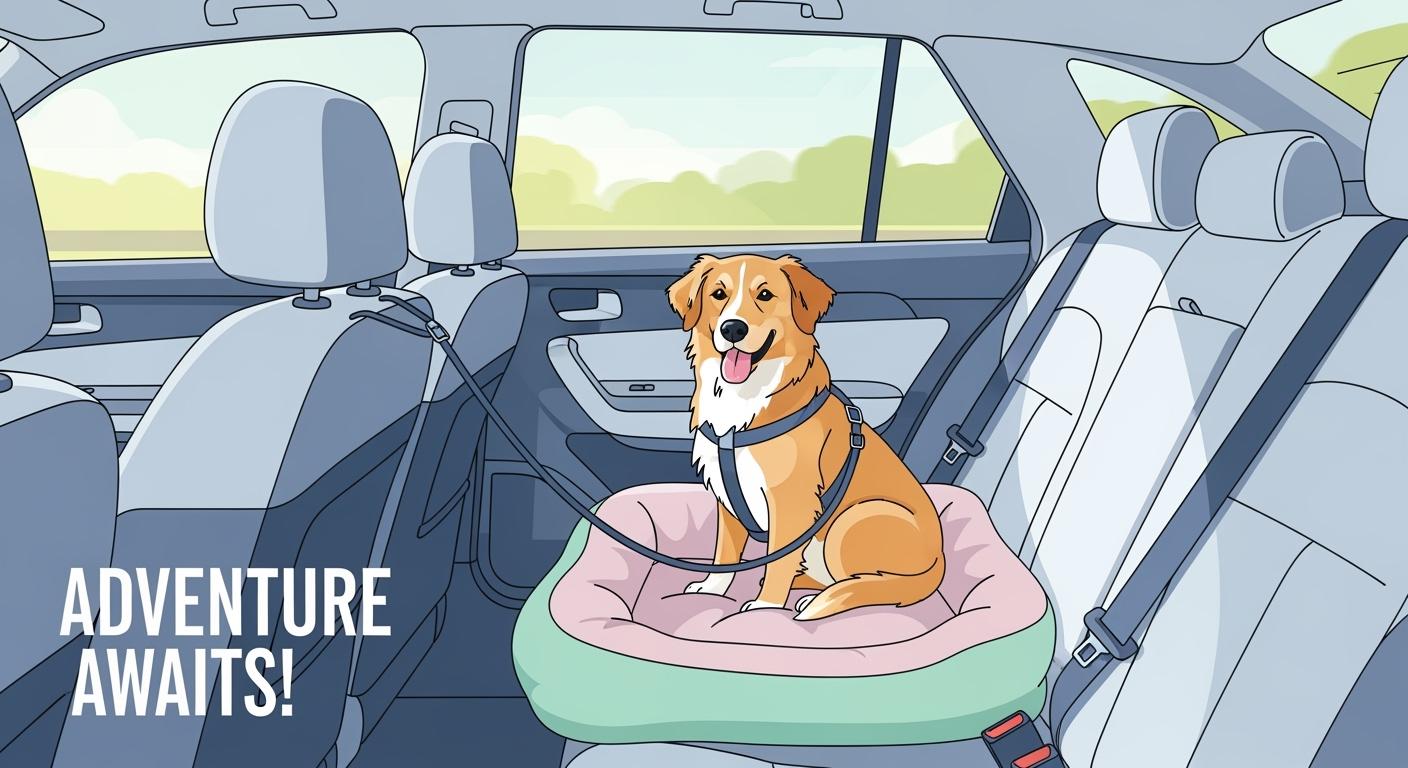
A back seat dog bed looks simple until it has to work inside a real car. The bed may be soft, but it can still fail if the footprint is wrong, the base slides, the bolster blocks entry, the cover traps hair, or the bed covers the buckle path needed for a restraint setup.
The better question is not only whether the bed feels comfortable. It is whether the bed can stay flat on the rear seat, give the dog enough usable resting room, clean up after travel, and leave safety access clear. These are the details that decide whether a back seat dog bed is useful after the first few rides.
Key Takeaways
- Back seat dog beds fail most often because the dog and the seat do not match the bed footprint, not because the bed is not soft enough.
- A stable base, washable surface, and fill that keeps its shape matter more than extra-thick padding if the bed is used for regular car travel.
- A back seat dog bed is a comfort and seat-protection product. It does not replace a harness, tether, carrier, or other restraint setup.
- Low or medium bolsters usually work better than tall edges when the dog needs easy entry and the rear-seat buckle path must stay usable.
Back seat dog bed fit starts with the dog and the seat
Dog size, resting style, and entry comfort
Start with the way the dog actually rests. Some dogs curl into a compact shape, while others stretch across more space than their body length suggests. A bed that only matches the dog by weight can still feel short, narrow, or awkward once the dog turns around and settles.
Measure the dog’s relaxed lying length and watch the resting style before comparing bed sizes. If the dog likes a raised edge for chin support, a soft bolster can help. If the dog needs a more defined riding space than a soft bed can provide, compare that setup with a pet seat.
Entry comfort matters just as much as lying space. Older dogs, heavy dogs, and dogs with stiff movement usually handle one open side better than a full raised wall. A bed can look plush in photos but still be difficult to use if the dog has to climb over a tall front edge every time.
30-second entry test: the dog should be able to step in, turn, and settle without tripping, pawing at the edge, or sliding backward.
Back seat footprint and bolster height
Measure the back seat inside the door frames, then check the seat depth from the backrest to the front edge. The bed should sit flat inside that footprint without bunching, hanging over the front edge, pressing into the door trim, or lifting at the corners.
Bolster height should support the dog without blocking entry or buckle access. Low or medium bolsters with one open side often work better for travel because they give the dog a boundary without turning the bed into a barrier.
| Fit point | Good sign | Failure sign |
|---|---|---|
| Dog resting room | The dog can curl, stretch, and turn without hanging off the edge. | The dog lies partly outside the bed or refuses to settle. |
| Seat footprint | The bed sits flat inside the rear-seat area. | The bed bunches, tilts, or lifts near the door or front seat edge. |
| Entry height | The dog can step in without climbing over a tall front wall. | The dog trips, hesitates, or pushes the bed backward during entry. |
| Buckle access | Seat-belt buckles and restraint paths remain reachable. | The bed hides the buckle or blocks the tether route. |
A parked-car test is useful before regular travel. Place the bed on the seat, check whether it sits flat, confirm buckle access, then let the dog step in and out. If the bed shifts before the car even moves, it will usually shift more during turns and braking.
Materials and construction decide whether the bed works after repeated rides
Surface fabrics, base stability, and cleaning
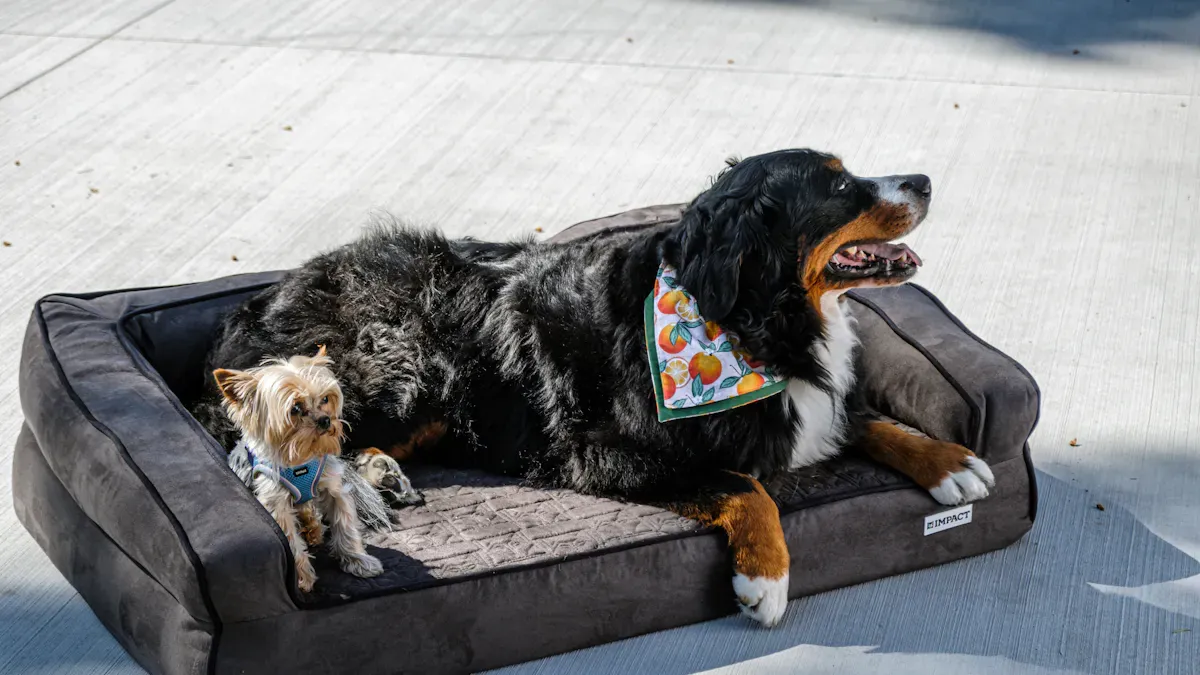
A back seat dog bed has to deal with fur, drool, damp paws, crumbs, mud, and repeated removal from the car. The top surface should feel comfortable without trapping hair too deeply, while the outer shell should clean faster than a thick indoor-only plush bed.
The base is just as important as the top fabric. A soft bed that slides on the rear seat can make the dog feel unstable, especially when the dog enters, turns, or shifts weight. Durable materials and good construction help the bed keep its shape and make everyday cleanup easier.
| Material detail | Why it matters in a car | Common failure |
|---|---|---|
| Water-resistant or quick-dry outer fabric | Handles damp paws, drool, and light spills better. | Moisture sits in the cover and creates odor. |
| Non-slip bottom or seat-contact panel | Helps the bed stay stable during entry and turns. | The bed creeps forward or slides sideways. |
| Removable cover or wipe-clean shell | Makes regular cleaning more realistic. | Hair, dirt, and smell build up after a few rides. |
| Inner liner or base layer | Helps keep fill from shifting toward the center. | The bed loses shape and collapses near buckle areas. |
| Smoother hair-release surface | Reduces cleaning time after shedding or outdoor trips. | Deep plush traps fur and dries slowly. |
Fill quality, seams, and edge support
The inside of the bed affects how it behaves on a narrow, uneven car seat. Supportive fill should stay spread across the surface instead of collapsing toward the middle. If the fill shifts, the dog may roll toward the buckle area or push against the bolster.
Seams and zipper placement matter because the bed will be lifted, shaken out, washed, and reinstalled many times. Clean stitching, protected zippers, and edge support help the bed hold its shape without creating hard pressure points.
| Construction type | Useful feature | What to check |
|---|---|---|
| Ripstop or heavy woven cover | Resists wear and light moisture better than thin plush-only fabric. | Check whether the surface still feels comfortable for resting. |
| Plush or sherpa top layer | Adds softness for dogs that like a warmer surface. | Check whether it traps fur or dries too slowly. |
| Canvas or structured outer shell | Usually holds shape well and cleans more easily. | Check whether the fabric feels too slick on warm days. |
| Removable cover | Makes spot cleaning and full washing more practical. | Check zipper position and whether the cover is easy to reinstall. |
| Stable edge support | Gives the dog a boundary without rolling inward. | Check whether the bolster collapses when weight leans into it. |
Travel use fails when the bed blocks safety access or becomes hard to clean
Easy placement, removal, and cleaning
A back seat dog bed should be easy to place, remove, shake out, and dry after a real trip. Lightweight beds are easier to reinstall, but they still need enough structure to avoid folding into the buckle area or sliding when the dog shifts weight.
Cleaning problems usually show up after outdoor use. A bed that traps wet hair, holds odor, or takes too long to dry may look comfortable but become inconvenient for regular travel. For car use, a washable or wipe-clean surface is often more useful than extra-deep plush.
Restraint compatibility and safety basics
A back seat dog bed can make the ride more comfortable, but it does not replace restraint. The bed should leave enough space for the restraint path you plan to use. If the dog rides with a harness and tether, the bed cannot hide the buckle, twist the belt route, or force the tether into an awkward angle.
A dog car seat safety guide can help separate comfort products from restraint products. That distinction matters because a bed can help the dog settle, but it should not create a false sense of crash protection.
Owner-manual check: confirm seat-belt path, buckle access, and any rear-seat restraint guidance in the vehicle before committing to a setup.
Common mistakes and troubleshooting
Most back seat dog bed mistakes come from a small mismatch: the bed is too wide for the seat, too slick on the bottom, too hard to wash, or used as if it were a restraint. Another common problem is skipping the test with the dog actually on the bed.
| Symptom | Likely cause | Fast check | Better direction |
|---|---|---|---|
| Bed slides or shifts | Low-grip bottom or weak anchoring | Push the empty bed across the seat by hand. | Use a grippier base or improve the seat-contact panel. |
| Cleanup takes too long | Non-removable or slow-dry cover | Check zipper access and drying time. | Choose a washable or faster-dry cover. |
| Dog cannot settle | Wrong footprint, hot surface, or weak edge support | Do a short parked-car settle test. | Resize the bed, cool the surface, or use a more structured option. |
| Buckle is hard to reach | Bolster or base covers the restraint path | Install the planned restraint before testing comfort. | Use a smaller footprint, lower side, or better buckle cutout. |
Quick checklist for choosing a back seat dog bed
| Check item | Pass signal | Fail signal | Better direction |
|---|---|---|---|
| Seat and dog fit match | The bed stays flat and leaves buckle access. | Bunching, edge lift, or blocked restraint path. | Re-measure seat footprint and bed size. |
| Base stability | The bed stays put during entry and turns. | The bed creeps, tilts, or slides. | Improve anchoring or choose a grippier base. |
| Cleaning routine | The cover removes or wipes clean easily. | Hair, odor, and moisture linger. | Use a washable or quicker-dry cover. |
| Edge design | The edge supports resting without blocking entry. | The dog climbs, trips, or avoids the bed. | Use a lower front edge or one open side. |
| Option | Best for | Watch-outs | Fit note |
|---|---|---|---|
| Plush bed with chin rest | Dogs that settle better with soft edges. | Can trap fur and dry slowly. | Check entry height and drying speed. |
| Structured waterproof base | Spill control and easier daily cleanup. | Some fabrics feel slick when warm. | Test traction with the dog on it. |
| Lightweight travel bed | Easy removal and flexible use. | May lack edge support or stability. | Use only if the footprint stays flat. |
Driveway test: install the bed, buckle the restraint you plan to use, let the dog get on and off twice, then check whether the bed still sits flat and leaves the restraint path clear.
FAQ
Can passengers still sit in the back seat with a dog bed fitted?
Sometimes, but only if the bed footprint leaves a real seating area and does not block buckle access. Many full-width beds work best when the dog uses most of the rear bench.
What size back seat dog bed do I need?
Measure seat width, seat depth, and the dog’s relaxed lying length. The bed should fit inside the seat footprint, stay flat, and still leave restraint access usable.
Does a dog still need a harness with a back seat dog bed?
Yes, if the travel setup includes a tether or restraint attachment. A bed alone is a comfort surface, not a restraint system.
Do I need an in-car tether?
If the dog is not riding in a secured carrier or another restraint setup, many travel setups still use a tether attached to a harness, not a collar. The bed should not block that tether path.
When is a pet seat better than a soft back seat dog bed?
A booster-style seat or more structured setup can work better when the dog needs clearer boundaries. A back seat dog bed usually fits better when flat resting space, seat protection, and easy cleaning matter most.
If the fit is uncertain, mock up the footprint with towels or a folded blanket first. This quick test shows whether the dog has enough room, the bed size makes sense, and the restraint path remains clear before choosing the final bed style.






